The reference plant community is open needleleaf forest (Viereck et al. 1992) with the dominant trees being black spruce. There are five plant communities within the reference state related to fire.
The vegetation modeled for this site has limited data and is considered provisional.
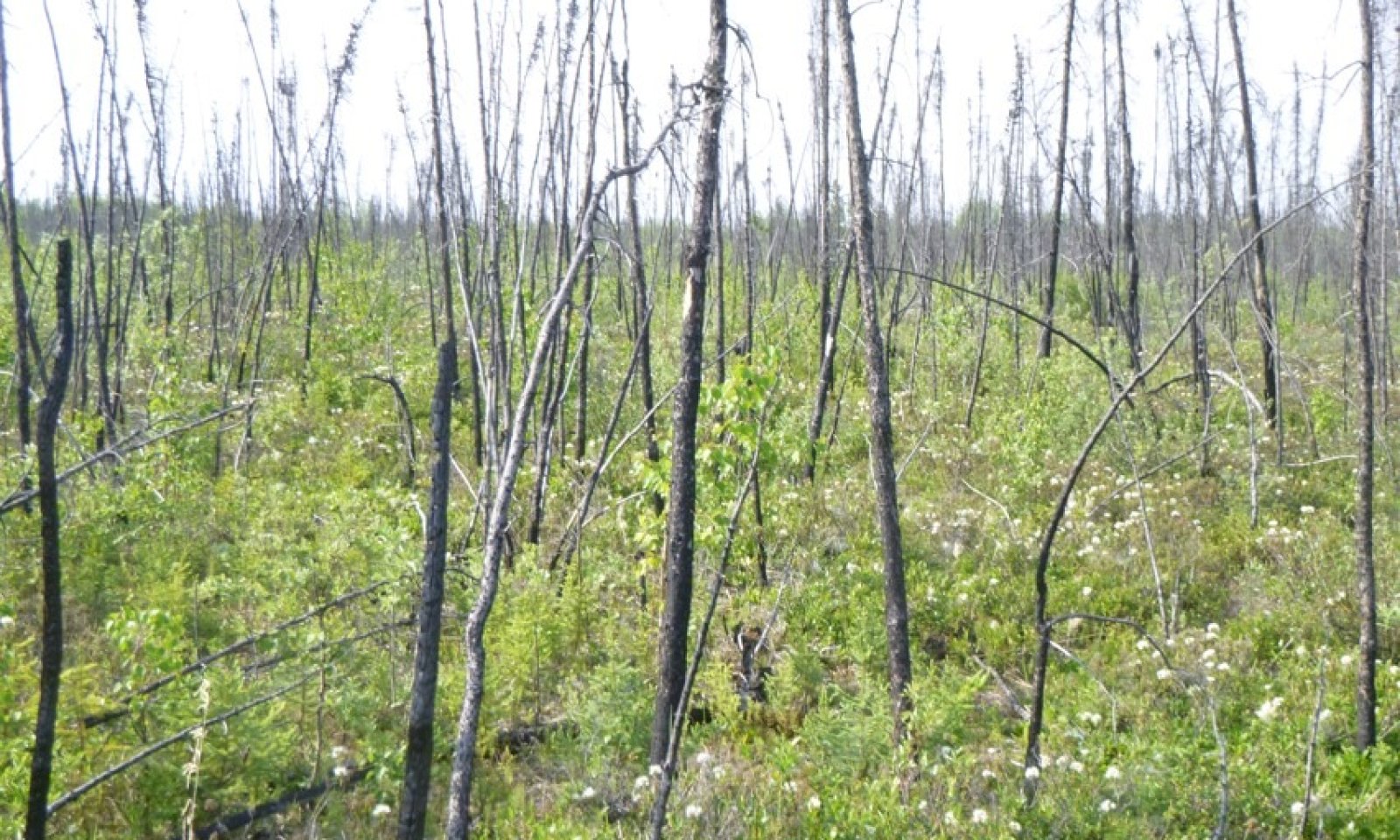
1.5. bog Labrador tea / bluejoint / fireweed - horsetail
Communities 1, 5 and 2 (additional pathways)
1.1. black spruce / bog Labrador tea - bog blueberry / splendid feathermoss - reindeer lichen
1.5. bog Labrador tea / bluejoint / fireweed - horsetail
1.2. black spruce - resin birch / Labrador tea - bog blueberry / splendid feathermoss - Schreber's big redstem moss
Model keys
Briefcase
Add { ecological sites } and { Major Land Resource Areas } to your briefcase by clicking on the briefcase
() icon wherever it occurs. Drag and drop items to reorder. Cookies are used to store briefcase items between browsing sessions. Because of this, the number of items that can be added to your briefcase is limited, and briefcase items added on one device and browser cannot be accessed from another device or browser. Users who do not wish to place cookies on their devices should not use the briefcase tool. Briefcase cookies serve no other purpose than described here and are deleted whenever browsing history is cleared.
The Ecosystem Dynamics Interpretive Tool is an information system framework developed by the USDA-ARS Jornada Experimental Range, USDA Natural Resources Conservation Service, and New Mexico State University.




 ) icon wherever it occurs. Drag and drop items to reorder. Cookies are used to store briefcase items between browsing sessions. Because of this, the number of items that can be added to your briefcase is limited, and briefcase items added on one device and browser cannot be accessed from another device or browser. Users who do not wish to place cookies on their devices should not use the briefcase tool. Briefcase cookies serve no other purpose than described here and are deleted whenever browsing history is cleared.

