


Natural Resources
Conservation Service
SHALLOW CALCAREOUS LOAM 12-14


Scenario model
Current ecosystem state
Select a state

Management practices/drivers
Select a transition or restoration pathway
- Transition T1a More details
- Transition T1a More details
- Transition T2b More details
- Transition T2a More details
- Transition T3 More details
-
No transition or restoration pathway between the selected states has been described
Target ecosystem state
Select a state
Description
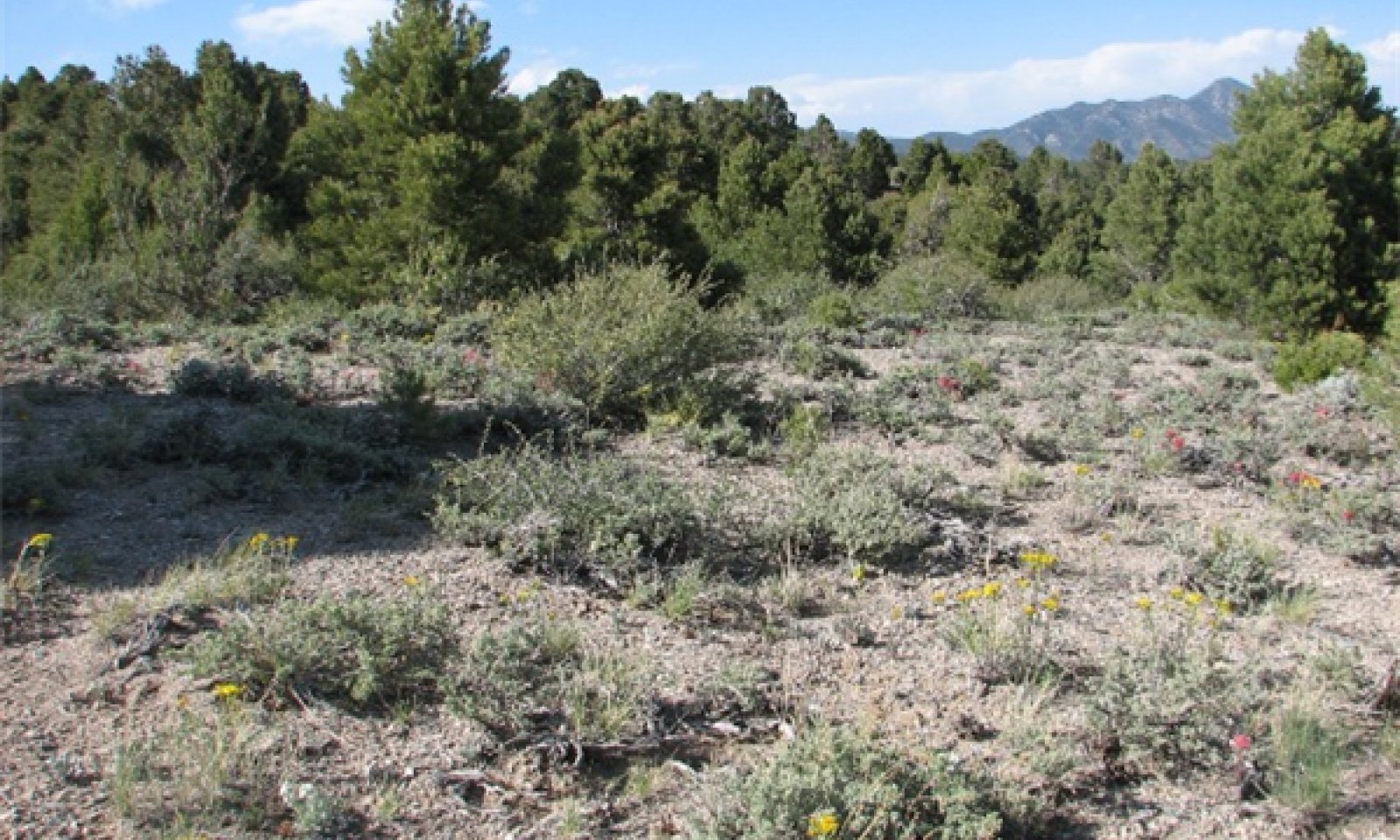
This state is representative of the natural range of variability under naturally stable, pre-European settlement conditions. This state is dominated by black sagebrush, desert bitterbrush, wild crabapple, and bluebunch wheatgrass with various other shrubs. Primary natural disturbances affecting this ecological site are wildfire, insect attack and periodic drought. Timing of fire combined with weather events determines plant community dynamics. Black sagebrush and associated species are adapted to receiving limited annual precipitation. Drought related mortality is generally low in this community type. Prolonged drought will result in an over-all decline in the grass-forb component of the plant community and reduced annual growth and seedling recruitment of black sagebrush.
Submodel
Description
The invaded state is characterized by the presence of non-native species. Compositionally, State 2 is similar to the reference state with a trace of non-native species in the understory. However, ecological resilience is reduced by the presence of non-natives, making it more difficult for this state to recover following disturbance. Low frequency, low intensity disturbances maintain the grass, shrub-grass and shrub community phases. However, non-natives are favored if disturbance regimes vary from the range of historic variation. Black sagebrush is characterized by a pronounced delay in establishment following disturbance. Therefore, frequent, repeated fire fueled by non-native species can eliminate black sagebrush from a site.
Submodel
Description
The shrub state is characterized by a over dominance of shrubs and reduced perennial herbaceous understory. Trace of deep-rooted perennial bunchgrasses remain in the community. Non-native annual grasses and forbs are abundant in the understory. A biotic threshold has been crossed with the loss of the deep-rooted perennial bunchgrasses, reducing ecological resilience of the site. The loss of structural and functional groups (deep-rooted perennial bunchgrasses and shrub seedlings), result in decreased herbaceous production, soil moisture and organic matter inputs. Changes in infiltration and runoff rates contribute to reduced soil moisture availability thereby reducing reproductive potential and recruitment of native species.
Submodel
Description
The tree state is characterized by the encroachment of pinyon and juniper, with tree cover greater than 20%. Lack of natural disturbances including fire, disease or insect attack allows pinyon and juniper to increase in cover, dominate and change site dynamics. Understory vegetation is reduced through shading, duff accumulation and competition for water and nutrients. Feedbacks contributing to the stability of this alternative state include, reduced infiltration resulting from reduced vegetative cover, leading to lower soil moisture preventing the establishment of vegetation, as well as, the density, the rate of spread and dominance of trees all contributing to an abiotic threshold being crossed. The ability of a site to capture, transport and store water is directly related to vegetative cover. Prolonged drought results in an overall decline of the plant community and reduced annual growth of pinyon and juniper.
Submodel
Mechanism
Trigger: Introduction of non-native species. Slow variables: Surface disturbances, changes in the kinds of animals and their grazing patterns, drought and/or changes in fire history that altered the recruitment rates of native species. Threshold: Reduction of the herbaceous understory changed soil hydrology including infiltration and runoff. Non-native invasive species cannot be easily removed from the system and have the potential to significantly alter disturbance regimes from their historic range of variation.
Mechanism
Trigger: Introduction of non-native species. Slow variables: Surface disturbances, changes in the kinds of animals and their grazing patterns, drought and/or changes in fire history that altered the recruitment rates of native species. Threshold: Reduction of the herbaceous understory changed soil hydrology including infiltration and runoff. Non-native invasive species cannot be easily removed from the system and have the potential to significantly alter disturbance regimes from their historic range of variation.
Mechanism
Trigger: Chronic inadequate rest and recovery from defoliation and/or prolonged drought. Slow variables: Changes in historic wildfire patterns and frequency. Repeated, heavy growing season grazing changes natural recruitment and recovery rates of perennial herbaceous species. Threshold: Reduction of deep and shallow-rooted perennial bunchgrasses and increased bare ground/interspaces changes soil hydrology, decreasing infiltration and increasing runoff.
Mechanism
Trigger: Infilling by pinyon and juniper may or may not be coupled with inadequate rest and recovery from defoliation and/or prolonged drought. Slow variables: Changes in historic wildfire patterns and frequency, as well as, natural recruitment of native perennials over time. Threshold: Reduction of understory (deep-rooted perennial bunchgrasses and woody perennials) and increased bare ground changes soil hydrology, decreasing infiltration and increasing runoff.
Mechanism
Trigger: Encroachment by pinyon and juniper. Possibly coupled with chronic inadequate rest and recovery from defoliation and/or prolonged drought. Slow variables: Changes in historic wildfire patterns and frequency and natural recruitment over time. Threshold: Reduction of understory (deep-rooted perennial bunchgrass and woody perennials) and increased bare ground changed soil hydrology, including infiltration and runoff.
Model keys
Briefcase
Add { ecological sites } and { Major Land Resource Areas } to your briefcase by clicking on the briefcase
( ) icon wherever it occurs. Drag and drop items to reorder. Cookies are used to store briefcase items between browsing sessions. Because of this, the number of items that can be added to your briefcase is limited, and briefcase items added on one device and browser cannot be accessed from another device or browser. Users who do not wish to place cookies on their devices should not use the briefcase tool. Briefcase cookies serve no other purpose than described here and are deleted whenever browsing history is cleared.
Ecological sites
Major Land Resource Areas


The Ecosystem Dynamics Interpretive Tool is an information system framework developed by the USDA-ARS Jornada Experimental Range, USDA Natural Resources Conservation Service, and New Mexico State University.
Accessibility statement