


Natural Resources
Conservation Service
Upland Loam (Wyoming Big Sagebrush)


Scenario model
Current ecosystem state
Select a state


Management practices/drivers
Select a transition or restoration pathway
- Transition T1a More details
- Transition T1b More details
- Transition T2a More details
- Transition T2b More details
- Transition T2c More details
- Transition T2d More details
- Transition T3a More details
- Transition T3b More details
- Transition T4a More details
- Transition T4b More details
- Transition T5a More details
- Restoration pathway R6a More details
-
No transition or restoration pathway between the selected states has been described
Target ecosystem state
Select a state
Description
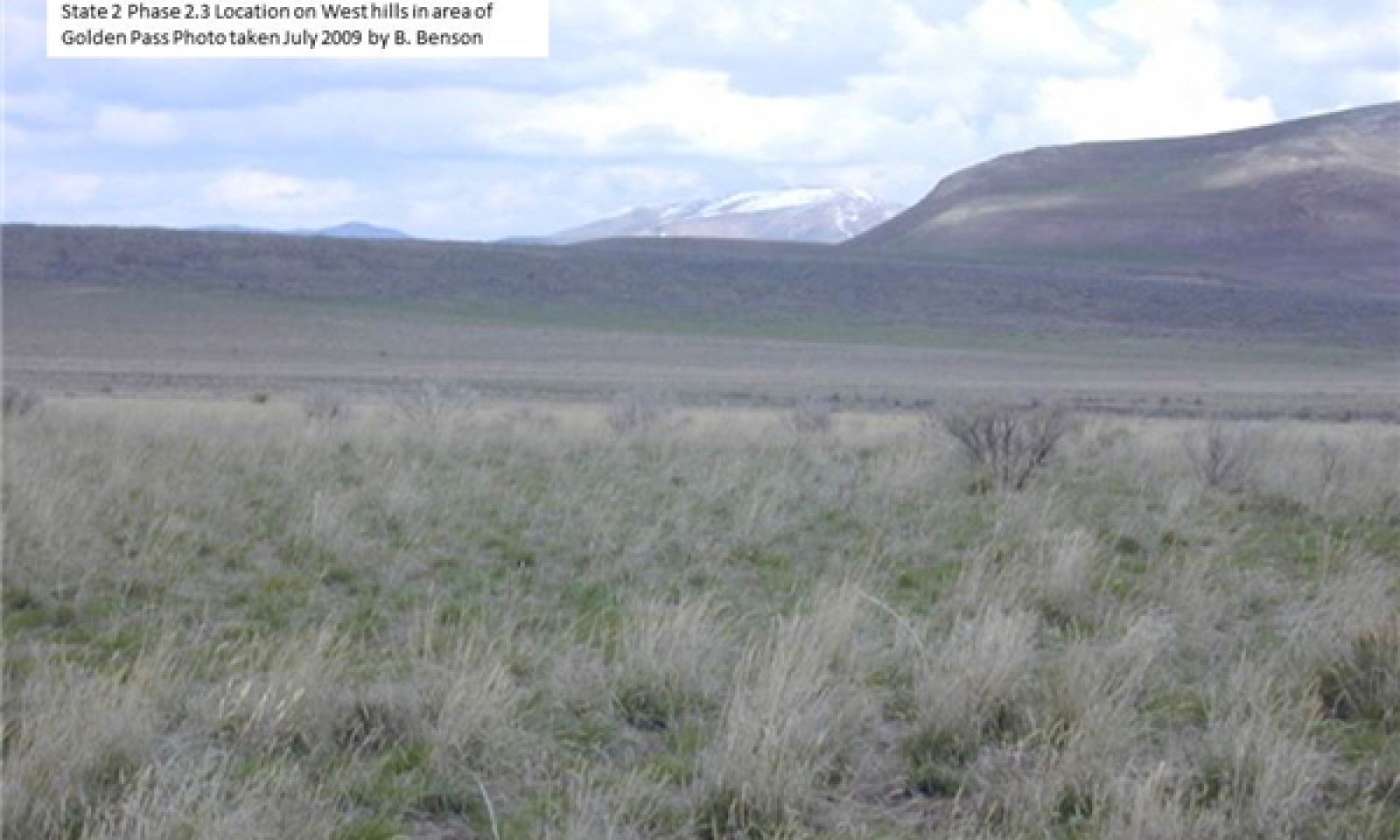
The Reference State includes the plant communities that were best adapted to the unique combination of factors associated with the ecological site. It is assumed that this site was in dynamic equilibrium with the historic biotic, abiotic, climatic factors in North America at the time of European immigration and settlement. This dominant aspect of the plant community is Wyoming big sagebrush and bluebunch wheatgrass. The community is made up of 65 percent grass, 15 percent forbs, and 20 percent shrubs based on dry weight. The community phases are interrelated and dependent on weather patterns and events as well as fire frequency and intensity. The fire frequency should be around 35 to 55 years. Any set of events that force the plant community out of this pattern can push it over a threshold and into another state (i.e. introduction of annual non-native plants).
Characteristics and indicators
This state does not have non-native species in the plant community.
Submodel
Description
The Current Potential State (CPS) includes the biotic communities that would become established on the ecological site if all successional sequences were completed without interferences by humans under the present environmental conditions. Natural disturbances are inherent in its development. The CPS state may include acclimatized, naturalized or invasive nonnative species. There is no known way to effectively remove these plants from the site once they have become established. The level of occurrence of these plants in the CPS is such that careful management can prevent their domination of the site. This site is irreversibly changed. Plant communities within the CPS state may be managed and used for various purposes without significant alteration in plant community composition or production. It includes all the plant communities that exist in the Reference State with the inclusion of species that are non-native to this ESD.
These scenarios are very interrelated and dependent on weather patterns and events as well as fire frequency and intensity. The fire frequency should be around 30 to 55 years. Any set of events that are strong enough to force the plant community out of this pattern can push it over a threshold and push it into another state.
Characteristics and indicators
This state is similar to the Reference State except it includes non-native species in the plant community.
Submodel
Description
The Utah Juniper Invasion State has only two described plant communities, but many variations of the represented ones are present. This state occurs when lack of disturbance, typically fire, has allowed Utah juniper and pinyon to establish and increase on the site. The Utah juniper increases and uses more resources. The juniper will eventually suppresses the shrub and grass understory. Shrubs are typically the first plants to decrease and may be found in small amounts or be absent in the community. The transition to tree dominated increases the probability of non-native annual dominance in the understory as those annual species can utilize the bare space between trees. This state may also accelerate soil erosion as the understory decreases leaving more bare ground susceptible to erosion. This state is persistent until the right conditions occur for a large wildfire. Mechanical tree removal may also occur to reduce tree cover.
Characteristics and indicators
This state will have a noticeable presence of Utah juniper in the plant community.
Submodel
Description
The Yellow rabbitbrush/invasive annuals = native perennials state occurs when fire removes the non-fire tolerant shrubs like big sagebrush. Overgrazing can and often does enhance the effect of fire. Other things like drought can also lead toward this condition. The dominant visual aspect of this community are annual grasses (mainly cheatgrass brome) and yellow rabbitbrush. The plant community composition is 35 percent cheatgrass brome, 10 percent forbs, and 45 percent fire tolerant shrubs with 90 percent of the shrub component being yellow rabbitbrush with 10 percent native perennials. If the site continues along the above described path it will deteriorate to an annual plant community.
Characteristics and indicators
This state is dominated by shrubs other than Wyoming big sagebrush, such as rabbitbrush and broom snakeweed.
Submodel
Description
The Invasive Annual Grass State occurs when this site is overgrazed and then burned and not seeded or has a failed seeding. The dominant aspect of the plant community is cheatgrass brome and yellow rabbitbrush. The community will usually be made up of 75 percent non-native annual grasses, 10 percent forbs (introduced or native), and 10 percent yellow rabbitbrush with minor components of other shrubs. The fire frequency in this state is 4 to 8 years.
Characteristics and indicators
This state will be dominated by invasive annual plants.
Submodel
Description
The Seeded Range State exists when the site is cultivated and/or burned and planted to introduced and/or in some situations native grasses with or with-out forbs and shrubs.
Characteristics and indicators
Non-native bunchgrasses and forbs dominate the plant community.
Submodel
Mechanism
Introduction of Utah juniper along with the introduction of non-native species into the ecosystem. Along with prolonged drought, overgrazing, extreme lengthening of the fire interval frequency. This takes place when the sagebrush canopy increases and destroys the perennial grass and forb under story and the fire frequency is increased from 50 to 60 years to 70 to 90 years and the introduction of Utah juniper with pinyon in areas where seed for these species are available.
Mechanism
Prolonged drought, overgrazing, extreme lengthening of the fire interval frequency. This takes place when the sagebrush canopy gets so heavy that it destroys the perennial grass and forb under story and the fire frequency is increased from 50 to 60 years to 70 to 90 years and the introduction of Utah juniper with pinyon in areas where the seed for these species are available.
Mechanism
Overgrazing and/or increase of fire frequency over a long period, between 8 and 12 years between fires.
Mechanism
Overgrazing and/or increase of fire frequency over a long period, between 4 and 8 years between fires.
Mechanism
Human caused disturbance (mechanical treatment and seeding; chemical treatment and seeding. etc.)
Mechanism
Continued overgrazing and increase of fire frequency over a very prolonged period. (8 to 12 year fire frequency interval)
Mechanism
Human caused disturbance (mechanical treatment and seeding; chemical treatment and seeding. etc.)
Mechanism
Time without catastrophic event and/or with management of grazing and often energy inputs. The community phase 4.2 will be self-sustaining if the fire frequency remains 3 to 5 years. This will continue unless a large amount of energy is injected into the system and management is changed..
Mechanism
Human caused disturbance (mechanical treatment and seeding; chemical treatment and seeding. etc.)
Mechanism
Human caused disturbance (mechanical treatment and seeding; chemical treatment and seeding etc.)
Mechanism
Time with proper management that favors the native plants as they establish on site. This may take over 30 years. The time frame depends on management and on the precipitation amounts.
Relevant conservation practices
| Practice | External resources |
|---|---|
|
Prescribed Grazing |
|
|
Grazing Management Plan - Applied |
Model keys
Briefcase
Add { ecological sites } and { Major Land Resource Areas } to your briefcase by clicking on the briefcase
( ) icon wherever it occurs. Drag and drop items to reorder. Cookies are used to store briefcase items between browsing sessions. Because of this, the number of items that can be added to your briefcase is limited, and briefcase items added on one device and browser cannot be accessed from another device or browser. Users who do not wish to place cookies on their devices should not use the briefcase tool. Briefcase cookies serve no other purpose than described here and are deleted whenever browsing history is cleared.
Ecological sites
Major Land Resource Areas


The Ecosystem Dynamics Interpretive Tool is an information system framework developed by the USDA-ARS Jornada Experimental Range, USDA Natural Resources Conservation Service, and New Mexico State University.
Accessibility statement