The reference state occurs with a fire return interval of 10 to 50 years, and only moderate grazing. The fire regime allows for a spatially variable succession of plant communities to co-exist, and grazing impacts are not severe enough to cross an ecological threshold to a degraded state where the natural community dynamics no longer function.
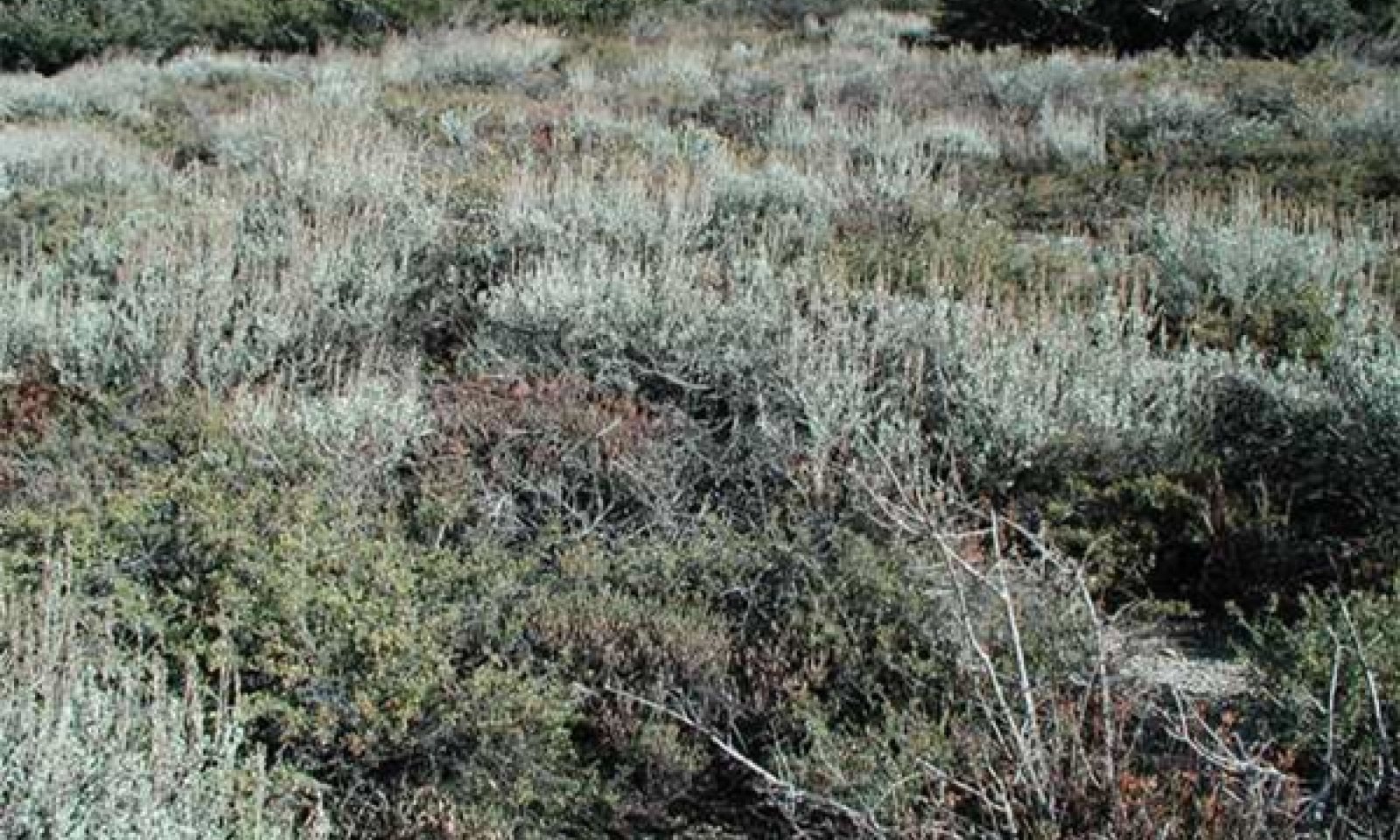
This state develops when overgrazing and a lack of fire triggers an ecological threshold to be crossed where the natural community dynamics no longer function and cannot be restored without active intervention. Exploitative grazing practices from the 1850s to approximately 1930 caused this transition to occur in much of the range of this ecological site, especially the Lake Tahoe Basin (Elliot-Fisk et al. 1996, Taylor 2004). Heavy and pervasive sheep grazing in the Lake Tahoe Basin removed all grasses and palatable shrubs in some areas by 1900 (Sudworth, 1900, quoted in Fisk et al. 1996). Over a century later, many of these shrublands have not recovered, and remain heavily dominated by shrubs with a minimal grass component, and increased unpalatable forbs. Fire in this state is rare, and a grass-dominated community does not occur.
Submodel
2.1. Overgazed
2.2. Grazed + Burned (Provisional)
2.3. Eroded Community Phase
Model keys
Briefcase
Add { ecological sites } and { Major Land Resource Areas } to your briefcase by clicking on the briefcase
() icon wherever it occurs. Drag and drop items to reorder. Cookies are used to store briefcase items between browsing sessions. Because of this, the number of items that can be added to your briefcase is limited, and briefcase items added on one device and browser cannot be accessed from another device or browser. Users who do not wish to place cookies on their devices should not use the briefcase tool. Briefcase cookies serve no other purpose than described here and are deleted whenever browsing history is cleared.
The Ecosystem Dynamics Interpretive Tool is an information system framework developed by the USDA-ARS Jornada Experimental Range, USDA Natural Resources Conservation Service, and New Mexico State University.




 ) icon wherever it occurs. Drag and drop items to reorder. Cookies are used to store briefcase items between browsing sessions. Because of this, the number of items that can be added to your briefcase is limited, and briefcase items added on one device and browser cannot be accessed from another device or browser. Users who do not wish to place cookies on their devices should not use the briefcase tool. Briefcase cookies serve no other purpose than described here and are deleted whenever browsing history is cleared.

