


Natural Resources
Conservation Service
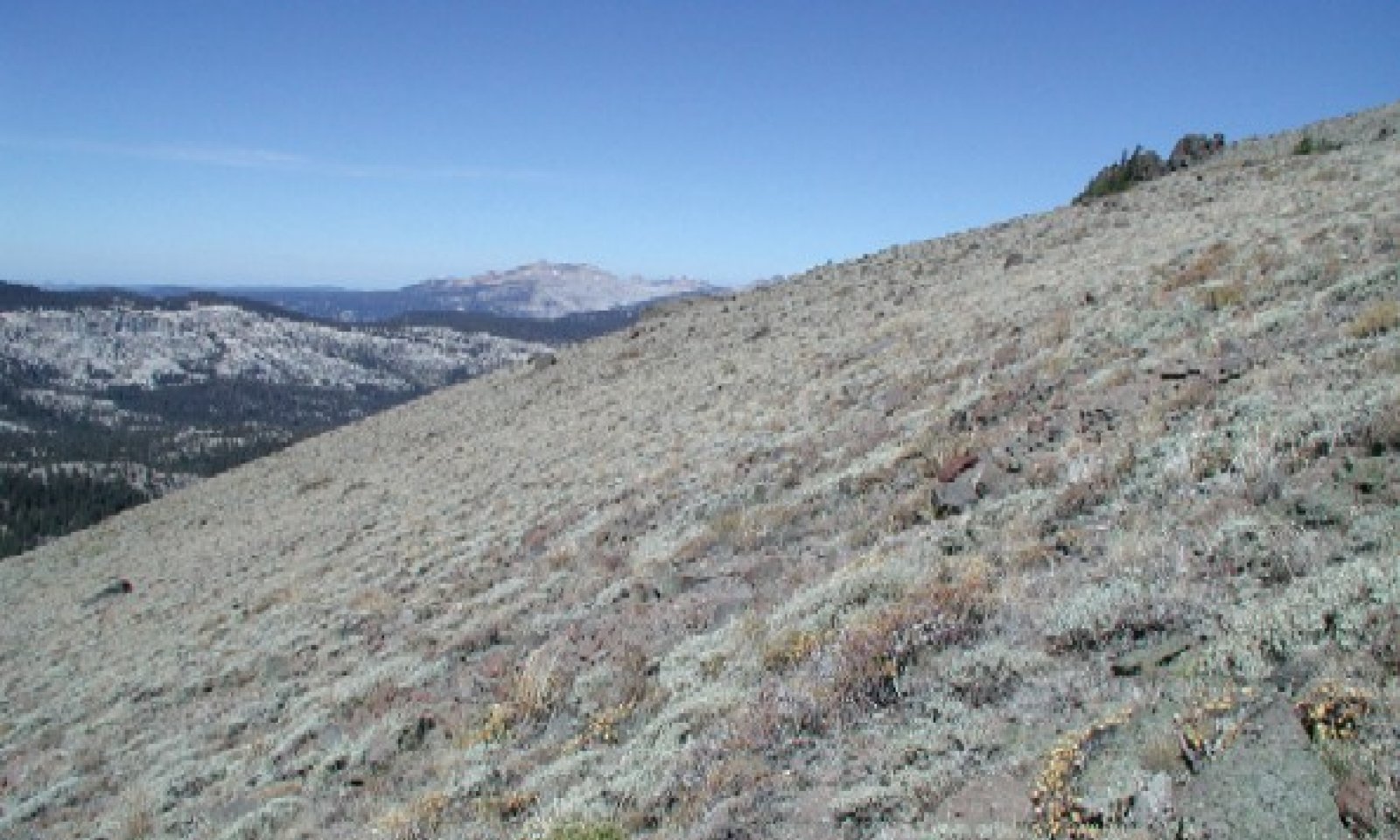
Shallow Andesite Ridge


Scenario model
Current ecosystem state
Select a state

Management practices/drivers
Select a transition or restoration pathway
- Transition T1 More details
- Transition T2 More details
- Transition T3 More details
-
No transition or restoration pathway between the selected states has been described
Target ecosystem state
Select a state
Description
The reference state is maintained by long fire return intervals (approximately 100 years), and a lack of overgrazing.
Submodel
Description
This state develops when severe overgrazing or fire in an at-risk community (burn recovery phase or moderately grazed phase) triggers an ecological threshold to be crossed where the natural ecological dynamics no longer function and cannot be restored without active intervention. The range of diversity in the herbaceous component of the vegetation community is no longer present. The perennial grass component is absent or very sparse. Total vegetation cover is low, exposing bare ground that is susceptible to erosion. This eroded soil is inhospitable for seed germination and plant recruitment, which causes a negative feedback limiting recovery of vegetation cover.
Fire is very unlikely in this state due to very low fuels and large areas of bare ground.
Submodel
Description
This state is characterized by low vegetation cover, high bare ground, and eroded soils. This eroded soil is inhospitable for seed germination and plant recruitment, which causes a negative feedback preventing recovery of vegetation cover.
Submodel
Mechanism
This transition occurs with ongoing overgrazing in the reference phase.
Mechanism
This transition occurs when overgrazing in an at-risk community phase (burn recovery phase or seral phase) or when continued severe overgrazing of any phase triggers an ecological threshold to be crossed where the natural ecological dynamics no longer function and cannot be restored without active intervention. This trigger causing this transition may be exacerbated by severe drought.
Mechanism
This transition occurs when grazing in an at-risk community phase (burn recovery phase) or when continued severe overgrazing triggers an ecological threshold to be crossed where the natural ecological dynamics no longer function and cannot be restored without active intervention. This trigger causing this transition may be exacerbated by severe drought.
Model keys
Briefcase
Add { ecological sites } and { Major Land Resource Areas } to your briefcase by clicking on the briefcase
( ) icon wherever it occurs. Drag and drop items to reorder. Cookies are used to store briefcase items between browsing sessions. Because of this, the number of items that can be added to your briefcase is limited, and briefcase items added on one device and browser cannot be accessed from another device or browser. Users who do not wish to place cookies on their devices should not use the briefcase tool. Briefcase cookies serve no other purpose than described here and are deleted whenever browsing history is cleared.
Ecological sites
Major Land Resource Areas


The Ecosystem Dynamics Interpretive Tool is an information system framework developed by the USDA-ARS Jornada Experimental Range, USDA Natural Resources Conservation Service, and New Mexico State University.
Accessibility statement