
Natural Resources
Conservation Service
Ecological site F236XY115AK
Boreal Forest Loamy Moist Slopes
Last updated: 2/13/2024
Accessed: 09/22/2026
-
Search


Major Land Resource Area or ecological site by name and/or ID.
PreviousSectionsNextGeneral information
Provisional. A provisional ecological site description has undergone quality control and quality assurance review. It contains a working state and transition model and enough information to identify the ecological site.
MLRA notes
Major Land Resource Area (MLRA): 236X–Bristol Bay-Northern Alaska Peninsula Lowlands
MLRA 236 is in southwest Alaska. It covers 19,575 square miles (USDA–NRCS, 2006) and extends inland from Bristol Bay. It is composed primarily of level to rolling plains and low to moderate hills bordered by long footslopes of mountains (Kautz et al., 2012). The flood plains and terraces along the major rivers and lakes are characterized by depressions and small basins. Mountains form the eastern and western borders of the MLRA, and glacially formed lakes are behind terminal moraines (Kautz et al., 2012). The entire MLRA was covered by glacial ice during the early to middle Pleistocene (USDA–NRCS, 2006).
The climate near the coast is dominantly maritime, and the continental climate further inland is influenced by weather systems of Interior Alaska (Kautz et al., 2012). Summers typically are warm and short, and winters are long and cold. The average annual precipitation is 13 to 50 inches, and the average annual air temperature is 30 to 36 degrees F (Kautz et al., 2012). The freeze-free period normally is 70 to 125 days. Aspect and elevation, which ranges from sea level to about 2,500 feet above sea level (USDA–NRCS, 2006), influence the climate and weather patterns.
This MLRA is sparsely populated. The major communities include Dillingham, Naknek, and King Salmon. Federally managed land in the MLRA includes parts of Katmai National Park and Preserve and the Aniakchak National Monument and Preserve as well as Togiak and Alaska Peninsula National Wildlife Refuges (Kautz et al., 2012; USDA–NRCS, 2006).Ecological site concept
This ecological site is on upland plains and hills. Site elevation ranges sea level to 920 feet. Slopes are nearly level to gentle (0 – 8 percent). Vegetation is supported on weakly developed soils that have increased fertility due to volcanic ash. Fire and windthrow create different communities in the reference state. There are two human-caused alternate states.
The reference state supports three communities. The reference plant community is characterized as a mixed open forest (Viereck et al., 1992). It is composed of a white spruce and paper birch in the canopy with an understory of shade-tolerant shrubs, forbs and graminoids.Associated sites
F236XY157AK Boreal Woodland Moist Loamy Plains
These sites adjoin each other on the same slopes. Soils are poorly drained and cooler on the nearly level, less steep slopes of F236XY157AK. The vegetation is shaped by these soil conditions and differentiate the veg on those slopes compared to the ones described by F236XY115AK.
F236XY116AK Boreal Forest Loamy Wet Slopes
Both sites are on plains and hills. F236XY116AK describes similar sites that are adjacent to wetlands. Wetland hydrology influences the site characteristics, disturbances, and supported vegetation, creating an ecological site distinct from F236XY115AK.
Similar sites
F236XY157AK Boreal Woodland Moist Loamy Plains
Both sites support a forest community on plains and hillslopes. These sites can be differentiated by over and understory composition driven by differences in soil characteristics. F237XY157AK is associated with poorly drained and cooler soils.
Table 1. Dominant plant species
Tree (1) Picea glauca
(2) Betula papyriferaShrub (1) Spiraea stevenii
(2) Rubus pedatusHerbaceous (1) Dryopteris expansa
(2) Calamagrostis canadensisPhysiographic features
This site is on linear slopes of plains and hill sideslopes. Elevation ranges from sea level to 920 feet. Slopes are primarily nearly level to gentle (0 – 8 percent), though they range up to 35 percent. Flooding and ponding are absent, and run-off is typically negligible to medium. This site is found at all aspects.
Table 2. Representative physiographic features
Geomorphic position, flats (1) Talf
(2) Rise
Geomorphic position, hills (1) Side Slope
Landforms (1) Plains > Plain
(2) Hills > Hill
(3) Plains > Rise
Runoff class Negligible to medium Flooding frequency None Ponding frequency None Elevation 0 – 920 ft Slope 0 – 8 % Water table depth 0 in Aspect W, NW, N, NE, E, SE, S, SW Table 3. Representative physiographic features (actual ranges)
Runoff class Negligible to high Flooding frequency None Ponding frequency None Elevation 0 – 980 ft Slope 0 – 35 % Water table depth 0 – 72 in Climatic features
The climate of this site reflects that of the MLRA, which is described as maritime polar (EPA, 2013). Temperatures are moderated by the nearby Bristol Bay and norther Pacific bodies of water. Annual precipitation ranges from 21 – 34 inches with approximately 40 percent occurring during the June-September growing season (PRISM, 2018).
Table 4 Representative climatic features
Frost-free period (characteristic range) 80-100 days Freeze-free period (characteristic range) 70-90 days Precipitation total (characteristic range) 20-30 in Frost-free period (actual range) 80-100 days Freeze-free period (actual range) 70-90 days Precipitation total (actual range) 20-40 in Frost-free period (average) 90 days Freeze-free period (average) 80 days Precipitation total (average) 30 in Characteristic rangeActual rangeBarLineFigure 1. Monthly precipitation range
Characteristic rangeActual rangeBarLineFigure 2. Monthly minimum temperature range
Characteristic rangeActual rangeBarLineFigure 3. Monthly maximum temperature range
BarLineFigure 4. Monthly average minimum and maximum temperature
Figure 5. Annual precipitation pattern
Figure 6 Annual average temperature pattern
">Influencing water features
Due to its landscape position, this site is not influenced by wetland or riparian water features. Precipitation is the main source of water.
Soil features
Soils are acidic Spodosols (Soil Survey Staff, 2013). They are very deep and well drained with moderate permeability. Soils support a cryic temperature regime and an udic moisture regime. Parent material is comprised of volcanic ash and/or loess.
Soil development and fertility affect vegetation on this site. Soil development is typically minimal, as evident by an ochric epipedon and cambic horizon. Vegetation on soils with these characteristics is typically restricted to fast-growing herbaceous species and nitrogen-fixing plants such as legumes and alder. On this site, the dense reference plant forest community may be the partial result of increased soil fertility due to volcanic ash in the soil resulting in andic soil properties in the rooting zone.
Correlated soil components in MLRA 236: Aleknagik, Ciimaq, Duney, Kanakanak, Typic Haplocryods, E36-Boreal forest and woodland-silty till slopes, E36-Boreal forest-gravelly colluvial slopesTable 5. Representative soil features
Parent material (1) Loess
(2) Volcanic ash
Surface texture (1) Highly organic silt loam
(2) Medial silt loam
(3) Highly organic silt
Drainage class Well drained Permeability class Moderate Soil depth 60 – 0 in Surface fragment cover <=3" Not specified Surface fragment cover >3" Not specified Available water capacity
(0-10in)1.5 – 2.5 in Soil reaction (1:1 water)
(0-10in)3.4 – 6 Subsurface fragment volume <=3"
(Depth not specified)0 – 23 % Subsurface fragment volume >3"
(Depth not specified)0 – 10 % Table 6. Representative soil features (actual values)
Drainage class Well drained Permeability class Moderate Soil depth 60 – 0 in Surface fragment cover <=3" 0 % Surface fragment cover >3" 0 % Available water capacity
(0-10in)1.5 – 3.1 in Soil reaction (1:1 water)
(0-10in)3.4 – 6 Subsurface fragment volume <=3"
(Depth not specified)0 – 53 % Subsurface fragment volume >3"
(Depth not specified)0 – 10 % Ecological dynamics
This boreal site is on upland linear to convex plain and hill slopes. Local site factors, including soil characteristics and disturbances create three vegetative communities. The reference plant community is a mixed birch and white spruce forest. It is unlikely that this site experiences long periods without disturbance which would otherwise support a white spruce forest.
Fires are a documented disturbance on this site. Fire frequency and intensity are unknown for this site. It is suspected that fires transform the reference plant community to an open meadow, before transitioning to a shrubland and finally returning to a forest.. Fires are typically suppressed around human settlements, so this disturbance is more common in remote areas.
Windthrow occurs on this site. It opens up the canopy, creating open pockets in the forest where understory competition flourishes. These areas support a dense mix of herbaceous and shrub species until once again becoming overshadowed by trees. Willows are browsed by moose. This does not appear to affect the ecological processes of the site.
Two human-created alternative states are present on this site. The first alternate state is in cleared areas in and around villages and towns experience a shift in the plant community. These areas may have been cleared for previous agricultural or cultural purposes, but are no longer managed. It is suspected that disturbances to the soil and existing seedbank create a unique post-disturbance phase. This evolves into a deciduous forest with lower abundances of vascular and non-vascular plants in the understory. A second alternate state is the result of forestry activities. Harvesting of trees for building material and fires results in different plant communities.
The information in this Ecological Dynamics section, including the state-and-transition model (STM), was developed based on current field data, professional experience, and a review of the scientific literature. As a result, all possible scenarios or plant species may not be included. Key indicator plant species, disturbances, and ecological processes are described to inform land management decisions.State and transition model
More interactive model formats are also available. View Interactive Models
Click on state and transition labels to scroll to the respective textEcosystem states
T1A - Cultural or agronomic pressure. T1B - Forestry. R2A - Removal of cultural or agronomic pressure. R3A - Cessation of forestry. State 1 submodel, plant communities
1.1a - Windthrow 1.1b - Fire 1.2a - Natural succession: Time and growth without windthrow. 1.3a - Fire recovery State 2 submodel, plant communities
State 3 submodel, plant communities
State 1
Reference StateThe reference state supports three community phases that are distinguished by the developed structure and dominance of the vegetation and by their ecological function and stability. The reference community phase is an open mixed forest that has an understory of various shrubs, forbs, and bluejoint. The presence of each community phase is dictated temporally by windthrow or fire.
This report provides baseline inventory data for the vegetation in the ecological site. Future data collection is needed to provide further information about existing plant communities and the disturbance regimes that result in transitions from one community to another. Common and scientific names are from the USDA PLANTS database. Community phases are characterized by the Alaska Vegetation Classification System (Viereck et al., 1992).Dominant plant species
-
white spruce (Picea glauca), tree
-
paper birch (Betula papyrifera), tree
-
beauverd spirea (Spiraea stevenii), shrub
-
strawberryleaf raspberry (Rubus pedatus), shrub
-
bluejoint (Calamagrostis canadensis), grass
-
spreading woodfern (Dryopteris expansa), other herbaceous
Community 1.1
Paper birch-white spruce/spirea-strawberryleaf raspberry/spreading woodfern
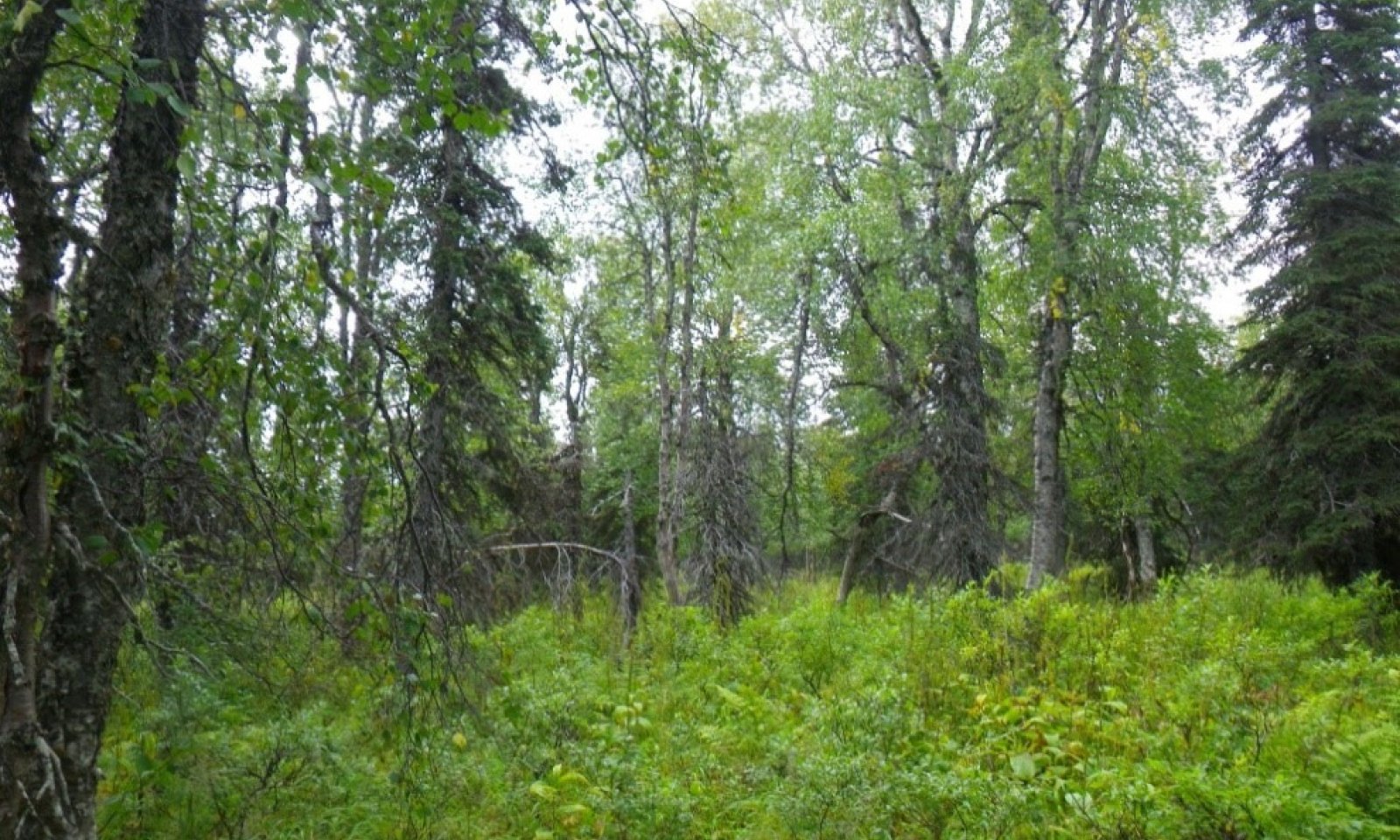
Figure 7. Dense understory typically is in the open forest of the reference plant community.

Figure 8. Frequency of species and canopy cover in community 1.1.
The reference plant community is an open mixed forest (Viereck et al., 1992) that has a diverse understory of shrubs, forbs, and bluejoint (Calamagrostis canadensis). Trees are in all four height strata, including stunted trees less than 15 feet high to tall trees more than 40 feet high. Typically, the overstory is paper birch and white spruce and the understory is medium to dwarf shrubs, including spirea (Spiraea stevenii), strawberryleaf raspberry (Rubus pedatus), Lapland cornel (Cornus suecica), and blueberries (Vaccinium ovalifolium, V. uliginosum). Forbs, such as spreading woodfern (Dryopteris expansa) and horsetails (Equisetum spp.), and bluejoint are common. A wide variety of other shrubs and forbs may be present, including fireweed (Chamerion angustifolium), sidebells wintergreen (Orthilia secunda), arctic starflower (Trientalis europaea), and twinflower (Linnaea borealis). Mosses generally make up a large percentage of the ground cover. The most prevalent are feathermosses (Hylocomium splendens, Pleurozium schreberi, and Ptilium crista-castrensis). Other ground cover commonly includes herbaceous litter and woody litter.
Dominant plant species
-
white spruce (Picea glauca), tree
-
paper birch (Betula papyrifera), tree
-
beauverd spirea (Spiraea stevenii), shrub
-
strawberryleaf raspberry (Rubus pedatus), shrub
-
Lapland cornel (Cornus suecica), shrub
-
twinflower (Linnaea borealis), shrub
-
bluejoint (Calamagrostis canadensis), grass
-
spreading woodfern (Dryopteris expansa), other herbaceous
Community 1.2
Sitka alder/spreading woodfern/bluejoint
Figure 9. Typical area of community 1.2.

Figure 10. Frequency of species and canopy cover in community 1.1.
Community phase 1.2 is characterized as closed tall scrub (Viereck et al. 1992). It consists of dense Sitka alder (Alnus viridis ssp. sinuata), spreading woodfern, and bluejoint. Other species include arctic starflower (Trientalis europaea), spirea, and a low abundance of myriad low and dwarf shrubs. The ground cover commonly includes herbaceous litter and woody litter.
Dominant plant species
-
Sitka alder (Alnus viridis ssp. sinuata), shrub
-
bluejoint (Calamagrostis canadensis), grass
-
spreading woodfern (Dryopteris expansa), other herbaceous
-
arctic starflower (Trientalis europaea), other herbaceous
Community 1.3
Herbaceous meadowThe post-fire community is likely an herbaceous meadow. Open areas are dominated by fast growing, disturbance loving forbs and graminoids. Extant shrub species are likely present. Community composition at any given site is dependent on factors such as fire intensity, survival of extant species, seed bank, post-fire soil conditions and propagule pressure.
This post-fire community was not encountered during NRCS survey work. This description is based on available research and personal knowledge. Further surveying is required to fully describe this community.Dominant plant species
-
willow (Salix), shrub
-
strawberryleaf raspberry (Rubus pedatus), shrub
-
bluejoint (Calamagrostis canadensis), grass
-
fireweed (Chamerion angustifolium), other herbaceous
Pathway 1.1a
Community 1.1 to 1.2
Paper birch-white spruce/spirea-strawberryleaf raspberry/spreading woodfern
Sitka alder/spreading woodfern/bluejointTall deciduous and coniferous trees may be susceptible to windthrow during periods of high winds. This can create nonvegetated areas in which fast-growing, pioneer plants may become established. The period needed for this transition is unknown. It depends on a variety of factors, including tree height, rooting depth, and windspeed.
Pathway 1.1b
Community 1.1 to 1.3Fire removes overstory species and partially or fully removes understory species. Any organic horizon is likely to be partially or completely removed. Soil and site conditions are ideal for extant shrubs and fast growing, disturbance-loving herbaceous species.
Pathway 1.2a
Community 1.2 to 1.1
Sitka alder/spreading woodfern/bluejoint
Paper birch-white spruce/spirea-strawberryleaf raspberry/spreading woodfernOver time, deciduous and coniferous trees may colonize and eventually become dominant in the overstory. Alders may be shaded out, which allows a species-rich understory to become established. The period needed for this transition is unknown. It likely is influenced by propagule pressure and encroachment by nearby trees.
Pathway 1.3a
Community 1.3 to 1.2The post-fire community develops into a shrubland. The weakly developed soil supports alder in the overstory. The understory is comprised of shade-tolerant species that benefit from the nitrogen fixing-properties of alder.
State 2
Cultural/Agronomic StateThis alternate state results from cultural or agronomic activities. Practices such as clearcutting can result in massive soil disturbance that in turn can produce an early community phase. As this community phase progresses, it typically produces a forest community dissimilar to community 1.1. This forest can support some species extant in the reference community phase, but it includes little, if any, white spruce (Picea glauca), has a lower abundance of shrubs, forbs, and graminoids, and has much less moss cover.
Continued anthropogenic activity typically prevents the forest from returning to the reference state. It is unknown whether community phase 2.1 will naturally shift back to the reference plant community if it can naturally progress with no further anthropogenic interference.Community 2.1
Paper birch/highbush cranberry/bluejoint
Figure 11. Typical area of community 2.1.

Figure 12. Frequency of species and canopy cover in community 2.1.
This late cultural/agronomic community phase is characterized by an open broadleaf forest (Viereck et al., 1992) that has an open, diverse understory of shrubs, graminoids, and forbs. Typically, the overstory is paper birch (Betula papyrifera) and the understory is highbush cranberry (Viburnum edule), bluejoint, spreading woodfern, and claspleaf twistedstalk (Streptopus amplexifolius). A variety of less common, less abundant forbs and shrubs typically are present, including twinflower (Linnea borealis), Lapland cornel, field horsetail (Equisetum arvense), woolly geranium (Geranium erianthum), and fireweed. A small amount of mosses typically are in this community, but lichens generally are not. Other ground cover commonly includes herbaceous and woody litter.
Forest overstory.Paper birch is the dominant and single tree species in this community.
Dominant plant species
-
paper birch (Betula papyrifera), tree
-
squashberry (Viburnum edule), shrub
-
bluejoint (Calamagrostis canadensis), grass
-
claspleaf twistedstalk (Streptopus amplexifolius), other herbaceous
-
spreading woodfern (Dryopteris expansa), other herbaceous
Community 2.2
Sitka alder/spreading woodfern
Figure 13. Typical area of community 2.2.

Figure 14. Frequency of species and canopy cover in community 2.2.
This early cultural/agronomic community phase is characterized as closed tall scrub (Vierek et al., 1992). It consists of dense scrubland that has limited species in the understory. Typically, the overstory is tall Sitka alder (Alnus viridis ssp. sinuata) and patches of red elderberry (Sambucus racemosa) and the understory is spreading woodfern and bluejoint. Other species in the understory include woodland horsetail (Equisetum sylvaticum), claspleaf twisted stalk, and arctic starflower. Mosses commonly are a minor component in the community. The ground cover typically consists of herbaceous and woody litter.
Dominant plant species
-
Sitka alder (Alnus viridis ssp. sinuata), tree
-
Sitka alder (Alnus viridis ssp. sinuata), shrub
-
red elderberry (Sambucus racemosa), shrub
-
bluejoint (Calamagrostis canadensis), grass
-
spreading woodfern (Dryopteris expansa), other herbaceous
Pathway 2.2A
Community 2.2 to 2.1
Sitka alder/spreading woodfern
Paper birch/highbush cranberry/bluejointTime and growth without human interference or natural disturbance. If this community is not disturbed, birch (Betula spp.) trees may colonize, creating a shaded understory and a declining alder population. This may allow for colonization by various understory shrubs, graminoids, and forbs. The period needed for this pathway is unknown. It likely is partially determined by the rates of colonization and growth of birch trees.
State 3
Forestry StateThis alternate state results from forestry practices, such as tree thinning and firewood harvesting, near and in the villages and towns. De-limbing and selective felling of white spruce and birch trees can open the understory to space and light without the major soil disturbance associated with windthrow. Forbs and graminoids can thrive and produce an early community phase different from that of the reference state. As trees eventually reclaim the canopy, a forest that is similar in the richness of species but different in the abundance as compared to the reference community typically becomes established.
Continued harvesting of trees generally prevents the forest from returning to the reference state. If community phase 3.1 is allowed to naturally progress, the forest canopy will close further and the understory shrubs, graminoids, and forbs will increase in richness and abundance. This will shift the community toward the reference state.Community 3.1
White spruce-paper birch/spirea/spreading woodfern
Figure 15. Typical area of community 3.1.

Figure 16. Frequency of species and canopy cover in community 3.1.
The late forestry community phase is characterized as an open mixed forest (Vierek et al., 1992) that has a relatively open understory of shrubs, forbs, and bluejoint. Typically, the overstory consists of white spruce and paper birch and the understory consists of spirea, twinflower, bluejoint, spreading woodfern, and stiff clubmoss (Lycopodium annotinum). Other species include lingonberry (Vaccinium vitis-idaea), black crowberry (Empetrum nigrum), strawberryleaf raspberry, and common ladyfern (Atherium felix-femina). Mosses, including feathermosses and sphagnum mosses (Sphagnum spp.) are widespread in the ground cover, and lichens are a relatively minor component. Other ground cover commonly includes herbaceous and woody litter.
Dominant plant species
-
white spruce (Picea glauca), tree
-
paper birch (Betula papyrifera), tree
-
beauverd spirea (Spiraea stevenii), shrub
-
twinflower (Linnaea borealis), shrub
-
black crowberry (Empetrum nigrum), shrub
-
bluejoint (Calamagrostis canadensis), grass
-
spreading woodfern (Dryopteris expansa), other herbaceous
-
arctic starflower (Trientalis europaea), other herbaceous
-
stiff clubmoss (Lycopodium annotinum), other herbaceous
Community 3.2
Bluejoint/fireweed
Figure 17. Area manipulated by forestry activity.

Figure 18. Frequency of species and canopy cover in community 3.2.
The early forestry community phase is characterized as a mesic forb herbaceous meadow consisting of graminoids and forbs (Viereck et al., 1992). Regardless of the harvesting technique used, this community typically consists of bluejoint, spirea, fireweed, and arctic starflower. Myriad other species may be present, including Altai fescue (Festuca altaica), sweet vernalgrass (Anthoxanthum odoratum), spreading woodfern, common ladyfern, and Rocky Mountain goldenrod (Solidago multiradiata). Regenerative, medium, and tall strata of paper birch and white spruce trees may be present. Feathermosses commonly are present. Other ground cover commonly includes herbaceous and woody litter.
Dominant plant species
-
beauverd spirea (Spiraea stevenii), shrub
-
bluejoint (Calamagrostis canadensis), grass
-
fireweed (Chamerion angustifolium), other herbaceous
-
claspleaf twistedstalk (Streptopus amplexifolius), other herbaceous
Pathway 3.2A
Community 3.2 to 3.1
Bluejoint/fireweed
White spruce-paper birch/spirea/spreading woodfernTime and growth without forestry activity. Deciduous and coniferous trees are likely to colonize if this community is undisturbed. The transition to a forested state may be accompanied by a change in the understory plant community. The progression of plants and period needed for this transition likely depend on various factors, including the size of the thinned area, the number of trees left, the frequency of thinning, and the rates of reproduction and growth of trees.
Transition T1A
State 1 to 2Cultural or agronomic activity can cause a shift to an alternate state. The initial activity creates an early community phase of shrubs and graminoids similar to the early community phase of the reference state. The extent of soil disturbance from clearcutting by heavy machinery is thought to be similar to that from windthrow of trees.
Key drivers
-
Mechanical soil disturbance
-
Timber management
Key ecosystem services affected
-
Nutrient cycling
-
Primary production
-
Wildlife forage
Transition T1B
State 1 to 3Selective forestry techniques, including thinning and limbing of trees and harvesting of firewood, can create a meadow community. This transition is associated with less disturbance of the soil than is transition T1A. This may partially explain the differences between the early community phases of these two alternate states.
Restoration pathway R2A
State 2 to 1Continued anthropogenic use of these areas typically prevents the forest from returning to the reference state. Depending on the amount of disturbance, a natural transition from the cultural/agronomic alternate state to the reference state may be possible. The richness and abundance of plant species are similar in the early community phases of both states. If an area is used briefly and the seed bank is not highly disrupted, shade-tolerant species such as white spruce likely will grow. The alternate state may then transition back to the reference state. The period needed depends on various factors, including the level of use and the spread and growth rate of trees.
Restoration pathway R3A
State 3 to 1Discontinuation of forestry activity would be required for the alternate forestry state to return to the reference state. Forestry community 3.1 and the reference state communities differ mainly in the abundance of species (not richness); therefore, eliminating woodcutting and harvesting activity may allow the species in community 3.1 to spread and grow, possibly transitioning the community back to the reference state. The period needed depends on various factors, such as the level of previous activity and the spread and growth rate of trees.
Additional community tables
Table 7. Community 1.1 plant community composition
Group Common name Symbol Scientific name Annual production () Foliar cover (%) Table 8. Community 1.2 plant community composition
Group Common name Symbol Scientific name Annual production () Foliar cover (%) Table 9. Community 1.3 plant community composition
Group Common name Symbol Scientific name Annual production () Foliar cover (%) Table 10. Community 2.1 plant community composition
Group Common name Symbol Scientific name Annual production () Foliar cover (%) Table 11. Community 2.2 plant community composition
Group Common name Symbol Scientific name Annual production () Foliar cover (%) Table 12. Community 3.1 plant community composition
Group Common name Symbol Scientific name Annual production () Foliar cover (%) Table 13. Community 3.2 plant community composition
Group Common name Symbol Scientific name Annual production () Foliar cover (%) Interpretations
Supporting information
Inventory data references
Modal points for Community 1.1 07SS11704 07SS12405 11SS02602 07CS12806 Modal points for community 1.2 07SS05306 07MM01102 Modal point for Community 1.3 None Modal point for Community 2.1 07DM21007 10SS00304 Modal point for Community 2.2 07CS18602 07SS11906 08SS15403 Modal point for Community 3.1 08LL10509 08SS16208 11SS00704 Modal point for Community 3.2 07MM21102 08SS14602 11SS00801
References
-
Viereck, L.A., C. T. Dyrness, A. R. Batten, and K. J. Wenzlick. 1992. The Alaska vegetation classification. U.S. Department of Agriculture, Forest Service, Pacific Northwest Forest and Range Experiment Station General Technical Report PNW-GTR-286..
Other references
Kautz, D.R., P. Taber, and S. Nield (editors). 2004. Land resource regions and major land resource areas of Alaska. U.S. Department of Agriculture, Natural Resources Conservation Service, Palmer, AK. Revised 2012.
Schoeneberger, P.J., and D.A. Wysocki. 2012. Geomorphic description system. Version 4.2. U.S. Department of Agriculture, Natural Resources Conservation Service, National Soil Survey Center, Lincoln, NE.
Schoeneberger, P.J., D.A. Wysocki, E.C. Benham, and Soil Survey Staff. 2012. Field book for describing and sampling soils. Version 3.0. U.S. Department of Agriculture, Natural Resources Conservation Service, National Soil Survey Center, Lincoln, NE.
Soil Science Division Staff. 2017. Soil survey manual. Ditzler, C., K. Scheffe, and H.C Monger, editors. U.S. Department of Agriculture Handbook 18. Government Printing Office, Washington, D.C.
U.S. Department of Agriculture, Forest Service, Alaska Region. 2013. Forest health conditions in Alaska - 2012. Publication R10-PR-32.
U.S. Department of Agriculture, Natural Resources Conservation Service. 2006. Land resource regions and major land resource areas of the United States, the Caribbean, and the Pacific Basin. U.S. Department of Agriculture Handbook 296.
Viereck, L.A., C.T. Dyrness, A.R. Batten, and K.J. Wezlick. 1992. The Alaska vegetation classification. U.S. Department of Agriculture, Forest Service, Pacific Northwest Research Station General Technical Report PNW-GTR-286. Portland, OR.
Western Regional Climate Center. 2017. Climate of Alaska. http://wrcc.dri.edu. Accessed September 19, 2017.Contributors
Phil Barber
Stephanie Schmit
Kendra Moseley
Michael Margo
Sue Tester
Jamin Johanson
Steff ShoemakerApproval
Kirt Walstad, 2/13/2024
Rangeland health reference sheet
Interpreting Indicators of Rangeland Health is a qualitative assessment protocol used to determine ecosystem condition based on benchmark characteristics described in the Reference Sheet. A suite of 17 (or more) indicators are typically considered in an assessment. The ecological site(s) representative of an assessment location must be known prior to applying the protocol and must be verified based on soils and climate. Current plant community cannot be used to identify the ecological site.
Author(s)/participant(s) Contact for lead author Date 09/22/2026 Approved by Approval date Composition (Indicators 10 and 12) based on Annual Production Indicators
-
Number and extent of rills:
-
Presence of water flow patterns:
-
Number and height of erosional pedestals or terracettes:
-
Bare ground from Ecological Site Description or other studies (rock, litter, lichen, moss, plant canopy are not bare ground):
-
Number of gullies and erosion associated with gullies:
-
Extent of wind scoured, blowouts and/or depositional areas:
-
Amount of litter movement (describe size and distance expected to travel):
-
Soil surface (top few mm) resistance to erosion (stability values are averages - most sites will show a range of values):
-
Soil surface structure and SOM content (include type of structure and A-horizon color and thickness):
-
Effect of community phase composition (relative proportion of different functional groups) and spatial distribution on infiltration and runoff:
-
Presence and thickness of compaction layer (usually none; describe soil profile features which may be mistaken for compaction on this site):
-
Functional/Structural Groups (list in order of descending dominance by above-ground annual-production or live foliar cover using symbols: >>, >, = to indicate much greater than, greater than, and equal to):
Dominant:
Sub-dominant:
Other:
Additional:
-
Amount of plant mortality and decadence (include which functional groups are expected to show mortality or decadence):
-
Average percent litter cover (%) and depth ( in):
-
Expected annual annual-production (this is TOTAL above-ground annual-production, not just forage annual-production):
-
Potential invasive (including noxious) species (native and non-native). List species which BOTH characterize degraded states and have the potential to become a dominant or co-dominant species on the ecological site if their future establishment and growth is not actively controlled by management interventions. Species that become dominant for only one to several years (e.g., short-term response to drought or wildfire) are not invasive plants. Note that unlike other indicators, we are describing what is NOT expected in the reference state for the ecological site:
-
Perennial plant reproductive capability:
Print Options
Sections
Font
AAAAOther
PrintThe Ecosystem Dynamics Interpretive Tool is an information system framework developed by the USDA-ARS Jornada Experimental Range, USDA Natural Resources Conservation Service, and New Mexico State University.
Accessibility statement


