
Natural Resources
Conservation Service
Ecological site F131AY502LA
Delta Plain - Poorly Drained Backswamp
Last updated: 6/10/2025
Accessed: 09/18/2026
-
Search


Major Land Resource Area or ecological site by name and/or ID.
PreviousSectionsNextGeneral information
Provisional. A provisional ecological site description has undergone quality control and quality assurance review. It contains a working state and transition model and enough information to identify the ecological site.
MLRA notes
Major Land Resource Area (MLRA): 131A–Southern Mississippi River Alluvium
The Southern Mississippi River Alluvium (MLRA 131A) is the largest of 4 MLRAs within Land Resource Region O, the Mississippi Delta Cotton and Feed Grains Region. It occurs in portions of 7 states including Louisiana (32 percent), Arkansas (26 percent), Mississippi (26 percent), Missouri (12 percent), Tennessee (3 percent), Kentucky (1 percent), and Illinois (less than 1 percent). The MLRA is comprised of 29,555 square miles and extends roughly 650 miles from an area near Cape Girardeau, Missouri in the north to the MLRA’s transition to the Gulf Coast Marsh (MLRA 151) in the south. Average elevations range from 330 feet in the north to sea level in the southern part of the area. For much of the north-south distance, the MLRA is bounded to the east by an abrupt rise in elevation of loess-capped bluffs and hills, the Southern Mississippi Valley Loess (MLRA 134). West of the Mississippi River, the boundary is less distinct except to the northwest where the MLRA abuts the Ozark Plateaus and Ouachita province (MLRAs 116A, 117, and 118A). South of the Ozark and Ouachita escarpment, the MLRA adjoins the Southern Mississippi River Terraces (MLRA 131D), which includes the fabled Grand Prairie and merges with the valleys of the Arkansas and Ouachita rivers (MLRA 131B) and the Red River (MLRA 131C). Occurring within or bordering the Southern Mississippi River Alluvium are three separate loess-capped, upland remnants: Crowley’s Ridge, Macon Ridge, and Lafayette Loess Plain, which are western units of MLRA 134 (USDA-NRCS, 2006a).
MLRA 131A is characterized by landscapes that were created and influenced by the current and earlier paths of the Mississippi River and its tributaries. Waters transporting the materials that formed the area originate from as far west as the east slope of the Continental Divide to the western edge of the Appalachian Divide in the east. This comprises a drainage basin of roughly 1,245,000 square miles and includes all or parts of thirty-one U.S. states and two Canadian provinces (Elliott, 1932). The drainage basin of the Mississippi River roughly resembles a funnel which has its spout at the Gulf of America. Waters from as far east as New York and as far west as Montana contribute to flows in the lower extent of the river (USACE, 2017). The soils of these alluvial landscapes are very deep, dominantly poorly and somewhat poorly drained, and have textures that are mostly loamy or clayey. Principal soil orders are Alfisols, Vertisols, Inceptisols, and Entisols (USDA-NRCS, 2006a).
The fluvial processes that shaped the area were highly dynamic, diverse, and complex. During the Pleistocene epoch, multiple continental glacial-interglacial cycles resulted in extreme fluctuations in river discharge and sediment loads. A braided river regime characterized the fluvial dynamics of the Mississippi River through much of the last glacial cycle (Autin et al., 1991; Rittenhour et al., 2007). Rapid aggradation of glacial outwash led to the development of prominent valley train features over a large portion of the area (Autin et al., 1991; Saucier, 1994; Aslan and Autin, 1999; Blum et al., 2000; Rittenour et al., 2007). A changing climate, meltwater withdrawal, and sea-level change induced a transition from a braided river regime to a predominantly single-channeled, laterally migrating river system during the Holocene epoch (Rittenhour et al., 2007; Shen et al., 2012) – characteristics that continue today. Fluvial dynamics of the migrating river resulted in the development of broad meander belts, backswamp environments, and extensive deltaic complexes (Saucier, 1994; Klimas et al., 2011).
Tremendous expanses of bottomland hardwood forests once covered much of the area. Today, the land base is largely in agriculture production, and soybeans, cotton, corn, and rice are the principal crops with sugarcane rising in importance in the southernmost portion of the MLRA (USDA-NRCS, 2022).
Due to its size and biophysical variability, the technical team advised subdividing the MLRA into six subregions: Western Lowlands, St. Francis Basin, Yazoo Basin, Tensas Basin, Delta Plain, and Batture.LRU notes
The Deltaic Plain of MLRA 131A is located in Louisiana, south of the Old River Control Structure on the Mississippi River. This portion of the MLRA is greatly affected by changes in hydrology over time, by both natural and anthropogenic forces. The landscape was built by the flooding of the Mississippi River with influences of the entire drainage basin.
The Mississippi River built the Deltaic Plain landscape through its multiple meandering channel belts and sediment deposition. The geologic development of coastal Louisiana is closely related to shifting Mississippi River courses. The Mississippi River Deltaic Plain developed as the Mississippi River changed its course multiple times throughout the Holocene Age. The Deltaic Plain is composed of six major delta complexes, two of which are prograding and four are degrading. Recognition that the Deltaic Plain is formed by an orderly progression of events related to shifting Mississippi River courses led to the identification and characterization of the deltaic cycle. The delta cycle is a dynamic and episodic process alternating between periods of seaward progradation of deltas (regressive deposition) and the subsequent landward retreat of deltaic headlands as deltas are abandoned, reworked, and submerged by marine waters (transgressive deposition) (USACE 2004). Within these shifts in land building and subsiding, the complexity of the ecological sites are realized. The interacting relationship between the alluvial landscape of MLRA 131A and the marsh landscape of MLRA 151 provides a gradual transition that obscures the boundary of these two regions. For the purposes of describing ecological sites, MLRA 131A sites are confined to those that are regarded as historically containing forested conditions and MLRA 151 sites confined to areas historically dominated by herbaceous marsh species. In addition to the interaction with MLRA 151 marshes, transitions from the Deltaic Plain into the adjacent MLRA 134 Southern Mississippi Valley Loess are abrupt in most places and are marked by loess covered plains to the east and west of the Deltaic Plain.Classification relationships
Major Land Resource Area (MLRA) and Land Resource Unit (LRU) (USDA-NRCS, 2006) MLRA 131A Southern Mississippi River Alluvium
The Natural Communities of Louisiana - (Louisiana Natural Heritage Program - Louisiana Department of Wildlife and Fisheries)
EPA Level IV Ecoregion (73n - Inland Swamps, Portions of 73k - Southern Holocene Meander Belts & 73m Southern Backswamps)Ecological site concept
The site contains wetland forests occurring on back swamps occasionally to frequently flooded generally outside of the growing season. Soil moisture is a major driver on this site. These very deep to deep, poorly drained, slowly permeable soils formed in clayey alluvium on level, nearly level, to concave slopes in the Southern Mississippi Valley Alluvium. Slopes range from 0 to 3 percent.
This site is on flood plains in level IV EPA Ecoregion portions of 73m Southern Backswamps, 73n Inland Swamps, and 73K Southern Holocene Meander Belts, of the Southern Mississippi River Alluvium Major Land Resource Area. Within the southern most reach of the MLRA is the Deltaic Plain which extends from approximately where the Red River influence begins within the MLRA and to the south.
Of note, this site occurs on the “protected” side of the extensive Mississippi River levee system and is distinguished from similar landforms within the “batture lands” (i.e., the alluvial land between the river channel and the constructed levee system). Some locations of this site will receive Mississippi River flood waters at times within the Atchafalaya Floodway system; this is similar to the flooding that would have been received historically, however the frequency will be altered due to control structures and management.Associated sites
F131AY501LA Delta Plain - Frequently Flooded Ponded Very Poorly Drained Oxbows and Swales
The Delta Plain - Frequently Flooded Ponded Very Poorly Drained Oxbows and Swales site is a lower site on the landscape and is wetter than this site.
F131AY503LA Delta Plain - Somewhat Poorly Drained Bottomland Hardwoods
The Delta Plain - Somewhat Poorly Drained Bottomland Hardwoods site is higher on the landscape than this site and is better drained.
Similar sites
F131AY402LA Tensas Basin - Poorly Drained Backswamp
The Tensas Basin - Poorly Drained Backswamp site is similar on the landscape although is found in the Tensas basin north of the Red River. In the areas near the northern extent of this site range the Tensas Basin - Poorly Drained Backswamp site may be utilized for information.

Figure 1. 131AY502 ES Extent Map
Table 2. Dominant plant species
Tree Not specified
Shrub Not specified
Herbaceous Not specified
Physiographic features
This Site occurs on nearly level backswamp positions.
Table 3. Representative physiographic features
Landforms (1) Backswamp
Runoff class Negligible to very low Flooding duration Very long (more than 30 days) Flooding frequency None to frequent Ponding duration Brief (2 to 7 days) to very long (more than 30 days) Ponding frequency Occasional to frequent Elevation 0 – 318 ft Slope 0 – 3 % Ponding depth 0 – 90 in Water table depth 0 – 40 in Aspect Aspect is not a significant factor Climatic features
South Louisiana has a warm, humid climate, with fairly long summers and relatively short winters. The result is a long growing season and abundant plant growth. Water is a definitive part of the southern Louisiana landscape, largely due to the combination of low elevation and fairly abundant rainfall in most years. Mean annual precipitation ranges from 51 to 67 inches over this region, and is fairly well distributed throughout the year. There have been very few years when less than 50 inches of precipitation has fallen. Snow is a rarity, and little more than 1 inch typically falls every few years. Growing seasons are long, typically from late February to late November. Along the gulf coast, it is not unusual for the lowest winter temperature to be above 30 degrees. Inland, there have been occasional blasts of cold air that have dropped temperatures into the teens and 20s, but these are rare. Hurricanes and tropical storms are an important part of the climate of southern Louisiana, with some impact occurring nearly every year in some part of the region. However, devastating storms do not occur too often, and heavy rain and storm surge are usually the biggest concerns, compared to wind damage. The following climatic data are averages from the weather stations listed below. Temperature and precipitation may vary considerably from that listed for each month. Site specific weather data should be used for land management decisions. For site specific weather conditions, obtain data from a weather station close to the site. Information can be accessed from specific weather stations at http://www.wrcc.dri.edu/coopmap/ or http://www.wrcc.dri.edu/summary/climsmla.html.
Table 4 Representative climatic features
Frost-free period (characteristic range) 240-270 days Freeze-free period (characteristic range) 310-370 days Precipitation total (characteristic range) 60-60 in Frost-free period (actual range) 220-310 days Freeze-free period (actual range) 260-370 days Precipitation total (actual range) 60-60 in Frost-free period (average) 260 days Freeze-free period (average) 340 days Precipitation total (average) 60 in Characteristic rangeActual rangeBarLineFigure 1. Monthly precipitation range
Characteristic rangeActual rangeBarLineFigure 2. Monthly minimum temperature range
Characteristic rangeActual rangeBarLineFigure 3. Monthly maximum temperature range
BarLineFigure 4. Monthly average minimum and maximum temperature
Figure 5. Annual precipitation pattern
Figure 6 Annual average temperature pattern
Climate stations used
-
(1) ST MARTINVILLE 3 SW [USC00168181], Saint Martinville, LA
-
(2) BOOTHVILLE ASOS [USW00012884], Buras, LA
-
(3) DONALDSONVILLE 4 SW [USC00162534], Donaldsonville, LA
-
(4) FRANKLIN 3 NW [USC00163313], Baldwin, LA
-
(5) NEW ORLEANS AUDUBON [USW00012930], Marrero, LA
-
(6) HOUMA [USC00164407], Houma, LA
-
(7) LSU CITRUS RSCH STN [USC00165624], Port Sulphur, LA
-
(8) ST BERNARD [USC00168108], Saint Bernard, LA
-
(9) CARVILLE 2 SW [USC00161565], Carville, LA
-
(10) LSU BEN-HUR FARM [USC00165620], Baton Rouge, LA
-
(11) MORGAN CITY [USC00166394], Berwick, LA
-
(12) RESERVE [USC00167767], Reserve, LA
-
(13) BRUSLY 2 W [USC00161246], Brusly, LA
-
(14) JEANERETTE 5 NW [USC00164674], Jeanerette, LA
">Influencing water features
This site is in a receiving water backswamp position. Flow may be received from adjacent landscapes, from up stream sources as well as being in a backwater position.
Wetland description
Cowardin System - Palustrine, Forested Wetland
Soil features
Please note that the soils listed in this section of the description may not be all inclusive. There may be additional soils that fit the site’s concepts. Additionally, the soils that provisionally form the concepts of this site may occur elsewhere, either within or outside of the MLRA and may or “may not” have the same geomorphic characteristics or support similar vegetation. Some soil map units and soil series included in this “provisional” ecological site were used as a “best fit” for a particular soil – landform catena during a specific era of soil mapping, regardless of the origin of parent material or the location of MLRA boundaries. Therefore, the listed soils may not be typical for MLRA 131A or a specific location, and the associated soil map units may warrant further investigation in a joint ecological site inventory – soil survey project. When utilizing this provisional description, the user is encouraged to verify that the area of interest meets the appropriate ecological site concepts by reviewing the soils, landform, vegetation, and physical location. If the site concepts do not match the attributes of the area of interest, please review the Similar or Associated Sites listed in the Supporting Information section of this description to determine if another site may be a better fit for your area of interest.
The principal (or modal) soils of this site are very deep, poorly drained, and have a perched water table at the surface during wet periods of the year, generally winter into spring. They formed in clayey alluvium on level to concave, broad backswamp positions between the lower Mississippi River meander belts, and on the lowest part of natural levees in the meander belts, and in the swales of gently undulating ridge and swale topography of the meander scrolls, as well as in the abandoned channels. Dominant slope gradient is between 0 and 1 percent, but may range to a high of 3 percent. Permeability is slow, and runoff is slow to very slow with some areas receiving overland flow from adjacent sites.
Principal soils of this site formed in clayey alluvium and include Schriever (Very-fine, smectitic, hyperthermic Chromic Epiaquerts), and Sharkey (Very-fine, smectitic, thermic Chromic Epiaquerts) soil series. The seasonally high water table perches at the surface to 15 cm (6 in). Unless protected by levees, these soils are flooded and ponded frequently up to very long durations. The subsoil stays moist in normal years, but will dry out enough to form intersecting slickensides. Reaction in the surface and subsoil ranges from slightly acid through moderately alkaline. Other soil series include Alligator, Baldwin, Gramercy, Haplaquolls, Iberia, Mhoon, Tensas, Thibaut, Tunica, Udorthents, Westwego. Alligator soils (Very-fine, smectitic, thermic Chromic Dystraquerts) differ in reaction in surface and upper subsoil (very strongly acid through strongly acid). Baldwin soils (Fine, smectitic, hyperthermic Chromic Vertic Epiaqualfs) and Tensas soils (Fine, smectitic, thermic Chromic Vertic Epiaqualfs) are in the fine family textural class, and have an argillic horizon. Tensas soils are considered somewhat poorly drained. Gramercy soils (Fine, smectitic, hyperthermic Chromic Epiaquerts) are in the fine family textural class and formed in clayey over fine-silty alluvium. Iberia soils (Very-fine, smectitic, hyperthermic Typic Epiaquerts) formed in alkaline clayey over fine-silty alluvium and have an argillic horizon in the lower subsoil. Mhoon soils (Fine-silty, mixed, superactive, nonacid, thermic Fluvaquentic Endoaquepts) formed in loamy alluvium. Thibaut soils (Clayey over loamy, smectitic over mixed, superactive, nonacid, hyperthermic Vertic Epiaquepts) and Tunica soils (Clayey over loamy, smectitic over mixed, superactive, nonacid, thermic Vertic Epiaquepts) formed in clayey over loamy alluvium. Westwego soils (Very-fine, smectitic, nonacid, thermic, cracked Thapto-Histic Fluvaquents) formed in semifluid clayey alluvium and organic material that dried and shrank irreversibly in the upper part as the result of artificial drainage.Table 5. Representative soil features
Parent material (1) Alluvium
(2) Herbaceous organic material
Surface texture (1) Clay
(2) Silty clay
(3) Mucky
Family particle size (1) Clayey
Drainage class Poorly drained Permeability class Slow to very slow Soil depth 80 in Surface fragment cover <=3" 0 – 7 % Surface fragment cover >3" Not specified Available water capacity
(0-80in)4.8 – 7.8 in Calcium carbonate equivalent
(0-80in)Not specified Electrical conductivity
(0-80in)0 – 4 mmhos/cm Sodium adsorption ratio
(0-80in)0 – 2 Soil reaction (1:1 water)
(0-80in)5.3 – 7.6 Subsurface fragment volume <=3"
(Depth not specified)0 – 2 % Subsurface fragment volume >3"
(Depth not specified)Not specified Ecological dynamics
Information contained in this section was adapted from several sources. The information presented is representative of very complex vegetation communities. Key indicator plants, animals and ecological processes are described to help inform land management decisions. Plant communities will differ across the MLRA because of the naturally occurring variability in weather, soils, and hydrology. The reference plant community is not necessarily the management goal. The species lists are representative and are not botanical descriptions of all species occurring, or potentially occurring, on this site. They are not intended to cover every situation or the full range of conditions, species, and responses for the site.
This site is found in the Delta Basin of MLRA 131A which is in the Mississippi Alluvial Plain Section of the EPA Ecoregions in sub-sections 73n - Inland Swamps, portions of 73k - Southern Holocene Meander Belts, and portions of 73m Southern Backswamps. The dissected plains in this portion of the MLRA have mixed soil mineralogy with influences from the majority of the Drainage Area of the Mississippi River.
The historic forests of this region once consisted entirely of bottom-land hardwood deciduous forests, mixed hardwood, and cypress swamps. The major tree species in the native plant communities in the areas of bottom-land hardwoods formerly were and currently are water oak, Nuttall oak, cherrybark oak, native pecan, red maple, sweetgum, eastern cottonwood, and hickory. The major tree species in the native plant communities in the swamps formerly were and currently are cypress, water tupelo, water oak, green ash, red maple, and black willow. The important native understory species are palmetto, greenbrier, wild grape, and poison ivy in the areas of bottom-land hardwoods and buttonbush, lizardtail, waterlily, water hyacinth, sedges, and rushes in the swamps. Land cover in many portions are now in farms, which produce mainly cash crops. Cotton, soybeans, milo, and corn are the main crops, and sugarcane is a major crop in the southernmost part of the area. Transitions from the Alluvial Plain into the Adjacent Loess is abrupt in most places and is marked by Loess bluffs to the East and West of the MLRA.
The majority of the MLRA has been converted to agricultural production; minimal areas contain stands of historic plant communities, and many of these areas that have native vegetation has had significant hydrologic alteration. At the northern end of this Sub-region of the MLRA, where the Red River, Atchafalaya River and Mississippi River converge are the Old River Control structures. These Structures are operated to maintain the distribution of flow between the Mississippi River and the Atchafalaya River, and also prevent the Atchafalaya River from capturing the flow of the Mississippi River. The Lower Atchafalaya Basin Floodway System is located within the bounds of this sub-region of the MLRA and includes six requirements - water management, recreation, public access, environmental protection, flood control, and water circulation/canal closure. The flood control component provides safety and livelihood protection to the surrounding communities; it limits the natural reach of the Mississippi River during overbank flow.
As mentioned previously this sub-region's northern extent is found at the Old River Control Structures which regulate the flows of the Mississippi, Red and Atchafalaya Rivers. Additional components in the system are the River levee systems which further regulate the flows and flooding of these river systems. These manmade constraints to the system have substantially altered the hydrologic functions of the sites found within the whole of MLRA 131A. Areas within the confines of the levee systems, unprotected areas, have increased frequency, duration, depth and force of flooding and the area outside of the levee systems, protected areas, have reduced total flooding other than catastrophic events. These Hydrologic alterations have changed ecological sites within the MLRA to where attempts at describing historic communities are best scientific concepts, so most sites are described based on current regimes. The current Atchafalaya River was initiated in the 18th century and by 1765 was well established and in 1831 the Shreve cutoff, near the location of the Old River Control Structure, minimized the flow between the Mississippi river and the Atchafalaya. These natural and anthropogenic hydrologic impacts have occurred within the timeframe that is considered to define the Historic community of the site, so the transitions between Ecological States and other Ecological Sites are very dynamic.
This sub-region of the MLRA has its southernmost portion being positioned at the gulf and it is influenced by tidal forces. The Mississippi River built this landscape through its multiple meandering channel belts and sediment deposition. The geologic development of coastal Louisiana is closely related to shifting Mississippi River courses. The Mississippi River has changed its course several times during the last 7,000 years, leading to the development of the Mississippi River Deltaic and Chenier Plains. The Delta Plain is comprised of six major delta complexes, two of which are prograding and four are degrading. Recognition that the Delta Plain is formed by an orderly progression of events related to shifting Mississippi River courses led to the identification and characterization of the deltaic cycle. The delta cycle is a dynamic and episodic process alternating between periods of seaward progradation of deltas (regressive deposition) and the subsequent landward retreat of deltaic headlands as deltas are abandoned, reworked, and submerged by marine waters (transgressive deposition). Within these shifts in land building and subsiding the complexity of the ecological sites are realized, with transitions from the alluvial landscape of MLRA 131A to the Marshes of MLRA 151. These close relationships and transitions between the alluvial landscape and the marsh landscape provides a gradual transition found in the southern most portion of the MLRA which is almost obscured. For the purposes of describing Ecological Sites, MLRA 131A sites are confined to those that are regarded as historically containing Forested conditions and those that were historically dominated by herbaceous marsh species are considered MLRA 151 Ecological Sites.
This site contains wetland forests occurring on back swamps that are occasionally to frequently flooded generally outside of the growing season. Soil moisture is a major driver on this site. These very deep to deep, poorly drained, slowly permeable soils formed in clayey alluvium on level, nearly level, to concave slopes in the Southern Mississippi Valley Alluvium, slopes range from 0 to 3 percent. Areas of the Southern Mississippi River Alluvium Major Land Resource Area, within the southern most reach of the MLRA is the Deltaic Plain which extends from approximately where the Red River influence begins within the MLRA and to the south.
Of note, this site occurs on the “protected” side of the extensive Mississippi River levee system and is distinguished from similar landforms within the “batture lands” (i.e., the alluvial land between the river channel and the constructed levee system). Some locations of this site will receive MS River flood waters at times within the Atchafalaya Floodway system, this is similar to the flooding that would have been received historically however the frequency will be altered due to control structures and management.State and transition model
Custom diagramStandard diagram
Figure 7. 131AY502 STM

Figure 8. 131AY502 STM Legend
More interactive model formats are also available. View Interactive Models
More interactive model formats are also available. View Interactive Models
Click on state and transition labels to scroll to the respective textEcosystem states
States 1 and 5 (additional transitions)
T1A - Wind or water Force causing canopy gaps. T*-3 - Catastrophic event river change in channel location to new run. T1B - Clear and established the desired Community T1B - Clear and established the desired Community T2A - Regeneration of Hardwood species. T*-3 - Catastrophic event river change in channel location to new run. T*-5 - Establish desired forage species and manage for grazing. T*-6 - Plant or natural regeneration of woody species. T*-4 - Establish and manage crop rotation. T*-6 - Plant or natural regeneration of woody species. T6A - Heavy Brush Management. T6B - Manage succession for historic community. State 1 submodel, plant communities
State 2 submodel, plant communities
State 3 submodel, plant communities
State 4 submodel, plant communities
4.1A - Soil disturbance (Tillage) which reduces Soil Health. 4.1B - Conventional tillage, seeding, and fertility Management for crops. 4.2A - No-till, Cover crops, Reduced Till - Soil Health Improvements 4.2B - Conventional tillage, seeding, and fertility Management for crops. 4.3A - No-till, Cover crops, Reduced Till with Soil Health Improvements as a goal. State 5 submodel, plant communities
5.1A - Seeding and/or Management for desired species composition 5.1B - Species Management without overseeding. 5.2A - Seeding, fertilizing, management/ removal of unwanted species 5.2B - Species Management without overseeding. 5.3A - Seeding, fertilizing, management/ removal of unwanted species 5.3B - Seeding and/or Management for desired species composition 5.3C - Lack of disturbance: No or minimal Mowing, burning, herbivory or Brush Mgmt. and/or Plant or natural regeneration of woody species. 5.4A - Brush mgmt./ removal of unwanted plants State 6 submodel, plant communities
State 7 submodel, plant communities
State 1
Historic Community Backswamp Bottomland HardwoodWillow, Water Oaks, Honey Locust, Green Ash, Sweetgum, Baldcypress, Red Maple, Box Elder, Overcup oak, Nuttall Oak, Bitter Pecan, Palmetto, Poison ivy
Community 1.1
Mixed Bottomland Hardwood
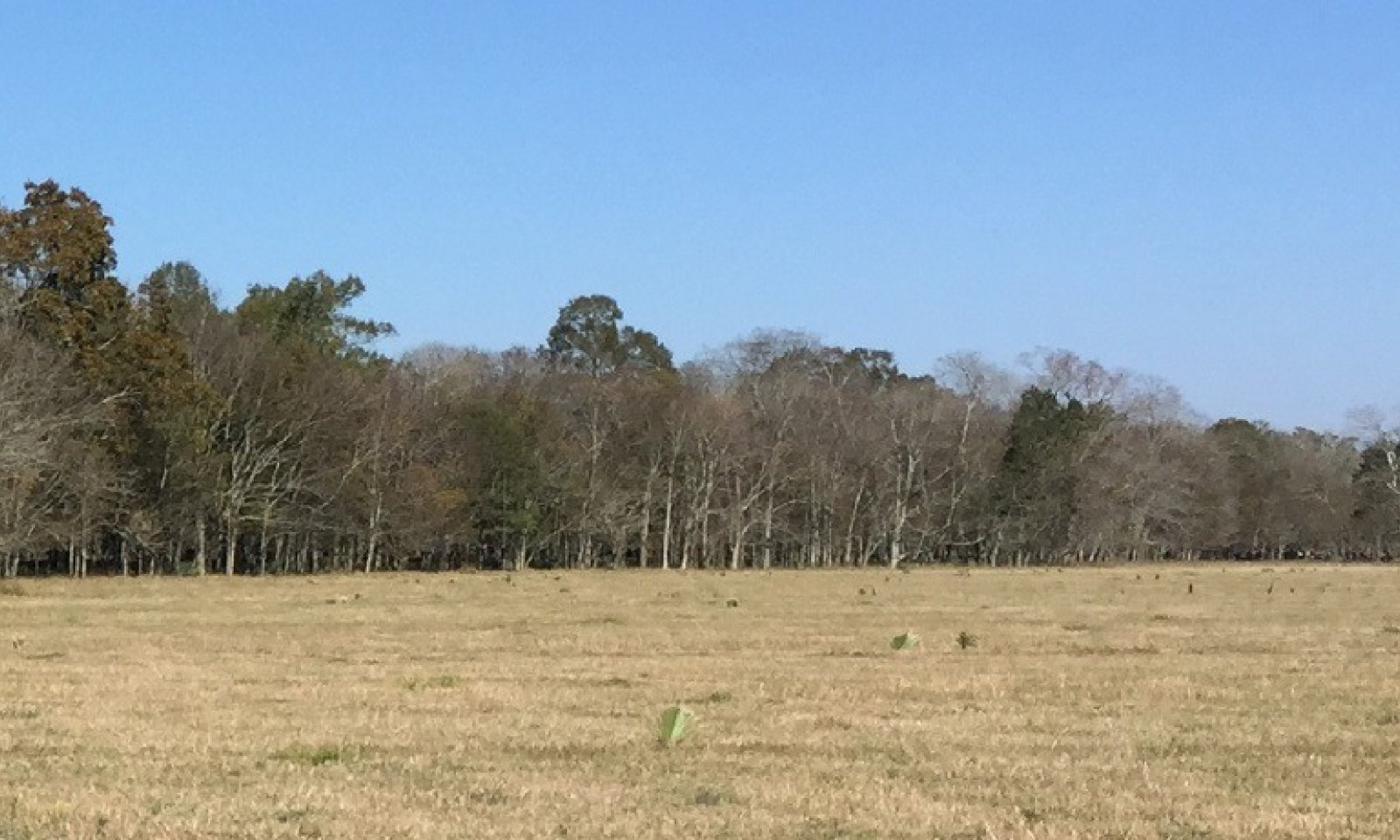
Figure 9. 131AY502-BLHBackswamp
Silver Maple, Willow, Water Oaks, Honey Locust, Green Ash, Sweetgum, Baldcypress, Palmetto, Poison ivy
State 2
Canopy Gap or OpeningForest Canopy opening created by potentially several ways that allows the understory community to receive adequate sunlight. This State will have a continuum from sparse herbaceous due to recent opening occurring to regeneration of Woody species with dense herbaceous species to the stage where the woody regeneration overtops the herbaceous and begins to shade them out. This continuum of colonization can be delineated as multiple phases depending on needs, and succession can be set back along the continuum.
Community 2.1
Wind or Water Throws of Trees (Food Plot)Some of the potential mechanisms to create Canopy Gaps in a forest community are water and/or wind from a storm or catastrophic event. The furthest southern reach of the site near the gulf can be affected by both forces simultaneously during a Tropical Storm or Hurricane. The northern extent of the site may be affected by similar forces as well as by River flood events. Anthropogenic forces that could cause similar state conditions may be from the creation of food plots in managed hunting locations. Food plots may function similarly to Cropland or Pasture states depending on how they are managed, but initially they may be similar to this state. The transition of food plots due to size and proximity to the natural community they will not transition similarly to agricultural production fields due to seed source. If an opening is large enough or adjacent seed sources are not present they will progress through succession similar to agriculture fields.
State 3
New River Run & FloodplainCatastrophic river change in channel (AVULSION)
When the river changes courses from potentially multiple factors this site will be affected in many ways. This site may become the location of the new channel when the river re-occupies and older course or that of another river. Conversely when the river changes course and abandons previous backswamps the site may loose sediment and water inputs and become drier other than in extreme events. This State has potentially multiple phases as great as all of the other states of the Ecological Sites in the sub region.Community 3.1
Catastrophic river change in channel (AVULSION)State 4
Converted State - CroplandThis site is generally considered not suited for crop production due to flooding and wetness. When the site hydrology has been altered mechanically by the construction of levees, water control structures, and potentially pumps, crop species may be established and the site utilized for production. Maintenance of the hydrologic control must be continued to maintain production and if control is abandoned or lost, site conditions may return to excessively wet conditions which will prevent utilization of the land for crop production. Conditions even with control may only allow production on an irregular basis.
This state represents a crop production field. Annual plantings for forage production would also be included in this phase, which may include cool season annual grasses and legumes and warm season forage species. Vegetable crops are grown on this site and are generally on a small scale. Sugarcane, Corn, and Soybeans are dominant crops and can be planted in fields with adequate management. Wheat may be included in the rotation or as a standalone crop. Other row crop species have been produced on these sites. Often two or more crops will be grown in a multiyear rotation, this breaks pest cycles and some crops produce higher amounts of residue, which is left on the soil to improve soil health. Maintenance of monoculture crop stands also requires the control of unwanted species, which will require Pest Management and Nutrient Management to maintain the needed fertility for production of the desired species. Refer to E-Field Office Technical Guide and the local NRCS Field Office for management assistance.Dominant resource concerns
-
Sheet and rill erosion
-
Ephemeral gully erosion
-
Classic gully erosion
-
Bank erosion from streams, shorelines, or water conveyance channels
-
Subsidence
-
Compaction
-
Organic matter depletion
-
Aggregate instability
-
Nutrients transported to surface water
-
Nutrients transported to ground water
-
Pesticides transported to surface water
-
Pesticides transported to ground water
-
Plant productivity and health
-
Plant pest pressure
-
Energy efficiency of farming/ranching practices and field operations
Community 4.1
Conservation ManagementThis cropland phase utilizes long term continuous conservation management systems including reduced till and cover crops, no-till with cover crops, and perennial cropping systems. Indicators of these systems take place in the soil and impacts how it functions, the state change can only be quantified using soil health indicator tests. The above-ground Crop growth is not the best tracking mechanism for this phase. Implementation of tillage even after long term no-till will reset the system back to conventional cropping systems, however returning to a conservation management system is achievable. There are instances where due to climatic conditions in a given crop year, tillage may be considered and/or needed to repair previous damage. These instances should be considered critically prior to implementing tillage if the desired outcome is aesthetics opposed to production.
Critical conservation practices associated with this phase include Cover Crops, No-Till, and Reduced Till as the bedrock practices. There could also be associated supporting and site-specific practices that are needed to address specific conservation needs in a given management unit.Community 4.2
Transitional Conservation ManagementThis cropland phase is a common scenario and could be in a continuous ‘transitional’ phase of conservation management state forever. Getting past years 1-2 will reduce the need to apply pesticides that call for bare soil for activation. Sugarcane is the most common perennial crop that would be a continuous transitional phase where intense tillage is implemented at the time of planting and then reduced tillage during the rotation. Planted forage crops could also be included in this phase when part of a crop rotation, as well as when part of a rotation where reduced tillage is implemented for one crop and then tillage is utilized for another crop in the rotation.
Conservation Practices are included with this phase and include Nutrient Management, Pest Management, Reduced Till, Strip Till and the inclusion of Cover Crops. There could also be associated supporting and site-specific practices that are needed to address specific conservation needs in a given management unit.Dominant resource concerns
-
Sheet and rill erosion
-
Ephemeral gully erosion
-
Classic gully erosion
-
Subsidence
-
Compaction
-
Organic matter depletion
Community 4.3
Conventional ManagementThis Cropland phase is typical conventional cropland where tillage is implemented as an annual part of the production system. When conventional annual tillage is part of the production system Sugarcane is placed with conventional annual cropping. This system is productive and will require the utilization of conservation practices such as Nutrient and Pest Management to address fertility needs and pest concerns within the crop production cycle. This phase may occur when tillage is implemented to address damage due to climatic conditions during a previous crop cycle in a conservation management system and the intention is to return to the conservation management system.
There could also be associated, supporting, and site-specific practices that are needed to address specific conservation needs in a given management unit. Specific needs may include grade stabilization structures to control gully erosion, grassed waterways to trap sediment from sheet and rill erosion, or Reduced Till.Dominant resource concerns
-
Sheet and rill erosion
-
Ephemeral gully erosion
-
Classic gully erosion
-
Subsidence
-
Compaction
-
Organic matter depletion
-
Sediment transported to surface water
Pathway 4.1A
Community 4.1 to 4.2Soil disturbance (Tillage) which reduces Soil Health.
Pathway 4.1B
Community 4.1 to 4.3Conventional tillage, seeding, and fertility Management for crops.
Pathway 4.2A
Community 4.2 to 4.1No-till, Cover crops, Reduced Till - Soil Health Improvements
Pathway 4.2B
Community 4.2 to 4.3Conventional tillage, seeding, and fertility Management for crops.
Pathway 4.3A
Community 4.3 to 4.2No-till, Cover crops, Reduced Till with Soil Health Improvements as a goal.
State 5
Converted State - Pasture or GrasslandThis site is generally considered not suited for grazing due to flooding and wetness. When the site hydrology has been altered mechanically by the construction of ditches, levees, water control structures, and potentially pumps, forage species may be established and the site utilized for grazing. Maintenance of the hydrologic control must be continued to maintain production and if control is abandoned or lost, site conditions may return to excessively wet conditions which will prevent utilization of the land for forage production. Conditions even with control may only allow forage production on an irregular basis. Additionally, adjacent higher elevation areas or protected areas may be needed for the storage of harvested forage or holding of livestock when wet or flooded conditions occur. Some forage operations on this site may experience none to multiple extreme wetness events in a single year that will require preplanning and resources to meet the needs of the livestock.
This state is characterized by a monoculture or a mixture of forage species planted or allowed to establish from naturalized species managed for forage production or as herbaceous ground cover.
This Site fits Pasture & Hayland Groups: 1A and 1B
Deep, poorly drained, bottomland soils with mostly clayey or loamy surface layers, having high or medium natural fertility and are subject to damaging overflows. Flooding is occasional to frequent with very brief to very long duration. It has a range of limitations that could include wetness, trafficability, high water tables, and soils saturation during the growing season.
Most soils need nitrogen fertilization for higher levels of production when grasses are grown alone. It is not practical to apply high rates of fertilizer due to the wetness limitation potential of the site which normally occurs from December through June. To prevent extreme acidity in the subsoil when high rates of acidifying nitrogen is used, the surface soil should not be allowed to become more acid than 5.0 pH and lime should be applied at more frequent intervals.
Adapted Grasses and Legumes
Hybrid bermudagrass, common bermudagrass, dallisgrass, bahiagrass, and johnsongrass are the better adapted warm-season perennials. White clover, vetch, winter peas, and red clover are adapted cool-season legumes. Periodic brush control is needed to prevent the area from reverting to woodland.Dominant resource concerns
-
Ephemeral gully erosion
-
Classic gully erosion
-
Compaction
-
Organic matter depletion
-
Aggregate instability
-
Ponding and flooding
-
Seasonal high water table
-
Objectionable odors
-
Plant productivity and health
-
Plant structure and composition
-
Plant pest pressure
-
Feed and forage imbalance
-
Inadequate livestock shelter
-
Inadequate livestock water quantity, quality, and distribution
Community 5.1
Managed monoculture grasslandTypically, this phase is characterized by planting forage species for hay production. Forage plantings generally consist of a single grass species. Introduced native and/or non-native forage species can be seeded. Forage is usually harvested as hay or haylage, although grazing may occur periodically. These sites are highly productive for forage and can provide ecological benefits to control soil erosion. Allowing for adequate rest and regrowth of desired species is required to maintain productivity. Maintenance of monoculture stands also requires control of unwanted species which will require Pest Management and Nutrient Management to maintain the needed fertility for the production of the species.
Generally, application of fertilizer and lime, is needed to establish and maintain improved desirable pastures. The exception to this is for bahiagrass and common bermudagrass can be sustained under natural fertility and pH levels. Introduced legumes require higher pH, phosphorus, and potassium levels than most grasses. Introduced grasses, such as hybrid bermudagrass, require a higher level of sustained fertility, maintain pH above 6.0, and good surface drainage, to persist. Implementation of prescribed grazing of grass species with a specific goal of growing roots deeper in the soil profile, in order to tap into the reservoir of available nutrients and moisture, to increase production and sustain desirable forages.
Conservation practices should include Prescribed Grazing, or Forage Harvest Management, Nutrient and Pest Management, and other site-specific facilitating practices.Dominant plant species
-
Bermudagrass (Cynodon dactylon), grass
-
bahiagrass (Paspalum notatum), grass
-
dallisgrass (Paspalum dilatatum), grass
Dominant resource concerns
-
Ephemeral gully erosion
-
Classic gully erosion
-
Compaction
-
Organic matter depletion
-
Ponding and flooding
-
Plant productivity and health
-
Plant structure and composition
-
Feed and forage imbalance
-
Inadequate livestock water quantity, quality, and distribution
Figure 10. Annual production by plant type (representative values) or group (midpoint values)
Table 6. Annual production by plant type
Plant type Low
(lb/acre)Representative value
(lb/acre)High
(lb/acre)Grass/Grasslike 2000 5000 8000 Total 2000 5000 8000 Figure 11. Plant community growth curve (percent production by month). LA0006 , Common Bermudagrass. Common Bermudagrass.
Jan Feb Mar Apr May Jun Jul Aug Sep Oct Nov Dec J F M A M J J A S O N D 3 15 32 31 12 5 2 Community 5.2
Mixed Species Managed System
Figure 12. 131AY502 - Mixed Species Managed Pasture
This community is characterized by mixed species composition of grasses and legumes, which is planted or naturally establishes. Typically, perennial warm-season grasses are the foundation of the stand which is periodically overseeded with adapted cool-season forages to extend the grazing season. This community phase can be highly productive for grazing and haying operations and can provide beneficial habitat for some wildlife species.
Maintenance of grass stands also requires a collection of management practices such as Prescribed Grazing, Brush Management, Pest Management, and Nutrient Management to maintain production of the desired species. Prescribed Grazing includes maintaining proper grazing heights, timing, and stocking rates. Supporting or Facilitating practices including fences, water lines and watering facilities could be part of the system that maintains this phase.Dominant resource concerns
-
Ephemeral gully erosion
-
Classic gully erosion
-
Compaction
-
Ponding and flooding
-
Seasonal high water table
-
Plant productivity and health
-
Plant pest pressure
-
Feed and forage imbalance
-
Inadequate livestock shelter
-
Inadequate livestock water quantity, quality, and distribution
Community 5.3
Mixed Species, Non-seededThis community is characterized by a stand where mixtures of native and naturalized non-native species occur, this could also include abandonment of cropping i.e., idle cropland that is not being utilized for forage production. This state represents low inputs after cropping, no initial seeding of pasture species, or periodic overseeding of adapted forage species. Forage is usually grazed and/or harvested as stored forage, hay or haylage. Common established species may include Bermudagrass, Bahiagrass, Vasey grass, and carpet grass. This state is productive, forage and grazing management can maintain forage stands and protect soils from excessive runoff and erosion. A common peril associated with this phase is overgrazing which favors less productive and less palatable weedy species, especially in areas where livestock congregate. Proper stocking rates and/or grazing systems that allow for adequate rest and plant regrowth are required to maintain productivity.
When forage species are afforded adequate recovery time between grazing intervals, they will develop deeper root systems and greater leaf area allowing for the capture of greater solar energy, where photosynthesis fixes carbohydrates for plant growth. Conversely, when plants are not allowed to recover adequately, root development will be restricted, forage and biomass production will be reduced. Maintenance of grass stands also requires Pest Management for control of unwanted weedy and woody species.Dominant resource concerns
-
Ephemeral gully erosion
-
Classic gully erosion
-
Compaction
-
Organic matter depletion
-
Ponding and flooding
-
Objectionable odors
-
Plant productivity and health
-
Plant structure and composition
-
Plant pest pressure
-
Feed and forage imbalance
-
Inadequate livestock shelter
-
Inadequate livestock water quantity, quality, and distribution
Community 5.4
Early Woody SuccessionThis community is characterized by a diverse species composition of grasses and forbs with an increasing composition of woody species (native and non-native) that are immature and low stature. If this community phase is not managed, and no brush management measures are taken, the plant community will transition to the Woodland encroached State (6). Control of woody species will require the input of extensive resources to return to a Grassland or Cropland state. This phase is generally limited in woody species composition and size to the point where normal agricultural equipment is no longer able to return the site to a cropland phase by mowing or disking. When the threshold is crossed to where the stem diameter exceeds 2 - 3 inches and the percent cover exceeds 100 - 300 stems per acre, the site has transitioned to the Woody Encroached State.
If the restored hardwood community is desired, proper management is required. This phase can be beneficial habitat for some wildlife species. Woody invasive species grow quickly and can be difficult and expensive to control. Some Invasive woody species, such as tallow trees (Triadica sebifera), will invade and grow to produce seeds in as few as 3 years.Pathway 5.1A
Community 5.1 to 5.2Seeding and/or Management for desired species composition
Pathway 5.1B
Community 5.1 to 5.3Species Management without overseeding.
Pathway 5.2A
Community 5.2 to 5.1Seeding, fertilizing, management/ removal of unwanted species
Pathway 5.2B
Community 5.2 to 5.3Species Management without overseeding.
Pathway 5.3A
Community 5.3 to 5.1Seeding, fertilizing, management/ removal of unwanted species
Pathway 5.3B
Community 5.3 to 5.2Seeding and/or Management for desired species composition
Pathway 5.3C
Community 5.3 to 5.4Lack of disturbance: No or minimal Mowing, burning, herbivory or Brush Mgmt. and/or Plant or natural regeneration of woody species.
Pathway 5.4A
Community 5.4 to 5.3Brush mgmt./ removal of unwanted plants
State 6
Woody EncroachedCommunity 6.1
Old field or planted hardwoodsThis phase occurs when cropland or pastureland has been allowed to naturally regenerate without succession manipulation and also when Artificial regeneration is planned to re-introduce hardwoods to the site. This state will have succession similar to the Canopy gap state of the historic community however species composition may be very different depending on the available seed source. When this occurs from a cropland or pasture state species composition may be dominated by introduced species but desired hardwood species can be established to regenerate the state to that desired community.
State 7
Conservation areasCommunity 7.1
Restored Bottomland Hardwood CommunityThis phase occurs when cropland or pastureland has been regenerated to re-introduce hardwoods to the site. This state will have succession similar to the Canopy gap state of the historic community where the hardwood canopy has begun to shade herbaceous competition. Species composition may be very different depending on the local available seed source and species that are planted. Desired hardwood species can be established to reach the community that fits the site conditions.
This phase is characterized by a stand of Hardwood species planted or allowed to regenerate from seed trees managed for wood production, conservation or restoration.
This Site fits into multiple Woodland Suitability Groups (2w6 or 1w6, 3w6, 5c0) depending on the soil Mapunit. . The first part of the symbol indicates potential productivity of the soils for important trees, very high (1); high (2); moderate high (3); and low (5). The second part, a letter, indicates the major kind of soil limitation, no serious management problems (o), limitation of excessive water in or on the soil (w) and clay in the upper part of the soil (c). The third part of the symbol, a numeral, indicates the kind of trees for which the soils are best suited and the severity of the hazard or limitation. The numeral 6 indicates severe limitations, and suitability for broadleaf trees and 0 indicates Non-productive.
These groups would generally describe this site as having a range of productivity from high to non, with slight to severe limitations for wetness for the production of broadleaf species.
WS 2w6 Wet, Clayey soils with high potential productivity, severe equipment limitations and moderate seedling mortality due primarily to excess water; Site index for green ash 80, cottonwood 100, oaks and sweetgum 90. Grazing not recommended. Potential is high for deer, ducks, squirrels and moderately high for turkey.
WS 1w6 Wet, loamy soils with very high potential productivity; severe equipment limitations and moderate seedling mortality due to primarily to excess water; best suited for southern hardwoods. Site index for green ash 80-90, cottonwood 100-110, oaks and sweetgum 100. Grazing not recommended. Potential is high for management of deer, ducks, squirrels and turkey.
WS 5c0 Non-productive poorly drained clay soils.Transition T1A
State 1 to 2Wind or water Force causing canopy gaps.
Key drivers
-
Precipitation event
-
Mechanical soil disturbance
Key ecosystem services affected
-
Climate regulation: carbon cycling and storage
-
Wildlife habitat
-
Soil formation
-
Plant biodiversity
Transition T*-3
State 1 to 3Catastrophic event river change in channel location to new run.
Key drivers
-
Precipitation (monthly scale)
-
Precipitation (decadal scale)
-
Precipitation event
-
Precipitation (annual scale)
Key ecosystem services affected
-
Cultural heritage values
-
Water regulation
-
Fresh water
-
Storm protection
-
Plant biodiversity
Transition T1B
State 1 to 4Clear and established the desired Community
Conservation practices
Clearing and Snagging Land Clearing Land Smoothing Key drivers
-
Livestock grazing or browsing
-
Mechanical soil disturbance
-
Nonnative plant species presence and/or establishment
-
Seeding
Key ecosystem services affected
-
Water purification and waste treatment
-
Aesthetic values
-
Nutrient cycling
-
Recreation
-
Primary production
-
Food and fiber: livestock forage
-
Food and fiber: wood products
-
Air quality maintenance
-
Water regulation
-
Wildlife habitat
-
Soil formation
-
Animal biodiversity
-
Plant biodiversity
Transition T1B
State 1 to 5Clear and established the desired Community
Conservation practices
Clearing and Snagging Land Clearing Land Smoothing Key drivers
-
Livestock grazing or browsing
-
Mechanical soil disturbance
-
Nonnative plant species presence and/or establishment
-
Seeding
Key ecosystem services affected
-
Water purification and waste treatment
-
Aesthetic values
-
Nutrient cycling
-
Recreation
-
Primary production
-
Food and fiber: livestock forage
-
Food and fiber: wood products
-
Air quality maintenance
-
Water regulation
-
Wildlife habitat
-
Soil formation
-
Animal biodiversity
-
Plant biodiversity
Transition T2A
State 2 to 1Regeneration of Hardwood species.
Transition T*-3
State 2 to 3Catastrophic event river change in channel location to new run.
Key drivers
-
Precipitation (monthly scale)
-
Precipitation (decadal scale)
-
Precipitation event
-
Precipitation (annual scale)
Key ecosystem services affected
-
Cultural heritage values
-
Water regulation
-
Fresh water
-
Storm protection
-
Plant biodiversity
Transition T*-5
State 4 to 5Establish desired forage species and manage for grazing.
Conservation practices
Bedding Fence Forage Harvest Management Forage and Biomass Planting Livestock Pipeline Prescribed Grazing Grazing Land Mechanical Treatment Heavy Use Area Protection Nutrient Management Watering Facility Water Well Key drivers
-
Livestock grazing or browsing
-
Seed dispersal by livestock
-
Seeding
Key ecosystem services affected
-
Erosion control
-
Nutrient cycling
-
Primary production
-
Food and fiber: livestock forage
-
Water regulation
-
Wildlife habitat
-
Soil formation
-
Animal biodiversity
-
Plant biodiversity
Transition T*-6
State 4 to 6Plant or natural regeneration of woody species.
Conservation practices
Tree/Shrub Site Preparation Tree/Shrub Establishment Forest Stand Improvement Key drivers
-
Wildlife grazing or browsing
-
Climate
-
Seeding
Key ecosystem services affected
-
Erosion control
-
Water purification and waste treatment
-
Pollination
-
Aesthetic values
-
Recreation
-
Primary production
-
Food and fiber: livestock forage
-
Food and fiber: wood products
-
Water regulation
-
Wildlife habitat
-
Plant biodiversity
Transition T*-4
State 5 to 4Establish and manage crop rotation.
Conservation practices
Conservation Crop Rotation Grade Stabilization Structure Nutrient Management Integrated Pest Management (IPM) Key drivers
-
Nonnative plant species presence and/or establishment
-
Seeding
Key ecosystem services affected
-
Erosion control
-
Fuel
-
Nutrient cycling
-
Primary production
-
Food and fiber: livestock forage
-
Water regulation
-
Wildlife habitat
-
Soil formation
-
Animal biodiversity
-
Plant biodiversity
Transition T*-6
State 5 to 6Plant or natural regeneration of woody species.
Conservation practices
Tree/Shrub Site Preparation Tree/Shrub Establishment Forest Stand Improvement Key drivers
-
Wildlife grazing or browsing
-
Climate
-
Seeding
Key ecosystem services affected
-
Erosion control
-
Water purification and waste treatment
-
Pollination
-
Aesthetic values
-
Recreation
-
Primary production
-
Food and fiber: livestock forage
-
Food and fiber: wood products
-
Water regulation
-
Wildlife habitat
-
Plant biodiversity
Transition T6A
State 6 to 5Heavy Brush Management.
Conservation practices
Bedding Fence Forage Harvest Management Forage and Biomass Planting Livestock Pipeline Prescribed Grazing Grazing Land Mechanical Treatment Heavy Use Area Protection Nutrient Management Watering Facility Water Well Key drivers
-
Livestock grazing or browsing
-
Seed dispersal by livestock
-
Seeding
Key ecosystem services affected
-
Erosion control
-
Nutrient cycling
-
Primary production
-
Food and fiber: livestock forage
-
Water regulation
-
Wildlife habitat
-
Soil formation
-
Animal biodiversity
-
Plant biodiversity
Transition T6B
State 6 to 7Manage succession for historic community.
Conservation practices
Forest Stand Improvement Key drivers
-
Precipitation (annual scale)
-
Temperature (annual scale)
-
Seeding
Key ecosystem services affected
-
Erosion control
-
Water purification and waste treatment
-
Pollination
-
Aesthetic values
-
Recreation
-
Food and fiber: wood products
-
Air quality maintenance
-
Water regulation
-
Climate regulation: carbon cycling and storage
-
Wildlife habitat
-
Plant biodiversity
Additional community tables
Table 7. Community 1.1 plant community composition
Group Common name Symbol Scientific name Annual production () Foliar cover (%) Table 8. Community 2.1 plant community composition
Group Common name Symbol Scientific name Annual production () Foliar cover (%) Table 9. Community 3.1 plant community composition
Group Common name Symbol Scientific name Annual production () Foliar cover (%) Table 10. Community 4.1 plant community composition
Group Common name Symbol Scientific name Annual production () Foliar cover (%) Table 11. Community 4.2 plant community composition
Group Common name Symbol Scientific name Annual production () Foliar cover (%) Table 12. Community 4.3 plant community composition
Group Common name Symbol Scientific name Annual production () Foliar cover (%) Table 13. Community 5.1 plant community composition
Group Common name Symbol Scientific name Annual production () Foliar cover (%) Grass/Grasslike1 Warm Season Grasses 2000–8000 Bermudagrass CYDA Cynodon dactylon 2000–8000 – Table 14. Community 5.2 plant community composition
Group Common name Symbol Scientific name Annual production () Foliar cover (%) Table 15. Community 5.3 plant community composition
Group Common name Symbol Scientific name Annual production () Foliar cover (%) Table 16. Community 5.4 plant community composition
Group Common name Symbol Scientific name Annual production () Foliar cover (%) Table 17. Community 6.1 plant community composition
Group Common name Symbol Scientific name Annual production () Foliar cover (%) Table 18. Community 7.1 plant community composition
Group Common name Symbol Scientific name Annual production () Foliar cover (%) Interpretations
Animal community
.
Hydrological functions
.
Recreational uses
.
Wood products
.
Other products
.
Other information
.
Supporting information
Inventory data references
The information provided on the states and community phases in this provisional description report were generated from literature reviews, conversations with technical specialists, and limited personal observations and experience on this soil-site environment. Intensive vegetation inventories were not conducted during the development of this provisional report. Those tasks will occur during future phases of ecological site development.
Other references
Aslan, A. and W.J. Autin. 1999. Evolution of the Holocene Mississippi River floodplain, Ferriday, Louisiana: Insights on the origin of fine-grained floodplains. Journal of Sedimentary Research 69: 800-815.
Aslan, A., W. J. Autin, and M. D. Blum. 2005. Causes of river avulsion: insights from the late Holocene avulsion history of the Mississippi River, USA. Journal of Sedimentary Research, 75(4), 650-664.
Autin, W.J., S.F. Burns, B.J. Miller, R.T. Saucier, and J.I. Snead. 1991. Quaternary geology of the Lower Mississippi Valley. p. 547-582. In R.B. Morrison (Editor). Quaternary Nonglacial Geology: Conterminous U.S. Geological Society of America. The Geology of North America, Volume K-2. Boulder, CO.
Autin, W. J. 1996. Pleistocene stratigraphy in the southern Lower Mississippi Valley. Engineering Geology, 45(1), 87-112.
Blum, M.D., M.J. Guccione, D.A. Wysocki, P.C. Robnett, and E.M. Rutledge. 2000. Late Pleistocene evolution of the lower Mississippi River valley, southern Missouri to Arkansas. Geological Society of America Bulletin, 112(2), 221-235.
Broadfoot, Walter M. 1976. Hardwood suitability for and properties of important midsouth soils. Res. Pap. SO-127. New Orleans, LA: U.S. Department of Agriculture, Forest Service, Southern Forest Experiment Station. 84 p.
Brown, D. A., V. E. Nash, A. G. Caldwell, L. J. Bartelli, R. C. Carter, and O. R. Carter. 1970. A monograph of the soils of the southern Mississippi River Valley alluvium. Southern Cooperative Series Bulletin, 178, 112.
Chapman, S.S, G.E. Griffith, J.M. Omernik, J.A. Comstock, Beiser, M.C., and D. Johnson. 2004. Ecoregions of Mississippi, (color poster with map, descriptive text, summary tables, and photographs): Reston, Virginia, U.S. Geological Survey (map scale 1:1,000,000).
Cowardin, L. M., V. Carter, F. C. Golet, and E. T. LaRoe. 1979. Classification of wetlands and deepwater habitats of the United States. US Fish and Wildlife Service FWS/OBS, 79(31), 131.
Cowdrey, A. E. 1977. Land’s End: A history of the New Orleans District. US Army Corps of Engineers, and Its Lifelong Battle with the Lower Mississippi and Other Rivers Wending Their Way to the Sea.
Daigle, J.J., G.E. Griffith, J.M. Omernik, P.L. Faulkner, R.P. McCulloh, et al. 2006. Ecoregions of Louisiana (color poster with map, descriptive text, summary tables, and photographs): Reston, Virginia, U.S. Geological Survey (map scale 1:1,000,000).
Ezell, A.W. 2016. Evaluating high-graded hardwood stands. Publication-Cooperative Extension Service, Mississippi State University (USA).
Fisk, H. N. 1944. Geological investigation of the alluvial valley of the lower Mississippi River: US Dept. Army, Mississippi River Comm.
Foti, T., C. Klimas, J. Pagan, and A. Keister. 2011. Potential natural vegetation of the Mississippi Alluvial Valley: Tensas Basin, Northeastern Louisiana. U.S. Fish and Wildlife Service, Lower Mississippi Valley Joint Venture; Vicksburg, MS.
Gardiner, E. S., and J. M. Oliver. 2005. Restoration of bottomland hardwood forests in Lower Mississippi Aluvial Valey, USA. In: Stanturf, JA; Madsen, P. eds. Restoration of boreal and temperate forests. Restoration of bottomland hardwood forests in the Lower Mississippi Alluvial Valley, USA Boca Raton, FL: CRC Press. 235-251.
Grigar, J., J.L. Hatfield, and R. Reeder, 2018. Transitional no-till: What is it and how does it differ from ‘true’no-till?. Crops and Soils 51, no. 6:28–36.
Kemp, K. 2000. The Mississippi Levee System and the Old River Control Structure. Available online: http://www.tulane.edu/~bfleury/envirobio/enviroweb/FloodControl.htm. Accessed 11/2018
Klimas, C.V. 1988. Forest vegetation of the leveed floodplain of the lower Mississippi River. Lower Mississippi River Environmental Program Report 11. US Army Corps of Engineers. Vicksburg, Mississippi.
Klimas, C., J. Pagan, T. Foti, and B. Tirpak. 2011. Potential natural vegetation of the Mississippi Alluvial Valley: Yazoo Basin, Mississippi. U.S. Fish and Wildlife Service, Lower Mississippi Valley Joint Venture; Vicksburg, MS.
Lentz, G. H. 1928. Summary of First Year's Hardwood Investigations in Louisiana. US Forest Service and Louisiana Division of Forestry
Lentz, G. H. 1929. Summary of First Year's Hardwood Investigations in Louisiana. Journal of Forestry, 27(5), 486-494.
McKnight, J.S., D.D. Hook, O.G. Langdon, and R.L. Johnson. 1981. Flood tolerance and related characteristics of trees of the bottomland forests of the southern United States. In Developments in Agricultural and Managed Forest Ecology. 11, pp. 29-69. Elsevier. https://www.srs.fs.usda.gov/pubs/ja/1980/ja_1980_mcknight_001.pdf (accessed 12 Oct. 2018)
Putnam, J. A., and H. Bull. 1932. The trees of the bottomlands of the Mississippi River Delta Region. US Department of Agriculture, Forest Service, Southern Forest Experiment Station, Occasional Paper, 27, 207.
Rittenhour, T.M., M.D. Blum, and R.J. Goble. 2007. Fluvial evolution of the Lower Mississippi River Valley during the last 100 k.y. glacial cycle: Response to glaciation and sea-level change. Geological Society of America Bulletin 119(5-6): 586-608.
Rogers, D. 2005. Evolution of the levee system along the Lower Mississippi River. University of Missouri-Rolla: Rolla, MO, USA. https://web.mst.edu/~rogersda/levees/Evolution%20of%20the%20Levee%20System%20Along%20the%20Mississippi.pdf. Accessed 10/2018.
Saucier, R. T. 1974. Quaternary geology of the lower Mississippi Valley (No. 6). Arkansas Archeological Survey.
Saucier, Roger T. 1994. Geomorphology and Quaternary Geologic History of the Lower Mississippi Valley, Volumes I & II. U.S. Army Corps of Engineers, Vicksburg, MS. (Available online: http://biotech.law.lsu.edu/climate/mississippi/sausier/sausier.htm)
Schumm, S. A., and W. J. Spitz. 1996. Geological influences on the Lower Mississippi River and its alluvial valley. Engineering Geology, 45(1-4), 245-261.
Shen, Z., T.E. Tornqvist, W.J. Autin, Z.R.P. Mateo, K.M. Straub, and B. Mauz. 2012. Rapid and widespread response of the Lower Mississippi River to eustatic forcing during the last glacial-interglacial cycle. Geological Society of America Bulletin 124(5-6): 690-704.
Theriot, R. F. 1992. Flood tolerance of plant species in bottomland forests of the southeastern United States. Ph.D. diss. University of Florida. Available online: http://ufdc.ufl.edu//AA00003281/00001
Turner, S., J. Welch, and N. Musso. 2010. The Atchafalaya National Heritage Area, Selected Level 0 Cultural Landscape Assessments. Suzanne Turner Associates LLC. Available online: http://www.atchafalaya.org/ckfinder/userfiles/files/CLA-Final.pdf
Tye, R. S., and J. M. Coleman. 1989. Depositional processes and stratigraphy of fluvially dominated lacustrine deltas: Mississippi delta plain. Journal of Sedimentary Research, 59(6).
[USACE] U.S. Army Corps of Engineers. 2004. Louisiana Coastal Area Comprehensive Coastwide Ecosystem Restoration Study. U.S. Army Corps of Engineers, New Orleans, LA. Available online: https://www.lca.gov/Library/ProductList.aspx?Prodtype=0&folder=1118.
[USACE] U.S. Army Corps of Engineers New Orleans District, Missions, Mississippi River Flood Control. No date. [Online]. Retrieved June 30, 2017. Available at http://www.mvn.usace.army.mil/Missions/Mississippi-River-Flood-Control/
[USACE] U.S. Army Corps of Engineers. Atchafalaya Basin Project, Brochure, http://www.mvn.usace.army.mil/Portals/56/docs/PAO/Brochures/AtchafalayaBasinProject.PDF (accessed 12 Oct. 2018)
[USDA-NRCS] United States Department of Agriculture, Natural Resources Conservation Service. 2006. Land resource regions and major land resource areas of the United States, the Caribbean, and the Pacific Basin. US Department of Agriculture Handbook, 296.
[USDA, SCS] USDA, Soil Conservation Service. 1968. Soil Survey Interpretations for Woodland in the Southern Mississippi Valley Alluvium Area of LA MS AR TN MO and KY, Progress Report.
[USDA-NRCS] United States Department of Agriculture, Natural Resources Conservation Service. 2022. Land Resource Regions and Major Land Resource Areas of the United States, the Caribbean, and the Pacific Basin. U.S. Department of Agriculture, Agriculture Handbook 296.Contributors
D. Charles Stemmans II
Rachel StoutEvans
Brandon WaltmanApproval
Charles Stemmans, 6/10/2025
Acknowledgments
We would like to express our appreciation to the MLRA 131A Technical Team for their assistance and input in the development of this document.
Rangeland health reference sheet
Interpreting Indicators of Rangeland Health is a qualitative assessment protocol used to determine ecosystem condition based on benchmark characteristics described in the Reference Sheet. A suite of 17 (or more) indicators are typically considered in an assessment. The ecological site(s) representative of an assessment location must be known prior to applying the protocol and must be verified based on soils and climate. Current plant community cannot be used to identify the ecological site.
Author(s)/participant(s) Contact for lead author Date 09/18/2026 Approved by Approval date Composition (Indicators 10 and 12) based on Annual Production Indicators
-
Number and extent of rills:
-
Presence of water flow patterns:
-
Number and height of erosional pedestals or terracettes:
-
Bare ground from Ecological Site Description or other studies (rock, litter, lichen, moss, plant canopy are not bare ground):
-
Number of gullies and erosion associated with gullies:
-
Extent of wind scoured, blowouts and/or depositional areas:
-
Amount of litter movement (describe size and distance expected to travel):
-
Soil surface (top few mm) resistance to erosion (stability values are averages - most sites will show a range of values):
-
Soil surface structure and SOM content (include type of structure and A-horizon color and thickness):
-
Effect of community phase composition (relative proportion of different functional groups) and spatial distribution on infiltration and runoff:
-
Presence and thickness of compaction layer (usually none; describe soil profile features which may be mistaken for compaction on this site):
-
Functional/Structural Groups (list in order of descending dominance by above-ground annual-production or live foliar cover using symbols: >>, >, = to indicate much greater than, greater than, and equal to):
Dominant:
Sub-dominant:
Other:
Additional:
-
Amount of plant mortality and decadence (include which functional groups are expected to show mortality or decadence):
-
Average percent litter cover (%) and depth ( in):
-
Expected annual annual-production (this is TOTAL above-ground annual-production, not just forage annual-production):
-
Potential invasive (including noxious) species (native and non-native). List species which BOTH characterize degraded states and have the potential to become a dominant or co-dominant species on the ecological site if their future establishment and growth is not actively controlled by management interventions. Species that become dominant for only one to several years (e.g., short-term response to drought or wildfire) are not invasive plants. Note that unlike other indicators, we are describing what is NOT expected in the reference state for the ecological site:
-
Perennial plant reproductive capability:
Print Options
Sections
Font
AAAAOther
PrintThe Ecosystem Dynamics Interpretive Tool is an information system framework developed by the USDA-ARS Jornada Experimental Range, USDA Natural Resources Conservation Service, and New Mexico State University.
Accessibility statement


