
Natural Resources
Conservation Service
Ecological site R083CY004TX
Shallow Sandy Loam
Last updated: 9/19/2023
Accessed: 09/19/2026
-
Search


Major Land Resource Area or ecological site by name and/or ID.
PreviousSectionsNextGeneral information
Provisional. A provisional ecological site description has undergone quality control and quality assurance review. It contains a working state and transition model and enough information to identify the ecological site.
Click to explore map
Figure 1. Mapped extent
Areas shown in blue indicate the maximum mapped extent of this ecological site. Other ecological sites likely occur within the highlighted areas. It is also possible for this ecological site to occur outside of highlighted areas if detailed soil survey has not been completed or recently updated.
MLRA notes
Major Land Resource Area (MLRA): 083C–Central Rio Grande Plain
Major Land Resource Area (MLRA) 83C makes up about 4,275 square miles (11,075 square kilometers). The towns of Freer, George West, and Hebbronville are in this area. The town of Alice is on the east edge of the area. U.S. Highways 59 and 281 cross the area. This area is comprised of inland, dissected coastal plains.
Classification relationships
USDA-Natural Resources Conservation Service, 2006.
-Major Land Resource Area (MLRA) 83CEcological site concept
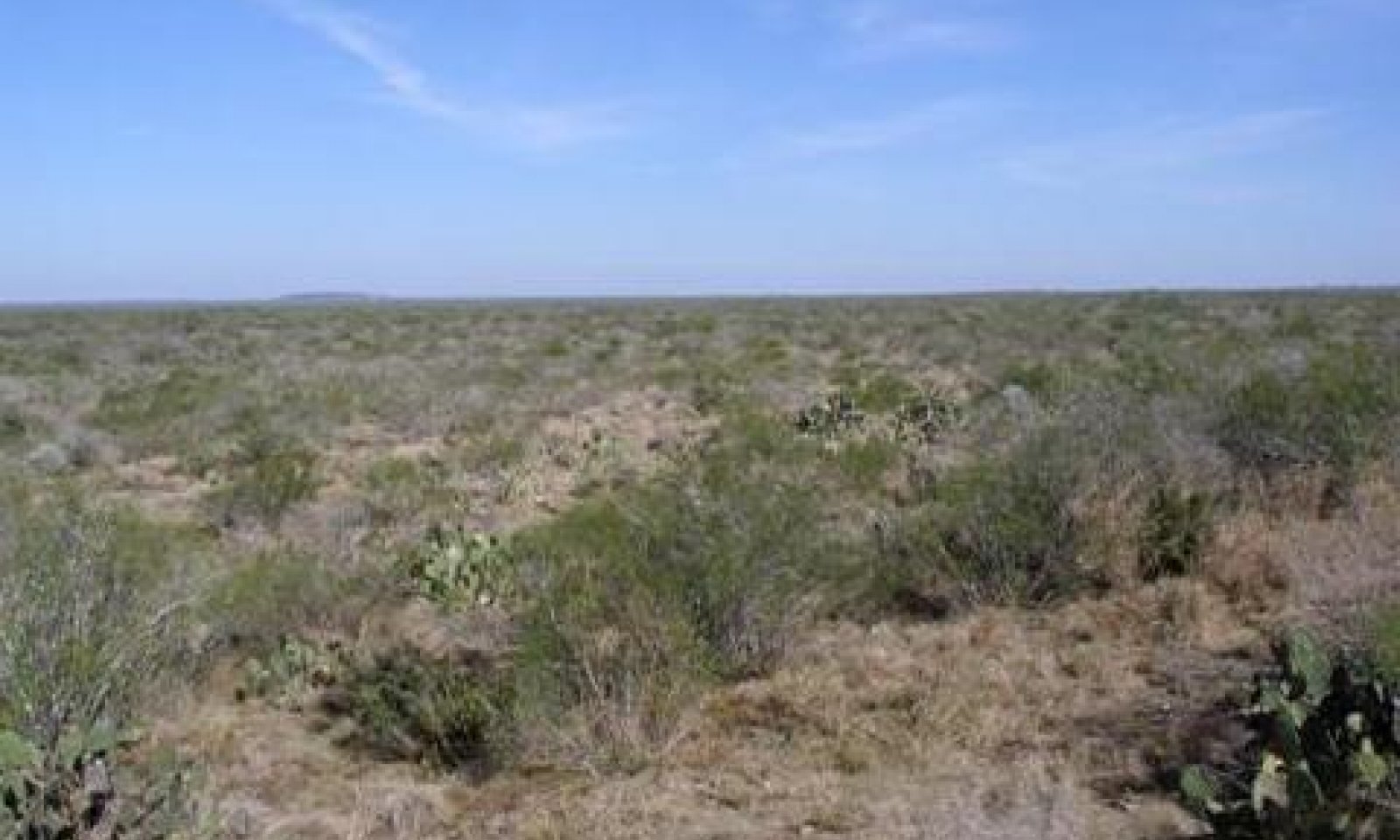
The Shallow Sandy Loam has soils that are shallow to very shallow, gently sloping, with neutral to moderate alkalinity. The reference plant community is a grassland with some woody species.
Associated sites
R083CY002TX Shallow Ridge
R083CY012TX Ramadero
R083CY023TX Sandy Loam
R083CY003TX Gravelly Ridge
R083CY007TX Lakebed
R083CY019TX Gray Sandy Loam
Similar sites
R083AY004TX Shallow Sandy Loam
R083BY004TX Shallow Sandy Loam
R083DY004TX Shallow Sandy Loam
Table 1. Dominant plant species
Tree Not specified
Shrub (1) Acacia berlandieri
(2) Acacia rigidulaHerbaceous (1) Bouteloua curtipendula
(2) Heteropogon contortusPhysiographic features
Sites are found on linear and convex ridges and interfluves on the inland, dissected Coastal Plains. Slopes are nearly level to gently sloping. Elevation ranges from 80 to 880 feet.
Table 2. Representative physiographic features
Landforms (1) Coastal plain > Ridge
(2) Coastal plain > Interfluve
Runoff class Low to very high Flooding frequency None Ponding frequency None Elevation 80 – 880 ft Slope 0 – 5 % Aspect Aspect is not a significant factor Climatic features
MLRA 83C is subtropical, subhumid on the western boundary and subtropical humid on the eastern boundary. Winters are dry and mild, and the summers are hot and humid. Tropical maritime air masses predominate throughout spring, summer, and fall. Modified polar air masses exert considerable influence during winter, creating a continental climate characterized by large variations in temperature. Peak rainfall, because of rain showers, occurs late in spring and a secondary peak occurs early in fall. Heavy thunderstorm activities increase in April, May, and June. July is hot and dry with little weather variations. Rainfall increases again in late August and September as tropical disturbances increase and become more frequent. Tropical air masses from the Gulf of Mexico dominate during the spring, summer, and fall. Prevailing winds are southerly to southeasterly throughout the year except in December when winds are predominately northerly.
Table 3 Representative climatic features
Frost-free period (characteristic range) 260-290 days Freeze-free period (characteristic range) 370 days Precipitation total (characteristic range) 20-30 in Frost-free period (actual range) 260-350 days Freeze-free period (actual range) 370 days Precipitation total (actual range) 20-30 in Frost-free period (average) 280 days Freeze-free period (average) 370 days Precipitation total (average) 30 in Characteristic rangeActual rangeBarLineFigure 2. Monthly precipitation range
Characteristic rangeActual rangeBarLineFigure 3. Monthly minimum temperature range
Characteristic rangeActual rangeBarLineFigure 4. Monthly maximum temperature range
BarLineFigure 5. Monthly average minimum and maximum temperature
Figure 6. Annual precipitation pattern
Figure 7 Annual average temperature pattern
Climate stations used
-
(1) CHOKE CANYON DAM [USC00411720], Three Rivers, TX
-
(2) FREER [USC00413341], Freer, TX
-
(3) MCCOOK [USC00415721], Edinburg, TX
-
(4) HEBBRONVILLE [USC00414058], Hebbronville, TX
-
(5) CALLIHAM [USC00411337], Calliham, TX
">Influencing water features
Water from streams or wetlands do not influence this site.
Wetland description
N/A
Soil features
The soils are shallow to very shallow, well drained with very slowly permeable to impermeable over a petrocalcic horizon. The soils formed in loamy alluvium over thick beds of caliche from Pleistocene and Pliocene ages of the Goliad Formation. The surface texture is fine sandy loam. Soil series correlated to this site include: Cuevitas, Jardin, Lacoste, Lomart, Parrita, Pettus, Piedras, and Randado.
Table 4. Representative soil features
Parent material (1) Alluvium – sedimentary rock
(2) Residuum – sedimentary rock
Surface texture (1) Fine sandy loam
(2) Loam
Family particle size (1) Loamy
(2) Coarse-loamy
(3) Loamy-skeletal
Drainage class Well drained Permeability class Very slow to moderately rapid Soil depth 8 – 20 in Surface fragment cover <=3" 0 – 5 % Surface fragment cover >3" 0 – 15 % Available water capacity
(0-40in)1 – 2 in Calcium carbonate equivalent
(0-40in)0 – 20 % Electrical conductivity
(0-40in)0 – 2 mmhos/cm Sodium adsorption ratio
(0-40in)0 – 2 Soil reaction (1:1 water)
(0-40in)6.6 – 8.4 Subsurface fragment volume <=3"
(7.9-38.2in)0 – 35 % Subsurface fragment volume >3"
(7.9-38.2in)0 – 5 % Ecological dynamics
The plant communities of this site are dynamic varying in relation to grazing and drought. The reference plant community is open grassland with scattered guajillo (Acacia berlandieri), mesquite (Prosopis glandulosa) and other woody shrubs. Mid-grasses make up about 60 percent of the composition. Substantial variation in soils may also occur within this site to affect plant composition and productivity. Cemented caliche formations are at or near the surface in some areas. Shrubs such as blackbrush (Acacia rigida) tend to dominate where caliche is near the surface.
Climatic variation and topoedaphic heterogeneity interact to influence vegetation responses to disturbances such as fire and grazing. Plants of the reference plant community evolved with and are generally well adapted to grazing and fire. Prior to European settlement, fires would likely have been frequent, between 5 and 10 years. These fires would have resulted from lightning during the hot, dry summer months or were set by Native Americans. The occurrence of fire promotes grasses while making it difficult for woody plants to achieve dominance. During the Pleistocene, there were significant populations of large-bodied grazers and browsers. Most of these went extinct, so that by the Holocene (about 10,000 years ago) only bison (Bos bison), white-tailed deer (Odocoileus virginianus), and antelope (Antilocapra americana) remained. Archeological evidence indicates that bison occurred in the region, but there is also evidence of centuries of absence. In addition, their numbers may have varied seasonally as herds migrated. When present, bison may have grazed certain areas heavily, but then moved on. Activities of other native herbivores (termites, cutter ants, soil nematodes, kangaroo rats (Dipodomys spp.)) also influenced vegetation productivity and dynamics.
Accounts of earlier explorers and settlers suggest the Rio Grande Plains was likely a mosaic of grasslands, savannahs, shrublands, and woodlands. Historical photographs suggest the nature of the vegetation structure likely varied from place-to-place depending on topography, soil properties and time since the last major disturbances (such as drought or fire). However, the occurrence of extensive grasslands and grassland fauna (antelope, for example) is mentioned in numerous historical accounts. Grasses dominating Sandy Loam uplands at the time of European settlement likely included little bluestem (Schizachyrium scoparium), false Rhodes grass (Chloris crinata), and multiflower false Rhodes grass (Chloris pluriflora), Arizona cottontop (Digitaria californica), plains bristlegrass (Setaria vulpiseta), and pink pappusgrass (Pappophorum bicolor). The composition and productivity of grass communities would have varied with annual rainfall, soil depth and the extent of argillic horizon development. Many Sandy Loam sites are now dominated by mesquite (Prosopis glandulosa), various acacias (Acacia spp.), granjeno (Celtis pallida), condalia (Condalia obovata), lime prickly ash, and prickly pear (Opuntia spp.). These woody plants are not new arrivals, but are native to the region and have increased in size and abundance within their historic ranges.
Grazing and fire are two factors that critically influence the relative abundance of grasses and woody plants through time. By the early 1800’s cattle and sheep numbers appear to have been quite high in the Rio Grande Plains, resulting in heavy, year-round grazing. The resulting reduction in abundance of late seral grasses lead to a decline in soil organic matter, a reduction in fire frequency/intensity (due to lack of fine fuels), and a shift from midgrass domination to shortgrass, like hooded windmill grass (Chloris cucullata), three-awns (Aristida spp.) and forbs, like orange zexmenia (Wedelia hispida), and croton (Croton spp.). These changes would have favored woody plants, most of which are unpalatable to livestock, and enabled them to establish and attain dominance. This would be especially true for leguminous shrubs such as mesquite, whose seeds are widely spread by livestock.
The shift from grass to woody plant domination became the impetus for brush management practices. By the 1950’s, large-scale mechanized clearing was common and by the 1970’s, aerial herbicide applications were widespread. However, by the 1980’s it was clear that brush management practices were often treating symptoms rather than underlying problems and having undesirable environmental consequences, including adverse effects on wildlife populations. Sites cleared of brush regenerated rapidly and often formed thickets that were denser and of lower diversity than the original stands. This realization, coupled with the fact that brush management treatments were typically short-lived, lead to the development of Integrated Brush Management Systems (IBMS). The IBMS approach takes a holistic, large-scale, long-term, whole-farm, ecosystem-based approach to brush management and recognizes multiple-use options for rangeland resources. Shrublands developing on former grasslands have other potential socioeconomic values that should be considered when contemplating brush management. These include alternate classes of livestock, lease hunting, deer and exotic game ranching, and ecotourism.
While shrublands have traditionally been viewed as degraded from a livestock production standpoint, it is important to recognize that they are not necessarily degraded from the ecological perspectives of primary productivity, nutrient cycling and biodiversity. The productivity of shrublands may be comparable to the grassland they replaced. In addition, shrubs modify soils and microclimate to increase levels of organic matter and nutrients in the upper four inches of the soil profile. This nutrient enrichment by shrubs can offset grazing-induced losses of soil nutrients and contribute to enhance grass production when shrub cover is reduced by natural or management-induced means. While the development of shrub communities may have adverse impacts on grasses and grassland fauna, other plants and animals may benefit. Thus, while ecosystem biodiversity certainly changes, it does not necessarily decrease with a shift from grass to woody plant domination.State and transition model
Custom diagramStandard diagram
More interactive model formats are also available. View Interactive Models
More interactive model formats are also available. View Interactive Models
Click on state and transition labels to scroll to the respective textEcosystem states
T1A - Absence of disturbance and natural regeneration over time T1B - Extensive soil disturbance followed by seeding improved forage species R2A - Reintroduction of historic disturbance return intervals T2A - Extensive soil disturbance followed by seeding improved forage species T3A - Absence of disturbance and natural regeneration over time, coupled with excessive grazing pressure State 1 submodel, plant communities
State 2 submodel, plant communities
State 3 submodel, plant communities
State 1
GrasslandDominant plant species
-
guajillo (Acacia berlandieri), shrub
-
blackbrush acacia (Acacia rigidula), shrub
-
sideoats grama (Bouteloua curtipendula), grass
Community 1.1
Midgrass DominantThe dominant grasses for this site are sideoats grama, little bluestem, feather bluestem, bristlegrass species, and Arizona cottontop. Arizona cottontop and plains bristlegrass are the more opportunistic species on this site. Silver bluestem is prevalent in the eastern portion of the region, with tanglehead and Arizona cottontop becoming more abundant in the drier western region. Guajillo is the most common woody shrub, but others include mesquite and various acacias. These would be small and obscured by grasses. Fire did not play as important a role on this site as in deeper more productive sites due to lower production of grasses to burn. More than likely, fire occurred after a year of good rainfall followed by a dry season.
Figure 8. Annual production by plant type (representative values) or group (midpoint values)
Table 5. Annual production by plant type
Plant type Low
(lb/acre)Representative value
(lb/acre)High
(lb/acre)Grass/Grasslike 950 1900 2900 Forb 150 300 500 Shrub/Vine 100 200 300 Tree 0 0 0 Total 1200 2400 3700 Figure 9. Plant community growth curve (percent production by month). TX5125 , Midgrass Grassland Community. Warm-season production from grass, forbs, and woody species..
Jan Feb Mar Apr May Jun Jul Aug Sep Oct Nov Dec J F M A M J J A S O N D 1 1 5 15 20 20 5 5 10 10 5 3 Community 1.2
Shortgrass DominantThis phase (1.2) of the Grassland State still exhibits a grassland plant structure with a shift to weaker, less palatable shortgrasses. Heavy continuous grazing removes many of the midgrasses from the community. Annual and perennial forbs are more common as weaker plants give way to more bare ground. With continued grazing pressure, increaser grasses become more common across the site. Plant production becomes more erratic. Drought interacts with grazing to trigger mid-to-shortgrass transitions. Termite activity often increases during low rainfall periods to further decrease production and ground cover.
The shortgrass and forb communities are less productive than the midgrass communities they replace. Reductions in above-ground cover and root biomass make this community more prone to runoff, erosion, and prolong the effects of drought. A reduction in ground cover leads to higher soil temperatures that, in conjunction with the reduction of leaf and root biomass inputs, can cause declines in soil organic matter. This reduces soil water holding capacity and fertility that further affects species composition and production. Fire frequency and intensity in this community is low because of low fine fuel load and continuity. As a result, woody plants are free to increase in size, density, and total cover.
When removing grazing pressure, midgrasses can regain dominance on the site and undesirable trends in soil organic matter, fertility, temperature, and erosion can be arrested and reversed. However, this process is very difficult to predict. Restoration of fine fuel biomass and continuity enable use of prescribed fire to reduce the stature and cover of established woody plants. The extent to which the original midgrass community can be re-established will depend on the extent to which soil physical and chemical properties were altered during retrogression.Figure 10. Annual production by plant type (representative values) or group (midpoint values)
Table 6. Annual production by plant type
Plant type Low
(lb/acre)Representative value
(lb/acre)High
(lb/acre)Grass/Grasslike 500 875 1525 Forb 40 275 400 Shrub/Vine 50 235 260 Tree 5 15 15 Total 595 1400 2200 Figure 11. Plant community growth curve (percent production by month). TX5128 , Shortgrass Dominant Community. Shortgrass dominates the site with decreasing midgrasses and increasing shrubs..
Jan Feb Mar Apr May Jun Jul Aug Sep Oct Nov Dec J F M A M J J A S O N D 1 1 5 15 20 21 5 5 10 10 5 2 Community 1.3
Mixed-grass SavannahIn the absence of fire, savannahs with 5 to 20 percent woody cover develop from the shortgrass community. Guajillo, blackbrush, and leatherstem are some of the woody shrubs that increase. Mesquite can establish in a matrix of competitive, late seral grasses, but establishment and growth rates will be greater on retrogressed and grazed sites. As established woody plants develop, they modify soils and microclimate to facilitate establishment of other shrubs such as brasil, lime prickly ash and algerita (Berberis trifoliolata). Discrete mixed-brush clusters begin to develop in the grassy matrix, giving the landscape a parkland appearance. However, woody plants in this state are not of sufficient size, leaf area or density to affect herbaceous plants. Ground cover remains mid or shortgrass dominated, depending on grazing pressure.
Figure 12. Annual production by plant type (representative values) or group (midpoint values)
Table 7. Annual production by plant type
Plant type Low
(lb/acre)Representative value
(lb/acre)High
(lb/acre)Grass/Grasslike 460 750 1450 Forb 40 250 330 Shrub/Vine 85 280 300 Tree 10 20 20 Total 595 1300 2100 Figure 13. Plant community growth curve (percent production by month). TX5129 , Mixed-grass Dominant Community. Declining mid and shortgrasses with increasing shrubs..
Jan Feb Mar Apr May Jun Jul Aug Sep Oct Nov Dec J F M A M J J A S O N D 1 1 5 15 20 21 5 5 10 10 5 2 Pathway 1.1A
Community 1.1 to 1.2A shift to the Shortgrass Dominant Community occurs if the Midgrass Dominant Community is weakened by excessive leaf removal. Drought hastens the process. A reduction in midgrass also corresponds in a reduction of fuel loading needed for fire to effectively suppress woody species.
Pathway 1.2A
Community 1.2 to 1.1This plant community can still be managed back to the Midgrass Dominant Community (1.1). Prescribed Grazing will be essential to reverse the trend toward the Mixed-grass Savannah (1.3). Prescribed Grazing will give the midgrasses a chance to restore vigor and compete. In years when rainfall provides extra grass fuel, burns can be used to suppress the brush.
Pathway 1.2B
Community 1.2 to 1.3If heavy continuous grazing continues, the plant community will transition to a Midgrass Savannah Community (1.3) with a woody canopy of 5 to 20 percent.
Pathway 1.3A
Community 1.3 to 1.2Conversion of these savannahs to grassland can be achieved with prescribed burning (individual plant treatments could be considered, but woody cover is too low to warrant conventional large-scale chemical or mechanical brush management). Conversion of shortgrass savannah to midgrass dominated grassland requires long-term relaxation of grazing pressure in conjunction with prescribed burning when the opportunity for adequate grass fuel exists.
State 2
ShrublandDominant plant species
-
blackbrush acacia (Acacia rigidula), shrub
-
acacia (Acacia), shrub
Community 2.1
Shrubland Complex
Figure 14. 2.1 Shrubland Complex
Lack of fire and continued heavy grazing causes a shift from the Grassland State with 0 to 20 percent cover to shrublands with 20 to 50 percent cover. The transition may be abrupt, triggered by losses of grass cover during drought and rapid establishment and growth of woody plants in post-drought periods. As the density, height and canopy area of mesquite, guajillo, and acacia are maximized, understory shrubs such as brasil, lime prickly ash, spiny hackberry, and blackbrush continue to grow and become co-dominant. This community develops a pronounced parkland appearance with scattered shrub clusters. Herbaceous composition and production in zones between shrub clusters depends on grazing history and is comparable the reference community. However, extensive bare ground occurs beneath shrub canopies where herbaceous production is dramatically reduced due to shading and competition for water and nutrients by shallow-rooted woody plants.
At this point, prescribed grazing alone will not restore this community back to the Grassland State (1). During the growing season, light showers are captured in the canopy of the shrubs and evaporate. Energy flow and nutrients are predominately used by the shrubs. Cool-season annual forbs and grasses are produced by fall and winter rains. With these conditions, prescribed fire is a very limited option due a lack of fine fuel load. With continued heavy grazing and no brush management, woody cover will increase to more than 50 percent.
Use of prescribed fire can be very difficult, as shrub clusters disrupt fine fuel continuity, making it difficult for fires to spread. Low productivity of herbaceous patches translate into low fuel loads and fires may not be hot enough to carry through shrub patches. Furthermore, relaxation of grazing does not guarantee that prescribed fire can be used. In some years, there may not be enough rainfall to generate sufficient fuel; in other years, fuel production may be high, but warm temperatures may keep plants green and too moist for effective prescribed winter burns. Prescribed summer fires burn hotter and therefore can be more effective than winter burns, but are also more difficult to control.Figure 15. Annual production by plant type (representative values) or group (midpoint values)
Table 8. Annual production by plant type
Plant type Low
(lb/acre)Representative value
(lb/acre)High
(lb/acre)Grass/Grasslike 350 700 1270 Forb 50 230 330 Shrub/Vine 130 250 280 Tree 10 20 20 Total 540 1200 1900 Figure 16. Plant community growth curve (percent production by month). TX5130 , Short/Midgrass Shrubland Complex 20-50% woody canopy. Shrubland Community with 20-50% woody canopy..
Jan Feb Mar Apr May Jun Jul Aug Sep Oct Nov Dec J F M A M J J A S O N D 2 2 5 10 18 15 5 9 15 9 5 5 Community 2.2
Woodland
Figure 17. 2.2 Woodland Community
In the absence of fire and brush management, a highly stable woodland develops as shrubs and trees increase in abundance and coalesce. This phase of the Shrubland Complex (2) features a woody shrub canopy greater than 50 percent. Blackbrush, leatherstem, condalia species, mesquite, and the other acacia species may begin to die due to natural causes, leaving a diverse mixed-shrub community. Ground cover and herbaceous production beneath shrub canopies is minimal, but soil organic carbon and nitrogen levels are enhanced. Due to the increase in shrub cover, more nutrients are used by the shrub cover than the herbaceous plants. Forbs and legumes tend to persist on the site, but in this deteriorated condition palatable perennials are replaced by a wide variety of annual forbs. Shortgrasses such as red grama, hairy tridens, gummy lovegrass, and red lovegrass may be the only species present.
Figure 18. Annual production by plant type (representative values) or group (midpoint values)
Table 9. Annual production by plant type
Plant type Low
(lb/acre)Representative value
(lb/acre)High
(lb/acre)Grass/Grasslike 200 525 1120 Shrub/Vine 200 320 330 Forb 25 225 320 Tree 15 30 30 Total 440 1100 1800 Figure 19. Plant community growth curve (percent production by month). TX5131 , Shrubland Complex Community, >50% woody canopy. Woodland Community with 50-80% woody canopy cover..
Jan Feb Mar Apr May Jun Jul Aug Sep Oct Nov Dec J F M A M J J A S O N D 2 2 5 10 18 15 5 9 15 9 5 5 Pathway 2.1A
Community 2.1 to 2.2
Shrubland Complex
WoodlandTransition to the 2.2 Woodland Community occurs with continued heavy grazing and lack of brush management. Woody cover is greater than 50 percent.
Pathway 2.2A
Community 2.2 to 2.1
Woodland
Shrubland ComplexBrush management is required to reduce the woody canopy below 50 percent. Mechanical or chemical options exist depending on landowner goals and cost effectiveness.
Community 3.1
Converted LandThis plant community is developed by applying brush management and seeding. The conversion can actually come from any of the previously mentioned communities where brush needs to be reduced and a seed source added to establish a desired plant community. In some instances, an adequate seed source may already exist in the soil.
When rootplowing is applied as brush management on this site, long term forb and woody plant diversity will be greatly reduced. Previous attempts at native seeding in this region were met with mixed results because of the seed source not being locally adapted to the region. Many of the grass species listed in the reference plant community are commercially available from collections made in south Texas. The locally adapted species are expected to be more successful in seeding efforts as compared to seed developed several hundred miles outside the region. However, proper seedbed preparation, planting techniques, and timely rainfall are essential for success.
The most common introduced grass species seeded is buffelgrass (Cenchrus ciliare). Seeding this species should be cautiously considered due to its aggressive nature to dominate plant communities and reduce herbaceous diversity. Once planted, conversion of buffelgrass dominated areas back to native grass is extremely difficult and rarely successful. The decision of which species to seed is a management decision based on clearly defined goals for livestock and wildlife. Careful consideration should be taken prior to seeding introduced species. Once introduced species are seeded, it is often difficult or impractical to remove them should objectives change. Because of the residual seed source of woody plants, encroachment is inevitable. To help maintain this plant community, prescribed grazing along with fire and some integrated brush management will be needed.Figure 20. Annual production by plant type (representative values) or group (midpoint values)
Table 10. Annual production by plant type
Plant type Low
(lb/acre)Representative value
(lb/acre)High
(lb/acre)Grass/Grasslike 840 2000 3200 Forb 50 260 340 Shrub/Vine 0 130 150 Tree 0 10 10 Total 890 2400 3700 Figure 21. Plant community growth curve (percent production by month). TX5133 , Converted Land Community - Native Grass Seeding. Developed by applying brush management, land clearing and seeding to any of the other plant communities where brush needs to be reduced and a seed source added to establish the desired plant community. .
Jan Feb Mar Apr May Jun Jul Aug Sep Oct Nov Dec J F M A M J J A S O N D 2 2 5 10 18 15 5 9 15 9 5 5 Community 3.2
Converted Land with Woody SeedlingsThis plant community develops from the Converted Land Community (3.1). Abandoned croplands and land seeded with exotic or native grasses are prone to encroachment by woody plants and with heavy grazing or the absence of fire, can revert to shrublands. These changes are triggered by recruitment and growth of shrub plants in periods following drought. The shrub seedlings that appear in pastures establish by wind, water, animals, or in the soil from the seed bank. Other seedlings may be re-sprouts arising from woody plant stems, roots, burls, and lignotubers that remain following brush management. These tend to grow faster and have higher establishment rates than true seedlings. Nearly all shrubs on this site have this capability of vegetative regeneration; hence it is the primary source of woody plants that re-establish following brush management.
Figure 22. Annual production by plant type (representative values) or group (midpoint values)
Table 11. Annual production by plant type
Plant type Low
(lb/acre)Representative value
(lb/acre)High
(lb/acre)Grass/Grasslike 480 1200 1830 Shrub/Vine 380 500 600 Forb 20 180 200 Tree 5 20 20 Total 885 1900 2650 Figure 23. Plant community growth curve (percent production by month). TX5138 , Converted Land Community - Woody Seedling Encroachment. Abandoned croplands and land seeded with exotic or native grasses are prone to encroachment by woody plants and with heavy grazing or the absence of fire, can revert to shrublands..
Jan Feb Mar Apr May Jun Jul Aug Sep Oct Nov Dec J F M A M J J A S O N D 2 2 5 10 18 15 5 9 15 9 5 5 Pathway 3.1A
Community 3.1 to 3.2A shift to the 3.2 Converted Land with Woody Seedlings occurs when no management activities such as prescribed grazing, brush management, or fire are accomplished as brush invades. Drought worsens the process. A reduction in planted grasses also corresponds in a reduction of fuel loading needed for fire to effectively suppress woody species.
Pathway 3.2A
Community 3.2 to 3.1Brush management to control invading woody species will transition the site back to the 3.1 Converted Land Community.
Transition T1A
State 1 to 2If heavy grazing continues and prescribed fire is not used, this phase will transition to a Shrubland State (2) with woody cover greater than 20 percent.
Transition T1B
State 1 to 3The transition to the Converted Land State is triggered by major ground disturbing mechanical treatment and planting to native or introduced forages (usually following brush management).
Restoration pathway R2A
State 2 to 1Aggressive brush and grazing management is required to revert the system back to the Grassland State. Re-seeding may be necessary if the grassy matrix is dominated by shortgrasses and annual forbs. Herbaceous production following brush management can be elevated by allowing them more resources. However, most shrubs are capable of re-sprouting, so treatments are often short lived. Allowances for follow-up treatments should be made. In the absence of follow-up treatments, woody cover and density may increase relative to pre-treatment conditions with adverse effects on forage production.
Transition T2A
State 2 to 3The transition to the Converted Land State is triggered by major ground disturbing mechanical treatment and planting to native or introduced forages. Planting is usually done following brush management.
Transition T3A
State 3 to 2Without follow-up management, seedlings of shrubs establish themselves and spread. If the seedlings are not controlled, the plant community will transition to the Shrubland Complex State (2) and will require machinery or herbicides to reduce the canopy and arrest the spread. Production of the grasses depends on the grazing management that has been applied and the canopy of the shrubs invading the site. As the canopy of the shrubs expands, grass and forb production will be reduced accordingly. Proper grazing and brush management are required to prevent woody plant ‘seedlings’ from dominating the site.
Additional community tables
Table 12. Community 1.1 plant community composition
Group Common name Symbol Scientific name Annual production () Foliar cover (%) Grass/Grasslike1 Mid/Tallgrasses 600–2000 sideoats grama BOCU Bouteloua curtipendula 100–800 – beardgrass BOTHR Bothriochloa 100–800 – Arizona cottontop DICA8 Digitaria californica 100–800 – little bluestem SCSCS Schizachyrium scoparium var. scoparium 100–800 – bristlegrass SETAR Setaria 100–800 – 2 Mid/Shortgrasses 200–350 tanglehead HECO10 Heteropogon contortus 100–250 – pink pappusgrass PABI2 Pappophorum bicolor 50–100 – slim tridens TRMU Tridens muticus 50–100 – fall witchgrass DICO6 Digitaria cognata 50–100 – 3 Shortgrasses 100–300 hooded windmill grass CHCU2 Chloris cucullata 50–150 – sand dropseed SPCR Sporobolus cryptandrus 50–150 – purple threeawn ARPU9 Aristida purpurea 50–100 – 4 Shortgrasses 100–250 slender grama BORE2 Bouteloua repens 25–80 – red grama BOTR2 Bouteloua trifida 25–80 – gummy lovegrass ERCU Eragrostis curtipedicellata 25–80 – hairy woollygrass ERPI5 Erioneuron pilosum 25–80 – red lovegrass ERSE Eragrostis secundiflora 25–80 – Texas fluffgrass TRTE2 Tridens texanus 25–80 – Forb5 Forbs 150–500 Rio Grande stickpea CACO Calliandra conferta 25–75 – yellow sundrops CASE12 Calylophus serrulatus 25–75 – prairie clover DALEA Dalea 25–75 – velvet bundleflower DEVE2 Desmanthus velutinus 25–75 – menodora MENOD Menodora 25–75 – Nuttall's sensitive-briar MINU6 Mimosa nuttallii 25–75 – awnless bushsunflower SICA7 Simsia calva 25–75 – Shrub/Vine6 Shrubs/Vines 100–300 guajillo ACBE Acacia berlandieri 25–75 – blackbrush acacia ACRI Acacia rigidula 25–75 – spiny hackberry CEEH Celtis ehrenbergiana 25–75 – snakewood CONDA Condalia 25–75 – clapweed EPAN Ephedra antisyphilitica 25–75 – stretchberry FOPU2 Forestiera pubescens 25–75 – Texas lignum-vitae GUAN Guaiacum angustifolium 25–75 – leatherstem JADID Jatropha dioica var. dioica 25–75 – littleleaf ratany KRER Krameria erecta 25–75 – honey mesquite PRGL2 Prosopis glandulosa 25–75 – shrubby blue sage SABA5 Salvia ballotiflora 25–75 – desert yaupon SCCU4 Schaefferia cuneifolia 25–75 – kidneywood EYSEN Eysenhardtia 4–13 – Table 13. Community 1.2 plant community composition
Group Common name Symbol Scientific name Annual production () Foliar cover (%) Table 14. Community 1.3 plant community composition
Group Common name Symbol Scientific name Annual production () Foliar cover (%) Table 15. Community 2.1 plant community composition
Group Common name Symbol Scientific name Annual production () Foliar cover (%) Table 16. Community 2.2 plant community composition
Group Common name Symbol Scientific name Annual production () Foliar cover (%) Table 17. Community 3.1 plant community composition
Group Common name Symbol Scientific name Annual production () Foliar cover (%) Table 18. Community 3.2 plant community composition
Group Common name Symbol Scientific name Annual production () Foliar cover (%) Interpretations
Animal community
As a historic tall/midgrass prairie, this site was occupied by bison, antelope, deer, quail, turkey, and dove. This site was also used by many species of grassland songbirds, migratory waterfowl, and coyotes. This site now provides forage for livestock and is still used by quail, dove, migratory waterfowl, grassland birds, coyotes, and deer.
Feral hogs (Sus scrofa) can be found on most ecological sites in Texas. Damage caused by feral hogs each year includes, crop damage by rutting up crops, destroyed fences, livestock watering areas, and predation on native wildlife, and ground-nesting birds. Feral hogs have few natural predators, thus allowing their population to grow to high numbers.
Wildlife habitat is a complex of many different plant communities and ecological sites across the landscape. Most animals use the landscape differently to find food, shelter, protection, and mates. Working on a conservation plan for the whole property, with a local professional, will help managers make the decisions that allow them to realize their goals for wildlife and livestock.
Grassland State (1): This state provides the maximum amount of forage for livestock such as cattle. It is also utilized by deer, quail and other birds as a source of food. When a site is in the reference plant community phase (1.1) it will also be used by some birds for nesting, if other habitat requirements like thermal and escape cover are near.
Tree/Shrubland (2): This state can be maintained to meet the habitat requirements of cattle and wildlife. Land managers can find a balance that meets their goals and allows them flexibility to manage for livestock and wildlife. Forbs for deer and birds like quail will be more plentiful in this state. There will also be more trees and shrubs to provide thermal and escape cover for birds as well as cover for deer.
Converted Land State (3): The quality of wildlife habitat this site will produce is extremely variable and is influenced greatly by the timing of rain events. This state is often manipulated to meet landowner goals. If livestock production is the main goal, it can be converted to pastureland. It can also be planted to a mix of grasses and forbs that will benefit both livestock and wildlife. A mix of forbs in the pasture could attract pollinators, birds and other types of wildlife. Food plots can also be planted to provide extra nutrition for deer.
This rating system provides general guidance as to animal preference for plant species. It also indicates possible competition between kinds of herbivores for various plants. Grazing preference changes from time to time, especially between seasons, and between animal kinds and classes. Grazing preference does not necessarily reflect the ecological status of the plant within the plant community. For wildlife, plant preferences for food and plant suitability for cover are rated. Refer to habitat guides for a more complete description of a species habitat needs.Hydrological functions
Peak rainfall periods occur in May and June from thunderstorms and in September and October from tropical systems. Rainfall events may be high (three to five inches per event) and intense. Extended periods (45 to 60 days) of little to no rainfall during the growing season are common.
Recreational uses
Hunting and bird watching are common activities.
Supporting information
Inventory data references
The data contained in this document is derived from analysis of inventories, clipping studies, and ecological interpretation from field evaluations.
Other references
Archer, S. 1995. Herbivore mediation of grass-woody plant interactions. Tropical Grasslands, 29:218-235.
Archer, S. 1995. Tree-grass dynamics in a Prosopis-thornscrub savanna parkland: reconstructing the past and predicting the future. Ecoscience, 2:83-99.
Archer, S. 1994. Woody plant encroachment into southwestern grasslands and savannas: rates, patterns and proximate causes. Ecological implications of livestock herbivory in the West, 13-68.
Archer, S., C. Scifres, C. R. Bassham, and R. Maggio. 1988. Autogenic succession in a subtropical savanna: conversion of grassland to thorn woodland. Ecological Monographs 58(2):110-127.
Archer, S. 1990. Development and stability of grass/woody mosaics in a subtropical savanna parkland, Texas, USA. Journal of Biogeography 17: 453-462.
Bond, W. J. What Limits Trees in C4 Grasslands and Savannas? Annual Review of Ecology, Evolution, and Systematics. 39:641-659.
De Leon, A. 2003. Itineraries of the De Léon Expeditions of 1689 and 1690. In Spanish Exploration in the Southwest, 1542-1706. Edited by H. E. Bolton. Charles Scribner’s Sons, New York, NY.
Dillehay T. 1974. Late quaternary bison population changes on the Southern Plains. Plains Anthropologist, 19:180-96.
Duaine, C. L. 1971. Caverns of Oblivion. Packrat Press, Oak Harbor, WA.
Everitt, J. H., D. L. Drawe, and R. I. Leonard. 2002. Trees, Shrubs, and Cacti of South Texas. Texas Tech University Press, Lubbock, TX.
Everitt, J. H., D. L. Drawe, and R. I. Lonard. 1999. Field Guide to the Broad-Leaved Herbaceous Plants of South Texas. Texas Tech University Press. Lubbock, TX.
Ford, J. S. 2010. Rip Ford’s Texas. University of Texas Press. Austin, TX.
Fulbright, T. E. and S. L. Beasom. 1987. Long-term effects of mechanical treatment on white-tailed deer browse. Wildlife Society Bulletin, 15:560-564.
Fulbright, T. E. and F. C. Bryant. 2003. The Wild Horse Desert: climate and ecology. The Ranch Management, 35-58.
Gilbert, L. E. 1982. An ecosystem perspective on the role of woody vegetation, especially mesquite, in the Tamaulipan biotic region of South Texas. Proceeding Symposium of the Tamaulipan Biotic Province, Corpus Christi, TX.
Hanselka, C. W., D. L. Drawe, and D. C. Ruthven, III. 2004. Management of South Texas Shrublands with prescribed fire. In Proceedings: Shrubland dynamics -- fire and water, 57-61.
Heitschmidt R. K., Stuth J. W., eds. 1991. Grazing management: an ecological perspective. Timberline Press, Portland, OR.
Inglis, J. M. 1964. A history of vegetation of the Rio Grande Plains. Texas Parks and Wildlife Department Bulletin No. 45, Austin, TX.
Jurena, P.N., and S. Archer. 2003. Woody Plant Establishment and Spatial Heterogeneity in Grasslands Ecology, 84(4):907-919.
Le Houerou, H. N. and J. Norwine. 1988. The ecoclimatology of South Texas. In Arid lands: today and tomorrow. Edited by E. E. Whitehead, C. F. Hutchinson, B. N. Timmesman, and R. G. Varady, 417-444. Westview Press, Boulder, CO.
Lehman, V. W. 1969. Forgotten legions: sheep in the Rio Grande Plains of Texas. Texas Western Press, University of Texas at El Paso, El Paso, TX.
McGinty, A. and D. N. Ueckert. 2001. The Brush Busters success story. Rangelands Archives, 23(6):3-8.
McLendon T. 1991. Preliminary description of the vegetation of South Texas exclusive of coastal saline zones. Texas Journal of Science, 43: 13-32
Neilson, R. P. 1987. Biotic regionalization and climatic controls in western North America. Vegetatio, 70(3): 135-147.
Norwine, J. 1978. Twentieth-century semiarid climates and climatic fluctuations in Texas and northeastern Mexico. Journal of Arid Environments, 1:313-325.
Norwine, J. and R. Bingham. 1986. Frequency and severity of droughts in South Texas: 1900-1983, 1-17. In Livestock and wildlife management during drought. Edited by R. D. Brown. Caesar Kleberg Wildlife Research Institute, Kingsville, TX.
Parvin, R. W. 2003. Rio Bravo Resource Conservation and Development. Llanos Mestenos South Texas Heritage Trail. Zapata, TX.
Rappole, J. H. and G. W. Blacklock. 1994. A field guide: Birds of Texas. Texas A&M University Press, College Station, TX.
Schmidley, D. J. 1983. Texas mammals east of the Balcones Fault zone. Texas A&M University Press. College Station, TX.
Scifres, C. J. and W. T. Hamilton. 1993. Prescribed burning for brushland management: the South Texas example. Texas A&M Press, College Station, TX.
Scifres C. J., W. T. Hamilton, J. R. Conner, J. M. Inglis, and G. A. Rasmussen. 1985. Integrated Brush Management Systems for South Texas: Development and Implementation. Texas Agricultural Experiment Station, College Station, TX.
Scifres, C. J., J.W. McAtee, and D. L. Drawe. 1980. Botanical, Edaphic, and Water Relationships of Gulf Cordgrass (Spartina spartinae [Trin.] Hitchc.) and Associated Communities The Southwestern Naturalist 25(3):397-409.
Texas Parks and Wildlife Department. 2007. List of White-tailed Deer Browse and Ratings. District 8.
Vavra, M., W. A. Laycock, R. D. Pieper. 1994. Ecological Implications of livestock herbivory in the West. Society for Range Management. Denver, CO.
Weltz, M. A. and W. H. Blackburn. 1995. Water budget for south Texas rangelands. Journal of Range Management, 48:45-52.
Whittaker, R. H., L. E. Gilbert, and J. H. Connell. 1979. Analysis of a two-phase pattern in a mesquite grassland, Texas. Journal of Ecology, 67:935-52.
Wright, B. D., R. K. Lyons, J. C. Cathey, and S. Cooper. 2002. White-tailed deer browse preferences for South Texas and the Edwards Plateau. Texas Cooperative Extension Bulletin B-6130.Contributors
Gary Harris, MSSL, NRCS, Robstown, Texas
Approval
Bryan Christensen, 9/19/2023
Acknowledgments
Reviewers and Technical Contributors: Shanna Dunn, RSS, NRCS, Corpus Christi, Texas Mark Moseley, RMS, NRCS, Boerne, Texas Justin Clary, RMS, NRCS, Temple, Texas Jason Hohlt, RMS, NRCS, Kingsville, Texas
Rangeland health reference sheet
Interpreting Indicators of Rangeland Health is a qualitative assessment protocol used to determine ecosystem condition based on benchmark characteristics described in the Reference Sheet. A suite of 17 (or more) indicators are typically considered in an assessment. The ecological site(s) representative of an assessment location must be known prior to applying the protocol and must be verified based on soils and climate. Current plant community cannot be used to identify the ecological site.
Author(s)/participant(s) Vivian Garcia, Zone RMS, NRCS, Corpus Christi, Texas Contact for lead author 361-241-0609 Date 01/18/2010 Approved by Approval date Composition (Indicators 10 and 12) based on Annual Production Indicators
-
Number and extent of rills:
Infrequent. -
Presence of water flow patterns:
Rare. -
Number and height of erosional pedestals or terracettes:
Infrequent. -
Bare ground from Ecological Site Description or other studies (rock, litter, lichen, moss, plant canopy are not bare ground):
May approach 15 percent during extended drought periods. -
Number of gullies and erosion associated with gullies:
None in reference conditions, but soil is susceptible to water erosion if not covered. -
Extent of wind scoured, blowouts and/or depositional areas:
None. -
Amount of litter movement (describe size and distance expected to travel):
Herbaceous and some small woody litter movement may occur during intense rainfall events. Movement distance should be short. -
Soil surface (top few mm) resistance to erosion (stability values are averages - most sites will show a range of values):
Under canopy higher values can be expected 5 to 6. Within interspaces, a stability rating of 4 may not be uncommon. -
Soil surface structure and SOM content (include type of structure and A-horizon color and thickness):
Surface is 0 to 1 inch thick; brown (7.5YR 5/4) fine sandy loam, brown (7.5YR 4/4) moist; weak medium platy structure; slightly hard, very friable, slightly sticky and slightly plastic; many fine roots; neutral; abrupt smooth boundary. -
Effect of community phase composition (relative proportion of different functional groups) and spatial distribution on infiltration and runoff:
Significant runoff can occur on this site during intense rainfall events. Due to its droughty nature, interspaces conducive to water movement are common. -
Presence and thickness of compaction layer (usually none; describe soil profile features which may be mistaken for compaction on this site):
Overall soil profile is 18 inches or less to root restrictive layer. -
Functional/Structural Groups (list in order of descending dominance by above-ground annual-production or live foliar cover using symbols: >>, >, = to indicate much greater than, greater than, and equal to):
Dominant:
Midgrasses >Sub-dominant:
Shortgrasses >> Forbs = Shrubs/Vines/TreesOther:
Additional:
Drastic differences are present as you depart from the reference community. -
Amount of plant mortality and decadence (include which functional groups are expected to show mortality or decadence):
Mortality among hebaceous plants can be common during extended drought when coupled with heavy termite use. -
Average percent litter cover (%) and depth ( in):
Litter is primarily herbaceous. -
Expected annual annual-production (this is TOTAL above-ground annual-production, not just forage annual-production):
1,200 to 3,000 pounds per acre. -
Potential invasive (including noxious) species (native and non-native). List species which BOTH characterize degraded states and have the potential to become a dominant or co-dominant species on the ecological site if their future establishment and growth is not actively controlled by management interventions. Species that become dominant for only one to several years (e.g., short-term response to drought or wildfire) are not invasive plants. Note that unlike other indicators, we are describing what is NOT expected in the reference state for the ecological site:
Invasion by brush plants include guajillo, blackbrush, and mesquite. Herbaceous invaders include Kleberg bluestem. -
Perennial plant reproductive capability:
All perennial species should be capable of reproducing every year unless disrupted by extended drought, overgrazing, wildfire, insect damage, or other events occuring immediately prior to, or during the reproductive phase.
Print Options
Sections
Font
AAAAOther
PrintThe Ecosystem Dynamics Interpretive Tool is an information system framework developed by the USDA-ARS Jornada Experimental Range, USDA Natural Resources Conservation Service, and New Mexico State University.
Accessibility statement


