
Natural Resources
Conservation Service
-
Search


Major Land Resource Area or ecological site by name and/or ID.
PreviousSectionsNextGeneral information
Provisional. A provisional ecological site description has undergone quality control and quality assurance review. It contains a working state and transition model and enough information to identify the ecological site.
Click to explore map
Figure 1. Mapped extent
Areas shown in blue indicate the maximum mapped extent of this ecological site. Other ecological sites likely occur within the highlighted areas. It is also possible for this ecological site to occur outside of highlighted areas if detailed soil survey has not been completed or recently updated.
MLRA notes
Major Land Resource Area (MLRA): 083A–Northern Rio Grande Plain
This area is entirely in Texas and south of San Antonio. It makes up about 11,115 square miles (28,805 square kilometers). The towns of Uvalde, Cotulla, and Hondo are in the western part of the area, and Beeville, Goliad, and Kenedy are in the eastern part. The town of Alice is just outside the southern edge of the area. Interstate Highways 35 and 37 cross this area. This area is comprised of inland, dissected coastal plains.
Classification relationships
USDA-Natural Resources Conservation Service, 2006.
-Major Land Resource Area (MLRA) 83AEcological site concept
The Loamy Sand site has a sandy surface over a loamy or clayey subsoil. These sites are located on uplands or stream terraces.
Associated sites
R083AY020TX Sand Hills
R083AY021TX Sandy
R083AY024TX Tight Sandy Loam
R083AY004TX Shallow Sandy Loam
R083AY010TX Vega
R083AY011TX Claypan Prairie
R083AY012TX Loamy Draw
Similar sites
R083CY022TX Loamy Sand
R083EY022TX Loamy Sand
Table 1. Dominant plant species
Tree Not specified
Shrub (1) Quercus virginiana
(2) LantanaHerbaceous (1) Schizachyrium littorale
(2) Bothriochloa laguroides ssp. torreyanaPhysiographic features
The soils for this site formed from fluviomarine deposits and/or loamy residuum weathered from sandstone. The site can be found on interfluves of the Coastal Plains and stream terraces of river valleys. The slopes are nearly level to gently sloping. Slope gradients range from 0 to 8 percent with the majority of the slopes less than 4 percent. Elevation ranges from 200 to 1,000 feet. This area is comprised of inland, dissected coastal plains.
Table 2. Representative physiographic features
Landforms (1) Coastal plain > Interfluve
(2) Coastal plain > Stream terrace
Runoff class Negligible to high Flooding frequency None Ponding frequency None Elevation 200 – 1000 ft Slope 0 – 8 % Aspect Aspect is not a significant factor Climatic features
MLRA 83A is subtropical, subhumid on the western boundary and subtropical humid on the eastern boundary. Winters are dry and mild and the summers are hot and humid. Tropical maritime air masses predominate throughout spring, summer, and fall. Modified polar air masses exert considerable influence during winter, creating a continental climate characterized by large variations in temperature. Average precipitation for MLRA 83A is 20 inches on the western boundary and 35 inches on the eastern boundary. Peak rainfall, because of rain showers, occurs late in spring and a secondary peak occurs early in fall. Heavy thunderstorm activities increase in April, May, and June. July is hot and dry with little weather variations. Rainfall increases again in late August and September as tropical disturbances increase and become more frequent. Tropical air masses from the Gulf of Mexico dominate during the spring, summer, and fall. Prevailing winds are southerly to southeasterly throughout the year except in December when winds are predominately northerly.
Table 3 Representative climatic features
Frost-free period (characteristic range) 220-250 days Freeze-free period (characteristic range) 260-370 days Precipitation total (characteristic range) 30-30 in Frost-free period (actual range) 210-260 days Freeze-free period (actual range) 250-370 days Precipitation total (actual range) 20-40 in Frost-free period (average) 240 days Freeze-free period (average) 310 days Precipitation total (average) 30 in Characteristic rangeActual rangeBarLineFigure 2. Monthly precipitation range
Characteristic rangeActual rangeBarLineFigure 3. Monthly minimum temperature range
Characteristic rangeActual rangeBarLineFigure 4. Monthly maximum temperature range
BarLineFigure 5. Monthly average minimum and maximum temperature
Figure 6. Annual precipitation pattern
Figure 7 Annual average temperature pattern
Climate stations used
-
(1) BEEVILLE 5 NE [USC00410639], Beeville, TX
-
(2) CROSS [USC00412125], Tilden, TX
-
(3) DILLEY [USC00412458], Dilley, TX
-
(4) FLORESVILLE [USC00413201], Floresville, TX
-
(5) GOLIAD [USC00413618], Goliad, TX
-
(6) LYTLE 3W [USC00415454], Natalia, TX
-
(7) HONDO MUNI AP [USW00012962], Hondo, TX
-
(8) CHEAPSIDE [USC00411671], Gonzales, TX
-
(9) CUERO [USC00412173], Cuero, TX
-
(10) HONDO [USC00414254], Hondo, TX
-
(11) NIXON [USC00416368], Stockdale, TX
-
(12) CARRIZO SPRINGS 3W [USC00411486], Carrizo Springs, TX
-
(13) KARNES CITY 2N [USC00414696], Karnes City, TX
-
(14) MATHIS 4 SSW [USC00415661], Mathis, TX
-
(15) PLEASANTON [USC00417111], Pleasanton, TX
-
(16) TILDEN 4 SSE [USC00419031], Tilden, TX
-
(17) UVALDE 3 SW [USC00419268], Uvalde, TX
-
(18) CHARLOTTE 5 NNW [USC00411663], Charlotte, TX
-
(19) FOWLERTON [USC00413299], Fowlerton, TX
-
(20) PEARSALL [USC00416879], Pearsall, TX
-
(21) POTEET [USC00417215], Poteet, TX
-
(22) CALLIHAM [USC00411337], Calliham, TX
">Influencing water features
Runoff is low to negligible due to the sandy surface texture.
Wetland description
N/A
Soil features
This site consists of deep to very deep, moderately well and well drained soils 50 to 80 inches over eolian sediments, alluvial sediments, and sandstone. Sandy surface thickness ranges from 10 inches to 40 inches before an increase in clay content is noticed, also called the argillic horizon. Secondary calcium carbonate is at depths deeper than 35 inches. Runoff is negligible to low. Soil series correlated to this site include: Alum, Comitas, Duval, Leming, Poth and Wilco.
Table 4. Representative soil features
Parent material (1) Alluvium – sedimentary rock
(2) Residuum – sedimentary rock
(3) Eolian sands – sedimentary rock
Surface texture (1) Loamy fine sand
(2) Loamy sand
Family particle size (1) Loamy
Drainage class Moderately well drained to well drained Permeability class Slow to moderate Soil depth 50 – 80 in Surface fragment cover <=3" Not specified Surface fragment cover >3" Not specified Available water capacity
(0-40in)3 – 6 in Calcium carbonate equivalent
(0-40in)0 – 10 % Electrical conductivity
(0-40in)0 – 2 mmhos/cm Sodium adsorption ratio
(0-40in)0 – 2 Soil reaction (1:1 water)
(0-40in)5.6 – 7.3 Subsurface fragment volume <=3"
(Depth not specified)0 – 7 % Subsurface fragment volume >3"
(Depth not specified)0 – 5 % Ecological dynamics
The plant communities of this site are dynamic and community composition varies with topographic position, soil moisture, grazing, and fire. The site is subject to extreme variation in rainfall. During the years 1900 to 1983, 36 percent were drought years and 34 percent were wet years. During dry periods the amount of bare ground increases. Bare ground may predominate during droughts. Shortgrasses such as fringed signalgrass (Urochloa ciliatissima), red lovegrass (Eragrostis secundiflora), and hooded windmillgrass (Chloris cucullata), in addition to forbs, increase in abundance at the expense of the dominant midgrasses during drought.
The reference plant community was a grassland with scattered woody plants. Seacoast bluestem (Schizachyrium scoparium var. littorale), brownseed paspalum (Paspalum plicatulum), and Pan American balsamscale (Elyonurus tripsacoides) dominated moister sites. Drier sites were dominated by seacoast bluestem, brownseed paspalum, tanglehead (Heteropogon contortus), and arrow feather threeawn (Aristida purpurascens). Swales at the bottom of slopes with high soil moisture levels supported a woody community dominated by mesquite, wolfberry (Lycium spp.), and granjeno (Celtis pallida).
Historically fire maintained this site as grassland with scattered mesquite (Prosopis glandulosa) and associated woody plants. White-tailed deer (Odocoileus virginianus) and pronghorns (Antilocapra americana) were the major large herbivores on this site before colonization by Europeans. Bison (Bos bison) were infrequent visitors to the site. Continued overuse by livestock results in a decline of seacoast bluestem and an increase in Pan American balsamscale, arrow feather threeawn, hooded windmillgrass, thin paspalum (Paspalum setaceum), and forbs. Mesquite seedlings become established with lack of fire and heavy grazing. Pan-American balsamscale, arrow feather three-awn, hooded windmillgrass, and thin paspalum decline on severely grazed rangeland. Seacoast bluestem is virtually eliminated by severe grazing and is replaced by fringed signalgrass, red lovegrass, grassbur (Cenchrus spp.), and forbs. Mesquite increases in abundance with continued overuse. Once the mesquites reach sufficient size, understory shrubs including granjeno, wolfberry, and lime prickly-ash (Zanthoxylum fagara) establish beneath them forming brush mottes.State and transition model
Custom diagramStandard diagram
Figure 8. STM
More interactive model formats are also available. View Interactive Models
More interactive model formats are also available. View Interactive Models
Click on state and transition labels to scroll to the respective textEcosystem states
T1A - Absence of disturbance and natural regeneration over time, may be coupled with excessive grazing pressure T1B - Removal of vegetation followed by extensive soil disturbance and planting with non-native species R2A - Reintroduction of historic disturbance return intervals T2A - Removal of vegetation followed by extensive soil disturbance and planting with non-native species T3A - Absence of disturbance and natural regeneration over time, may be coupled with excessive grazing pressure State 1 submodel, plant communities
State 2 submodel, plant communities
State 3 submodel, plant communities
State 1
GrasslandDominant plant species
-
shore little bluestem (Schizachyrium littorale), grass
-
brownseed paspalum (Paspalum plicatulum), grass
Community 1.1
Midgrass Dominant
Figure 9. 1.1 Midgrass Dominant Community
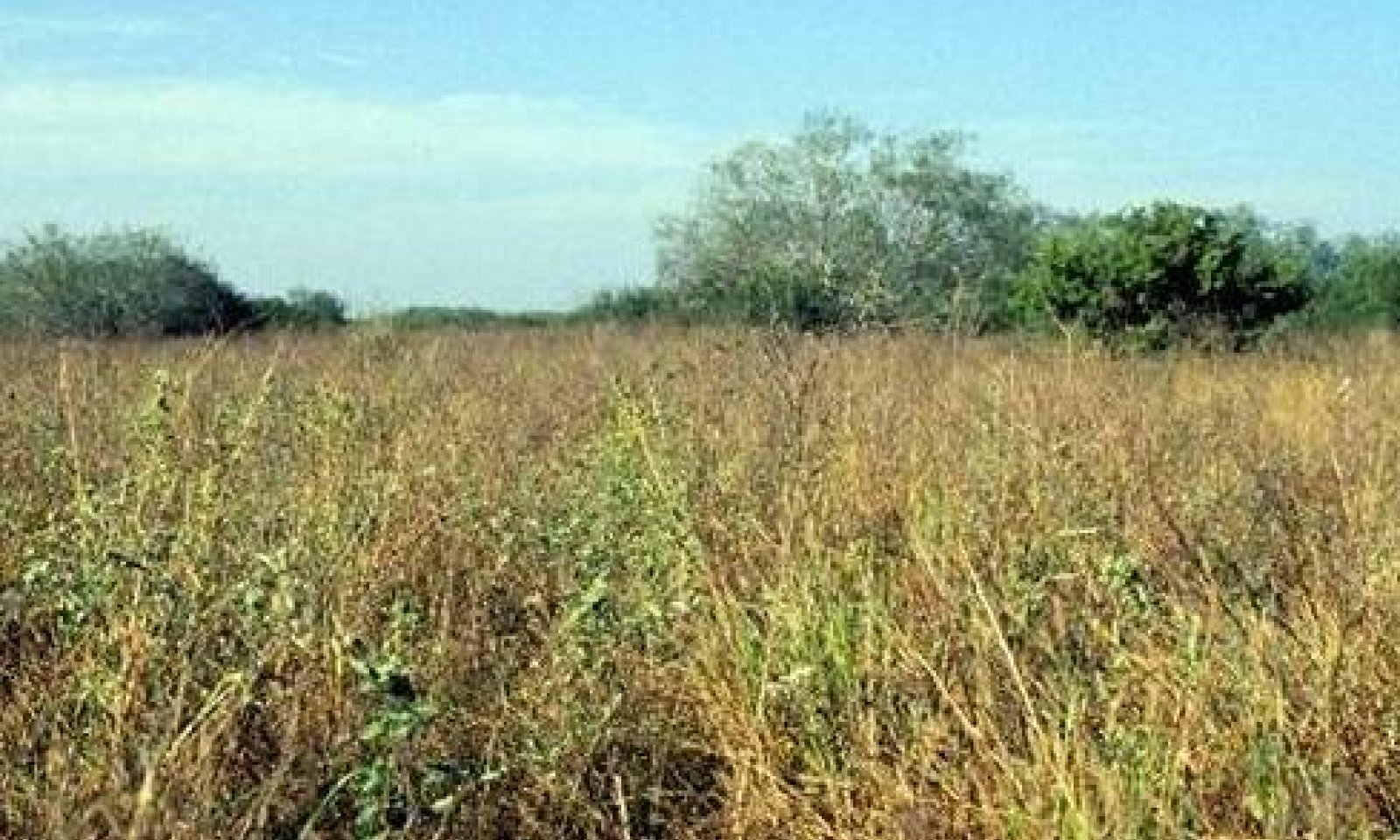
The reference community is dominated by midgrasses. The grassland state is composed of midgrasses with scattered mesquites and associated subordinate shrubs. Mesquite-dominated mottes compose about five percent of the vegetation canopy cover. Heavy grazing or absence of fire shifts community composition to either a short grass community, or to a community dominated by larger mesquites and associated woody plants composing 5 to 20 percent of the canopy cover. Prescribed grazing and prescribed fire at periodic intervals are required to maintain the original midgrass dominated community.
Figure 10. Annual production by plant type (representative values) or group (midpoint values)
Table 5. Annual production by plant type
Plant type Low
(lb/acre)Representative value
(lb/acre)High
(lb/acre)Grass/Grasslike 1800 3150 4500 Shrub/Vine 100 175 250 Forb 100 175 250 Tree 0 0 0 Total 2000 3500 5000 Figure 11. Plant community growth curve (percent production by month). TX4537 , Mid/Tallgrass Community. Mid and tallgrasses dominant with less than 5% woody canopy species..
Jan Feb Mar Apr May Jun Jul Aug Sep Oct Nov Dec J F M A M J J A S O N D 0 0 5 10 20 15 5 10 15 10 5 5 Community 1.2
Shortgrass DominantHeavy grazing or absence of fire results in establishment of woody plant seedlings and a shift from dominance by midgrasses to a community dominated by shortgrasses, including arrow feather threeawn, fringed signalgrass, red lovegrass, and hooded windmillgrass. The overstory consists of 5 to 10 percent canopy cover of mesquites and associated woody plants under three feet tall. Drought will hasten the process. At this point, the restoration of prescribed fire and grazing management can restore this plant community back to one similar to the Midgrass Dominant Community (1.1). There are usually enough residual herbaceous plants to recolonize the site. Once the woody plants have established, grazing management alone will not completely restore the plant community. However, fire can maintain this plant community which does have beneficial uses, especially for wildlife.
Figure 12. Annual production by plant type (representative values) or group (midpoint values)
Table 6. Annual production by plant type
Plant type Low
(lb/acre)Representative value
(lb/acre)High
(lb/acre)Grass/Grasslike 850 1700 2400 Shrub/Vine 150 175 325 Forb 100 125 275 Tree 0 0 0 Total 1100 2000 3000 Figure 13. Plant community growth curve (percent production by month). TX4547 , Shortgrass Dominant Grassland Community 5-10% woody canopy. Shortgrass dominant with some midgrass remnants and increasing forbs and shrubs approaching 10% canopy..
Jan Feb Mar Apr May Jun Jul Aug Sep Oct Nov Dec J F M A M J J A S O N D 0 0 5 10 20 15 5 10 15 10 5 5 Community 1.3
Savannah Grassland
Figure 14. 1.3 Savannah Grassland
A continued abusive grazing or absence of fire results in a shift from dominance by midgrasses or shortgrasses to a community with 5 to 20 percent canopy cover of mesquite and associated woody plants. Prescribed fire at periodic intervals and proper grazing management can maintain a savannah-like structure to the community. A very aggressive prescribed burn program, coupled with some individual plant treatment (IPT), can transition this plant community back to the Shortgrass Dominated Community (1.2), and eventually the Midgrass Dominant Community (1.1). With mesquite and most of the mixed brush on this site being resprouters following top removal, suppression of the woody species will provide an openness to the site. Once recurring fire is removed, then the canopy will quickly thicken and increase in structure. As the canopy approaches 20 percent a threshold to the Shrubland State (2) is being approached.
Figure 15. Annual production by plant type (representative values) or group (midpoint values)
Table 7. Annual production by plant type
Plant type Low
(lb/acre)Representative value
(lb/acre)High
(lb/acre)Grass/Grasslike 800 1600 2300 Shrub/Vine 200 275 425 Forb 100 125 275 Tree 0 0 0 Total 1100 2000 3000 Figure 16. Plant community growth curve (percent production by month). TX4548 , Savannah Grassland Community. Mid and shortgrass community with 5-20 percent canopy cover of mesquite and associated woody plants. .
Jan Feb Mar Apr May Jun Jul Aug Sep Oct Nov Dec J F M A M J J A S O N D 0 0 5 10 20 15 5 10 15 10 5 5 Pathway 1.1A
Community 1.1 to 1.2The reference community (1.1) will transition to the Shortgrass Dominant Community (1.2) with lack of fire, continued overgrazing, insufficient rest cycles, and/or natural disturbances, like prolonged drought.
Pathway 1.2A
Community 1.2 to 1.1This phase can be managed back to the Midgrass Dominant Community (1.1) but will take the reintroduction of fire to the ecosystem or some method of brush management that allows selective removal of the plants. A prescribed grazing plan will be essential to reverse the trend and returning the midgrasses back to the plant community over an extended period time.
Pathway 1.2B
Community 1.2 to 1.3If heavy continuous grazing continues with the exclusion of fire, the phase will transition to the Savannah Grassland Community (1.3).
Pathway 1.3A
Community 1.3 to 1.1
Savannah Grassland
Midgrass DominantThis phase can be managed back to the Community 1.2, and eventually 1.1 but will take the reintroduction of fire to the ecosystem or some method of brush management that allows selective removal of the plants. A prescribed grazing plan will be essential to reverse the trend and restoring the plant community over an extended period time.
Community 2.1
Moderate Canopy Shrub/WoodlandElimination of fire on this site results in crossing a threshold from the grassland state to a shrubland complex with 20 to 50 percent woody cover. At this point, prescribed grazing will not reduce the brush. Once canopy exceeds 30 percent, then the shade is a major factor preventing herbaceous recovery. Brush management and implementation of proper grazing management are required to cause a transition back to the grassland state once the shrubland complex has developed. Fire can be used to maintain it once it has transitioned. The shrubland complex that develops is a mix of mesquite, acacia, wolfberry, granjeno, and hogplum (Colubrina texensis).
Figure 17. Annual production by plant type (representative values) or group (midpoint values)
Table 8. Annual production by plant type
Plant type Low
(lb/acre)Representative value
(lb/acre)High
(lb/acre)Grass/Grasslike 600 1400 2100 Shrub/Vine 400 475 625 Forb 100 125 275 Tree 0 0 0 Total 1100 2000 3000 Figure 18. Plant community growth curve (percent production by month). TX4528 , Shrub/Woodland Community, 20-50% canopy. Shrub/Woodland Community with 20-50% woody canopy..
Jan Feb Mar Apr May Jun Jul Aug Sep Oct Nov Dec J F M A M J J A S O N D 2 2 5 10 18 15 5 9 15 9 5 5 Community 2.2
Heavy Canopy Shrub/Woodland
Figure 19. 2.2 Heavy Canopy Shrub/Woodland
Continued absence of fire or brush management results in a shift from a community with 20 to 50 percent woody cover to a community with greater than 50 percent woody cover. The shrubland complex is mixed with mesquite, acacia, wolfberry, granjeno, and hogplum. These woody communities will persist indefinitely in the absence of fire or brush management. Aggressive brush management along with proper grazing management are required to invoke a transition back to the grassland state once the shrubland complex has developed. The heavy canopy cover of brush reduces herbaceous production, and prescribed fire is usually not possible in this community without an initial mechanical or chemical treatment because there is too little fine fuel. Prescribed fire is the recommended maintenance treatment following mechanical or chemical brush management on this site. Prescribed grazing then becomes important to maintain fuel for burning.
Figure 20. Annual production by plant type (representative values) or group (midpoint values)
Table 9. Annual production by plant type
Plant type Low
(lb/acre)Representative value
(lb/acre)High
(lb/acre)Shrub/Vine 750 1225 1725 Grass/Grasslike 300 700 1050 Forb 50 75 225 Tree 0 0 0 Total 1100 2000 3000 Figure 21. Plant community growth curve (percent production by month). TX4529 , Shrub Woodland Community with >50% Woodies. Shrub Woodland Community with >50% Woodies.
Jan Feb Mar Apr May Jun Jul Aug Sep Oct Nov Dec J F M A M J J A S O N D 2 2 5 10 18 15 5 9 15 9 5 5 Pathway 2.1A
Community 2.1 to 2.2Continued heavy grazing coupled with lack of fire will cause this community to transition to the Heavy Canopy Shrub/Woodland Community (2.2). Brush density and height will continue to increase and shade the ground.
State 3
Converted LandDominant plant species
-
Bermudagrass (Cynodon dactylon), grass
-
kleingrass (Panicum coloratum), grass
Community 3.1
Converted LandAny of the prior plant communities can be converted to alternative plants through brush management and seeding. The site can be planted to either native mixtures or to introduced plants depending upon management objectives. Introduced grasses commonly seeded on the site include bermudagrass (Cynodon dactylon) and Kleingrass (Panicum coloratum). The introduced species will require a concerted management effort to keep the stands pure because of the seedbank of woody species. Native plantings will require some form of brush removal such as individual plant treatment, prescribed fire, broadcast treatments, or mechanical treatments to maintain a grassland.
Figure 22. Annual production by plant type (representative values) or group (midpoint values)
Table 10. Annual production by plant type
Plant type Low
(lb/acre)Representative value
(lb/acre)High
(lb/acre)Shrub/Vine 750 1225 1725 Grass/Grasslike 300 700 1050 Forb 50 75 225 Tree 0 0 0 Total 1100 2000 3000 Figure 23. Plant community growth curve (percent production by month). TX4530 , Converted Land Community. Community converted into warm-season grass seed mixtures..
Jan Feb Mar Apr May Jun Jul Aug Sep Oct Nov Dec J F M A M J J A S O N D 2 2 5 10 18 15 5 9 15 9 5 5 Figure 24. Plant community growth curve (percent production by month). TX4531 , Converted Land - Introduced Grass Seeding. Seeding Coverted Land into Introduced grass species..
Jan Feb Mar Apr May Jun Jul Aug Sep Oct Nov Dec J F M A M J J A S O N D 0 0 5 10 20 15 5 10 15 10 5 5 Community 3.2
Abandoned LandThis site is sometimes cultivated and used for production of watermelons and other crops. Abandoned fields on this site are usually impoverished in nutrients. Willow baccharis (Baccharis salicina) is commonly one of the initial woody plant species to establish once cultivation ceases. Later in succession, huisache (Acacia smallii) and mesquite establish and become the dominant woody plants on the site. With no form of brush management, the Abandoned Land Community will become solid brush in 10 to 15 years, resulting in a transition to the Shrubland State (2). In most cases, cultivation has destroyed all the residual herbaceous native plants and has deteriorated the soil structure. To restore this plant community back to a grassland will require significant intervention with heavy equipment to remove the brush and replant. An on-going therapy of brush management, fire, and prescribed grazing will be needed to hold off the brush and maintain the grassland.
Figure 25. Annual production by plant type (representative values) or group (midpoint values)
Table 11. Annual production by plant type
Plant type Low
(lb/acre)Representative value
(lb/acre)High
(lb/acre)Grass/Grasslike 1850 3200 4550 Forb 100 175 250 Shrub/Vine 50 125 200 Tree 0 0 0 Total 2000 3500 5000 Figure 26. Plant community growth curve (percent production by month). TX4534 , Converted Land - Woody Seedlings Encroachment. Woody seedling encroachment on converted lands such as abandoned cropland, native seeded land, and introduced seeding lands..
Jan Feb Mar Apr May Jun Jul Aug Sep Oct Nov Dec J F M A M J J A S O N D 2 2 5 10 18 15 5 9 15 9 5 5 Pathway 3.1A
Community 3.1 to 3.2The transition from can occur when crop fields are left to fallow without management. Generally, pastureland will transition to the Shrubland State (2) and not to the Abandoned Land Community (3.2).
Pathway 3.2A
Community 3.2 to 3.1Many land managers may want to utilize this site as cropland or pastureland. To achieve this transition land clearing practices such as land clearing, dozing and raking will be necessary. After the land has been cleared and an appropriate seedbed prepared, the crop or pasture can be planted.
Transition T1A
State 1 to 2Once the woody canopy exceeds approximately 20 percent and is taller than three feet, a threshold will have been passed to the Shrubland State (2). In this case, energy in the form of heavy equipment and/or herbicides will be required along with prescribed grazing to shift the plant community back to the Grassland State (1).
Transition T1B
State 1 to 3The Grassland State (1) can be converted to the Converted Land State (3) by controlling the brush and seeding to native or introduced grasses. It may also be plowed and converted to cropland.
Restoration pathway R2A
State 2 to 1Brush management is the key driver in restoring Shrubland State (2) back to the Grassland State (1). Reduction in woody canopy below 20 percent will take large energy inputs depending on the canopy cover. A prescribed grazing plan and prescribed burning plan will keep the state functioning.
Transition T2A
State 2 to 3The Shrubland State (2) can be converted to the Converted Land State (3) by controlling the brush and seeding to native or introduced grasses. It may also be plowed and converted to cropland.
Transition T3A
State 3 to 2If the Abandoned Land Community (3.2) is left alone, eventually the woody plants will create a moderate to heavy canopy. At this point, the desired understory grasses, forbs, and/or crops will be shaded out and the site will transition into a Shrubland State (2).
Additional community tables
Table 12. Community 1.1 plant community composition
Group Common name Symbol Scientific name Annual production () Foliar cover (%) Grass/Grasslike1 Tallgrasses 800–2100 shore little bluestem SCLI11 Schizachyrium littorale 500–1500 – little bluestem SCSCS Schizachyrium scoparium var. scoparium 500–1500 – switchgrass PAVI2 Panicum virgatum 250–750 – 2 Midgrasses 200–500 tanglehead HECO10 Heteropogon contortus 150–300 – brownseed paspalum PAPL3 Paspalum plicatulum 150–300 – crinkleawn grass TRACH2 Trachypogon 150–300 – 3 Midgrasses 500–1400 silver beardgrass BOLAT Bothriochloa laguroides ssp. torreyana 300–500 – hooded windmill grass CHCU2 Chloris cucullata 300–500 – Arizona cottontop DICA8 Digitaria californica 300–500 – Texas cottontop DIPA6 Digitaria patens 300–500 – pink pappusgrass PABI2 Pappophorum bicolor 300–500 – plains bristlegrass SEVU2 Setaria vulpiseta 300–500 – 4 Shortgrasses 200–500 threeawn ARIST Aristida 100–200 – slender grama BORE2 Bouteloua repens 100–200 – fall witchgrass DICO6 Digitaria cognata 100–200 – balsamscale grass ELION Elionurus 100–200 – knotgrass PADI6 Paspalum distichum 100–200 – thin paspalum PASE5 Paspalum setaceum 100–200 – fringed signalgrass URCI Urochloa ciliatissima 100–200 – Forb5 Forbs 60–150 dayflower COMME Commelina 20–50 – prairie clover DALEA Dalea 20–50 – coastal indigo INMI Indigofera miniata 20–50 – dotted blazing star LIPU Liatris punctata 20–50 – sensitive plant MIMOS Mimosa 20–50 – snoutbean RHYNC2 Rhynchosia 20–50 – awnless bushsunflower SICA7 Simsia calva 20–50 – vervain VERBE Verbena 20–50 – 6 Forbs 40–100 Forb, annual 2FA Forb, annual 0–50 – Indian mallow ABUTI Abutilon 20–50 – ragweed AMBRO Ambrosia 20–50 – croton CROTO Croton 20–50 – Shrub/Vine7 Shrubs/Vines 100–250 live oak QUVI Quercus virginiana 100–250 – pricklypear OPUNT Opuntia 50–100 – mesquite PROSO Prosopis 0–100 – hackberry CELTI Celtis 0–100 – snakewood CONDA Condalia 0–50 – Texan hogplum COTE6 Colubrina texensis 0–50 – Christmas cactus CYLE8 Cylindropuntia leptocaulis 20–50 – lantana LANTA Lantana 10–50 – Berlandier's wolfberry LYBE Lycium berlandieri 0–50 – spiny hackberry CEEH Celtis ehrenbergiana 0–50 – Table 13. Community 1.2 plant community composition
Group Common name Symbol Scientific name Annual production () Foliar cover (%) Table 14. Community 1.3 plant community composition
Group Common name Symbol Scientific name Annual production () Foliar cover (%) Table 15. Community 2.1 plant community composition
Group Common name Symbol Scientific name Annual production () Foliar cover (%) Table 16. Community 2.2 plant community composition
Group Common name Symbol Scientific name Annual production () Foliar cover (%) Table 17. Community 3.1 plant community composition
Group Common name Symbol Scientific name Annual production () Foliar cover (%) Table 18. Community 3.2 plant community composition
Group Common name Symbol Scientific name Annual production () Foliar cover (%) Interpretations
Animal community
As a historic tall/midgrass prairie, this site was occupied by bison, antelope, deer, quail, turkey, and dove. This site was also used by many species of grassland songbirds, migratory waterfowl, and coyotes. This site now provides forage for livestock and is still used by quail, dove, migratory waterfowl, grassland birds, coyotes, and deer.
Feral hogs (Sus scrofa) can be found on most ecological sites in Texas. Damage caused by feral hogs each year includes, crop damage by rutting up crops, destroyed fences, livestock watering areas, and predation on native wildlife, and ground-nesting birds. Feral hogs have few natural predators, thus allowing their population to grow to high numbers.
Wildlife habitat is a complex of many different plant communities and ecological sites across the landscape. Most animals use the landscape differently to find food, shelter, protection, and mates. Working on a conservation plan for the whole property, with a local professional, will help managers make the decisions that allow them to realize their goals for wildlife and livestock.
Grassland State (1): This state provides the maximum amount of forage for livestock such as cattle. It is also utilized by deer, quail and other birds as a source of food. When a site is in the reference plant community phase (1.1) it will also be used by some birds for nesting, if other habitat requirements like thermal and escape cover are near.
Shrubland State (2): This state can be maintained to meet the habitat requirements of cattle and wildlife. Land managers can find a balance that meets their goals and allows them flexibility to manage for livestock and wildlife. Forbs for deer and birds like quail will be more plentiful in this state. There will also be more trees and shrubs to provide thermal and escape cover for birds as well as cover for deer.
Converted Land State (3): The quality of wildlife habitat this site will produce is extremely variable and is influenced greatly by the timing of rain events. This state is often manipulated to meet landowner goals. If livestock production is the main goal, it can be converted to pastureland. It can also be planted to a mix of grasses and forbs that will benefit both livestock and wildlife. A mix of forbs in the pasture could attract pollinators, birds and other types of wildlife. Food plots can also be planted to provide extra nutrition for deer.
This rating system provides general guidance as to animal preference for plant species. It also indicates possible competition between kinds of herbivores for various plants. Grazing preference changes from time to time, especially between seasons, and between animal kinds and classes. Grazing preference does not necessarily reflect the ecological status of the plant within the plant community. For wildlife, plant preferences for food and plant suitability for cover are rated. Refer to habitat guides for a more complete description of a species habitat needs.Hydrological functions
Water infiltration is rapid in the site. Therefore, runoff and soil erosion from water is seldom a problem except on cultivated and overgrazed areas.
Recreational uses
Hunting, recreation, and bird watching are common activities.
Supporting information
Inventory data references
Information presented was derived from the revised Range Site, literature, limited NRCS clipping data (417s), field observations, and personal contacts with range-trained personnel.
Other references
AgriLife. 2009. Managing Feral Hogs Not a One-shot Endeavor. AgNews, April 23, 2009. http://agnews.tamu.edu/showstory.php?id=903.
Archer, S. 1995. Herbivore mediation of grass-woody plant interactions. Tropical Grasslands, 29:218-235.
Archer, S. 1995. Tree-grass dynamics in a Prosopis-thornscrub savanna parkland: reconstructing the past and predicting the future. Ecoscience, 2:83-99.
Archer, S. 1994. Woody plant encroachment into southwestern grasslands and savannas: rates, patterns and proximate causes. Ecological implications of livestock herbivory in the West, 13-68.
Archer, S. and F. E. Smeins. 1991. Ecosystem-level Processes. In Grazing Management: An Ecological Perspective. Edited by R.K. Heischmidt and J.W. Stuth. Timber Press, Portland, OR.
Baen, J. S. 1997. The growing importance and value implications of recreational hunting leases to agricultural land investors. Journal of Real Estate Research, 14:399-414.
Bailey, V. 1905. North American Fauna No. 25: Biological Survey of Texas. United States Department of Agriculture Biological Survey. Government Printing Office, Washington D. C.
Bestelmeyer, B. T., J.R. Brown, K. M. Havstad, R. Alexander, G. Chavez, and J. E. Herrick. 2003. Development and use of state-and-transition models for rangelands. Journal of Range Management, 56(2):114-126.
Box, T. W. 1960. Herbage production on four range plant communities in South Texas. Journal of Range Management, 13:72-76.
Briske, B B, B. T. Bestelmeyer, T. K. Stringham, and P. L. Shaver. 2008. Recommendations for development of resilience-based State-and-Transition Models. Rangeland Ecology and Management, 61:359-367.
Brown, J. R. and S. Archer. 1999. Shrub invasion of grassland: recruitment is continuous and not regulated by herbaceous biomass or density. Ecology, 80(7):2385-2396.
Diamond, D. D. and T. E. Fulbright. 1990. Contemporary plant communities of upland grasslands of the Coastal Sand Plain, Texas. Southwestern Naturalist, 35:385-392.
Dillehay T. 1974. Late quaternary bison population changes on the Southern Plains. Plains Anthropologist, 19:180-96.
Edward, D. B. 1836. The history of Texas; or, the immigrants, farmers, and politicians guide to the character, climate, soil and production of that country. Geographically arranged from personal observation and experience. J. A. James and Co., Cincinnati, OH.
Everitt, J. H., D. L. Drawe, and R. I. Leonard. 2002. Trees, Shrubs, and Cacti of South Texas. Texas Tech University Press, Lubbock, TX.
Everitt, J. H., D. L. Drawe, and R. I. Lonard. 1999. Field Guide to the Broad-Leaved Herbaceous Plants of South Texas. Texas Tech University Press. Lubbock, TX.
Foster, J. H. 1917. Pre-settlement fire frequency regions of the United States: a first approximation. Tall Timbers Fire Ecology Conference Proceedings No. 20.
Foster, W. C., ed. 1998. The La Salle Expedition to Texas: The Journal of Henry Joutel, 1684-1687. Texas State Historical Association, Austin, TX.
Frost, C. C. 1995. Presettlement fire regimes in southeastern marshes, peatlands, and swamps. In: Prodeedings, 19th Tall Timbers fire ecology conference, 39-60. Tall Timbers Research Station, Tallahassee, FL.
Fulbright, T. E. and S. L. Beasom. 1987. Long-term effects of mechanical treatment on white-tailed deer browse. Wildlife Society Bulletin, 15:560-564.
Fulbright, T. E., J. A. Ortega-Santos, A. Lozano-Cavazos, and L. E. Ramirez-Yanez. 2006. Establishing vegetation on migrating inland sand dunes in Texas. Rangeland Ecology and Management, 59:549-556.
Fulbright, T. E., D. D. Diamond, J. Rappole, and J. Norwine. The Coastal Sand Plain of Southern Texas. Rangelands, 12:337-340.
Gould, F. W. 1975. The Grasses of Texas. Texas A&M University Press, College Station, TX.
Grace, J. B., L. K. Allain, H. Q. Baldwin, A. G. Billock, W. R. Eddleman, A. M. Given, C. W. Jeske, and R. Moss. 2005. Effects of prescribed fire in the coastal prairies of Texas. USGS Open File Report 2005-1287.
Hamilton, W. and D. Ueckert. 2005. Rangeland Woody Plant Control: Past, Present, and Future. In: Brush Management: Past, Present, and Future, 3-16. Texas A&M University Press. College Station, TX.
Hansmire, J. A., D. L. Drawe, B. B. Wester and C.M. Britton. 1988. Effect of winter burns on forbs and grasses of the Texas Coastal Prairie. The Southwestern Naturalist, 33(3):333-338.
Heitschmidt R. K., Stuth J. W., eds. 1991. Grazing management: an ecological perspective. Timberline Press, Portland, OR.
Inglis, J. M. 1964. A history of vegetation of the Rio Grande Plains. Texas Parks and Wildlife Department Bulletin No. 45, Austin, TX.
Kneuper, C. L., C. B. Scott, and W. E. Pinchak. 2003. Consumption and dispersion of mesquite seeds by ruminants. Journal of Range Management, 56:255-259.
Kramp, B., R. Ansley, and D. Jones. 1998. Effect of prescribed fire on mesquite seedlings. Texas Tech University Research Highlights - Range, Wildlife and Fisheries Management, 29:13.
Le Houerou, H. N. and J. Norwine. 1988. The ecoclimatology of South Texas. In Arid lands: today and tomorrow. Edited by E. E. Whitehead, C. F. Hutchinson, B. N. Timmesman, and R. G. Varady, 417-444. Westview Press, Boulder, CO.
Lehman, V. W. 1965. Fire in the range of Attwater’s prairie chicken. Tall Timbers Fire Ecology Conference, 4:127-143.
Lehman, V. W. 1969. Forgotten Legions: Sheep in the Rio Grande Plain of Texas. Texas Western Press, El Paso, TX.
Mann, C. 2004. 1491. New Revelations of the Americas before Columbus. Vintage Books, New York City, NY.
Mapston, M. E. 2009. Feral Hogs in Texas. Rep. Texas Cooperative Extension. 23 Apr. 2009 http://icwdm.org/Publications/pdf/Feral%20Pig/Txferalhogs.pdf
McClendon, T. 1991. Preliminary description of the vegetation of South Texas exclusive of the Coastal Saline Zones. Texas Journal of Science, 43:13-32.
McGinty A., D. N. Ueckert. 2001. The Brush Busters success story. Rangelands, 23:3-8.
McLendon, T. 1991. Preliminary description of the vegetation of south Texas exclusive of coastal saline zones. Texas Journal of Science, 43:13-32.
Norwine, J. 1978. Twentieth-century semiarid climates and climatic fluctuations in Texas and northeastern Mexico. Journal of Arid Environments, 1:313-325.
Norwine, J. and R. Bingham. 1986. Frequency and severity of droughts in South Texas: 1900-1983, 1-17. In Livestock and wildlife management during drought. Edited by R. D. Brown. Caesar Kleberg Wildlife Research Institute, Kingsville, TX.
Olmsted, F. L. 1857. A journey through Texas, or a saddle trip on the Southwest frontier: with a statistical appendix. Dix, Edwards, and co., New York, London.
Prichard, D. 1998. A User Guide to Assessing Proper Functioning Condition and the Supporting Science for Lentic Areas. Bureau of Land Management. National Applied Resource Sciences Center, CO.
Rappole, J. H. and G. W. Blacklock. 1994. A field guide: Birds of Texas. Texas A&M University Press, College Station, TX.
Rhyne, M. Z. 1998. Optimization of wildlife and recreation earnings for private landowners. M. S. Thesis, Texas A&M University-Kingsville, Kingsville, TX.
Schindler, J. R. and T. E. Fulbright. 2003. Roller chopping effects on Tamaulipan scrub community composition. Journal of Range Management, 56:585-590.
Schmidley, D. J. 1983. Texas mammals east of the Balcones Fault zone. Texas A&M University Press, College Station, TX.
Scifres C. J., W. T. Hamilton, J. R. Conner, J. M. Inglis, and G. A. Rasmussen. 1985. Integrated Brush Management Systems for South Texas: Development and Implementation. Texas Agricultural Experiment Station, College Station, TX.
Scifres, C. J. and W. T. Hamilton. 1993. Prescribed burning for brushland management: the South Texas example. Texas A&M Press, College Station, TX.
Scifres, C. J. 1975. Systems for improving McCartney rose infested coastal prairie rangeland. Texas Agricultural Experiment Station Bulletin MP 1225.
Smeins, F. E., S. Fuhlendorf, and C. Taylor, Jr. 1997. Environmental and Land Use Changes: A Long Term Perspective. In Juniper Symposium, 1-21. Texas Agricultural Experiment Station.
Smeins, F. E., D. D. Diamond, and W. Hanselka. 1991. Coastal prairie, 269-290. In Ecosystems of the World: Natural Grasslands. Edited by R. T. Coupland. Elsevier Press, Amsterdam, Netherlands.
Soil Survey Staff, Natural Resources Conservation Service, United States Department of Agriculture. Soil Survey Geographic (SSURGO) Database.
Snyder, R. A. and C. L. Boss. 2002. Recovery and stability in barrier island plant communities. Journal of Coastal Research, 18:530-536.
Stiles, H. R., ed. 1906. Joutel’s journal of La Salle’s last voyage, 1686-1687. Joseph McDonough, Albany, NY.
Stringham, T. K., W. C. Krueger, and P. L. Shaver. 2001. State and transition modeling: and ecological process approach. Journal of Range Management, 56(2):106-113.
Texas A&M Research and Extension Center. 2000. Native Plants of South Texas http://uvalde.tamu.edu/herbarium/index.html.
Texas Agriculture Experiment Station. 2007. Benny Simpson’s Texas Native Trees http://aggie-horticulture.tamu.edu/ornamentals/natives/.
Texas Parks and Wildlife Department. 2007. List of White-tailed Deer Browse and Ratings. District 8.
Tharp, B. C. 1926. Structure of Texas Vegetation east of the 98th meridian. Bulletin 2606. University of Texas, Austin. TX.
Thurow, T. L. 1991. Hydrology and Erosion. In: Grazing Management: An Ecological Perspective. Edited by R.K. Heitschmidt and J.W. Stuth. Timber Press, Portland, OR.
Urbatsch, L. 2000. Chinese tallow tree (Triadica sebifera (L.) Small. USDA-NRCS Plant Guide.
USDA-NRCS Plant Database. 2018. https://plants.usda.gov/.
Van’t Hul, J. T., R. S. Lutz and N. E. Mathews. 1997. Impact of prescribed burning on vegetation and bird abundance on Matagorda Island, Texas. Journal of Range Management, 50:346-360.
Vines, R. A. 1984. Trees of Central Texas. University of Texas Press, Austin, TX.
Wade, D. D., B. L. Brock, P. H. Brose, J. B. Grace, G. A. Hoch, and W. A. Patterson III. 2000. Fire in Eastern ecosystems. In Wildland fire in ecosystems: effects of fire on flora. Edited by. J. K. Brown and J. Kaplers. United States Forest Service, Rocky Mountain Research Station, Ogden, UT.
Weltz, M. A. and W. H. Blackburn. 1995. Water budget for south Texas rangelands. Journal of Range Management, 48:45-52.
Whittaker, R. H., L. E. Gilbert, and J. H. Connell. 1979. Analysis of a two-phase pattern in a mesquite grassland, Texas. Journal of Ecology, 67:935-52.
Wright, B. D., R. K. Lyons, J. C. Cathey, and S. Cooper. 2002. White-tailed deer browse preferences for South Texas and the Edwards Plateau. Texas Cooperative Extension Bulletin B-6130.
Wright, H.A. and A.W. Bailey. 1982. Fire Ecology: United States and Southern Canada. John Wiley & Sons, Inc., Hoboken, NJ.Approval
Bryan Christensen, 9/19/2023
Acknowledgments
Reviewers and Technical Contributors: Shanna Dunn, RSS, NRCS, Corpus Christi, Texas Jason Hohlt, RMS, NRCS, Kingsville, Texas Justin Clary, RMS, NRCS, Temple, Texas Mark Moseley, RMS, NRCS, Boerne, Texas
Rangeland health reference sheet
Interpreting Indicators of Rangeland Health is a qualitative assessment protocol used to determine ecosystem condition based on benchmark characteristics described in the Reference Sheet. A suite of 17 (or more) indicators are typically considered in an assessment. The ecological site(s) representative of an assessment location must be known prior to applying the protocol and must be verified based on soils and climate. Current plant community cannot be used to identify the ecological site.
Author(s)/participant(s) Contact for lead author Date 08/28/2026 Approved by Approval date Composition (Indicators 10 and 12) based on Annual Production Indicators
-
Number and extent of rills:
-
Presence of water flow patterns:
-
Number and height of erosional pedestals or terracettes:
-
Bare ground from Ecological Site Description or other studies (rock, litter, lichen, moss, plant canopy are not bare ground):
-
Number of gullies and erosion associated with gullies:
-
Extent of wind scoured, blowouts and/or depositional areas:
-
Amount of litter movement (describe size and distance expected to travel):
-
Soil surface (top few mm) resistance to erosion (stability values are averages - most sites will show a range of values):
-
Soil surface structure and SOM content (include type of structure and A-horizon color and thickness):
-
Effect of community phase composition (relative proportion of different functional groups) and spatial distribution on infiltration and runoff:
-
Presence and thickness of compaction layer (usually none; describe soil profile features which may be mistaken for compaction on this site):
-
Functional/Structural Groups (list in order of descending dominance by above-ground annual-production or live foliar cover using symbols: >>, >, = to indicate much greater than, greater than, and equal to):
Dominant:
Sub-dominant:
Other:
Additional:
-
Amount of plant mortality and decadence (include which functional groups are expected to show mortality or decadence):
-
Average percent litter cover (%) and depth ( in):
-
Expected annual annual-production (this is TOTAL above-ground annual-production, not just forage annual-production):
-
Potential invasive (including noxious) species (native and non-native). List species which BOTH characterize degraded states and have the potential to become a dominant or co-dominant species on the ecological site if their future establishment and growth is not actively controlled by management interventions. Species that become dominant for only one to several years (e.g., short-term response to drought or wildfire) are not invasive plants. Note that unlike other indicators, we are describing what is NOT expected in the reference state for the ecological site:
-
Perennial plant reproductive capability:
Print Options
Sections
Font
AAAAOther
PrintThe Ecosystem Dynamics Interpretive Tool is an information system framework developed by the USDA-ARS Jornada Experimental Range, USDA Natural Resources Conservation Service, and New Mexico State University.
Accessibility statement


