
Natural Resources
Conservation Service
Ecological site R080BY161TX
Shallow Clay
26-33" PZ
Last updated: 9/19/2023
Accessed: 08/21/2026
-
Search


Major Land Resource Area or ecological site by name and/or ID.
PreviousSectionsNextGeneral information
Provisional. A provisional ecological site description has undergone quality control and quality assurance review. It contains a working state and transition model and enough information to identify the ecological site.
Click to explore map
Figure 1. Mapped extent
Areas shown in blue indicate the maximum mapped extent of this ecological site. Other ecological sites likely occur within the highlighted areas. It is also possible for this ecological site to occur outside of highlighted areas if detailed soil survey has not been completed or recently updated.
MLRA notes
Major Land Resource Area (MLRA): 080B–Texas North-Central Prairies
MLRA 80B consists of gently rolling, dissected plains with very steep hillsides and sideslopes and narrow flood plains associated with small streams. Loamy and clayey soils range from very shallow to deep and developed in sandstones, shales, and limestones of Pennsylvanian age.
Classification relationships
This ecological site is correlated to soil components at the Major Land Resource Area (MLRA) level which is further described in USDA Ag Handbook 296.
Ecological site concept
These sites occur on shallow clay soils on uplands. The reference vegetation consists of native perennial midgrasses and shortgrasses with scattered forbs and very few woody plants. Abusive grazing or other ground disturbance can lead to an increased amount of bare soil on these sites.
Associated sites
R080BY164TX Tight Sandy Loam 26-33" PZ
Tight Sandy Loam site occupies the same landscape position and is frequently found adjacent to the Shallow Clay site.
R080BY156TX Rocky Hill 26-33" PZ
Rocky Hill has a steeper slope and is found upslope of the Shallow Clay site.
Similar sites
R080BY160TX Shallow 26-33" PZ
Shallow soils less clay content
Table 1. Dominant plant species
Tree Not specified
Shrub Not specified
Herbaceous (1) Bouteloua curtipendula
(2) Bouteloua dactyloidesPhysiographic features
This site occurs on linear to convex nose slopes, and side slopes of scarp slopes and ridges in the Texas North-Central Prairies. This site is characteristically a water distributing site. Slopes are typically less than 8 percent.
Table 2. Representative physiographic features
Landforms (1) Hills > Scarp slope
(2) Hills > Ridge
Runoff class Very high Elevation 750 – 2400 ft Slope 1 – 8 % Aspect Aspect is not a significant factor Climatic features
The climate is subtropical subhumid and is characterized by hot humid summers and relatively mild winters. Tropical maritime air controls the climate during spring, summer and fall. In winter and early spring, frequent surges of polar Canadian air cause sudden drops in temperatures and add considerable variety to the daily weather. The average first frost generally occurs about November 5 and the last freeze of the season usually occurs about March 19. The average frost free period ranges from 215 days in the northern counties, to 240 days in the south.
The average relative humidity in mid-afternoon is about 60 percent in the summer months. Humidity is higher at night, and the average at dawn is about 80 percent. The sun shines 75 percent of the time possible during the summer and 50 percent in winter. The prevailing wind direction is from the southwest and highest windspeeds occur during the spring months.
Approximately 75% of annual rainfall occurs between April 1 and October 31. Rainfall during the months of April through September typically occurs during thunderstorms which tend to be intense and brief, resulting in large amounts of rain in a short time. The wettest months of the year are May, June, September, and October. The driest months during the growing season are July and August. The winter months of November, December, January, and February are the driest months overall.
Average annual precipitation for the entire MLRA is approximately 28 inches. There is a noticeable difference in the average annual precipitation in the northern counties in comparison to the southern and western counties of this Major Land Resource Area. Jack, Clay, Young, and Palo Pinto Counties all have an average annual precipitation of more than 31 inches. Stephens, Eastland, McCulloch, and San Saba Counties all have an average annual precipitation of less than 28 inches.
Winters tend to be mild, with occasional periods of very cold temperatures which can be accompanied by strong northerly winds and freezing precipitation. Snow is infrequent and significant accumulations are rare. These periods of very cold weather are generally short-lived. Summers tend to be hot and dry. Drought conditions are common during most summers. Air temperatures of more than 95oF are common from mid-June through September. In the northern counties nearest to the Red River, temperatures are generally slightly cooler during winter months and slightly warmer during summer months than in the other counties in the North Central Prairie.Table 3 Representative climatic features
Frost-free period (characteristic range) 180-200 days Freeze-free period (characteristic range) 210-230 days Precipitation total (characteristic range) 30-30 in Frost-free period (actual range) 180-200 days Freeze-free period (actual range) 210-230 days Precipitation total (actual range) 30-30 in Frost-free period (average) 190 days Freeze-free period (average) 220 days Precipitation total (average) 30 in Characteristic rangeActual rangeBarLineFigure 2. Monthly precipitation range
Characteristic rangeActual rangeBarLineFigure 3. Monthly minimum temperature range
Characteristic rangeActual rangeBarLineFigure 4. Monthly maximum temperature range
BarLineFigure 5. Monthly average minimum and maximum temperature
Figure 6. Annual precipitation pattern
Figure 7 Annual average temperature pattern
Climate stations used
-
(1) SAN SABA 7NW [USC00417994], Richland Springs, TX
-
(2) BROWNWOOD 2ENE [USC00411138], Early, TX
-
(3) EASTLAND [USC00412715], Eastland, TX
-
(4) MINERAL WELLS AP [USW00093985], Millsap, TX
-
(5) BRECKENRIDGE [USC00411042], Breckenridge, TX
-
(6) GRAHAM [USC00413668], Graham, TX
-
(7) JACKSBORO [USC00414517], Jacksboro, TX
">Influencing water features
These sites are not associated with wetlands.
Wetland description
NA
Soil features
Representative soil components for this ecological site include: Owens
The site is characterized by shallow to moderately deep, well drained clayey soils.Table 4. Representative soil features
Parent material (1) Residuum – claystone
Surface texture (1) Clay
Drainage class Well drained Permeability class Very slow Soil depth 10 – 30 in Surface fragment cover <=3" 0 – 20 % Surface fragment cover >3" 0 – 15 % Available water capacity
(0-40in)3 – 4 in Calcium carbonate equivalent
(0-40in)2 – 15 % Electrical conductivity
(0-40in)0 – 4 mmhos/cm Sodium adsorption ratio
(0-40in)0 – 10 Soil reaction (1:1 water)
(0-40in)7.4 – 8.4 Subsurface fragment volume <=3"
(Depth not specified)4 – 11 % Subsurface fragment volume >3"
(Depth not specified)2 – 6 % Ecological dynamics
The reference plant community for the Shallow Clay ecological site is a midgrass/shortgrass prairie. Evidence of the historic vegetation can be found in the journals and records of explorers, military expeditions, boundary survey teams, and early scientists who studied the vegetation.
Climate is a major factor influencing vegetation on the site. Long-term droughts lasting multiple years or growing seasons are infrequent, but when they do occur, they can have a negative impact on the vegetation. If abusive grazing occurs during or immediately following the drought period, the results can be devastating. The effects of erratic seasonal moisture and short-term dry spells lasting a few months are not as severe as those caused by long-term droughts. However, the lower the ecological status of the site, the greater the negative impact will be during drought periods regardless of duration.
Fire was an important part of the ecosystem. Historic fires on this site were not as intense as they were on most associated sites because of the structure of the vegetation, and the relatively low amount of fine fuel to sustain the fires. The shorter height of the grasses and the scarcity of forbs and woody plants contributed to these less intense fires. However, fires of moderate to low intensity did play a key role in refreshing and reinvigorating the old growth vegetation and keeping weeds and brush suppressed.
Lack of fire allows herbaceous vegetation to become senescent and may eventually lead to the loss of the most desirable species. Seedlings of non-native brush species and invasive weeds may encroach on the site from adjacent sites
Prior to settlement, this site was subject to periodic grazing and browsing by vast herds of bison, wild cattle, wild horses, and deer. At times these grazing and browsing episodes were intense and severe, but periods of heavy use were followed by long periods of non-use as the herds migrated to fresh grazing areas before returning to previously grazed areas. The grazed areas had an opportunity to rest, regrow, regain vigor, and reproduce prior to the next grazing event. Intervals between grazing periods were frequently influenced by the amount of time that had elapsed since the last fire on the area.
As the region was settled, fire was reduced or eliminated and grasslands were fenced off to control movement and facilitate grazing by domestic livestock. As a result of abusive grazing or lack of grazing and/or the elimination of fire, in association with extreme climatic events, the historic plant community has been altered on most Shallow Clay sites.
This site usually occurs as small, isolated, and widely scattered areas within larger areas of other soils. Because of their dense clay subsoils, ponds and dams are often built on this site. This site is frequently overgrazed because it may be the only location of surface water in a pasture. The site is usually very slow to recover from overgrazing because of its dense, shallow soils. As the historic midgrasses decrease on the site, they are replaced by early successional midgrasses, a significant increase in the shortgrasses, as well as annual grasses and forbs. Further deterioration leads to the loss of the perennial midgrass plant community as shortgrasses, annual forbs, and annual grasses, begin to dominate the site. If disturbances are severe enough for an extended period of time, annual species dominate and bare ground is extensive. This provides the opportunity for less desirable woody species such as mesquite, lotebush, pricklypear, and tasajillo to encroach from adjacent sites.
Selective individual removal of unwanted trees and shrubs is relatively easy and more practical when brush plants initially appear on the site. The increase of brush can be fairly rapid and the plants per acre will soon become too numerous for individual control to be feasible. Once woody plants become mature or develop into dense stands, control is expensive, uneconomical, impractical, and difficult to achieve. Brush management is most successful using a systems approach. Initial treatment by mechanical methods can be followed by using approved herbicides, and using prescribed fire as a maintenance technique. Prescribed grazing with a reasonable stocking rate can sustain the grass species composition and production at a near reference level.
Changes in plant communities and vegetation states on the Shallow Clay site are result of the combined influences of natural events (rainfall, temperature, droughts, etc.) and the accompanying management systems implemented on the area (prescribed fire, grazing management, and brush management).
Rangeland Health Reference Worksheets have been posted for this site on the Texas NRCS website (www.tx.nrcs.usda.gov) in Section II of the eFOTG under (F) Ecological Site Descriptions.
State and Transitional Pathways:
The State and Transition Diagram which follows provides information on some of the most typical pathways that the vegetation on this site can follow as the result of natural events, management inputs, and application of conservation treatments. There may be other plant communities that can exist on this site under certain conditions. Consultation with local experts and professionals is recommended prior to application of practices or management strategies in order to ensure that specific objectives will be met.State and transition model
Custom diagramStandard diagram
More interactive model formats are also available. View Interactive Models
More interactive model formats are also available. View Interactive Models
Click on state and transition labels to scroll to the respective textEcosystem states
State 1 submodel, plant communities
State 2 submodel, plant communities
State 3 submodel, plant communities
State 4 submodel, plant communities
State 1
Midgrass Prairie State - ReferenceThe reference plant community for the Shallow Clay ecological site is a Mid/Shortgrass Prairie Communtiy. In pristine conditions, the site is dominated by midgrasses. Buffalograss, curlymesquite, and hairy grama are sub-dominant shortgrasses. Blue grama is a minor, but significant, part of the historic shortgrass component on this site. Perennial forbs are scattered across the site. Shrubs are a minor component of the plant community. Annual production ranges from 1000 to 2800 pounds per acre.
In the Short/Midgrass Community, sideoats grama declines and shortgrasses such as buffalograss and curlymesquite, dominate the site. More annual grasses and forbs begin to appear on the site. Mesquite, lotebush, pricklypear, and tasajillo begin to invade from adjacent sites and the shrub canopy begins to gradually increase. Annual production ranges from 900 to 2500 pounds per acre.Dominant plant species
-
sideoats grama (Bouteloua curtipendula), grass
-
buffalograss (Bouteloua dactyloides), grass
Community 1.1
Mid/Shortgrass Prairie Community
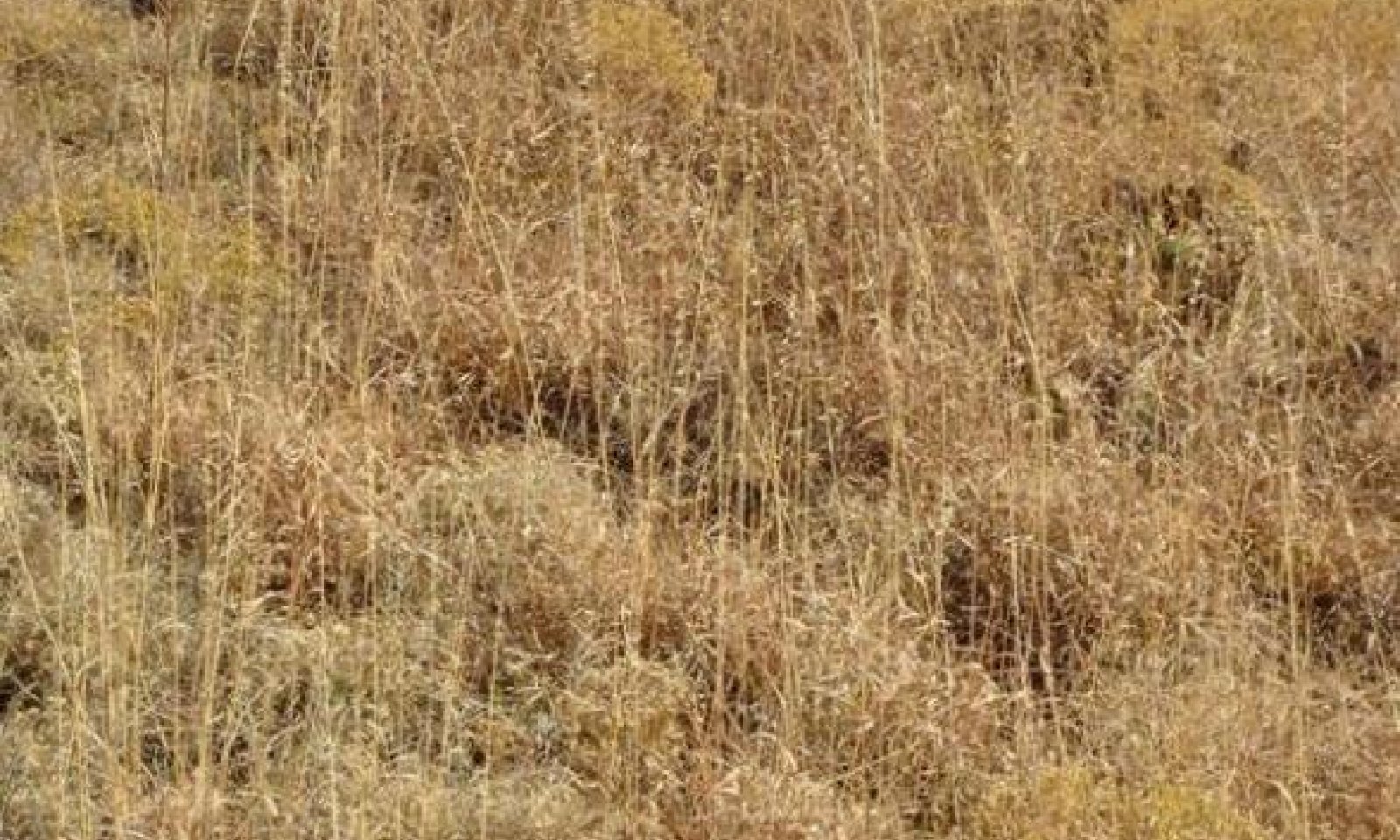
Figure 8. 1.1 Mid/Shortgrass Prairie Community
The reference plant community for the Shallow Clay ecological site is a midgrass/shortgrass prairie. In pristine conditions, the site is dominated by sideoats grama with smaller amounts of cane and silver bluestem, Arizona cottontop, dropseeds, and vine mesquite. Buffalograss, curlymesquite, and hairy grama are sub-dominant shortgrasses. Blue grama is a minor, but significant, part of the historic shortgrass component on this site. Perennial forbs are scattered across the site. Shrubs are a minor component of the plant community. Annual production ranges from 1000 to 2800 pounds per acre.
Figure 9. Annual production by plant type (representative values) or group (midpoint values)
Table 5. Annual production by plant type
Plant type Low
(lb/acre)Representative value
(lb/acre)High
(lb/acre)Grass/Grasslike 750 1500 2250 Forb 200 300 400 Shrub/Vine 50 100 150 Total 1000 1900 2800 Figure 10. Plant community growth curve (percent production by month). TX3027 , Mid/Shortgrass Prairie. Historic Climax Plant Community, Mid and Short grass Prairie..
Jan Feb Mar Apr May Jun Jul Aug Sep Oct Nov Dec J F M A M J J A S O N D 2 2 2 10 20 24 10 5 10 10 3 2 Community 1.2
Short/Midgrass Prairie Community
Figure 11. 1.2 Short/Midgrass Prairie Community
Sideoats grama declines because of disturbance or neglect as a result of uncontrolled grazing, lack of fire, climatic factors, or other factors. Shortgrasses such as buffalograss and curlymesquite, dominate the site along with midgrasses such as silver bluestem, dropseeds, and slim and rough tridens. Threeawns and Texas grama increase significantly. More annual grasses and forbs begin to appear on the site. Mesquite, lotebush, pricklypear, and tasajillo begin to invade from adjacent sites and the shrub canopy begins to gradually increase. Annual production ranges from 900 to 2500 pounds per acre.
Figure 12. Annual production by plant type (representative values) or group (midpoint values)
Table 6. Annual production by plant type
Plant type Low
(lb/acre)Representative value
(lb/acre)High
(lb/acre)Grass/Grasslike 550 1200 1850 Forb 300 400 500 Shrub/Vine 50 100 150 Total 900 1700 2500 Figure 13. Plant community growth curve (percent production by month). TX3049 , Shortgrasses/Midgrasses/No Shrubs Community. Shortgrass/Midgrass - buffalograss, curlymesquite, Texas wintergrass, sideoats grama, vine mesquite/No Shrubs or Trees..
Jan Feb Mar Apr May Jun Jul Aug Sep Oct Nov Dec J F M A M J J A S O N D 3 4 7 15 18 15 5 5 10 10 5 3 Pathway 1.1A
Community 1.1 to 1.2
Mid/Shortgrass Prairie Community
Short/Midgrass Prairie CommunityWith uncontrolled grazing and no fires, the Mid/Shortgrass Prairie Community will shift to the Short/Midgrass Prairie Community.
Pathway 1.2A
Community 1.2 to 1.1
Short/Midgrass Prairie Community
Mid/Shortgrass Prairie CommunityApplying conservation practices such as Prescribed Grazing and Prescribed Burning can restore the Short/Midgrass Prairie Community back to the Mid/Shortgrass Prairie Community.
Conservation practices
Prescribed Burning Prescribed Grazing State 2
Shortgrass Prairie StateThe Shortgrass/Forb/Shrub Community is composed of perennial shortgrasses, including buffalograss, curlymesquite, and threeawns which dominate the site along with annual forbs and grasses. Invading shrubs increase in density and canopy. A few individual plants of sideoats grama and Arizona cottontop remain in isolated areas. Annual production ranges from 800 to 1400 pounds per acre.
Dominant plant species
-
buffalograss (Bouteloua dactyloides), grass
Community 2.1
Shortgrass/Forb/Shrub Community
Figure 14. 2.1 Shortgrass/Forb/Shrub Community
This plant community is the result of prolonged periods of damaging disturbances and neglect which may include continuous abusive grazing and total lack of prescribed fire or brush management. Perennial shortgrasses, including buffalograss, curlymesquite, and threeawns dominate the site along with annual forbs and grasses. Invading shrubs such as mesquite, lotebush, and pricklypear increase in density and canopy, but their growth habit is stunted because of shallow soils, limited rooting depth, and lack of available moisture. A few individual plants of sideoats grama and Arizona cottontop remain in isolated areas, but silver bluestem, dropseeds, and white tridens are the most common midgrasses. Annual production ranges from 800 to 1400 pounds per acre.
Figure 15. Annual production by plant type (representative values) or group (midpoint values)
Table 7. Annual production by plant type
Plant type Low
(lb/acre)Representative value
(lb/acre)High
(lb/acre)Forb 400 500 600 Grass/Grasslike 400 500 600 Shrub/Vine 100 150 200 Total 900 1150 1400 Figure 16. Plant community growth curve (percent production by month). TX3039 , Shortgrass/Annuals/Mesquite/Shrubs Community. Shortgrass/Annuals/Mesquite and Shrubs – buffalograss, curlymesquite, broomweed, annual forbs and grasses, mesquite, lotebush.
Jan Feb Mar Apr May Jun Jul Aug Sep Oct Nov Dec J F M A M J J A S O N D 3 4 8 16 18 12 4 4 10 12 6 3 State 3
Annuals/Bare Ground StateIn the Annuals/Bare Ground Community, annual forbs such as broomweed are abundant. Stunted mesquite, lotebush, and pricklypear are scattered across the site. In the lowest stages of degradation, there is a significant amount of bare ground, and scalded areas are obvious. Annual production ranges from 500 to 800 pounds per acre.
Dominant plant species
-
threeawn (Aristida), grass
Community 3.1
Annuals/Bare Ground CommunityContinued lack of fire and brush management along with uncontrolled grazing results in a plant community dominated by annual forbs and grasses. Annual forbs such as broomweed are abundant. Stunted mesquite, lotebush, and pricklypear are scattered across the site. In the lowest stages of degradation, there is a significant amount of bare ground, and scalded areas are obvious. Some of the scalds are the result of geologic erosion while others are the result of long-term abuse and mismanagement. This plant community is a terminal state that will not return to historic plant communities because of total degradation of the soil, and complete loss of most of the higher successional native plant species. Annual production ranges from 500 to 800 pounds per acre.
Figure 17. Annual production by plant type (representative values) or group (midpoint values)
Table 8. Annual production by plant type
Plant type Low
(lb/acre)Representative value
(lb/acre)High
(lb/acre)Grass/Grasslike 200 250 300 Forb 200 250 300 Shrub/Vine 100 150 200 Total 500 650 800 Figure 18. Plant community growth curve (percent production by month). TX3039 , Shortgrass/Annuals/Mesquite/Shrubs Community. Shortgrass/Annuals/Mesquite and Shrubs – buffalograss, curlymesquite, broomweed, annual forbs and grasses, mesquite, lotebush.
Jan Feb Mar Apr May Jun Jul Aug Sep Oct Nov Dec J F M A M J J A S O N D 3 4 8 16 18 12 4 4 10 12 6 3 State 4
Converted Land StateHundreds of thousands of acres have been plowed up and converted to cropland, pastureland, or hayland. This community is known as the Converted Land Community. Wheat is the primary annual crop. Bermudagrass is the primary introduced pasture species used in this area.
Abandoned croplands and reseeded areas tend to revert back to a more natural state through the process of secondary succession. This is a very slow process that takes decades or centuries to evolve, dependent on the status of the area at the time it is abandoned. The first plants to establish are “pioneer plants” (annual forbs and grasses followed by early successional shortgrasses and midgrasses). This community is known as the Abandoned Land Community.Dominant plant species
-
Bermudagrass (Cynodon dactylon), grass
Community 4.1
Converted Land CommunityThe Shallow Clay site is one of the sites that is poorly suited to use as cropland or intensively managed pastureland. The soils of this site are poorly suited to cultivation or conversion to pastureland because of poor soil-moisture-plant relationship, shallow root zones, and moderate slopes that are susceptible to erosion. A small amount of this site has been cultivated in the past, but very few acres are still planted to annual crops. Those limited areas of cropland remaining are planted to wheat or forage sorghum, but yields are usually low. King Ranch bluestem has been seeded on some areas that were formerly cropland.
Figure 19. Annual production by plant type (representative values) or group (midpoint values)
Table 9. Annual production by plant type
Plant type Low
(lb/acre)Representative value
(lb/acre)High
(lb/acre)Grass/Grasslike 450 650 850 Forb 300 250 200 Shrub/Vine 50 100 150 Total 800 1000 1200 Figure 20. Plant community growth curve (percent production by month). TX3002 , Cropland - Small Grains. Planted into small grains such as wheat or oats..
Jan Feb Mar Apr May Jun Jul Aug Sep Oct Nov Dec J F M A M J J A S O N D 5 16 21 19 5 0 0 0 0 8 18 8 Figure 21. Plant community growth curve (percent production by month). TX3037 , Converted Land Community. Planted to monocultures of introduced species, or monocultures or mixtures of commercially available native tallgrasses. .
Jan Feb Mar Apr May Jun Jul Aug Sep Oct Nov Dec J F M A M J J A S O N D 1 3 5 14 23 20 5 4 12 8 3 2 Community 4.2
Abandoned Land Community
Figure 22. 4.2 Abandoned Land Community
The soils of this site are poorly suited to cultivation or conversion to pastureland. Therefore, most of the acres of this site that were cultivated in the past have been abandoned because of very low yields and poor economics. Abandoned croplands and reseeded areas tend to revert back to a more natural state through the process of secondary succession. This is a very slow process that takes decades or centuries dependent on the status of the area at the time it is abandoned. The first plants to establish are annual forbs and grasses followed by early successional shortgrasses and midgrasses. If managed properly, some of these abandoned areas may eventually begin to approximate the diversity and complexity of the historic Shallow Clay ecosystem. Midgrasses and perennial forbs may begin to establish if the area is carefully managed. However, it is highly unlikely that abandoned lands can ever return to climax vegetation within a reasonable period of time.
Figure 23. Annual production by plant type (representative values) or group (midpoint values)
Table 10. Annual production by plant type
Plant type Low
(lb/acre)Representative value
(lb/acre)High
(lb/acre)Grass/Grasslike 450 650 850 Forb 300 250 200 Shrub/Vine 50 100 150 Total 800 1000 1200 Figure 24. Plant community growth curve (percent production by month). TX3038 , Abandoned Land Community. Abandoned croplands, pasturelands and seeded areas..
Jan Feb Mar Apr May Jun Jul Aug Sep Oct Nov Dec J F M A M J J A S O N D 3 4 8 16 18 12 4 4 10 12 6 3 Pathway 4.1A
Community 4.1 to 4.2With abusive grazing, no fires, no brush management, idled land, no pasture/range/cropland management, the Converted Land Community will shift to the Abandoned Land Community.
Pathway 4.2A
Community 4.2 to 4.1With the implementation of various conservation practices such as Prescribed Grazing, Prescribed Burning, Pasture/Crop Management, Seedbed Preparation, and Range/Pasture Planting, the Abandoned Land Community can be restored back to the Converted Land Community.
Conservation practices
Brush Management Conservation Crop Rotation Prescribed Burning Forage and Biomass Planting Prescribed Grazing Range Planting Nutrient Management Integrated Pest Management (IPM) Transition T1A
State 1 to 2With abusive grazing, no fires, and no brush management practices, the Midgrass Prairie State will transition into the Shortgrass Prairie State.
Restoration pathway R2A
State 2 to 1The Shortgrass Prairie State can be restored to the Midgrass Prairie State with the use of various conservation practices including but not limited to Prescribed Grazing, Prescribed Burning, Brush Management, and Range Planting.
Conservation practices
Brush Management Prescribed Burning Prescribed Grazing Range Planting Transition T2A
State 2 to 3With the continuation of abusive grazing pressure, no fires and no brush management practices, the Shortgrass Prairie State will transition into the Annuals/<a class="species-link" href="https://plants.usda.gov/core/profile?symbol=2BARE" target="_blank" title="Open in plants.usda.gov"><i>Bare Ground</i></a> State.
Transition T2B
State 2 to 4With Brush Management, Seedbed Preparation, Range, Pasture or Crop Cultivation, the Shortgrass Prairie State can transition into the Converted Land State.
Additional community tables
Table 11. Community 1.1 plant community composition
Group Common name Symbol Scientific name Annual production () Foliar cover (%) Grass/Grasslike1 Tallgrasses 0–400 little bluestem SCSC Schizachyrium scoparium 0–400 – 2 Midgrasses 300–750 sideoats grama BOCU Bouteloua curtipendula 300–750 – 3 Midgrasses 300–750 cane bluestem BOBA3 Bothriochloa barbinodis 0–300 – silver beardgrass BOLAT Bothriochloa laguroides ssp. torreyana 50–300 – Drummond's dropseed SPCOD3 Sporobolus compositus var. drummondii 50–250 – hairy grama BOHI2 Bouteloua hirsuta 50–250 – Arizona cottontop DICA8 Digitaria californica 0–200 – blue grama BOGR2 Bouteloua gracilis 0–200 – Texas wintergrass NALE3 Nassella leucotricha 50–200 – vine mesquite PAOB Panicum obtusum 0–200 – Hall's panicgrass PAHAH Panicum hallii var. hallii 0–150 – slim tridens TRMUE Tridens muticus var. elongatus 0–150 – slim tridens TRMUM Tridens muticus var. muticus 0–150 – sand dropseed SPCR Sporobolus cryptandrus 0–150 – white tridens TRAL2 Tridens albescens 0–100 – Reverchon's bristlegrass SERE3 Setaria reverchonii 0–100 – Texas cupgrass ERSE5 Eriochloa sericea 0–100 – hooded windmill grass CHCU2 Chloris cucullata 0–100 – tumble windmill grass CHVE2 Chloris verticillata 0–100 – 4 Shortgrasses 150–350 buffalograss BODA2 Bouteloua dactyloides 0–350 – curly-mesquite HIBE Hilaria belangeri 0–350 – Texas grama BORI Bouteloua rigidiseta 0–100 – sedge CAREX Carex 0–100 – purple threeawn ARPU9 Aristida purpurea 0–100 – Wright's threeawn ARPUW Aristida purpurea var. wrightii 0–100 – Forb5 Forbs 200–400 Engelmann's daisy ENPE4 Engelmannia peristenia 0–150 – white heath aster SYERE Symphyotrichum ericoides var. ericoides 0–150 – fineleaf fournerved daisy TELI3 Tetraneuris linearifolia 0–50 – slender greenthread THSI Thelesperma simplicifolium 0–50 – Texas vervain VEHA Verbena halei 0–50 – prairie broomweed AMDR Amphiachyris dracunculoides 0–50 – Cuman ragweed AMPS Ambrosia psilostachya 0–50 – American star-thistle CEAM2 Centaurea americana 0–50 – Texas thistle CITE2 Cirsium texanum 0–50 – Queen Anne's lace DACA6 Daucus carota 0–50 – prairie clover DALEA Dalea 0–50 – purple prairie clover DAPU5 Dalea purpurea 0–50 – Leavenworth's eryngo ERLE11 Eryngium leavenworthii 0–50 – beeblossom GAURA Gaura 0–50 – curlycup gumweed GRSQ Grindelia squarrosa 0–50 – Indian rushpea HOGL2 Hoffmannseggia glauca 0–50 – trailing krameria KRLA Krameria lanceolata 0–50 – plains blackfoot MELE2 Melampodium leucanthum 0–50 – blazingstar MENTZ Mentzelia 0–50 – Nuttall's sensitive-briar MINU6 Mimosa nuttallii 0–50 – pony beebalm MOPE Monarda pectinata 0–50 – plantain PLANT Plantago 0–50 – upright prairie coneflower RACO3 Ratibida columnifera 0–50 – Drummond's skullcap SCDR2 Scutellaria drummondii 0–50 – Shrub/Vine6 Shrubs 50–150 gum bully SILA20 Sideroxylon lanuginosum 0–150 – honey mesquite PRGL2 Prosopis glandulosa 0–100 – lotebush ZIOB Ziziphus obtusifolia 0–100 – catclaw acacia ACGRG3 Acacia greggii var. greggii 0–100 – Christmas cactus CYLE8 Cylindropuntia leptocaulis 0–50 – black prairie clover DAFR2 Dalea frutescens 0–50 – clapweed EPAN Ephedra antisyphilitica 0–50 – Berlandier's wolfberry LYBE Lycium berlandieri 0–50 – pricklypear OPUNT Opuntia 0–50 – yucca YUCCA Yucca 0–50 – Table 12. Community 1.2 plant community composition
Group Common name Symbol Scientific name Annual production () Foliar cover (%) Table 13. Community 2.1 plant community composition
Group Common name Symbol Scientific name Annual production () Foliar cover (%) Table 14. Community 3.1 plant community composition
Group Common name Symbol Scientific name Annual production () Foliar cover (%) Table 15. Community 4.1 plant community composition
Group Common name Symbol Scientific name Annual production () Foliar cover (%) Table 16. Community 4.2 plant community composition
Group Common name Symbol Scientific name Annual production () Foliar cover (%) Interpretations
Animal community
Historically, the Shallow Clay site was occasionally utilized by a variety mammals, reptiles, and birds. Several historical references and journals written in the 18th and 19th century by explorers, survey parties, and military expeditions refer to herds of bison, wild cattle, wild horses, and antelope roaming freely across the North Central Prairie and adjacent regions.
Today the site is primarily used by bob-white quail because of the scattered vegetation, amount of open ground, and presence of scattered, low-growing shrubs. The site may be utilized intermittently by deer, dove, species of grassland birds, and small fur-bearing mammals, but it is not a preferred site for most wildlife because of the relatively low and uniform structure of the vegetation, as well as the lack of trees, shrubs, and forbs. With the exception of quail, most wildlife only use this site incidentally in association with the use of more suitable adjacent sites. Animal species and populations fluctuate as the vegetation cycles through temporary phases and different ecological stages.
Livestock grazing should be controlled by implementing grazing management systems that incorporate frequent and timely deferment periods to prevent abusive grazing.Hydrological functions
When herbaceous vegetation and ground cover are maintained in a healthy and vigorous status, water infiltration into the soil profile is increased, resulting in less runoff. However, infiltration rates are generally low and permeability is slow. Vegetation on this site is often sparse and interspersed with significant areas of bare ground. Overland water flow can cause significant erosion hazards particularly during intense rainfall periods. A thick, healthy grass cover will improve water quality because it serves as a filter or trap to reduce sediments and pollutants before the water flows offsite.
Recreational uses
Because of the scarcity of trees and shrubs, the level terrain, characteristics of the soil, and the uniformity of the plant community, recreational use of this site is incidental and is generally associated with recreational use of adjacent sites. This site provides limited opportunities for outdoor activities such as hiking, camping, and horseback riding. Quail and dove hunting offer the most potential for recreation on this site.
Wood products
Insignificant.
Other products
Insignificant.
Other information
None.
Supporting information
Inventory data references
Vegetation data for this site was obtained from existing Range Site Descriptions, SCS-RANGE -417 Production and Composition Records for Native Grazing Lands, and on-site inventories by the author and local experts including ranchers, natural resource specialists from federal and state agencies, and personnel from cooperating agencies and organizations. A total of 9 SCS-RANGE-417’s containing data collected from 5 counties (Brown, Callahan, Lampasas, Palo Pinto and Wise)during the period 12/30/1981 to 12/12/1986 were reviewed for this site.
References
-
. 2021 (Date accessed). USDA PLANTS Database. http://plants.usda.gov.
Other references
Ajilvsgi, Geyata. Wildflowers of Texas. Sharer Publishing, Bryan, TX. 1984.
Coffey, Chuck R., and Russell Stevens. Grasses of Southern Oklahoma and North Texas: A Pictorial Guide. The Samuel Roberts Noble Foundation, Ardmore, OK. 2004
Diggs, George M., Jr., Barney L. Lipscomb, and Robert J. O’Kennon. Illustrated Flora of North Central Texas. Botanical Research Institute of Texas. Fort Worth, TX 1999.
Enquist, Marshall. Wildflowers of the Texas Hill Country. Lone Star Botanical, Austin, TX. 1987.
Flores, Dan. “Indian Use of Range Resources” presented at 20th Annual Ranch Management Conference. Lubbock, TX, September 30, 1983.
Gould, Frank W., The Grasses of Texas. Texas A&M University Press, College Station, TX. 1975.
Hatch, Stephan L., Kancheepuram N. Gandhi, and Larry E. Brown. Checklist of the Vascular Plants of Texas. Texas Agricultural Experiment Station MP-1655. College Station, TX. 1990
Hatch, Stephan L., Jennifer Pluhar. Texas Range Plants. Texas A&M University Press, College Station, TX. 1993.
Kelton, Elmer. “History of Rancher Use of Range Resources” presented at 20th Annual Ranch Management Conference. Lubbock, TX, September 30, 1983.
Ladd, Doug. Tallgrass Prairie Wildflowers. Falcon Press, Helena and Billings, MT. 1995.
Parker, W.B. Through Unexplored Texas In The Summer and Fall of 1854. The Texas State Historical Commission. Austin, TX 1984
Smith, Jared G. Grazing Problems in the Southwest and How to Meet Them. United States Department of Agriculture Division of Agrostology. Washington, DC. 1899.
Texas Almanac Sesquicentennial Edition 1857-2007. Dallas Morning News. Dallas, TX. 2006.
Tyrl, Ronald J., Terrence G. Bidwell, and Ronald E. Masters. Field Guide to Oklahoma Plants. Oklahoma State University, Stillwater, OK. 2002.
United States Department of Agriculture Natural Resources Conservation Service, National Plant Data Center, Baton Rouge, LA. The PLANTS Database. http://plants.usda.gov 2007.
United States Department of Agriculture Natural Resources Conservation Service, Ag Handbook 296. Land Resource Regions and Major Land Resource Areas of the United States, the Caribbean, and the Pacific Basin. 2006.
United States Department of Agriculture Natural Resources Conservation Service, Temple, TX. Shallow Clay Ecological Site Descriptions R078BY090TX and R078CY112TX. 2006.
United States Department of Agriculture Soil Conservation Service, Temple, TX. Production and Composition Record for Native Grazing Lands. SCS-RANGE 417 data from Brown, Eastland, Jack, Stephens, and Young Counties. 1981-1986.
United States Department of Agriculture Soil Conservation Service, Washington, DC. Web Soil Survey http://websoilsurvey.nrcs.usda.gov/app/. 2007
United States Department of Agriculture Soil Conservation Service, Temple, TX. Published Soil Surveys: Brown and Mills, Jack, Palo Pinto, Stephens, and Young Counties. Various publication dates.
United States Department of Agriculture Soil Conservation Service, Temple, TX. Range Site Descriptions for the North Central Prairie counties. Various publication dates.
Vines, Robert A. Trees of North Texas. University of Texas Press, Austin, TX. 1982
Weniger, Del. The Explorers’ Texas. Eakin Publications. Austin, TX. 1984.
Williams, Gerald W. References On The American Indian Use Of Fire in Ecosystems. United States Department of Agriculture – Forest Service, Washington, DC. 2005.
ACKNOWLEDGEMENTS: I would like to express my thanks and appreciation to the following for their cooperation, assistance, and support in the development of this Ecological Site Description:
Lake Brownwood State Park – Brownwood, TX
Ricky Marks, NRCS – Brownwood, TX
John Paclik, NRCS – Graham, TX
Misty Pearcy, NRCS – Brownwood, TX
Reviewers:
Lem Creswell, RMS, NRCS, Weatherford, Texas
Justin Clary, RMS, NRCS, Temple, TexasContributors
Dan Caudle, DMS Natural Resources Mgmt, Weatherford, Texas
Joe B. Norris, RMS, NRCS, Abilene, Texas
PES edits by Colin Walden, Stillwater Soil Survey OfficeApproval
Bryan Christensen, 9/19/2023
Acknowledgments
Site Development and Testing Plan: Future work, as described in a Project Plan, to validate the information in this Provisional Ecological Site Description is needed. This will include field activities to collect low, medium and high intensity sampling, soil correlations, and analysis of that data. Annual field reviews should be done by soil scientists and vegetation specialists. A final field review, peer review, quality control, and quality assurance reviews of the ESD will be needed to produce the final document. Annual reviews of the Project Plan are to be conducted by the Ecological Site Technical Team.
Rangeland health reference sheet
Interpreting Indicators of Rangeland Health is a qualitative assessment protocol used to determine ecosystem condition based on benchmark characteristics described in the Reference Sheet. A suite of 17 (or more) indicators are typically considered in an assessment. The ecological site(s) representative of an assessment location must be known prior to applying the protocol and must be verified based on soils and climate. Current plant community cannot be used to identify the ecological site.
Author(s)/participant(s) Lem Creswell, Zone RMS, NRCS, Weatherford, Texas Contact for lead author 817-596-2865 Date 12/04/2007 Approved by Approval date Composition (Indicators 10 and 12) based on Annual Production Indicators
-
Number and extent of rills:
None. -
Presence of water flow patterns:
Deposition or erosion is uncommon during normal rainfall events, but may occur in limited areas during intense rainfall events. -
Number and height of erosional pedestals or terracettes:
Uncommon for this site. -
Bare ground from Ecological Site Description or other studies (rock, litter, lichen, moss, plant canopy are not bare ground):
Expect no more than 20% bare ground scattered randomly throughout the site. -
Number of gullies and erosion associated with gullies:
Few rills should occur. Some gullies may exist on side drains into intermittent streams. -
Extent of wind scoured, blowouts and/or depositional areas:
None. -
Amount of litter movement (describe size and distance expected to travel):
Little or no litter movement or deposition during normal rainfall events. -
Soil surface (top few mm) resistance to erosion (stability values are averages - most sites will show a range of values):
Soil surface in HCPC is resistant to erosion. Stability range is expected to be 5-6. -
Soil surface structure and SOM content (include type of structure and A-horizon color and thickness):
0-6 inches of Dark brown flaggy silty clay loam with subrounded to angular pebbles, cobbles, and stones. Has a strong fine granular structure. SOM is 1-4%. See soil survey for more information. -
Effect of community phase composition (relative proportion of different functional groups) and spatial distribution on infiltration and runoff:
The midgrass/shortgrass prairie has scattered perennial forbs and very few shrubs. Little litter accumulation is expected. Moderate amounts of bare ground, shallow soils, low infiltration, and slow permeability provides for moderate infiltration and moderate runoff. -
Presence and thickness of compaction layer (usually none; describe soil profile features which may be mistaken for compaction on this site):
None. -
Functional/Structural Groups (list in order of descending dominance by above-ground annual-production or live foliar cover using symbols: >>, >, = to indicate much greater than, greater than, and equal to):
Dominant:
Warm-season midgrasses > Warm-season shortgrasses >Sub-dominant:
Perennial Forbs >Other:
ShrubsAdditional:
-
Amount of plant mortality and decadence (include which functional groups are expected to show mortality or decadence):
Perennial grasses will naturally exhibit a minor amount (less than 5%) of senescence and some mortality every year. -
Average percent litter cover (%) and depth ( in):
Litter is dominantly herbaceous. -
Expected annual annual-production (this is TOTAL above-ground annual-production, not just forage annual-production):
1000 to 2800 pounds per acre. -
Potential invasive (including noxious) species (native and non-native). List species which BOTH characterize degraded states and have the potential to become a dominant or co-dominant species on the ecological site if their future establishment and growth is not actively controlled by management interventions. Species that become dominant for only one to several years (e.g., short-term response to drought or wildfire) are not invasive plants. Note that unlike other indicators, we are describing what is NOT expected in the reference state for the ecological site:
Mesquite, lotebush, pricklypear, yucca, tasajillo, King Ranch bluestem, annual broomweed. -
Perennial plant reproductive capability:
All perennial species should be capable of reproducing every year unless disrupted by extended drought, overgrazing, wildfire, insect damage, or other events occuring immediately prior to, or during the reproductive phase.
Print Options
Sections
Font
AAAAOther
PrintThe Ecosystem Dynamics Interpretive Tool is an information system framework developed by the USDA-ARS Jornada Experimental Range, USDA Natural Resources Conservation Service, and New Mexico State University.
Accessibility statement


