
Natural Resources
Conservation Service
Ecological site R080BY160TX
Shallow
26-33" PZ
Last updated: 9/19/2023
Accessed: 08/01/2026
-
Search


Major Land Resource Area or ecological site by name and/or ID.
PreviousSectionsNextGeneral information
Provisional. A provisional ecological site description has undergone quality control and quality assurance review. It contains a working state and transition model and enough information to identify the ecological site.
Click to explore map
Figure 1. Mapped extent
Areas shown in blue indicate the maximum mapped extent of this ecological site. Other ecological sites likely occur within the highlighted areas. It is also possible for this ecological site to occur outside of highlighted areas if detailed soil survey has not been completed or recently updated.
MLRA notes
Major Land Resource Area (MLRA): 080B–Texas North-Central Prairies
MLRA 80B consists of gently rolling, dissected plains with very steep hillsides and sideslopes and narrow flood plains associated with small streams. Loamy and clayey soils range from very shallow to deep and developed in sandstones, shales, and limestones of Pennsylvanian age.
Classification relationships
This ecological site is correlated to soil components at the Major Land Resource Area (MLRA) level which is further described in USDA Ag Handbook 296.
Ecological site concept
These sites occur on shallow clay and clay loam soils on uplands. The reference vegetation consists native perennial midgrasses with numerous forbs and few scattered shrubs and trees. Without periodic fire or other brush management, woody species may increase and dominate the site.
Associated sites
R080BY146TX Clay Loam 26-33" PZ
Often adjacent downhill with deeper soils.
R080BY154TX Low Stony Hill 26-33" PZ
Often adjacent uphill with shallower soils.
Similar sites
R085AY185TX Shallow 30-38" PZ
Shallow site in MLRA 85.
Table 1. Dominant plant species
Tree Not specified
Shrub Not specified
Herbaceous (1) Bouteloua curtipendula
(2) Schizachyrium scopariumPhysiographic features
This site occurs on linear to convex dip slopes in the Texas North-Central Prairies. This site is characteristically a water distributing site. Slopes are typically less than 5 percent.
Table 2. Representative physiographic features
Landforms (1) Hills > Ridge
(2) Hills > Dip slope
Runoff class Low to medium Elevation 750 – 2400 ft Slope 1 – 5 % Aspect Aspect is not a significant factor Climatic features
The climate is subtropical subhumid and is characterized by hot humid summers and relatively mild winters. Tropical maritime air controls the climate during spring, summer and fall. In winter and early spring, frequent surges of polar Canadian air cause sudden drops in temperatures and add considerable variety to the daily weather. The average first frost generally occurs about November 5 and the last freeze of the season usually occurs about March 19. The average frost free period ranges from 215 days in the northern counties, to 240 days in the south.
The average relative humidity in mid-afternoon is about 60 percent in the summer months. Humidity is higher at night, and the average at dawn is about 80 percent. The sun shines 75 percent of the time possible during the summer and 50 percent in winter. The prevailing wind direction is from the southwest and highest windspeeds occur during the spring months.
Approximately 75% of annual rainfall occurs between April 1 and October 31. Rainfall during the months of April through September typically occurs during thunderstorms which tend to be intense and brief, resulting in large amounts of rain in a short time. The wettest months of the year are May, June, September, and October. The driest months during the growing season are July and August. The winter months of November, December, January, and February are the driest months overall.
Average annual precipitation for the entire MLRA is approximately 28 inches. There is a noticeable difference in the average annual precipitation in the northern counties in comparison to the southern and western counties of this Major Land Resource Area. Jack, Clay, Young, and Palo Pinto Counties all have an average annual precipitation of more than 31 inches. Stephens, Eastland, McCulloch, and San Saba Counties all have an average annual precipitation of less than 28 inches.
Winters tend to be mild, with occasional periods of very cold temperatures which can be accompanied by strong northerly winds and freezing precipitation. Snow is infrequent and significant accumulations are rare. These periods of very cold weather are generally short-lived. Summers tend to be hot and dry. Drought conditions are common during most summers. Air temperatures of more than 95oF are common from mid-June through September. In the northern counties nearest to the Red River, temperatures are generally slightly cooler during winter months and slightly warmer during summer months than in the other counties in the North Central Prairie.Table 3 Representative climatic features
Frost-free period (characteristic range) 180-200 days Freeze-free period (characteristic range) 210-230 days Precipitation total (characteristic range) 30-30 in Frost-free period (actual range) 180-200 days Freeze-free period (actual range) 210-230 days Precipitation total (actual range) 30-30 in Frost-free period (average) 190 days Freeze-free period (average) 220 days Precipitation total (average) 30 in Characteristic rangeActual rangeBarLineFigure 2. Monthly precipitation range
Characteristic rangeActual rangeBarLineFigure 3. Monthly minimum temperature range
Characteristic rangeActual rangeBarLineFigure 4. Monthly maximum temperature range
BarLineFigure 5. Monthly average minimum and maximum temperature
Figure 6. Annual precipitation pattern
Figure 7 Annual average temperature pattern
Climate stations used
-
(1) SAN SABA 7NW [USC00417994], Richland Springs, TX
-
(2) BROWNWOOD 2ENE [USC00411138], Early, TX
-
(3) EASTLAND [USC00412715], Eastland, TX
-
(4) MINERAL WELLS AP [USW00093985], Millsap, TX
-
(5) BRECKENRIDGE [USC00411042], Breckenridge, TX
-
(6) GRAHAM [USC00413668], Graham, TX
-
(7) JACKSBORO [USC00414517], Jacksboro, TX
">Influencing water features
These sites often shed some rainfall water to areas lower on the landscape. However, the presence of good ground cover and deep rooted grasses can help facilitate water infiltration into the soil. These sites are not associated with wetlands.
Wetland description
NA

Figure 8.
Soil features
Representative soil components for this ecological site include: Aledo, Cho, Mereta
The site is characterized by shallow, calcareous, well drained soils.Table 4. Representative soil features
Parent material (1) Alluvium – limestone and shale
Surface texture (1) Gravelly loam
(2) Gravelly clay loam
Drainage class Well drained Permeability class Moderately slow to moderate Soil depth 5 – 20 in Surface fragment cover <=3" 0 – 2 % Surface fragment cover >3" 0 – 10 % Available water capacity
(0-40in)1 – 3 in Calcium carbonate equivalent
(0-40in)5 – 65 % Electrical conductivity
(0-40in)0 – 2 mmhos/cm Sodium adsorption ratio
(0-40in)Not specified Soil reaction (1:1 water)
(0-40in)7.9 – 8.4 Subsurface fragment volume <=3"
(Depth not specified)0 – 30 % Subsurface fragment volume >3"
(Depth not specified)0 – 5 % Ecological dynamics
The reference plant community of the Shallow Ecological Site in the PZ 26-33 zone of the 80B MLRA is a fire induced Midgrass Prairie (1.1) with scattered live oak motts or trees. Before European settlement in the mid 1800s brought fencing and animal husbandry, frequent wildfires maintained woody species at about 5 percent canopy. The soils of the site are shallow with pockets of deeper soils. Productivity of the site varies with these fluctuations and decreases with precipitation from north to south in the MLRA. Moisture holding capacity is relatively limited and often limits productivity. Long term droughts, occurring three to four times per century, may cause shifts in vegetation affecting woody plant die-off such as the one that occurred in the 1930s (Dyksterhuis 1948).
There was a large component of midgrasses including sideoats grama, Texas cupgrass, vine-mesquite, Texas wintergrass, cane and silver bluestems. Little bluestem, big bluestem and Indiangrass were in scattered stands on favorable moisture areas and deeper soils throughout the site. Frequent fires favored grasses over woody plants and forbs. There was a wide variety of forbs, however. Trees, primarily live oak and hackberry, covered about 5 percent of the site occupying rock crevices and deeper soil pockets on areas protected from wildfires.
The Midgrass Prairie Community (1.1) was relatively stable and resilient within the climate, soil and fire regime until European settlement (Archer, 1994). As overgrazing occurred, there was a reduction of tallgrasses and palatable forbs, decline in mulch and organic matter and a reduction in intensity and frequency of fires. The shift in plant cover and decline in soil properties favored woody plant encroachment. Climate change, including increased atmospheric carbon dioxide, is also thought to be a factor. The woody and grassland vegetation invaders were generally endemic species released from competition. Continued overgrazing results in a Mixed-grass Prairie Community (1.2) being invaded by woody plants. In this phase, midgrasses such as sideoats grama, feathery bluestems, plains lovegrass, buffalograss and low palatability forbs began replacing the more preferred tallgrasses and forbs. Grasses still dominate primary production, but the encroaching woody species contribute an increasing amount.
If the Mixed-grass Prairie Community (1.2) is continually overgrazed and fire is excluded, the plant community continues its transition toward a woody plant dominated community. The more preferred tall and midgrasses begin to be replaced by less palatable grasses and forbs. Less preferred woody plants and weedy grasses and forbs invade. As grass cover declines, litter and soil organic matter decline and bare ground, erosion and other desertification processes increase. The microclimate in the grassland areas becomes more arid. Increasing woody dominants are primarily mesquite and juniper, although live oak and other understory shrubs may increase also. When the woody plant community exceeds 20 to 25 percent canopy and they become fire resistant, rest from grazing alone generally will not restore the grassland community. When this threshold is crossed, the plant community transitions into the Shortgrass/Mixed-brush Community (2.1). This plant community also marks the beginning of the Woodland State.
Live oak, mesquite and juniper dominate the Shortgrass/Mixed-brush Community (2.1). Condalia, elbowbush, skunkbush sumac and pricklypear are also common. The grass component is a mixture of midgrasses, shortgrasses and low quality forbs initially. Little bluestem often persists, especially in the northern parts of the MLRA. Texas wintergrass and buffalograss are also persistent increasers. During this phase, the process of deterioration can be reversed with moderately intensive brush control, prescribed burning and prescribed grazing management. If these conservation practices are not applied, the woody canopy will continue to increase in size and density and a Mixed-brush/ Shortgrass/Annuals Plant Community (2.2) develops.
The Mixed-brush/Shortgrass/Annuals Community (2.2) is a mosaic, open woodland dominated by live oak, juniper, mesquite and underbrush to the exclusion of most herbaceous species except within the small interspaces. Once woody plant cover exceeds 40 to 50 percent overstory, forage production becomes very limited, being generally made up of unpalatable shrubs, grasses and forbs. Due to shading and competition from the woody plants, the herbaceous layer, mostly shortgrasses, cool-season grasses and annuals, is of low vigor. Desertification, including erosion, continues in the interspaces until maximum ground cover by woody species is approached. Once canopy cover reaches equilibrium, however, the hydrologic processes, energy flow and nutrient cycling stabilize under the woodland environment (Thurow, 1991).
Major expense and energy are necessary to restore the Mixed-brush/Shortgrass/Annuals Community (2.2) to a Grassland State. Generally, broadcast mechanical or herbicidal treatments, such as dozing, range planting followed by grazing deferment, prescribed grazing and prescribed burning, are essential for the site to return to State 1. Erosion may preclude a return to the reference state (1).
The following diagram suggests some pathways that the vegetation on this site might take. There may be other states not shown on the diagram. This information is intended to show what might happen in a given set of circumstances; it does not mean that this would happen the same way in every instance. Local professional guidance should always be sought before pursuing a treatment scenario.State and transition model
Custom diagramStandard diagram
More interactive model formats are also available. View Interactive Models
More interactive model formats are also available. View Interactive Models
Click on state and transition labels to scroll to the respective textEcosystem states
State 1 submodel, plant communities
State 2 submodel, plant communities
State 1
Grassland State - ReferenceThe Midgrass Prairie Community is the interpretive plant community for the site. It was a fire induced midgrass prairie with scattered stands of tallgrasses, scattered woody plants and a good variety of forbs. The tallgrasses usually occurred in the vicinity of limestone outcrops, drainages or the crests of hills. Live oak, hackberry and shrubs were widely scattered in draws. Sideoats grama was the most abundant grass throughout the site. It is estimated that the Midgrass Prairie Community produced from 1500 to 3500 pounds of biomass annually. Grasses make up to 85 percent of species composition.
The Mixed-grass Community (1.2) is mixed-grass dominated grassland being encroached by indigenous or invading woody species. Numerous woody species, including juniper and mesquite, are increasing in density. In this phase, the increasing woody species are generally less than four feet tall and the woody canopy vary between 5 and 20 percent. The prairie becomes grassland being encroached by previously suppressed woody species. The preferred tallgrasses are being replaced by the more grazing resistant midgrasses although little bluestem often persists. Most of the perennial forbs persist, but in lesser amounts, being replaced by weedy forbs. Annual primary production ranges from 1000 to 3000 pounds per acre. Forage production is predominantly grass.Dominant plant species
-
sideoats grama (Bouteloua curtipendula), grass
-
little bluestem (Schizachyrium scoparium), grass
Community 1.1
Midgrass Prairie CommunityThe Midgrass Prairie Community (1.1) is the interpretive plant community for the site. It was a fire induced midgrass prairie with scattered stands of tallgrasses, scattered woody plants and a good variety of forbs. The tallgrasses usually occurred in the vicinity of limestone outcrops, drainages or the crests of hills. Live oak, hackberry and shrubs were widely scattered in draws. Catclaw acacia, sumacs, elbowbush, ephedra, bumelia and pricklyash were typical shrubs. Tall grasses such as little bluestem, big bluestem and Indiangrass occupied favorable micro-sites and were locally abundant. Sideoats grama was the most abundant grass throughout the site. Also occurring on the site, but in smaller amounts, were the feathery bluestems, Arizona cottontop, Texas wintergrass, Texas cupgrass, vine mesquite and a number of shortgrasses. Buffalograss, curly-mesquite, perennial threeawns, slim and white tridens were common shortgrasses. Common forbs included gaura, Louisiana sagewort, trailing ratany, awnless bushsunflower, Engelmann's daisy, catclaw sensitivebriar and bundleflower.
It is estimated that the Midgrass Prairie Community (1.1) produced from 1500 to 3500 pounds of biomass annually, depending upon the amount of precipitation. Grasses make up to 85 percent of species composition, with about 10% being by cool-season species. With continuous overgrazing, decrease in intensity and frequency of fires and no brush management, this plant community transitions into the Mixed-grass Prairie Community (1.2).
Figure 9. Annual production by plant type (representative values) or group (midpoint values)
Table 5. Annual production by plant type
Plant type Low
(lb/acre)Representative value
(lb/acre)High
(lb/acre)Grass/Grasslike 1275 2125 2975 Forb 150 250 350 Tree 45 75 105 Shrub/Vine 30 50 70 Total 1500 2500 3500 Figure 10. Plant community growth curve (percent production by month). TX3027 , Mid/Shortgrass Prairie. Historic Climax Plant Community, Mid and Short grass Prairie..
Jan Feb Mar Apr May Jun Jul Aug Sep Oct Nov Dec J F M A M J J A S O N D 2 2 2 10 20 24 10 5 10 10 3 2 Community 1.2
Mixed-grass Prairie Community
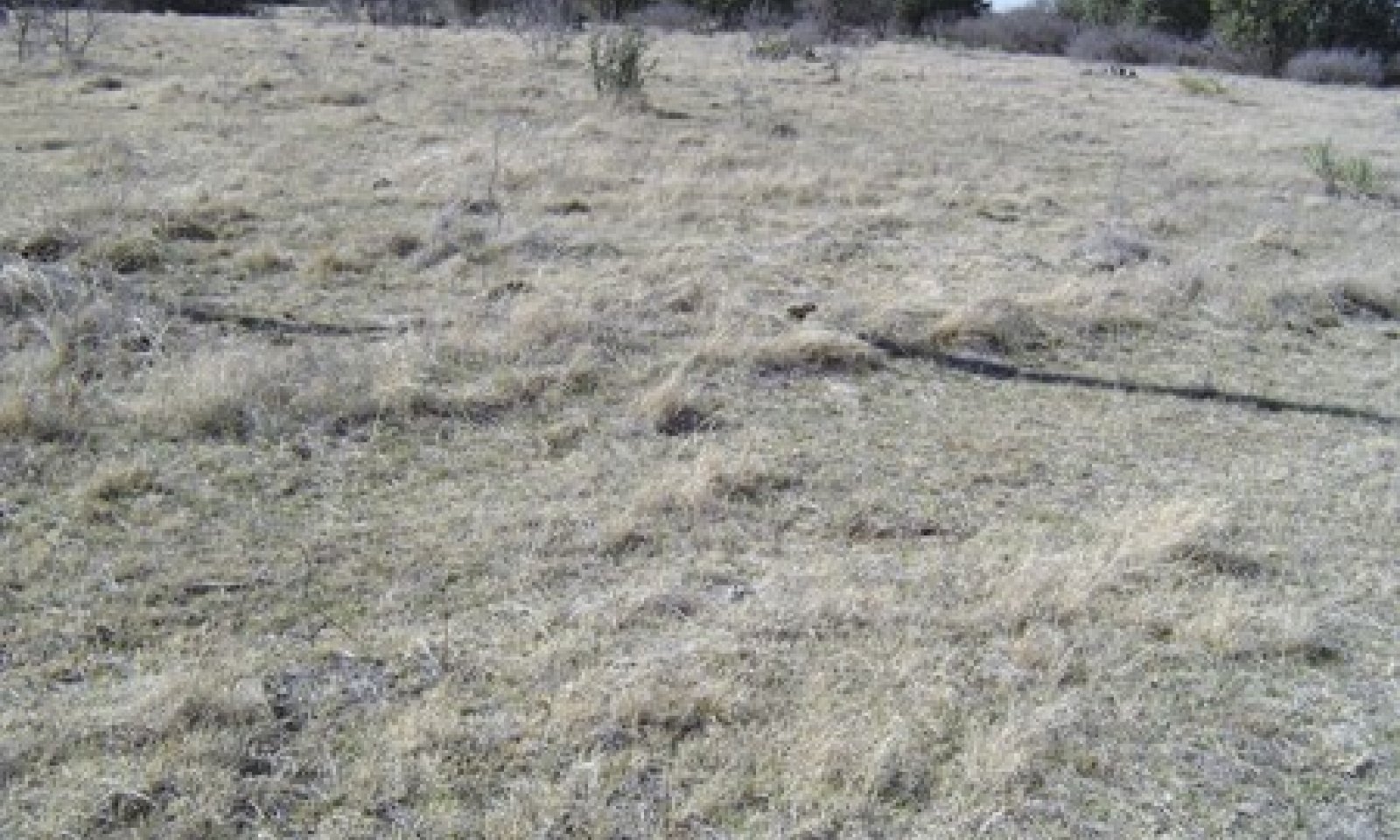
Figure 11. 1.2 Mixed-grass Prairie Community
The Mixed-grass Prairie Community (1.2) is mixed-grass dominated grassland being encroached by indigenous or invading woody species. Numerous woody species, including juniper and mesquite, are increasing in density because overgrazing by livestock has reduced grass cover, exposed some soil and reduced fine fuel for fire. In this phase, the increasing woody species are generally less than four feet tall and still subject to control or suppression by fire and prescribed grazing management. The woody canopy varies between 5 and 20 percent depending on severity of grazing, time since burned and availability of invading species. Typically, oaks increase in size and mesquite and/or juniper increase in density. Less preferred brushy species such as ephedra, pricklyash, sumacs, condalia, skunkbush sumac, catclaw acacia, elbowbush and feather dalea increase in density. The prairie becomes grassland being encroached by previously suppressed woody species. The preferred tallgrasses are being replaced by the more grazing resistant midgrasses although little bluestem often persists. Characteristic grasses are sideoats grama, cane and silver bluestem, tall and meadow dropseed, vine mesquite, plains lovegrass, Texas cupgrass and Arizona cottontop. Texas wintergrass and buffalograss are the primary increasers. Most of the perennial forbs persist, but in lesser amounts, being replaced by weedy forbs.
Annual primary production ranges from 1000 to 3000 pounds per acre, depending on precipitation and the soil series. Forage production is predominantly grass. Heavy continuous grazing has reduced plant cover, litter and mulch and has increased bare ground slightly exposing the soil to some erosion. There could be some mulch and litter movement during rainstorms but due to gentle slopes little soil movement would take place in this vegetation phase.
The changes in composition are small initially, but unless proper grazing and prescribed burning are practiced, retrogression toward a shrubland type continues. Heavy continuous grazing reduces the grassland structure while the woody species continue to increase in size and density. The transition to a Shortgrass/Mixed-brush Community (2.1) is complete when the canopy of the woody plants becomes dense enough (20-40% canopy) and large enough (> 4 feet) to suppress grass growth and resist fire damage. Once this threshold is crossed normal maintenance range management practices, such as prescribed grazing and prescribed burning, cannot reverse the trend to woody plant dominance.Figure 12. Annual production by plant type (representative values) or group (midpoint values)
Table 6. Annual production by plant type
Plant type Low
(lb/acre)Representative value
(lb/acre)High
(lb/acre)Grass/Grasslike 600 1125 1500 Shrub/Vine 80 150 200 Forb 80 150 200 Tree 40 75 100 Total 800 1500 2000 Figure 13. Plant community growth curve (percent production by month). TX3027 , Mid/Shortgrass Prairie. Historic Climax Plant Community, Mid and Short grass Prairie..
Jan Feb Mar Apr May Jun Jul Aug Sep Oct Nov Dec J F M A M J J A S O N D 2 2 2 10 20 24 10 5 10 10 3 2 Pathway 1.1A
Community 1.1 to 1.2With heavy continuous grazing, no fires, no brush management, and invasion of brush species, the Midgrass Prairie Community will shift to the Mixed-grass Prairie Community.
Pathway 1.2A
Community 1.2 to 1.1With the application of various conservation practices including Prescribed Grazing, Prescribed Burning, and Brush Management, the Mixed-grass Prairie Community can be reverted back to the Midgrass Prairie Community.
Conservation practices
Brush Management Prescribed Burning Prescribed Grazing State 2
Woodland StateThe Mixed-brush/Shortgrass Community (2.1) is characterized by a 20 to 40 percent canopy of woody plants on a shortgrass rangeland. The composition of annual production has shifted toward the woody component. All, except the more palatable woody species, have increased in size and density. Remnants of climax grasses and forbs and unpalatable invaders occupy the open areas between trees and shrubs. Cool-season grasses such as Texas wintergrass can be found under and around woody plants. Annual primary production is approximately 1000 to 2500 pounds per acre.
The Mixed-brush/Shortgrass/Annuals Community (2.2) is open woodland dominated by live oak, mesquite and/or juniper. With continued heavy grazing, the trees and shrubs can approach 70 percent ground cover. Shortgrasses and low quality annual and perennial forbs occupy the woody plant interspaces. Grasses and forbs make up 35 percent or less of the annual forage production. Annual production is 1000 to 2500 pounds per acre.Dominant plant species
-
Ashe's juniper (Juniperus ashei), tree
-
Texas wintergrass (Nassella leucotricha), grass
Community 2.1
Shortgrass/Mixed-Brush Community
Figure 14. 2.1 Shortgrass/Mixed-Brush Community
The Mixed-brush/Shortgrass Community (2.1) is characterized by a 20 to 40 percent canopy of woody plants on a shortgrass rangeland. It is the result of selective overgrazing by livestock and deer and the differential response of plants to defoliation. With continued overgrazing by livestock, there is a continued decline in diversity of the grassland component and an increase in woody species and unpalatable forbs. Primary production has decreased due to deterioration in soil structure and decline in organic matter. The composition of annual production has shifted toward the woody component. All, except the more palatable woody species, have increased in size and density. Live oak and mesquite were early increasers throughout the MLRA. Ashe juniper and/or redberry juniper have increased considerably on non-burned sites in recent years. Typically elbowbush, condalia, agarito, Texas persimmon, pricklypear, pricklyash and sumac increase under continuous overgrazing on this site.
Remnants of climax grasses and forbs and unpalatable invaders occupy the open areas between trees and shrubs. Cool season grasses such as Texas wintergrass, plus other grazing resistant climax species, can be found under and around woody plants. Because of grazing pressure and competition for nutrients and water from the woody plants the grassland component show general lack of plant vigor and productivity. Buffalograss and Texas wintergrass are persistent increasers until shrub density reaches maximum canopy. Other common grasses include threeawns, slim tridens, white tridens, meadow dropseed, hairy grama, sedges, Texas grama and red grama. Forbs include greenthread, western ragweed, gray goldaster, gaura, Louisiana sagewort, half-shrub sundrop, goldenrod, dwarf morningglory, verbena, bush sunflower and knotweed leafflower. Cool-season annuals such as annual broomweed, annual brome and Texas filaree can be abundant following above normal fall and winter moisture.
As the grassland vegetation declines, more soil is exposed leading to crusting and erosion. During this phase, erosion can be severe on higher slopes. Higher interception losses by the increasing woody canopy combined with evaporation and runoff can reduce the effectiveness of rainfall. Soil organic matter and soil structure decline within the interspaces but soil conditions are improved under the woody plant cover. Some soil loss can occur during heavy rainfall events. Annual primary production is approximately 1000 to 2500 pounds per acre. In this plant community, annual production is balanced between herbaceous plants and woody plants. Browsing animals such as goats and deer can find fair food value if browse plants have not been grazed excessively. Forage quality for cattle is low. Unless brush management and good prescribed grazing management are applied at this stage, the transition toward the Mixed-brush/Shortgrass/Annuals Community (2.2) will continue. The trend cannot be reversed with good grazing management alone.
Figure 15. Annual production by plant type (representative values) or group (midpoint values)
Table 7. Annual production by plant type
Plant type Low
(lb/acre)Representative value
(lb/acre)High
(lb/acre)Grass/Grasslike 400 700 1000 Shrub/Vine 300 525 750 Tree 200 350 500 Forb 100 175 250 Total 1000 1750 2500 Figure 16. Plant community growth curve (percent production by month). TX3039 , Shortgrass/Annuals/Mesquite/Shrubs Community. Shortgrass/Annuals/Mesquite and Shrubs – buffalograss, curlymesquite, broomweed, annual forbs and grasses, mesquite, lotebush.
Jan Feb Mar Apr May Jun Jul Aug Sep Oct Nov Dec J F M A M J J A S O N D 3 4 8 16 18 12 4 4 10 12 6 3 Community 2.2
Mixed-brush/Shortgrass/Annuals Community
Figure 17. 2.2 Mixed-brush/Shortgrass/Annuals Community
The Mixed-brush/Shortgrass/Annuals Community (2.2) is open woodland dominated by live oak, mesquite and/or juniper. It is the result of many years of overgrazing by livestock. With continued heavy grazing, the trees and shrubs can approach 70 percent ground cover. Common understory shrubs are elbowbush, pricklypear, agarito, sumacs, condalia, pricklyash and tasajillo. Shortgrasses and low quality annual and perennial forbs occupy the woody plant interspaces. Characteristic grasses are Texas wintergrass, buffalograss, Scribner’s panicum, Texas grama, red grama, hairy tridens, slim tridens, threeawns, meadow dropseed, and fall witchgrass. Grasses and forbs make up 35 percent or less of the annual forage production. Forbs commonly found in this community include dotted gayfeather, orange zexmania, croton, western ragweed, prairie coneflower, filaree, gray goldaster, curlycup gumweed and broomweed.
Without considerable inputs in brush control and range planting plus proper grazing management, the shrubland will continue to thicken until the site stabilizes with the climate and soil factors. Restoration to the reference plant community may not be possible if erosion has depleted the historic soil properties. Alternatives for restoration back to grassland include intensive brush management and range planting. Prescribed grazing and prescribed fire are also necessary to maintain the desired community.
The Mixed-brush/Shortgrass/Annuals Community (2.2) is poor range for livestock and low quality deer habitat providing only cover and low quality browse. However, this plant community provides good habitat for songbirds and woodland mammals; particularly predators. Annual production is 1000 to 2500 pounds per acre.Figure 18. Annual production by plant type (representative values) or group (midpoint values)
Table 8. Annual production by plant type
Plant type Low
(lb/acre)Representative value
(lb/acre)High
(lb/acre)Grass/Grasslike 250 440 1000 Shrub/Vine 500 650 750 Tree 150 260 500 Forb 100 175 250 Total 1000 1525 2500 Figure 19. Plant community growth curve (percent production by month). TX3039 , Shortgrass/Annuals/Mesquite/Shrubs Community. Shortgrass/Annuals/Mesquite and Shrubs – buffalograss, curlymesquite, broomweed, annual forbs and grasses, mesquite, lotebush.
Jan Feb Mar Apr May Jun Jul Aug Sep Oct Nov Dec J F M A M J J A S O N D 3 4 8 16 18 12 4 4 10 12 6 3 Pathway 2.1A
Community 2.1 to 2.2
Shortgrass/Mixed-Brush Community
Mixed-brush/Shortgrass/Annuals CommunityWith heavy continuous grazing, no fires, and no brush management practices, the Shortgrass/Mixed-brush Community will shift to the Mixed-brush/Shortgrass/Annuals Community.
Pathway 2.2A
Community 2.2 to 2.1
Mixed-brush/Shortgrass/Annuals Community
Shortgrass/Mixed-Brush CommunityWith the application of various conservation practices including Prescribed Grazing, Prescribed Burning, Brush Management, and Range Planting, the Mixed-brush/Shortgrass/Annuals Community can be reverted to the Shortgrass/Mixed-brush Community.
Conservation practices
Brush Management Prescribed Burning Prescribed Grazing Range Planting Transition T1A
State 1 to 2With heavy continuous grazing, no fires, no brush management, and brush invasion, the Grassland State will transition into the Woodland State.
Restoration pathway R2A
State 2 to 1The Woodland State can be restored to the Grassland State with the implementation of various conservation practices such as Prescribed Grazing, Prescribed Burning, Brush Management, and Reclamation.
Conservation practices
Brush Management Prescribed Burning Prescribed Grazing Range Planting Additional community tables
Table 9. Community 1.1 plant community composition
Group Common name Symbol Scientific name Annual production () Foliar cover (%) Grass/Grasslike1 Tallgrasses 300–700 little bluestem SCSC Schizachyrium scoparium 150–350 – Indiangrass SONU2 Sorghastrum nutans 75–175 – big bluestem ANGE Andropogon gerardii 75–175 – switchgrass PAVI2 Panicum virgatum 0–10 – 2 Midgrasses 675–1575 sideoats grama BOCU Bouteloua curtipendula 375–875 – silver beardgrass BOLAT Bothriochloa laguroides ssp. torreyana 30–70 – Arizona cottontop DICA8 Digitaria californica 30–70 – plains lovegrass ERIN Eragrostis intermedia 30–70 – Texas cupgrass ERSE5 Eriochloa sericea 30–70 – green sprangletop LEDU Leptochloa dubia 30–70 – vine mesquite PAOB Panicum obtusum 30–70 – large-spike bristlegrass SEMA5 Setaria macrostachya 30–70 – Reverchon's bristlegrass SERE3 Setaria reverchonii 30–70 – Drummond's dropseed SPCOD3 Sporobolus compositus var. drummondii 30–70 – cane bluestem BOBA3 Bothriochloa barbinodis 30–70 – 3 Shortgrasses 150–350 curly-mesquite HIBE Hilaria belangeri 30–70 – buffalograss BODA2 Bouteloua dactyloides 30–70 – hairy grama BOHI2 Bouteloua hirsuta 15–35 – fall witchgrass DICO6 Digitaria cognata 15–35 – white tridens TRAL2 Tridens albescens 15–35 – slim tridens TRMUE Tridens muticus var. elongatus 15–35 – slim tridens TRMUM Tridens muticus var. muticus 15–35 – threeawn ARIST Aristida 15–35 – 4 Cool-season grasses 150–350 Texas wintergrass NALE3 Nassella leucotricha 100–250 – Canada wildrye ELCA4 Elymus canadensis 50–100 – cedar sedge CAPL3 Carex planostachys 0–5 – Scribner's rosette grass DIOLS Dichanthelium oligosanthes var. scribnerianum 0–5 – Forb5 Forbs 150–350 Cuman ragweed AMPS Ambrosia psilostachya 7–20 – white sagebrush ARLUA Artemisia ludoviciana ssp. albula 7–20 – white sagebrush ARLUM2 Artemisia ludoviciana ssp. mexicana 7–20 – milkvetch ASTRA Astragalus 7–20 – croton CROTO Croton 7–20 – purple prairie clover DAPU5 Dalea purpurea 7–20 – bundleflower DESMA Desmanthus 7–20 – Engelmann's daisy ENPE4 Engelmannia peristenia 7–20 – beeblossom GAURA Gaura 7–20 – hoary false goldenaster HECA8 Heterotheca canescens 7–20 – trailing krameria KRLA Krameria lanceolata 7–20 – dotted blazing star LIPU Liatris punctata 7–20 – Florida mimosa MIQUF Mimosa quadrivalvis var. floridana 7–20 – leafflower PHYLL Phyllanthus 7–20 – groundcherry PHYSA Physalis 7–20 – skullcap SCUTE Scutellaria 7–20 – awnless bushsunflower SICA7 Simsia calva 7–20 – fanpetals SIDA Sida 7–20 – vervain VERBE Verbena 7–20 – Shrub/Vine6 Shrubs/Vines 30–70 acacia ACACI Acacia 3–10 – snakewood CONDA Condalia 3–10 – featherplume DAFO Dalea formosa 3–10 – jointfir EPHED Ephedra 3–10 – stretchberry FOPU2 Forestiera pubescens 3–10 – algerita MATR3 Mahonia trifoliolata 3–10 – fragrant sumac RHAR4 Rhus aromatica 3–10 – littleleaf sumac RHMI3 Rhus microphylla 3–10 – bully SIDER2 Sideroxylon 3–10 – Hercules' club ZACL Zanthoxylum clava-herculis 3–10 – Tree7 Trees 45–105 eastern redbud CECA4 Cercis canadensis 9–25 – hackberry CELTI Celtis 9–25 – mesquite PROSO Prosopis 9–25 – Texas live oak QUFU Quercus fusiformis 9–25 – elm ULMUS Ulmus 9–25 – Table 10. Community 1.2 plant community composition
Group Common name Symbol Scientific name Annual production () Foliar cover (%) Table 11. Community 2.1 plant community composition
Group Common name Symbol Scientific name Annual production () Foliar cover (%) Table 12. Community 2.2 plant community composition
Group Common name Symbol Scientific name Annual production () Foliar cover (%) Interpretations
Animal community
Many types of grassland insects, reptiles, birds and mammals used the plant community of the Shallow Ecological Site, either as their base habitat or from the adjacent sites. Small mammals include many kinds of rodents, jackrabbit, cottontail rabbit, raccoon, skunk, opossum and armadillo. Predators include coyote, fox and bobcat. Game birds, songbirds, and birds of prey were indigenous or frequent users. Bison and pronghorn antelope are no longer present, but white-tailed deer utilize the Shallow site in conjunction with adjacent sites. Deer, turkey and quail particularly favor the habitat provided by the Mixed-grass Community (1.2) and Shortgrass/ Mixed-brush (2.1) plant communities.
The site in the Grassland State (1.0) is very suited to primary grass eaters such as cattle. As woody plants increase the site becomes better habitat for sheep, goats, deer and other wildlife because of the browse and cool season grasses. Cattle, sheep and goats should be stocked in proportion to the available grass, forb and browse forage, keeping deer competition for forbs and browse in mind. If the animal numbers are not kept in balance with herbage and browse production through prescribed grazing management and good wildlife population management, the late Mixed-brush/Shortgrass/Annuals (2.2) plant community will have little to offer as habitat except cover.Hydrological functions
The Shallow Ecological Site is a well-drained, moderately permeable upland with nearly level to gentle slopes. The soils have a good plant-soil-moisture relationship, but shallowness to a hard limestone or caliche layer limits soil moisture holding capacity. Little or no water penetrates to a ground water table except through cracks and crevasses in the caliche layer. Runoff is slow due to gentle slopes if there is a good vegetative cover. However, soil crusting can cause erosion from bare ground on steeper slopes if plant cover is removed.
The grassland vegetation intercepted and utilized much of the incoming rainfall in the soil solum. Only during extended rains or heavy thunderstorms was there much runoff. Litter and soil movement was slight. Standing plant cover, duff and organic matter decrease and surface runoff increases as the Midgrass Prairie Community (1.1) transitions to the Mixed-grass Community (1.2). These processes continue in the interstitial spaces in the Shortgrass/Mixed-brush Community (2.1) phase. Evaporation and interception losses are higher, resulting in less moisture reaching the soil. If, overgrazing continues the plant community deteriorates further and desertification processes continue. Biomass production is reduced and production has shifted from primarily grasses to primarily woody plants. The woody plants compete for moisture with the remaining grasses and forbs further reducing production and ground cover in openings. Decreased litter and more bare ground allow erosion from soils in openings between trees. Once the Mixed-brush/Shortgrass/Annuals Community (2.2) canopy surpasses 50 percent the hydrological and ecological processes, nutrient cycling and energy flow, stabilize within the woody plant community.Recreational uses
The Shallow site occurs in small narrow bands with Low Stony Hill and Clay Loam sites. Together, these sites are well suited for many outdoor recreational uses including recreational hunting, hiking, camping, equestrian and bird watching. The Shallow site, along with adjacent sites, provides diverse scenic beauty and many opportunities for recreation and hunting.
Wood products
Posts and specialty wood products are made from juniper, mesquite, oak and many shrubs. Mesquite and oak are use for firewood and charcoal.
Other products
Jams and jellies are made from many fruit bearing species, such as agarito. Seeds can be harvested from many plants for commercial sale. Grasses and forbs are sometimes harvested by the dried-plant industry for sale in dried flower arrangements. Honeybees are utilized to harvest honey from the many flowering plants, such as mesquite.
Other information
None.
Supporting information
Inventory data references
Information presented here has been derived from the Shallow Range Site Descriptions Area 8 dated 3-30-79 and Area 9 dated 8-1-72, literature, limited NRCS clipping data (417s), field observations and personal contacts with range-trained personnel. Photos by J.L. Schuster. Special thanks to the following NRCS personnel for assistance and guidance with development of this ESD: Justin Clary, NRCS Temple, Texas and to Mark Moseley, NRCS Boerne, TX.
References
-
. 2021 (Date accessed). USDA PLANTS Database. http://plants.usda.gov.
Other references
1. Archer S. 1994. Woody plant encroachment into southwestern grasslands and savannas: rates, patterns and proximate causes. In Ecological implications of livestock herbivory in the West, pp. 13-68. Edited by M. Vavra, W. Laycock and R. Peiper, Society for Range Management Publication, Denver, CO.
2. Brown, J.K. and J.K. Smith (Editors). 2000. Wildland fire in Ecosystems; effects of fire on flora. Gen. Tech. Rep. RMRS-GTR-42-vol. 2. Ogden. UT: U.S.D.A., Forest Service, Rocky Mtn. Sta. 257p.
3. Dyksterhuis, E.J. 1948. The Vegetation of the Western Cross Timbers. Ecological Monographs 18 (3):325-376.
4. Frost, C. C. 1998. Pre-settlement fire frequency regions of the United States: A first approximation. Tall Timbers Fire Ecology Conference Proceedings No. 20
5. Milchunas, D.G. 2006. Responses of Plant Communities to grazing in the southwestern United States. USDA-Forest Service. Rocky Mtn. Sta. GTR. 169
6. Thurow T.L., 1991. Hydrology and Erosion. Chapter 6 in: Grazing Management: An Ecological Perspective Edited by: R.K. Heitschmidt and J.W. Stuth. Timber Press, Portland, Oregon.
7. USDA/NRCS Soil Survey Manuals for Brown, Eastland, McCulloch, Young, Jack Counties, Texas.
8. Plant symbols, common names and scientific names according to USDA/NRCS Texas Plant List (Unpublished)
9. Bestelmeyer, B. T., J.R. Brown, K. M. Havsted, R. Alexander, G. Chavez and J. E. Hedrick. 2003. Development and use of state-and-transition models for rangelands. J. Range Management. 56(2): 114-126.
Reviewers:
Lem Creswell, RMS, NRCS, Weatherford, Texas
Nathan Haile, RSS, NRCS, Weatherford, Texas
Justin Clary, RMS, NRCS, Temple, Texas
Mark Moseley, RMS, NRCS, Boerne, TexasContributors
Dr Joe Schuster, Range & Wildlife Habitat Consultants, LLC, Bryan, Texas
Joe McEntire, Area Conservationist, NRCS, Abilene, Texas
PES edits by Colin Walden, Stillwater Soil Survey OfficeApproval
Bryan Christensen, 9/19/2023
Acknowledgments
Site Development and Testing Plan: Future work, as described in a Project Plan, to validate the information in this Provisional Ecological Site Description is needed. This will include field activities to collect low, medium and high intensity sampling, soil correlations, and analysis of that data. Annual field reviews should be done by soil scientists and vegetation specialists. A final field review, peer review, quality control, and quality assurance reviews of the ESD will be needed to produce the final document. Annual reviews of the Project Plan are to be conducted by the Ecological Site Technical Team.
Rangeland health reference sheet
Interpreting Indicators of Rangeland Health is a qualitative assessment protocol used to determine ecosystem condition based on benchmark characteristics described in the Reference Sheet. A suite of 17 (or more) indicators are typically considered in an assessment. The ecological site(s) representative of an assessment location must be known prior to applying the protocol and must be verified based on soils and climate. Current plant community cannot be used to identify the ecological site.
Author(s)/participant(s) Lem Creswell, Zone RMS, NRCS, Weatherford, Texas Contact for lead author 817-596-2865 Date 04/20/2009 Approved by Approval date Composition (Indicators 10 and 12) based on Annual Production Indicators
-
Number and extent of rills:
None. -
Presence of water flow patterns:
Water flow patterns are common and follow old stream meanders. Deposition or erosion is uncommon for normal rainfall but may occur during intense rainfall events. -
Number and height of erosional pedestals or terracettes:
Pedestals or terracettes would have been uncommon for this site. -
Bare ground from Ecological Site Description or other studies (rock, litter, lichen, moss, plant canopy are not bare ground):
Expect no more than 20% bare ground randomly distributed throughout. -
Number of gullies and erosion associated with gullies:
Some gullies may be present on side drains into perennial and intermitttent streams. Gullies should be vegetated and stable. -
Extent of wind scoured, blowouts and/or depositional areas:
None to slight. -
Amount of litter movement (describe size and distance expected to travel):
Under normal rainfall, litter movement should be expected; however, litter of all sizes may move long distances depending on obstructions under intense storm events. -
Soil surface (top few mm) resistance to erosion (stability values are averages - most sites will show a range of values):
Soil surface in HCPC is resistant to wind erosion but moderate to severe water hazards. Stability range is expected to be 5-6. -
Soil surface structure and SOM content (include type of structure and A-horizon color and thickness):
Shallow clays & clay loam surface; weak fine granular structure; hard, friable; few fine roots; calcareous moderately alkaline; moderate permeability; well drained; good plant-soil-moisture; moderate SOM. -
Effect of community phase composition (relative proportion of different functional groups) and spatial distribution on infiltration and runoff:
Functional groups and slight slopes make site well drained; permeability is moderately slow; run-off negligible on 0-1% slopes, very low on 1-3% and low on 3-5% slopes. Infiltration moderate to caliche layer which is impermeable except at cracks. -
Presence and thickness of compaction layer (usually none; describe soil profile features which may be mistaken for compaction on this site):
None. -
Functional/Structural Groups (list in order of descending dominance by above-ground annual-production or live foliar cover using symbols: >>, >, = to indicate much greater than, greater than, and equal to):
Dominant:
Warm-season midgrasses >Sub-dominant:
Warm-season tallgrasses > Warm-season shortgrasses >Other:
Cool-season grasses > Forbs > Shrubs/Vines > TreesAdditional:
-
Amount of plant mortality and decadence (include which functional groups are expected to show mortality or decadence):
Perennial grasses will naturally exhibit a minor amount (less than 5%) of senescence and some mortality every year. -
Average percent litter cover (%) and depth ( in):
Litter is primarily herbaceous. -
Expected annual annual-production (this is TOTAL above-ground annual-production, not just forage annual-production):
1500 - 3500 pounds per acre. -
Potential invasive (including noxious) species (native and non-native). List species which BOTH characterize degraded states and have the potential to become a dominant or co-dominant species on the ecological site if their future establishment and growth is not actively controlled by management interventions. Species that become dominant for only one to several years (e.g., short-term response to drought or wildfire) are not invasive plants. Note that unlike other indicators, we are describing what is NOT expected in the reference state for the ecological site:
Mesquite, pricklypear, lotebush, tasajillo. -
Perennial plant reproductive capability:
All perennial species should be capable of reproducing every year unless disrupted by extended drought, overgrazing, wildfire, insect damage, or other events occuring immediately prior to, or during the reproductive phase.
Print Options
Sections
Font
AAAAOther
PrintThe Ecosystem Dynamics Interpretive Tool is an information system framework developed by the USDA-ARS Jornada Experimental Range, USDA Natural Resources Conservation Service, and New Mexico State University.
Accessibility statement


