
Natural Resources
Conservation Service
-
Search


Major Land Resource Area or ecological site by name and/or ID.
PreviousSectionsNextGeneral information
Provisional. A provisional ecological site description has undergone quality control and quality assurance review. It contains a working state and transition model and enough information to identify the ecological site.
Click to explore map
Figure 1. Mapped extent
Areas shown in blue indicate the maximum mapped extent of this ecological site. Other ecological sites likely occur within the highlighted areas. It is also possible for this ecological site to occur outside of highlighted areas if detailed soil survey has not been completed or recently updated.
MLRA notes
Major Land Resource Area (MLRA): 080A–Central Rolling Red Prairies
MLRA 80A is characterized by dark red Permian rocks that are exposed on gently sloping plains. These plains are dissected by rivers that flow from northwest to southeast. Major rivers of this MLRA include the Chickaskia and Bluff rivers in KS, the Salt Fork, Cimarron,North and South Canadian,Washita, Cache, Red River in OK, and branches of the Wichita River in TX. Soils are generally well drained, loamy or clayey deposits overlying Permian sandstones or shales.
Classification relationships
This ecological site is correlated to soil components at the Major Land Resource Area (MLRA) level which is further described in USDA Ag Handbook 296.
Ecological site concept
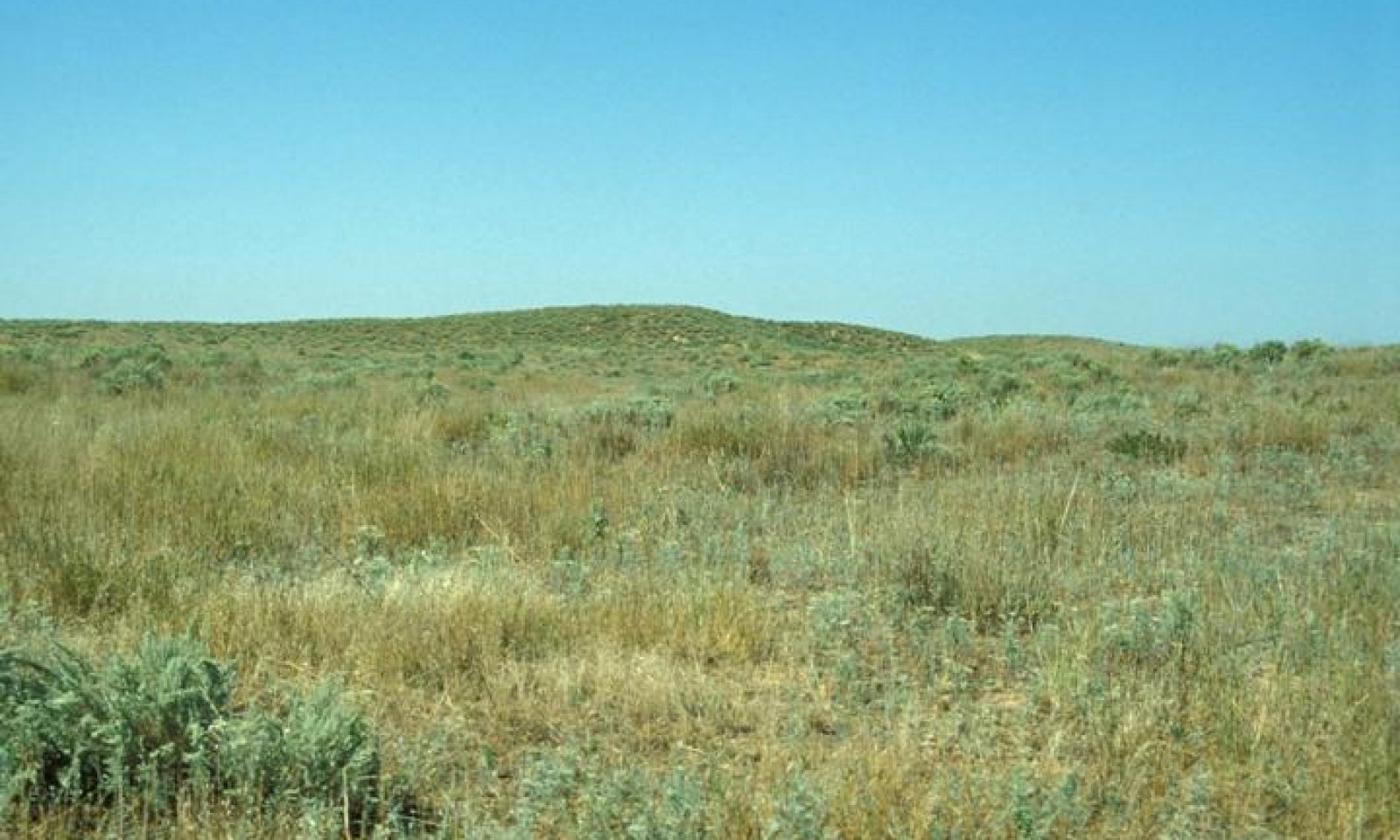
This ecosite occurs on sandy soils on dunes. These soils allow for rapid infiltration of precipitation but also have a low water holding capacity. Therefore plant production on these sites can vary greatly from year to year. The reference plant community consists of tallgrasses, midgrasses, along with various forbs and legumes. Shrub species also occur in the reference community in small amounts. Historically, periodic fires have kept the woody species restricted to a minor component of the plant community. As fire is removed from the system, the shrubs may increase in abundance well beyond that of the reference plant community. When grazed, these sites may be quite sensitive to overutilization due to the dune soils.
Associated sites
R080AY014OK Deep Sand
Loamy Fine Sand. More developed soil profile. Higher productivity. Eda & Aline soils.
Table 1. Dominant plant species
Tree Not specified
Shrub (1) Prunus angustifolia
Herbaceous (1) Calamovilfa gigantea
Physiographic features
These sites occur on dune topography on sand sheets.

Figure 2. Dune
Table 2. Representative physiographic features
Landforms (1) Alluvial plain > Dune
Runoff class Negligible to low Elevation 700 – 1500 ft Slope 15 – 25 % Aspect Aspect is not a significant factor Table 3. Representative physiographic features (actual ranges)
Runoff class Not specified Elevation 0 ft Slope 2 – 45 % Climatic features
The climate is characterized by moist, cool, springs; hot, often dry summers; mild autumns; and mild to cold winters. Variation in timing and amounts of precipition from year to year is quite common. Drought cycles range from three to five years duration with occasionally longer periods occurring at unpredictable intervals. Above normal rainfall cycles are usually just as random, but shorter in duration.
Table 4 Representative climatic features
Frost-free period (characteristic range) 180-190 days Freeze-free period (characteristic range) 200-220 days Precipitation total (characteristic range) 30-40 in Frost-free period (actual range) 180-190 days Freeze-free period (actual range) 200-220 days Precipitation total (actual range) 30-40 in Frost-free period (average) 180 days Freeze-free period (average) 210 days Precipitation total (average) 40 in Characteristic rangeActual rangeBarLineFigure 3. Monthly precipitation range
Characteristic rangeActual rangeBarLineFigure 4. Monthly minimum temperature range
Characteristic rangeActual rangeBarLineFigure 5. Monthly maximum temperature range
BarLineFigure 6. Monthly average minimum and maximum temperature
Figure 7. Annual precipitation pattern
Figure 8 Annual average temperature pattern
Climate stations used
-
(1) PURCELL 2 SW [USC00347327], Purcell, OK
-
(2) CUSHING [USC00342318], Cushing, OK
-
(3) HELENA 1 SSE [USC00344019], Helena, OK
-
(4) GEARY [USC00343497], Calumet, OK
">Influencing water features
There are no water influencing features on this site.<br />
<br />
Infiltration of precipitation into the soil is rapid and even small rainfall events can supply plant available moisture. No surface water features are present.Wetland description
NA

Figure 9.
Soil features
Soils are mapped for each county within the MLRA. Mapunits are representations of the major soil series component(s) and named accordingly. Each Mapunit is spatially represented on a digital soils map as polygons of different shapes and sizes. Within these Mapunits, there are often minor soil series components included. These minor components are soils that occur within a Mapunit polygon but are of small extent (15% or less of the Mapunit area). However, it is difficult to separate these minor soils spatially due to the scale of soil mapping.
Ecological sites are correlated at the component level of the soil survey. Therefore, a single Mapunit may contain multiple Ecological Sites just as it may contain multiple soil components. This is important to understand when investigating soils and Ecological Sites. A soil survey Mapunit may be correlated to a single Ecological Site based on the major component; however, there may be inclusional areas of additional Ecological Sites which are correlated to the minor components of that particular soil Mapunit.
Representative soil components for this site include:
Goodnight
Soil features are undulating to rolling very deep fine sands with high water infiltration rates but low water storage capacity. The soils have no structure and no well-defined horizons. Fertility is very low but plant available water is high. Surface temperatures on bare sand are very high and plant establishment is difficult. Wind erosion is an ever present problem unless surface cover is adequate to stabilize the fragile sands. Although wind erosion is very common on Dune Sites, the Goodnight soils are rarely, if ever, mapped as eroded. These areas of Dune sites are usually referred to as "blowouts" by local farmers and ranchers.Table 5. Representative soil features
Parent material (1) Eolian sands – sandstone
Surface texture (1) Fine sand
(2) Loamy fine sand
Drainage class Excessively drained Permeability class Rapid Soil depth 72 – 0 in Surface fragment cover <=3" 0 – 1 % Surface fragment cover >3" 0 – 1 % Available water capacity
(0-40in)2 – 3 in Electrical conductivity
(0-40in)0 – 1 mmhos/cm Sodium adsorption ratio
(0-40in)0 – 1 Soil reaction (1:1 water)
(0-40in)6.1 – 8.4 Subsurface fragment volume <=3"
(Depth not specified)0 – 1 % Ecological dynamics
The information contained in the State and Transition Diagram (STD) and the Ecological Site Description was developed using archaeological and historical data, professional experience, and scientific studies. The information presented is representative of a very complex set of plant communities. Not all scenarios or plants are included. Key indicator plants, animals and ecological processes are described to inform land management decisions.
The reference plant community is dominated by warm-season, perennial tallgrasses and midgrasses. These grass species are intermixed and well distributed over the site. Grasses do not form a tight sward. Generally, there are spaces of several inches (6" to 12") between individual plants wherein the coarse sand surface is exposed. Some plants are strongly rhizomatous and often form loose colonies six to ten feet across. Production is quite variable from year to year and location to location. The site can be very droughty when below normal rainfall occurs during the growing season. Conversely, the deep-rooted tallgrasses respond and produce favorably during periods of normal or above normal precipitation. This is especially true when ample rainfall occurs in the first half of the growing season.
The plant community is suited to grazing by domestic livestock, however, careful management is required. Soils (sands) are susceptible to wind erosion. Heavy grazing (disturbance) can impact the stability of the site. Small areas of active blowouts are common unless good grazing management is practiced. Continuous, heavy grazing usually results in a gradual decrease of tallgrasses. These grasses are replaced by perennial midgrasses, perennial shortgrasses and various amounts of annuals. Shrub species may also become more noticeable as the tallgrasses decrease.
Natural fire was important in the development of this plant community. Periodic fires tended to suppress the growth of woody plants. In the absence of fire, shrub species will generally increase and may eventually dominate the site. Scattered small amounts of annual plants are common on the site during most years. These annuals often occur as a result of disturbances by rodents and other small digging mammals. The annuals also increase in abundance as the site deteriorates from overgrazing. Annuals may temporarily occur in great abundance during years when normal rainfall immediately resumes following an extended period of drought.
State and Transition Diagram:
A State and Transition Diagram for the Dune (R080AY022OK) is depicted below. Thorough descriptions of each state, transition, and pathway follow the model. Experts base this model on available experimental research, field observations, professional consensus, and interpretations. It is likely to change as knowledge increases.
Plant communities will differ across the MLRA because of the natural variability in weather, soils, and aspect. The Reference Plant Community is not necessarily the management goal; other vegetative states may be desired plant communities as long as the Range Health assessments are in the moderate and above category.
The biological processes on this site are complex. Therefore, representative values are presented in a land management context. The species lists are representative and are not botanical descriptions of all species occurring, or potentially occurring, on this site. They are not intended to cover every situation or the full range of conditions, species, and responses for the site.
Composition by dry weight and percent canopy cover are provided to describe the functional groups. Most observers find it easier to visualize or estimate percent canopy for woody species (trees and shrubs).
The following diagram suggests some pathways that the vegetation on this site might take. There may be other states not shown on the diagram. This information is intended to show what might happen in a given set of circumstances. It does not mean that this would happen the same way in every instance. Local professional guidance should always be sought before pursuing a treatment scenario.State and transition model
Custom diagramStandard diagram
Figure 10. R080AY022OK
More interactive model formats are also available. View Interactive Models
More interactive model formats are also available. View Interactive Models
Click on state and transition labels to scroll to the respective textEcosystem states
State 1 submodel, plant communities
State 2 submodel, plant communities
State 1
GrasslandDominant plant species
-
Chickasaw plum (Prunus angustifolia), shrub
-
little bluestem (Schizachyrium scoparium), grass
Community 1.1
Tallgrasses, MidgrassesThis is the reference or diagnostic community for the site. The description is based on early range site descriptions, clipping data, professional consensus of experienced range specialists, and analysis of field work.
This site is open grassland on rolling/ hummocky to steep dune topography.
The reference community is dominated by tall warm-season grasses. These include sand bluestem, switchgrass, Indiangrass and big sandreed. The major midgrass is little bluestem. Other important midgrasses are sand dropseed, fringeleaf paspalum, sand lovegrass and purple lovegrass. Scattered throughout the site are minor amounts of shortgrasses consisting primarily of blue grama, hairy grama and fall witchgrass. Forbs on the site include Illinois bundleflower, silktop dalea, silky sophora, roundhead lespedeza, fringeleaf ruellia, prairie spiderwort and halfshrub sundrop. Typically, a few shrubs such as skunkbush sumac and chickasaw plum occur on site. Sand sagebush can be found on some areas in the western portion of the site’s occurrence, especially in transition zones between R078CY and R080AY. These sand sagebrush transition zones may extend well into MLRA R080AY to the east. It is not uncommon for these transition zones to be a county or more wide. Annuals that commonly occur following rodent disturbances and drouth include showy partridgepea, fourpoint eveningprimrose, annual eriogonum, camphorweed, and mat sandbur.
This plant community evolved under grazing by large herbivore and occasional fire. As the site deteriorates from overgrazing and absence of fire, other plant communities may result.
Figure 11. Annual production by plant type (representative values) or group (midpoint values)
Table 6. Annual production by plant type
Plant type Low
(lb/acre)Representative value
(lb/acre)High
(lb/acre)Grass/Grasslike 1300 2200 2800 Forb 100 150 450 Shrub/Vine 100 150 250 Total 1500 2500 3500 Figure 12. Plant community growth curve (percent production by month). OK0001 , Native, Warm Season Grasses. Typically, the summer growing season for warm season grasses begins April 5 to 15 and ends October 15 to 25. Nearly three-fourths of the season production will occur before the first of July. This varies from year to year depending upon temperatures and precipitation..
Jan Feb Mar Apr May Jun Jul Aug Sep Oct Nov Dec J F M A M J J A S O N D 0 1 5 10 20 30 10 5 10 6 2 1 Community 1.2
Midgrass-Tallgrass-Shortgrass
Figure 13. Dune #2, Tallgrass - Midgrass
The composition of this plant community resembles that of the reference phase, however, there has been a slight decrease of the more palatable grasses and forbs. The dominant grasses are sand bluestem, little bluestem, switchgrass, Indiangrass and sand lovegrass. Sand bluestem is readily selected by cattle and, under a program of continuous grazing during the summer growing season, it will be maintained in a state of low vigor. Secondary grasses include sand dropseed, fringeleaf paspalum, purple lovegrass and Texas bluegrass.
Shortgrasses such as hairy grama, fall witchgrass, windmillgrass and red lovegrass may comprise 5 to 10 percent of the vegetation. The most palatable forbs, including the perennial sunflowers, lespedezas, prairieclovers and tickclovers have decreased in abundance from the HPC. Less desirable forbs that have increased include Carruths’ sagewort, Louisiana sagewort, redroot wildbuckwheat, bush morningglory, queensdelight, lemon scurfpea, bigtop dalea and ten-petal mentzelia. Numerous annuals occur on the site. The more common annuals are showy partridgepea, camphorweed, fourpoint eveningprimrose, common ragweed, annual eriogonum and mat sandbur. In some locations, shrubs such as skunkbush, chickasaw plum and sand sagebrush comprise 5 to 10 percent of the vegetation.
The time needed to restore the productivity of this plant community may take 3 to 6 years of prescribed grazing management. Prescribed grazing management should include an adequate program of critical growth time deferment.
Figure 14. Annual production by plant type (representative values) or group (midpoint values)
Table 7. Annual production by plant type
Plant type Low
(lb/acre)Representative value
(lb/acre)High
(lb/acre)Grass/Grasslike 1200 1500 1800 Forb 150 200 850 Shrub/Vine 150 200 350 Total 1500 1900 3000 Figure 15. Plant community growth curve (percent production by month). OK0001 , Native, Warm Season Grasses. Typically, the summer growing season for warm season grasses begins April 5 to 15 and ends October 15 to 25. Nearly three-fourths of the season production will occur before the first of July. This varies from year to year depending upon temperatures and precipitation..
Jan Feb Mar Apr May Jun Jul Aug Sep Oct Nov Dec J F M A M J J A S O N D 0 1 5 10 20 30 10 5 10 6 2 1 Pathway 1.1A
Community 1.1 to 1.2If abusive grazing practices persist, the community may shift towards 1.2 as the less palatable species are able to dominate. This may also occur as the result of a long term(multiyear)drought.
Pathway 1.2A
Community 1.2 to 1.1With the implementation of a prescribed grazing system that includes growing season deferment, the community may shift towards the reference community 1.1.
Community 2.1
Tree/Shrub DominantThe description for this plant community is derived from analysis of limited field data and professional consensus of range trained individuals.
This plant community is tree or shrub dominant with annual forbs and annual grasses. Productivity is low and plant diversity is limited. These sites will usually have minor wind erosion from winter and early spring winds affecting bare places where annual vegetation prevailed. These sites are not fully stable. Plant communities are dominated by shrubs, mainly sandplum or sumac species while sites on the eastern side of the MLRA may be dominated by elm, hackberry, or locust species. There are very few perennial grasses present. Annual forbs and grasses prevail and vary in production depending on available moisture. If there are small amounts of perennial grasses remaining, the site may be able to be manipulated by brush management and long rest periods with periodic control of annual forb populations. Allowing complete rest for two growing seasons would improve the amount of vegetative cover and would probably be a first step in site restoration. After rest is applied, careful brush management to reduce sagebrush and annual competition might be considered. With brush management and rest, it is anticipated that this vegetative state might move towards a mid-seral state of perennial dropseed species and other mid-seral plants. This progression may take 5 to 10 years. Shrubs will also re-establish on these sites.
This plant community does not have a great deal of potential for livestock grazing. There may be limited potential for wildlife habitat for bobwhite quail or prairie chicken. Increased diversity is needed for both livestock and wildlife.
Transition T1A
State 1 to 2In the absence of fire or other brush management strategies, woody species may begin to encroach on the site. If left unchecked, some woody species will begin to dominate the ecological functions of the site such as nutrient cycling and hydrologic cycle.
Restoration pathway R2A
State 2 to 1With the implementation of prescribed fire or an alternative form of brush management, the site may be restored to the reference grassland state. Careful grazing management is also required to ensure the recovery of the herbaceous species.
Additional community tables
Table 8. Community 1.1 plant community composition
Group Common name Symbol Scientific name Annual production () Foliar cover (%) Grass/Grasslike1 480–1020 sand bluestem ANHA Andropogon hallii 472–1020 – giant sandreed CAGI3 Calamovilfa gigantea 59–128 – switchgrass PAVI2 Panicum virgatum 59–128 – Indiangrass SORGH Sorghastrum 59–128 – 2 531–1170 little bluestem SCSC Schizachyrium scoparium 532–1148 – 3 118–260 sand lovegrass ERTR3 Eragrostis trichodes 89–191 – dropseed SPORO Sporobolus 71–153 – tufted lovegrass ERPEP2 Eragrostis pectinacea var. pectinacea 59–128 – Florida paspalum PAFL4 Paspalum floridanum 59–128 – sideoats grama BOCU Bouteloua curtipendula 30–64 – blue grama BOGR2 Bouteloua gracilis 12–26 – hairy grama BOHI2 Bouteloua hirsuta 12–26 – fall witchgrass DICO6 Digitaria cognata 12–26 – blowout grass REFL Redfieldia flexuosa 12–26 – red lovegrass ERSE Eragrostis secundiflora 12–26 – tumble lovegrass ERSE2 Eragrostis sessilispica 12–26 – witchgrass PACA6 Panicum capillare 6–13 – mat sandbur CELO3 Cenchrus longispinus 6–13 – curly threeawn ARDE3 Aristida desmantha 6–13 – 4 59–130 sedge CAREX Carex 30–64 – Scribner's rosette grass DIOLS Dichanthelium oligosanthes var. scribnerianum 30–64 – Canada wildrye ELCA4 Elymus canadensis 30–64 – western wheatgrass PASM Pascopyrum smithii 30–64 – Texas bluegrass POAR Poa arachnifera 30–64 – Forb5 67–225 golden prairie clover DAAU Dalea aurea 34–150 – nineanther prairie clover DAEN Dalea enneandra 34–150 – Illinois bundleflower DEIL Desmanthus illinoensis 34–150 – sessileleaf ticktrefoil DESE Desmodium sessilifolium 34–150 – roundhead lespedeza LECA8 Lespedeza capitata 34–150 – slender lespedeza LEVI7 Lespedeza virginica 34–150 – lemon scurfpea PSLA3 Psoralidium lanceolatum 34–150 – silky sophora SONU Sophora nuttalliana 34–150 – Virginia tephrosia TEVI Tephrosia virginiana 34–150 – partridge pea CHFA2 Chamaecrista fasciculata 7–30 – 6 67–225 Maximilian sunflower HEMA2 Helianthus maximiliani 54–240 – pitcher sage SAAZG Salvia azurea var. grandiflora 34–150 – hairy sunflower HEHI2 Helianthus hirsutus 34–150 – redroot buckwheat ERRA3 Eriogonum racemosum 34–150 – scaly blazing star LISQH Liatris squarrosa var. hirsuta 34–150 – tenpetal blazingstar MEDE2 Mentzelia decapetala 34–150 – fourpoint evening primrose OERH Oenothera rhombipetala 34–150 – stiff goldenrod OLRI Oligoneuron rigidum 27–120 – downy ragged goldenrod SOPE Solidago petiolaris 27–120 – Fendler's aster SYFE Symphyotrichum fendleri 27–120 – prairie spiderwort TROC Tradescantia occidentalis 20–90 – bush morning-glory IPLE Ipomoea leptophylla 13–60 – queen's-delight STSY Stillingia sylvatica 13–60 – Cuman ragweed AMPS Ambrosia psilostachya 13–60 – Virginia dayflower COVI3 Commelina virginica 13–60 – Carruth's sagewort ARCA14 Artemisia carruthii 13–60 – white sagebrush ARLU Artemisia ludoviciana 13–60 – sand milkweed ASAR Asclepias arenaria 13–60 – plains milkweed ASPU Asclepias pumila 13–60 – wavyleaf thistle CIUN Cirsium undulatum 7–30 – Rocky Mountain beeplant CLSE Cleome serrulata 7–30 – Canadian horseweed COCA5 Conyza canadensis 7–30 – winged pigweed CYAT Cycloloma atriplicifolium 7–30 – annual buckwheat ERAN4 Eriogonum annuum 7–30 – Arkansas dozedaisy APSK Aphanostephus skirrhobasis 7–30 – camphorweed HESU3 Heterotheca subaxillaris 7–30 – redwhisker clammyweed PODO3 Polanisia dodecandra 7–30 – prairie fleabane ERST3 Erigeron strigosus 7–30 – Shrub/Vine7 67–250 leadplant AMCA6 Amorpha canescens 67–167 – sand sagebrush ARFI2 Artemisia filifolia 67–167 – Jersey tea CEHE Ceanothus herbaceus 67–167 – Chickasaw plum PRAN3 Prunus angustifolia 67–167 – skunkbush sumac RHTR Rhus trilobata 67–167 – soapweed yucca YUGL Yucca glauca 67–167 – smooth sumac RHGL Rhus glabra 34–84 – Table 9. Community 1.2 plant community composition
Group Common name Symbol Scientific name Annual production () Foliar cover (%) Grass/Grasslike1 640–960 sand bluestem ANHA Andropogon hallii 480–720 – switchgrass PAVI2 Panicum virgatum 120–180 – Indiangrass SORGH Sorghastrum 40–60 – giant sandreed CAGI3 Calamovilfa gigantea 40–60 – 2 560–840 little bluestem SCSC Schizachyrium scoparium 560–840 – 3 280–420 sand lovegrass ERTR3 Eragrostis trichodes 80–120 – Florida paspalum PAFL4 Paspalum floridanum 80–120 – sand dropseed SPCR Sporobolus cryptandrus 80–120 – tufted lovegrass ERPEP2 Eragrostis pectinacea var. pectinacea 80–120 – red lovegrass ERSE Eragrostis secundiflora 48–72 – tumble lovegrass ERSE2 Eragrostis sessilispica 48–72 – purple threeawn ARPU9 Aristida purpurea 40–60 – blue grama BOGR2 Bouteloua gracilis 40–60 – hairy grama BOHI2 Bouteloua hirsuta 40–60 – mat sandbur CELO3 Cenchrus longispinus 40–60 – tumble windmill grass CHVE2 Chloris verticillata 40–60 – fall witchgrass DICO6 Digitaria cognata 40–60 – 4 120–180 Texas bluegrass POAR Poa arachnifera 80–120 – sedge CAREX Carex 40–60 – Scribner's rosette grass DIOLS Dichanthelium oligosanthes var. scribnerianum 40–60 – Forb5 150–860 Carruth's sagewort ARCA14 Artemisia carruthii 75–430 – white sagebrush ARLU Artemisia ludoviciana 75–430 – nineanther prairie clover DAEN Dalea enneandra 75–430 – redroot buckwheat ERRA3 Eriogonum racemosum 75–430 – tenpetal blazingstar MEDE2 Mentzelia decapetala 75–430 – fourpoint evening primrose OERH Oenothera rhombipetala 75–430 – lemon scurfpea PSLA3 Psoralidium lanceolatum 60–344 – redwhisker clammyweed PODO3 Polanisia dodecandra 38–215 – Maximilian sunflower HEMA2 Helianthus maximiliani 38–215 – camphorweed HESU3 Heterotheca subaxillaris 38–215 – annual ragweed AMAR2 Ambrosia artemisiifolia 38–215 – Cuman ragweed AMPS Ambrosia psilostachya 38–215 – downy ragged goldenrod SOPE Solidago petiolaris 38–215 – Fendler's aster SYFE Symphyotrichum fendleri 38–215 – annual buckwheat ERAN4 Eriogonum annuum 38–215 – Virginia tephrosia TEVI Tephrosia virginiana 15–86 – golden prairie clover DAAU Dalea aurea 15–86 – hairy sunflower HEHI2 Helianthus hirsutus 15–86 – Illinois bundleflower DEIL Desmanthus illinoensis 15–86 – roundhead lespedeza LECA8 Lespedeza capitata 15–86 – slender lespedeza LEVI7 Lespedeza virginica 15–86 – scaly blazing star LISQH Liatris squarrosa var. hirsuta 15–86 – pitcher sage SAAZG Salvia azurea var. grandiflora 15–86 – Shrub/Vine6 150–360 sand sagebrush ARFI2 Artemisia filifolia 75–180 – Chickasaw plum PRAN3 Prunus angustifolia 75–180 – smooth sumac RHGL Rhus glabra 75–180 – skunkbush sumac RHTR Rhus trilobata 75–180 – soapweed yucca YUGL Yucca glauca 75–180 – leadplant AMCA6 Amorpha canescens 38–90 – Jersey tea CEHE Ceanothus herbaceus 15–36 – Table 10. Community 2.1 plant community composition
Group Common name Symbol Scientific name Annual production () Foliar cover (%) Interpretations
Animal community
Many species will utilize the site for at least a portion of their habitat needs but rely on a more extensive landscape to meet all their needs. Some animals may only utilize one plant community of the site to fulfill their habitat needs.
Smaller mammals include many kinds of rodents, jackrabbit, cottontail rabbit, raccoon, skunks, opossum, and armadillo. Mammalian predators include coyote, fox, and bobcat. Many species of snakes and lizards are native to the site.
Many species of birds are found on this site including game birds, songbirds, and birds of prey. Major game birds that are economically important are Rio Grande turkey, bobwhite quail, and mourning dove. Turkey prefers plant communities with substantial amounts of shrubs and trees interspersed with grassland. Quail prefer plant communities with a combination of low shrubs, bunch grass, bare ground, and low successional forbs. The different species of songbirds vary in their habitat preferences. In general, habitat that provides a diversity of grasses, forbs, shrubs, vines and trees, and a complex of grassland, savannah, shrubland, and woodland will support a variety and abundance of songbirds. Birds of prey are important to keep the numbers of rodents, rabbits, and snakes in balance. The different plant communities of the site will sustain different species of raptors.Hydrological functions
These are coarse textured upland soils. Water infiltration is rapid but water holding capacity is low. The herbaceous plant communities are dependent upon seasonal rainfall.
Recreational uses
NA
Wood products
NA
Other products
NA
Other information
NA
Supporting information
Inventory data references
USDA-NRCS (Formerly Soil Conservation Service) Range Site Descriptions (1960s) USDA-NRCS (Formerly Soil Conservation Service) Ag Handbook 296 (2006)
Type locality
Location 1: Payne County, OK Township/Range/Section T18 N R5 E S11 Latitude 36° 5′ 72″ Longitude -96° 74′ 91″ General legal description Payne County, Oklahoma; about 5 miles north on OK-18 Highway and 1 mile east of Cushing; about 600 feet south and 200 feet east of the northwest corner of sec. 11, T. 18 N., R. 5 E. References
-
Anderson, R.C. 1982. An evolutionary model summarizing the roles of fire, climate, and grazing animals in the origin and maintenance of grasslands. Pages 297–308 in , , and , editors. Grasses and grasslands: systematics and ecology.
-
Umbanhowar, C.E. 2004. Interactions of climate and fire at two sites in the northern Great Plains, USA. Palaeogeography, Palaeoclimatology, Palaeoecology 208:141–152.
Other references
This “Approved” site was included in an update project during 2013. The State&Transition model was re-formatted and the ESD was edited to fit the new ESIS format. The concepts and vegetative data contained therein was not altered. The entire ESD will be reviewed, updated, and subjected to the QC/QA processes as part of a future project. CW
USDA-NRCS (Formerly Soil Conservation Service) Range Site Descriptions (1960s)
USDA-NRCS (Formerly Soil Conservation Service) Ag Handbook 296 (2006)Contributors
Dr. Jack Eckroat, Grazing Lands Specialist, NRCS, Oklahoma
Harland Dietz, Range Conservationist, NRCS, Oklahoma, (Retired)
Edits by Colin Walden, Soil Survey Office, Stillwater, OKApproval
Bryan Christensen, 9/19/2023
Acknowledgments
Site Development and Testing Plan Future work, as described in a Project Plan, to validate the information in this Provisional Ecological Site Description is needed. This will include field activities to collect low, medium and high intensity sampling, soil correlations, and analysis of that data. Annual field reviews should be done by soil scientists and vegetation specialists. A final field review, peer review, quality control, and quality assurance reviews of the ESD will be needed to produce the final document. Annual reviews of the Project Plan are to be conducted by the Ecological Site Technical Team.
Rangeland health reference sheet
Interpreting Indicators of Rangeland Health is a qualitative assessment protocol used to determine ecosystem condition based on benchmark characteristics described in the Reference Sheet. A suite of 17 (or more) indicators are typically considered in an assessment. The ecological site(s) representative of an assessment location must be known prior to applying the protocol and must be verified based on soils and climate. Current plant community cannot be used to identify the ecological site.
Author(s)/participant(s) Mark Moseley, Jack Eckroat, Kay Anderson, David Kraft, Harry Fritzler, Steve Glasgow Contact for lead author Date 04/01/2005 Approved by Approval date Composition (Indicators 10 and 12) based on Annual Production Indicators
-
Number and extent of rills:
There are none on this site due to high infiltration rates. -
Presence of water flow patterns:
There are none on this site due to high infiltration rates. -
Number and height of erosional pedestals or terracettes:
There should not be any evidence of erosional pedestals or terracettes on this site. -
Bare ground from Ecological Site Description or other studies (rock, litter, lichen, moss, plant canopy are not bare ground):
There is some variability, but it should average 10-15% bare ground on this site. Bare areas are small and not connected. -
Number of gullies and erosion associated with gullies:
None, drainages are represented as natural stable channels; vegetation is common with no signs of erosion. -
Extent of wind scoured, blowouts and/or depositional areas:
Only a few, because plants and litter block the wind. (~1%). -
Amount of litter movement (describe size and distance expected to travel):
Very little movement due to water because of high infiltration. Twelve inches maximum, and only with strong winds. -
Soil surface (top few mm) resistance to erosion (stability values are averages - most sites will show a range of values):
Surface soil is moderately stabilized (Stability Score 4). Stability scores based on a minimum of 6 samples tested. -
Soil surface structure and SOM content (include type of structure and A-horizon color and thickness):
A horizon: 0 to 7 inches; pale brown, single grained, loose. C horizon: 7 to 60 inches; yellow fine sand, single grained, loose. Refer to specific description for component sampled. -
Effect of community phase composition (relative proportion of different functional groups) and spatial distribution on infiltration and runoff:
Infiltration and runoff are not affected by any changes in plant community composition and distribution. (Tallgrass/Midgrass dominated). Any changes in infiltration and runoff can be attributed to other factors (e.g. compaction). -
Presence and thickness of compaction layer (usually none; describe soil profile features which may be mistaken for compaction on this site):
There is no compaction layer due to sandy soils. -
Functional/Structural Groups (list in order of descending dominance by above-ground annual-production or live foliar cover using symbols: >>, >, = to indicate much greater than, greater than, and equal to):
Dominant:
Tallgrasses MidgrassesSub-dominant:
Forbs ShrubsOther:
Shortgrasses Perennial Cool Season GrassesAdditional:
-
Amount of plant mortality and decadence (include which functional groups are expected to show mortality or decadence):
Plant mortality and decadence is highly variable on this site due to the droughty nature of the deep sands, but will primarily range between 5-10%, especially in the absence of fire and herbivory. -
Average percent litter cover (%) and depth ( in):
Litter should cover 50-75% of the area between plants with accumulations of ~1/2 inch deep. -
Expected annual annual-production (this is TOTAL above-ground annual-production, not just forage annual-production):
Normal production is 1500 - 3500 pounds per year. -
Potential invasive (including noxious) species (native and non-native). List species which BOTH characterize degraded states and have the potential to become a dominant or co-dominant species on the ecological site if their future establishment and growth is not actively controlled by management interventions. Species that become dominant for only one to several years (e.g., short-term response to drought or wildfire) are not invasive plants. Note that unlike other indicators, we are describing what is NOT expected in the reference state for the ecological site:
No invasive species. Invasives might include: eastern redcedar, annuals and non-natives. -
Perennial plant reproductive capability:
All plants capable of reproducing at least every 3 years.
Print Options
Sections
Font
AAAAOther
PrintThe Ecosystem Dynamics Interpretive Tool is an information system framework developed by the USDA-ARS Jornada Experimental Range, USDA Natural Resources Conservation Service, and New Mexico State University.
Accessibility statement


