
Natural Resources
Conservation Service
Ecological site R078BY080TX
Loamy Bottomland
19-26" PZ
Last updated: 9/15/2023
Accessed: 09/20/2026
-
Search


Major Land Resource Area or ecological site by name and/or ID.
PreviousSectionsNextGeneral information
Provisional. A provisional ecological site description has undergone quality control and quality assurance review. It contains a working state and transition model and enough information to identify the ecological site.
Click to explore map
Figure 1. Mapped extent
Areas shown in blue indicate the maximum mapped extent of this ecological site. Other ecological sites likely occur within the highlighted areas. It is also possible for this ecological site to occur outside of highlighted areas if detailed soil survey has not been completed or recently updated.
MLRA notes
Major Land Resource Area (MLRA): 078B–Central Rolling Red Plains, Western Part
MLRA 78B is characterized by strongly dissected, rolling plains with prominent ridges and valleys and rolling to steep irregular topography. Loamy soils are generally well drained, range from shallow to deep, and developed in sediments of Triassic and Permian age.
LRU notes
NA
Classification relationships
This ecological site is correlated to soil components at the Major Land Resource Area (MLRA) level which is further described in USDA Ag Handbook 296.
Ecological site concept
These sites occur on deep loamy soils on floodplains. The reference vegetation consists of tallgrasses and forbs with some scattered shrubs and trees. Abusive grazing practices may lead to a shift in the plant community and a decline in the more palatable tallgrass species.
Associated sites
R078BY087TX Sandy Bottomland 19-26" PZ
Sandy soils on floodplains
R078BY093TX Wet Bottomland 19-26" PZ
Saturated soils on floodplains
Similar sites
R078BY070TX Clayey Bottomland 19-26" PZ
Clayey Bottomland has a heavier surface texture. The site is on a similar landscape positions.
R078BY087TX Sandy Bottomland 19-26" PZ
Sandy Bottomland has a sandy surface texture. The site is on a similar landscape positions.
R078BY093TX Wet Bottomland 19-26" PZ
Similar physiographic position, but with a high water table.
Table 1. Dominant plant species
Tree (1) Populus deltoides
Shrub Not specified
Herbaceous (1) Panicum virgatum
Physiographic features
This site occurs in stream flood plains or as stream terraces along major streams. Soils are alluvial and have loamy surfaces and subsoils. Usually they are intermittently flooded but are above the main stream channel. They occupy the lowest position on the landscape and receive runoff water from upland sites. Slopes are generally level to very gently sloping.
Table 2. Representative physiographic features
Landforms (1) River valley > Terrace
(2) River valley > Stream terrace
Runoff class Negligible to low Flooding duration Very brief (4 to 48 hours) to brief (2 to 7 days) Flooding frequency Occasional to frequent Ponding frequency None Elevation 1000 – 2900 ft Slope 0 – 2 % Water table depth 75 – 80 in Aspect Aspect is not a significant factor Climatic features
The climate of the western rolling plains is dry, sub-humid with hot summers and mild winters. Temperatures often reach 100 degrees F for several consecutive days during summer. Cold spells with temperatures less than 20 degrees F only last short periods of time. The soil is not frozen below the 3-inch depth for more than 2 to 3 days. Humidity is low during the winter and early spring months. Sometimes relative humidity is high enough to make summer days seem uncomfortable. Most of the precipitation comes in the form of rain and that in the spring and early summer principally. May is the wettest month followed by June. July and August are dryer and much hotter. Rainfall often comes as intense showers of relatively short duration. Rainfall rate per hour is often high and runoff is significant. Infiltration is diminished due to lack of opportunity time. The growing season begins in April and ends with the first killing frost in November. There is little snowfall with the average being about 10 inches. Rainfall averages about 22 inches.
There is a 70% chance that yearly precipitation will fall between 16 and 24 inches. About 55% of the time, the yearly rainfall is below the mean. Dry spells during the growing season are common and long-term droughts occur in cycles of about 20 years. Native vegetation is principally warm season.Table 3 Representative climatic features
Frost-free period (characteristic range) 190-190 days Freeze-free period (characteristic range) 200-220 days Precipitation total (characteristic range) 20-20 in Frost-free period (actual range) 180-200 days Freeze-free period (actual range) 200-220 days Precipitation total (actual range) 20-30 in Frost-free period (average) 190 days Freeze-free period (average) 210 days Precipitation total (average) 20 in Characteristic rangeActual rangeBarLineFigure 2. Monthly precipitation range
Characteristic rangeActual rangeBarLineFigure 3. Monthly minimum temperature range
Characteristic rangeActual rangeBarLineFigure 4. Monthly maximum temperature range
BarLineFigure 5. Monthly average minimum and maximum temperature
Figure 6. Annual precipitation pattern
Figure 7 Annual average temperature pattern
Climate stations used
-
(1) WELLINGTON [USC00419565], Wellington, TX
-
(2) PADUCAH [USC00416740], Paducah, TX
-
(3) JAYTON [USC00414570], Jayton, TX
-
(4) SNYDER [USC00418433], Snyder, TX
-
(5) ROBERT LEE [USC00417669], Robert Lee, TX
">Influencing water features
The site will flood occasionally. Water tables are usually high (within a few feet of surface). Water may stand on the surface for brief periods after major rainfall events. Some deposition can occur in major floods.
Wetland description
NA
Soil features
The soils are deep to moderately deep and alluvial in nature. Textures are loams, silt loams and fine sandy loams. Permeability is moderate to moderately rapid. Fertility is moderate and organic matter can be fairly high. Water storage capacity is moderate but the presence of a water table influences plant growth as much as soil storage capacity. Plant roots can easily penetrate the soil and productive potential is high.
Major Soil Taxonomic Units correlated to this site include: Clairemont silt loam, Yahola fine sandy loam, and Spur soils.Table 4. Representative soil features
Parent material (1) Alluvium – sandstone and siltstone
Surface texture (1) Sandy loam
(2) Fine sandy loam
(3) Very fine sandy loam
Family particle size (1) Loamy
Drainage class Well drained to somewhat excessively drained Permeability class Moderate to moderately rapid Soil depth 80 in Surface fragment cover <=3" Not specified Surface fragment cover >3" Not specified Available water capacity
(0-40in)2 – 8 in Calcium carbonate equivalent
(0-40in)0 – 20 % Electrical conductivity
(0-40in)0 – 2 mmhos/cm Sodium adsorption ratio
(0-40in)0 – 4 Soil reaction (1:1 water)
(0-40in)4.2 – 9.1 Subsurface fragment volume <=3"
(Depth not specified)0 – 2 % Subsurface fragment volume >3"
(Depth not specified)Not specified Ecological dynamics
The reference plant community for this site is tall and midgrass dominant with a few shrubs and scattered trees of moderate to tall stature. The majority of species are warm-season. The site is more productive than the Sandy Bottomland ecological site (R078BY087TX) because of greater soil development and greater fertility. There is usually a water table within reach of deep rooted grasses and forbs. Trees can obtain sufficient water so as to attain their growth potential. Switchgrass (Panicum virgatum), Indiangrass (Sorghastrum nutans) and smaller amounts of little bluestem (Schizachyrium scoparium), big bluestem (Andropogon gerardii) and Canada wildrye (Elymus canadensis) are also found. Midgrasses common to the site are western wheatgrass (Pascopyrum smithii), vine mesquite (Panicum obtusum), meadow dropseed (Sporobolus compositus var. drummondii), and sideoats grama (Bouteloua curtipendula). A few shortgrass species are present which include blue grama (Bouteloua gracilis), inland saltgrass (Distichlis spicata), and buffalograss (Bouteloua dactyloides). There are some perennial forbs present although the variety is limited. Major forbs include Illinois bundleflower (Desmanthus illinoensis) Maximilian sunflower (Helianthus maximiliani), heath aster (Chaetopappa ericoides) and primrose (Oenothera spp.). Grasses dominate the community. Shrubs that occur in small quantities include skunkbush sumac (Rhus aromatica), leadplant (Amorpha canescens), and willow baccharis (Baccharis salicina). Trees are mainly cottonwood (Populus deltoides) and hackberry (Celtis laevigata var. reticulata). Salt cedar (Tamarix ramosissima) and baccharis can invade the site if poor management reduces grass cover and seed sources are present.
This site is preferred by livestock for grazing and is often overused due to plant preference and due to the presence of water. Management must be careful in order to maintain plant diversity and productivity and keep invasive species from becoming aggressive. The site is very important as a buffer along streams and contributes to good water quality provided good plant cover is maintained. Many species of wildlife utilize this site as nesting and escape cover, roosting sites and for general browsing.
If this site is abused by inappropriate abusive grazing for long periods of time, the tallgrasses will disappear and mid and shortgrasses will dominate. Further abuse will see shortgrasses and annual forbs making up most of the plant cover. Woody shrubs such as salt cedar and baccharis will act as invaders and form a significant canopy cover. The site is very productive but needs careful management in order to sustain the reference plant community. If the site declines in ecological condition and shrubs invade, restoration can often be accomplished with proper grazing treatment and judicious brush and weed control measures. If degradation has progressed very far, this process of restoration may take several years. Care must be taken using herbicides due to possible damage to valuable trees. Prescribed fire can be used but trees need to be protected. In general, fire should be applied before the cottonwoods bud out in the spring.
In addition to abusive grazing, this site has declined in ecological condition in some cases due to lowered water tables and decreased spring flow. If water table depths lower, then mid and short grasses sometimes increase due to less water requirement. Heavy stands of shrubs can also lower water tables in certain instances. It is also possible that pumping of ground water for agricultural and municipal use has had an adverse affect on site soil/water/plant relationships.
Plant Communities and Transitional Pathways (diagram) :
The following diagram suggests some pathways that the vegetation on this site might take. There may be other states not shown on the diagram. This information is intended to show what might happen in a given set of circumstances; it does not mean that this would happen the same way in every instance. Local professional guidance should always be sought before pursuing a treatment scenario.State and transition model
More interactive model formats are also available. View Interactive Models
Click on state and transition labels to scroll to the respective textEcosystem states
State 1 submodel, plant communities
State 1
Tallgrass Grassland StateThe Tallgrass Grassland State is dominated by tallgrasses. Major grass species include switchgrass, Indiangrass, and various midgrasses. Shrubs are few and forbs limited to a few perennial species such as Illinois bundleflower, prairie acacia, and gaura species.
Community 1.1
Tallgrass Dominant Community
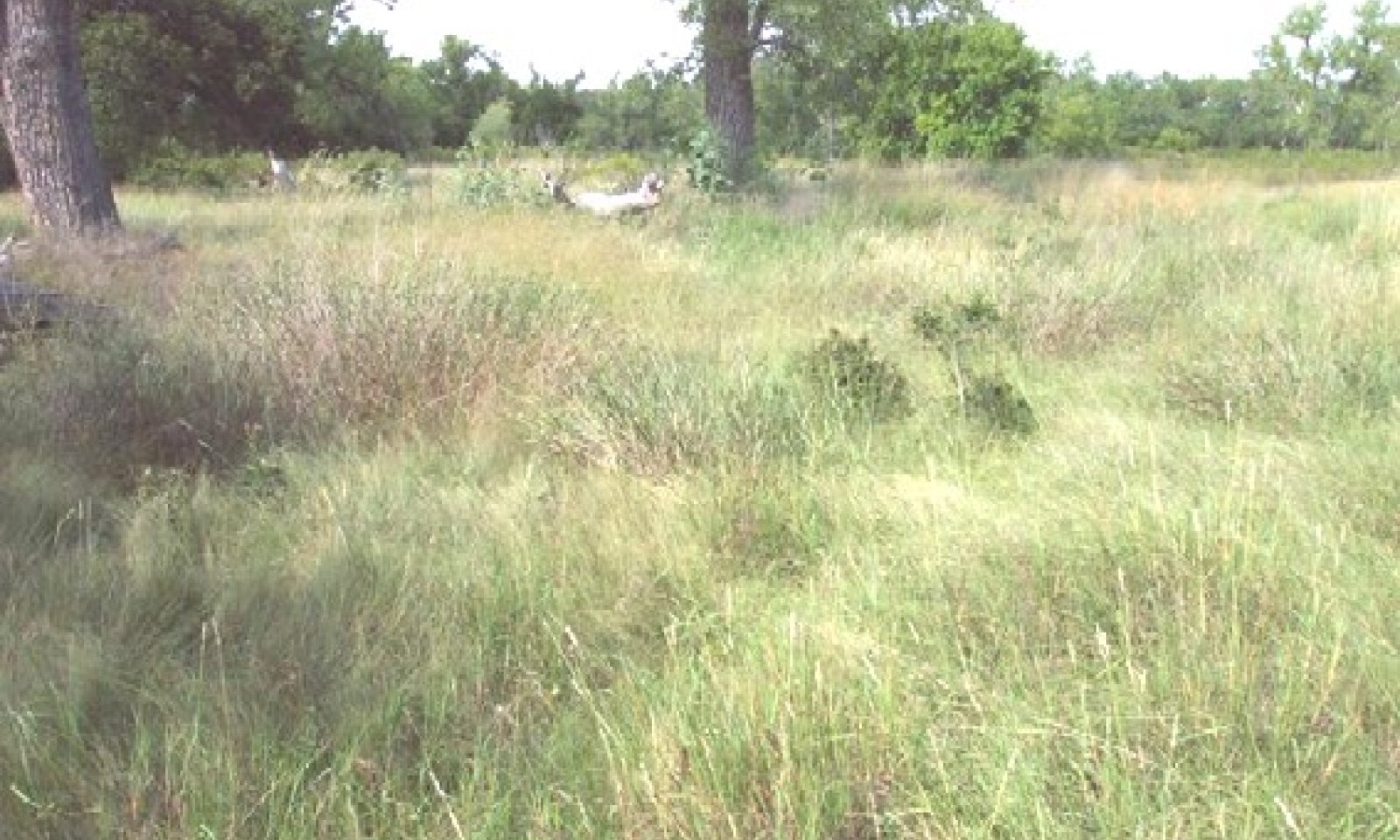
Figure 8. 1.1 Tallgrass Dominant Community
This community is the reference plant community. Tallgrasses dominate. Major grass species are switchgrass, Indiangrass, and various midgrasses. Shrubs are few and forbs limited to a few perennial species such as Illinois bundleflower, prairie acacia, and gaura species.
Figure 9. Annual production by plant type (representative values) or group (midpoint values)
Table 5. Annual production by plant type
Plant type Low
(lb/acre)Representative value
(lb/acre)High
(lb/acre)Grass/Grasslike 1500 2600 3000 Tree 100 170 300 Forb 60 220 240 Shrub/Vine 20 30 50 Microbiotic Crusts 0 0 1 Total 1680 3020 3591 Figure 10. Plant community growth curve (percent production by month). TX2034 , Tallgrass climax community. Tall grasses with scattered shrubs and trees. Also some forbs..
Jan Feb Mar Apr May Jun Jul Aug Sep Oct Nov Dec J F M A M J J A S O N D 0 2 4 8 20 28 15 8 8 5 2 0 Community 1.2
Midgrass Dominant Community
Figure 11. Community 1.2
The dominant grass species in this plant community is western wheatgrass and vine mesquite. Production is slightly less than that of the reference community. There are only a small amount of tallgrass species present. Forbs found in this plant community include ironweed, snow-on-the-mountain, heath aster and annual forbs. This site is still productive, diversity is less and wildlife habitat is less desirable.
Figure 12. Annual production by plant type (representative values) or group (midpoint values)
Table 6. Annual production by plant type
Plant type Low
(lb/acre)Representative value
(lb/acre)High
(lb/acre)Grass/Grasslike 1300 2000 2500 Forb 40 100 150 Tree 25 50 125 Shrub/Vine 30 50 80 Microbiotic Crusts 0 0 1 Total 1395 2200 2856 Figure 13. Plant community growth curve (percent production by month). TX2042 , Midgrass Dominant Community. Cool and warm-season midgrasses with few forbs and shrubs..
Jan Feb Mar Apr May Jun Jul Aug Sep Oct Nov Dec J F M A M J J A S O N D 2 6 16 22 20 10 4 3 6 5 4 2 Community 1.3
Shortgrass Dominant Community
Figure 14. Community 1.3
A degraded plant community with western ragweed, annual forbs, shortgrasses and invasive shrub species dominating the plant cover. This site has lost much of its wildlife benefit and is not producing much forage for livestock.
Figure 15. Annual production by plant type (representative values) or group (midpoint values)
Table 7. Annual production by plant type
Plant type Low
(lb/acre)Representative value
(lb/acre)High
(lb/acre)Grass/Grasslike 500 700 900 Forb 200 350 400 Tree 100 200 200 Shrub/Vine 20 30 40 Microbiotic Crusts 0 0 0 Total 820 1280 1540 Figure 16. Plant community growth curve (percent production by month). TX2043 , Shortgrasses/Annual vegetation with invasive shrubs. Shortgrasses, perennial and annual forbs, and shrubs dominate this plant community..
Jan Feb Mar Apr May Jun Jul Aug Sep Oct Nov Dec J F M A M J J A S O N D 0 1 4 18 30 25 5 5 8 2 2 0 Pathway 1.1A
Community 1.1 to 1.2
Tallgrass Dominant Community
Midgrass Dominant CommunityHeavy Continuous Grazing, No Fires, and Brush Invasion are some of the drivers for the transition from the Tallgrass Community to the Midgrass Community.
Pathway 1.2A
Community 1.2 to 1.1
Midgrass Dominant Community
Tallgrass Dominant CommunityThe restoration from the Midgrass Community to the Tallgrass Community occurs with the use of Prescribed Grazing and Prescribed Burning conservation practices.
Pathway 1.2B
Community 1.2 to 1.3
Midgrass Dominant Community
Shortgrass Dominant CommunityThe transition from the Midgrass Community to the Shortgrass Community occurs due to heavy continuous grazing, brush invasion, no fires, and no brush management practices.
Pathway 1.3A
Community 1.3 to 1.2
Shortgrass Dominant Community
Midgrass Dominant CommunityWith one to four years of Prescribed Grazing, Brush Management application, Range Planting of native grasses, and Pest Management conservation practices, the Shortgrass Community can be restored back into the Midgrass Community.
Additional community tables
Table 8. Community 1.1 plant community composition
Group Common name Symbol Scientific name Annual production () Foliar cover (%) Grass/Grasslike0 Warm Season Midgrasses 260–525 1 Warm Season Tallgrasses 895–1760 switchgrass PAVI2 Panicum virgatum 575–1150 – Indiangrass SONU2 Sorghastrum nutans 260–520 – sand bluestem ANHA Andropogon hallii 60–115 – 2 Midgrasses 155–320 western wheatgrass PASM Pascopyrum smithii 90–175 – vine mesquite PAOB Panicum obtusum 35–85 – Canada wildrye ELCA4 Elymus canadensis 30–60 – 3 Warm Season Midgrasses 45–95 Drummond's dropseed SPCOD3 Sporobolus compositus var. drummondii 30–65 – silver beardgrass BOLAT Bothriochloa laguroides ssp. torreyana 15–30 – 4 Warm Season Shortgrasses 115–235 buffalograss BODA2 Bouteloua dactyloides 25–45 – blue grama BOGR2 Bouteloua gracilis 25–45 – tumble windmill grass CHVE2 Chloris verticillata 25–45 – saltgrass DISP Distichlis spicata 25–45 – creeping muhly MURE Muhlenbergia repens 25–45 – white tridens TRAL2 Tridens albescens 25–45 – 5 Tallgrasses 30–65 eastern gamagrass TRDA3 Tripsacum dactyloides 30–60 – prairie cordgrass SPPE Spartina pectinata 0–5 – Shrub/Vine6 Shrubs 20–50 leadplant AMCA6 Amorpha canescens 0–20 – false indigo bush AMFR Amorpha fruticosa 0–20 – saltwater false willow BAAN Baccharis angustifolia 0–20 – Oklahoma plum PRGR Prunus gracilis 0–20 – fragrant sumac RHAR4 Rhus aromatica 0–20 – Tree7 Trees 100–300 eastern cottonwood PODE3 Populus deltoides 70–210 – netleaf hackberry CELAR Celtis laevigata var. reticulata 30–90 – black willow SANI Salix nigra 0–1 – western soapberry SASAD Sapindus saponaria var. drummondii 0–1 – Forb8 Forbs 60–240 beeblossom GAURA Gaura 5–25 – Maximilian sunflower HEMA2 Helianthus maximiliani 5–25 – evening primrose OENOT Oenothera 5–25 – slimflower scurfpea PSTE5 Psoralidium tenuiflorum 5–25 – Baldwin's ironweed VEBA Vernonia baldwinii 5–25 – Forb, annual 2FA Forb, annual 5–25 – Cuman ragweed AMPS Ambrosia psilostachya 5–25 – white sagebrush ARLUM2 Artemisia ludoviciana ssp. mexicana 5–25 – rose heath CHER2 Chaetopappa ericoides 5–25 – bundleflower DESMA Desmanthus 5–25 – Engelmann's daisy ENGEL Engelmannia 5–25 – snow on the mountain EUMA8 Euphorbia marginata 0–1 – prairie gentian EUSTO Eustoma 0–1 – Table 9. Community 1.2 plant community composition
Group Common name Symbol Scientific name Annual production () Foliar cover (%) Table 10. Community 1.3 plant community composition
Group Common name Symbol Scientific name Annual production () Foliar cover (%) Interpretations
Animal community
This site is important habitat since it provides a good variety of browse, and grazing for a variety of species of wildlife. Water is often present as well, making it a highly desirable site. Roosting trees are available for turkey and sufficient nesting and escape cover exists for ground nesting birds. Many small mammals and predators inhabit the site. If the site is degraded, much of the benefits to wildlife are lost.
Hydrological functions
The site acts as a buffer along streams that occasionally flood. With good cover, water quality downstream is enhanced. Silt is reduced and streambank erosion is less. The site also aids in ground water recharge provided the plant community is near reference conditions. With good management, spring flow is often enhanced.
Recreational uses
Hunting, Camping, Hiking, Birdwatching, Photography, Horseback Riding.
Wood products
None.
Other products
None.
Other information
None.
Supporting information
Inventory data references
NRCS FOTG – Section II of the FOTG Range Site Descriptions and numerous historical accounts of vegetative conditions at the time of early settlement in the area were used in the development of this site description. Vegetative inventories were made at several site locations for support documentation. Inventory Data References (documents): NRCS FOTG – Section II - Range Site Descriptions NRCS Clipping Data summaries over a 20 year period
Other references
Natural Resources Conservation Service - Range Site Descriptions
USDA-Natural Resources Conservation Service - Soil Surveys & Website soil database
Rathjen, Frederick W., The Texas Panhandle Frontier, Rev. 1998, Univ. of Texas Press
Hatch, Brown and Ghandi, Vascular Plants of Texas (An Ecological Checklist)
Texas A&M Exp. Station, College Station, Texas
Texas Tech University – Range,Wildlife & Fisheries Dept.
Technical Review:
Homer Sanchez, State Rangeland Management Specialist, NRCS, Temple, Texas
Mark Moseley, State Rangeland Management Specialist, NRCS, San Antonio, Texas
Clint Rollins, Rangeland Management Specialist, NRCS, Amarillo, Texas
Tony Garcia, Zone Rangeland Management Specialist, NRCS, Lubbock, Texas
Dr. Jack Eckroat, Grazing Lands Specialist, NRCS, Stillwater, Oklahoma
Justin Clary, Rangeland Management Specialist, NRCS, Temple, TexasContributors
J.R. Bell, RMS, NRCS, Amarillo, Texas (retired)
PES Edits by Tyson Morley, MLRA Soil Scientist, Altus, OklahomaApproval
Bryan Christensen, 9/15/2023
Acknowledgments
Site Development and Testing Plan: Future work, as described in a Project Plan, to validate the information in this Provisional Ecological Site Description is needed. This will include field activities to collect low, medium and high intensity sampling, soil correlations, and analysis of that data. Annual field reviews should be done by soil scientists and vegetation specialists. A final field review, peer review, quality control, and quality assurance reviews of the ESD will be needed to produce the final document. Annual reviews of the Project Plan are to be conducted by the Ecological Site Technical Team.
Rangeland health reference sheet
Interpreting Indicators of Rangeland Health is a qualitative assessment protocol used to determine ecosystem condition based on benchmark characteristics described in the Reference Sheet. A suite of 17 (or more) indicators are typically considered in an assessment. The ecological site(s) representative of an assessment location must be known prior to applying the protocol and must be verified based on soils and climate. Current plant community cannot be used to identify the ecological site.
Author(s)/participant(s) Stan Bradbury, Zone RMS, NRCS, Lubbock, Texas Contact for lead author 806-791-0581 Date 09/04/2007 Approved by Approval date Composition (Indicators 10 and 12) based on Annual Production Indicators
-
Number and extent of rills:
None to slight. -
Presence of water flow patterns:
Well defined water flow patterns. -
Number and height of erosional pedestals or terracettes:
Common due to concentrated water flow. -
Bare ground from Ecological Site Description or other studies (rock, litter, lichen, moss, plant canopy are not bare ground):
10-15% along banks and up to 50% in channeled areas. -
Number of gullies and erosion associated with gullies:
None to slight. -
Extent of wind scoured, blowouts and/or depositional areas:
None to slight. -
Amount of litter movement (describe size and distance expected to travel):
Frequent and intensive during heavy rainfall events. -
Soil surface (top few mm) resistance to erosion (stability values are averages - most sites will show a range of values):
Very resistant to surface erosion. -
Soil surface structure and SOM content (include type of structure and A-horizon color and thickness):
Silt loam; friable surface; and high SOM. -
Effect of community phase composition (relative proportion of different functional groups) and spatial distribution on infiltration and runoff:
Extensive basal cover, density with small interspaces should make rainfall impact minimal. This site has moderately permeable soils, runoff is slow and available water holding capacity is high. -
Presence and thickness of compaction layer (usually none; describe soil profile features which may be mistaken for compaction on this site):
None. -
Functional/Structural Groups (list in order of descending dominance by above-ground annual-production or live foliar cover using symbols: >>, >, = to indicate much greater than, greater than, and equal to):
Dominant:
Warm-season tallgrasses >>Sub-dominant:
Cool-season grasses > Warm-season midgrasses > Trees > Forbs >Other:
Shrubs/VinesAdditional:
-
Amount of plant mortality and decadence (include which functional groups are expected to show mortality or decadence):
Plant mortality and decadence is minimal -
Average percent litter cover (%) and depth ( in):
Litter is dominantly herbaceous. -
Expected annual annual-production (this is TOTAL above-ground annual-production, not just forage annual-production):
1,700 to 3,600 pounds per acre. -
Potential invasive (including noxious) species (native and non-native). List species which BOTH characterize degraded states and have the potential to become a dominant or co-dominant species on the ecological site if their future establishment and growth is not actively controlled by management interventions. Species that become dominant for only one to several years (e.g., short-term response to drought or wildfire) are not invasive plants. Note that unlike other indicators, we are describing what is NOT expected in the reference state for the ecological site:
Willow baccharis, salt cedar, elm species, and Russian olive can be invasive. -
Perennial plant reproductive capability:
All plant species should be capable of reproduction except during periods of prolonged drought conditions, heavy natural herbivory or intense wildfires.
Print Options
Sections
Font
AAAAOther
PrintThe Ecosystem Dynamics Interpretive Tool is an information system framework developed by the USDA-ARS Jornada Experimental Range, USDA Natural Resources Conservation Service, and New Mexico State University.
Accessibility statement


