


Natural Resources
Conservation Service

Scenario model
Current ecosystem state
Select a state
Management practices/drivers
Select a transition or restoration pathway
- Transition 1A More details
- Transition 1B More details
- Restoration pathway 2A More details
- Transition 2A More details
- Transition 3A More details
-
No transition or restoration pathway between the selected states has been described
Target ecosystem state
Select a state
Description
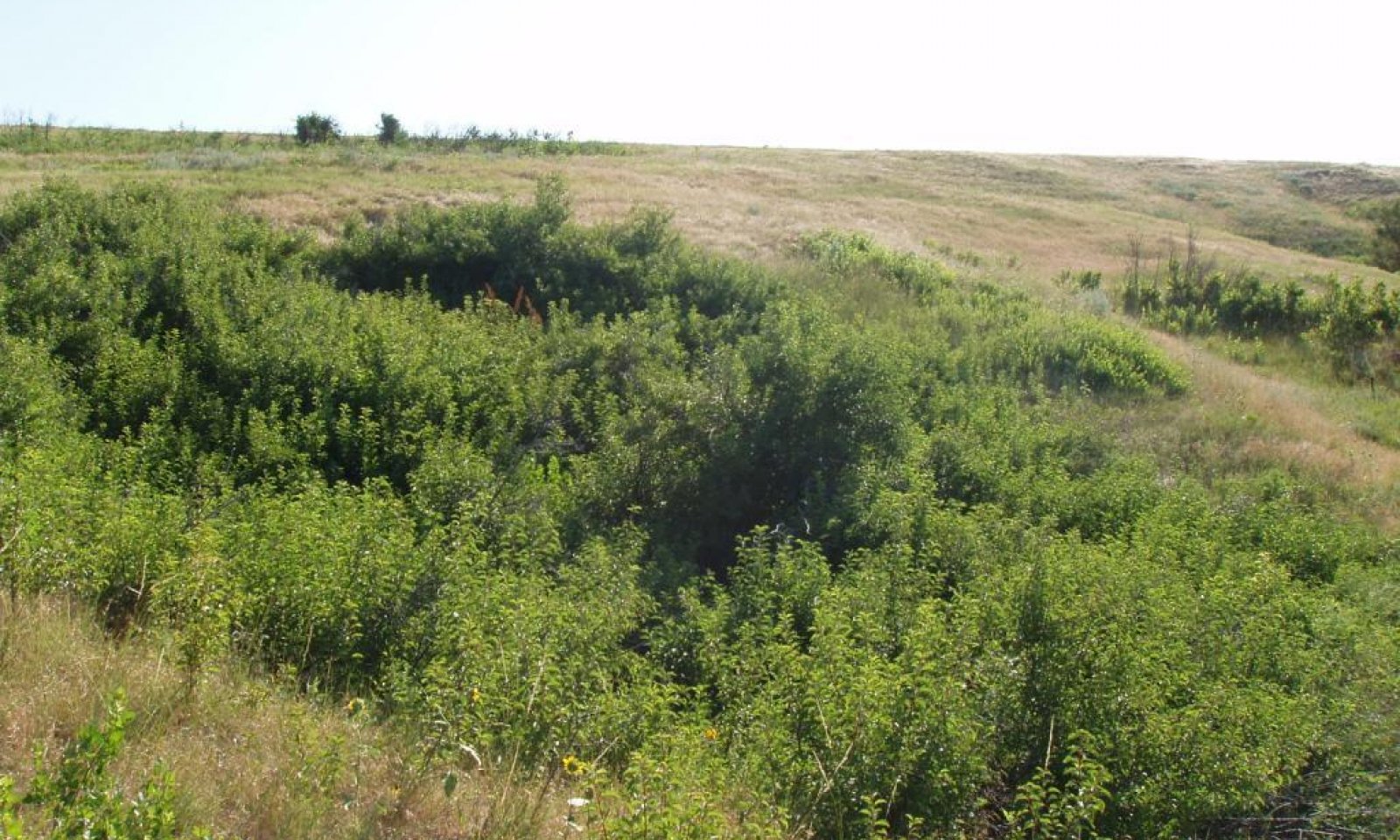
This State represents what is believed to show the natural range of variability that dominated the dynamics of the ecological site prior to European settlement. This site in Reference, is a mix of grasses, grass-like, forbs, shrubs and tree species. Wet and dry climatic cycles, fire, no fire and encroachment of junipers are the major drivers between plant communities. In general, grazing pressure is limited because of limited accessibility however on flatter slopes, livestock will utilize the site for shade and loafing.
Dominant plant species
green ash (Fraxinus pennsylvanica), tree
bur oak (Quercus macrocarpa), tree
hackberry (Celtis), tree
American elm (Ulmus americana), tree
American plum (Prunus americana), shrub
silver buffaloberry (Shepherdia argentea), shrub
western snowberry (Symphoricarpos occidentalis), shrub
green muhly (Muhlenbergia ramulosa), grass
big bluestem (Andropogon gerardii), grass
Canada wildrye (Elymus canadensis), grass
sideoats grama (Bouteloua curtipendula), grass
little bluestem (Schizachyrium scoparium), grass
green needlegrass (Nassella viridula), grass
porcupinegrass (Hesperostipa spartea), grass
sedge (Carex), grass
white sagebrush (Artemisia ludoviciana), grass
purple coneflower (Echinacea), grass
white prairie aster (Symphyotrichum falcatum), grass
Submodel
Description
This State occurs when eastern redcedar and/or Rocky Mountain juniper encroach onto the site. As the juniper becomes established, the herbaceous component declines and more bare ground is exposed. It appears that juniper is creating the condition for continuing encroachment. As bare ground increases juniper establishes more readily.
Dominant plant species
American plum (Prunus americana), shrub
silver buffaloberry (Shepherdia argentea), shrub
Rocky Mountain juniper (Juniperus scopulorum), shrub
chokecherry (Prunus virginiana), shrub
western snowberry (Symphoricarpos occidentalis), shrub
eastern redcedar (Juniperus virginiana), shrub
Canada wildrye (Elymus canadensis), grass
bluegrass (Poa), grass
cheatgrass (Bromus tectorum), grass
white sagebrush (Artemisia ludoviciana), grass
northern bedstraw (Galium boreale), grass
starry false lily of the valley (Maianthemum stellatum), grass
Submodel
Description
This State is the result of a stand replacing fire that removes the majority of the woody component from the site. Before the re-sprouting shrubs can stabilize the site and native grasses and forbs can reestablish, non-native, cool-season grasses invade the site and become the dominate species. This State can also be the result of heavy use by livestock.
Dominant plant species
western snowberry (Symphoricarpos occidentalis), shrub
chokecherry (Prunus virginiana), shrub
American plum (Prunus americana), shrub
silver buffaloberry (Shepherdia argentea), shrub
Kentucky bluegrass (Poa pratensis), grass
cheatgrass (Bromus tectorum), grass
smooth brome (Bromus inermis), grass
blue grama (Bouteloua gracilis), grass
western wheatgrass (Pascopyrum smithii), grass
slender wheatgrass (Elymus trachycaulus), grass
sedge (Carex), grass
curlycup gumweed (Grindelia squarrosa), grass
lambsquarters (Chenopodium album), grass
yellow salsify (Tragopogon dubius), grass
thistle (Cirsium), grass
Cuman ragweed (Ambrosia psilostachya), grass
Submodel
Mechanism
Over time, no fire will convert the plant community to the Conifer State (2.0). Shrubs and trees replace the grasses and forbs due to no fire over many years. This transition is most likely to occur through Plant Community Phase (1.2).
Mechanism
Heavy use (livestock concentration or loafing areas) and invasion on non-native, cool-season grasses will transition this site to the Disturbed State (3.0).
Mechanism
In areas where non-native, cool-season grasses are not common in the adjacent plant communities, the natural successional process of shrubs and tree regeneration can transition this plant community back to the Reference State (1.0).
Mechanism
Hot, stand replacing fire and the invasion of non-native, cool-season grasses will convert the plant community to the Invaded State (3.0).
Model keys
Briefcase
Add { ecological sites } and { Major Land Resource Areas } to your briefcase by clicking on the briefcase
( ) icon wherever it occurs. Drag and drop items to reorder. Cookies are used to store briefcase items between browsing sessions. Because of this, the number of items that can be added to your briefcase is limited, and briefcase items added on one device and browser cannot be accessed from another device or browser. Users who do not wish to place cookies on their devices should not use the briefcase tool. Briefcase cookies serve no other purpose than described here and are deleted whenever browsing history is cleared.
Ecological sites
Major Land Resource Areas


The Ecosystem Dynamics Interpretive Tool is an information system framework developed by the USDA-ARS Jornada Experimental Range, USDA Natural Resources Conservation Service, and New Mexico State University.
Accessibility statement