
Natural Resources
Conservation Service
Ecological site R041XA105AZ
Limy Upland
16-20" p.z.
Last updated: 4/09/2021
Accessed: 09/29/2026
-
Search


Major Land Resource Area or ecological site by name and/or ID.
PreviousSectionsNextGeneral information
Provisional. A provisional ecological site description has undergone quality control and quality assurance review. It contains a working state and transition model and enough information to identify the ecological site.
Click to explore map
Figure 1. Mapped extent
Areas shown in blue indicate the maximum mapped extent of this ecological site. Other ecological sites likely occur within the highlighted areas. It is also possible for this ecological site to occur outside of highlighted areas if detailed soil survey has not been completed or recently updated.
MLRA notes
Major Land Resource Area (MLRA): 041X–Madrean Archipelago
AZ 41.1 – Mexican Oak-Pine Forest and Oak Savannah
Elevations range from 4500 to 10,700 feet and precipitation ranges from 16 to 30 inches. Vegetation includes Emory oak, Mexican blue oak, Arizona white oak, one-seed juniper, alligator juniper, sacahuista, California bricklebush, skunkbush sumac, Arizona rosewood, wait-a-bit mimosa, sideoats grama, blue grama, purple grama, wooly bunchgrass, plains lovegrass, squirreltail, and pinyon ricegrass. The soil temperature regime ranges from thermic to mesic and the soil moisture regime ranges from aridic ustic to typic ustic. This unit occurs within the Basin and Range Physiographic Province and is characterized by numerous mountain ranges that rise abruptly from broad, plain-like valleys and basins. Igneous and metamorphic rock classes dominate the mountain ranges and sediments filling the basins represent combinations of fluvial, lacustrine, colluvial and alluvial deposits.Associated sites
R041XA103AZ Limestone Hills 16-20 p.z.
R041XA107AZ Loamy Slopes 16-20" p.z.
R041XA108AZ Loamy Upland 16-20" p.z.
R041XA114AZ Loamy Bottom 16-20" p.z.
R041XA115AZ Loamy Swale 16-20" p.z.
Similar sites
R041XC309AZ Limy Upland 12-16" p.z.
R041XA103AZ Limestone Hills 16-20 p.z.
R041XC308AZ Limy Slopes 12-16" p.z.
R041XA104AZ Limy Slopes 16-20" p.z.
Table 1. Dominant plant species
Tree Not specified
Shrub (1) krameria erecta
(2) nolina microcarpaHerbaceous (1) bouteloua eriopoda
(2) aristida purpurea var. nealleyiPhysiographic features
This site occurs in the middle elevations of the Madrean Basin and Range province in southeastern Arizona. It occurs on ridge-tops and fan terraces.
Table 2. Representative physiographic features
Landforms (1) Ballena
(2) Ridge
(3) Fan piedmont
Flooding frequency None Ponding frequency None Elevation 4700 – 5500 ft Slope 1 – 15 % Aspect Aspect is not a significant factor Climatic features
Precipitation in this zone of the common resource area ranges from 16-20 inches per year with elevations from 4700-5500 feet. Approximately 40% of this moisture comes as gentle rain or snow during the winter-spring (Oct-Apr) season; originates in the north Pacific and Gulf of California and comes as frontal storms with long duration and low intensity. The remaining 60% falls in the summer season (May-Sep); originates in the Gulf of Mexico and are convective, usually brief, intense thunderstorms. Snow is common Dec-Mar, averaging 5-15 inches per year, but rarely lasts more than a week. May and June are the driest months. Humidity is low.
Temperatures are mild. Freezing temperatures are common at night from Oct-May, but daytime temperatures are almost always over 40 F. Below 0 F temperatures can occur Dec-Feb. Daytime summer highs rarely exceed 95 F.
Species like New Mexico feathergrass, wooly bunchgrass, false mesquite, shrubby dalea and ratany begin growth in late March to April. Warm season grasses begin growth in July or August with receipt of the first summer rains.Table 3 Representative climatic features
Frost-free period (average) 200 days Freeze-free period (average) Precipitation total (average) 20 in BarLineFigure 2. Monthly precipitation range
BarLineFigure 3. Monthly average minimum and maximum temperature
">Influencing water features
There are no water features associated with this site.
Soil features
These soils have developed on calcareous alluvium or conglomerate and fanglomerate. They are shallow to lime cemented pans and are calcareous throughout. Soil surfaces range in texture from very cobbly sandy loam to very gravelly loam. The surface soil is dark colored. Soil surfaces are well protected by covers of rocks, cobbles, and/or gravels. Plant soil moisture relationships are poor to fair.
Soils mapped on this site include:SSA-666 Cochise Northwestern part MU 16 Carbine; SSA-671 Cochise county Douglas-Tombstone part MU 43 Denab.Table 4. Representative soil features
Parent material (1) Alluvium – conglomerate
Surface texture (1) Very gravelly sandy loam
(2) Very gravelly loam
(3) Cobbly sandy loam
Family particle size (1) Loamy
Drainage class Well drained Permeability class Moderately rapid to moderate Soil depth 10 – 20 in Surface fragment cover <=3" 20 – 55 % Surface fragment cover >3" 0 – 5 % Available water capacity
(0-40in)0.8 – 2 in Calcium carbonate equivalent
(0-40in)5 – 30 % Electrical conductivity
(0-40in)0 – 2 mmhos/cm Sodium adsorption ratio
(0-40in)0 – 2 Soil reaction (1:1 water)
(0-40in)7.8 – 8.4 Subsurface fragment volume <=3"
(Depth not specified)10 – 45 % Subsurface fragment volume >3"
(Depth not specified)0 – 5 % Ecological dynamics
The plant communities found on an ecological site are naturally variable. Composition and production will vary with yearly conditions, location, aspect, and the natural variability of the soils. The Historical Climax Plant Community represents the natural potential plant communities found on relict or relatively undisturbed sites. Other plant communities described here represent plant communities that are known to occur when the site is disturbed by factors such as fire, grazing, or drought.
Production data provided in this site description is standardized to air dry weight at the end of the summer growing season. The plant communities described in this site description are based on near normal rainfall years.
NRCS uses a Similarity Index to compare existing plant communities to the plant communities described here. Similarity index is determined by comparing the production and composition of a plant community to the production and composition of a plant community described in this site description. To determine Similarity index, compare the production (air dry weight) of each species to that shown in the plant community description. For each species, count no more than the maximum amount shown for the species, and for each group, count no more than the maximum amount shown for each group. Divide the resulting total by the total normal year production shown in the plant community description. If the rainfall has been significantly above or below normal, use the total production shown for above or below normal years. If field data is not collected at the end of the summer growing season, then the field data must be corrected to the end of the year production before comparing it to the site description. The growth curve can be used as a guide for estimating production at the end of the summer growing season.
State and transition model
Custom diagramStandard diagram
Figure 4. 41-1 Limy Upland STM
More interactive model formats are also available. View Interactive Models
More interactive model formats are also available. View Interactive Models
Click on state and transition labels to scroll to the respective textEcosystem states
State 1 submodel, plant communities
State 2 submodel, plant communities
State 3 submodel, plant communities
State 4 submodel, plant communities
State 1
ReferenceCommunity 1.1
Grassland - Savannah (HCPC)
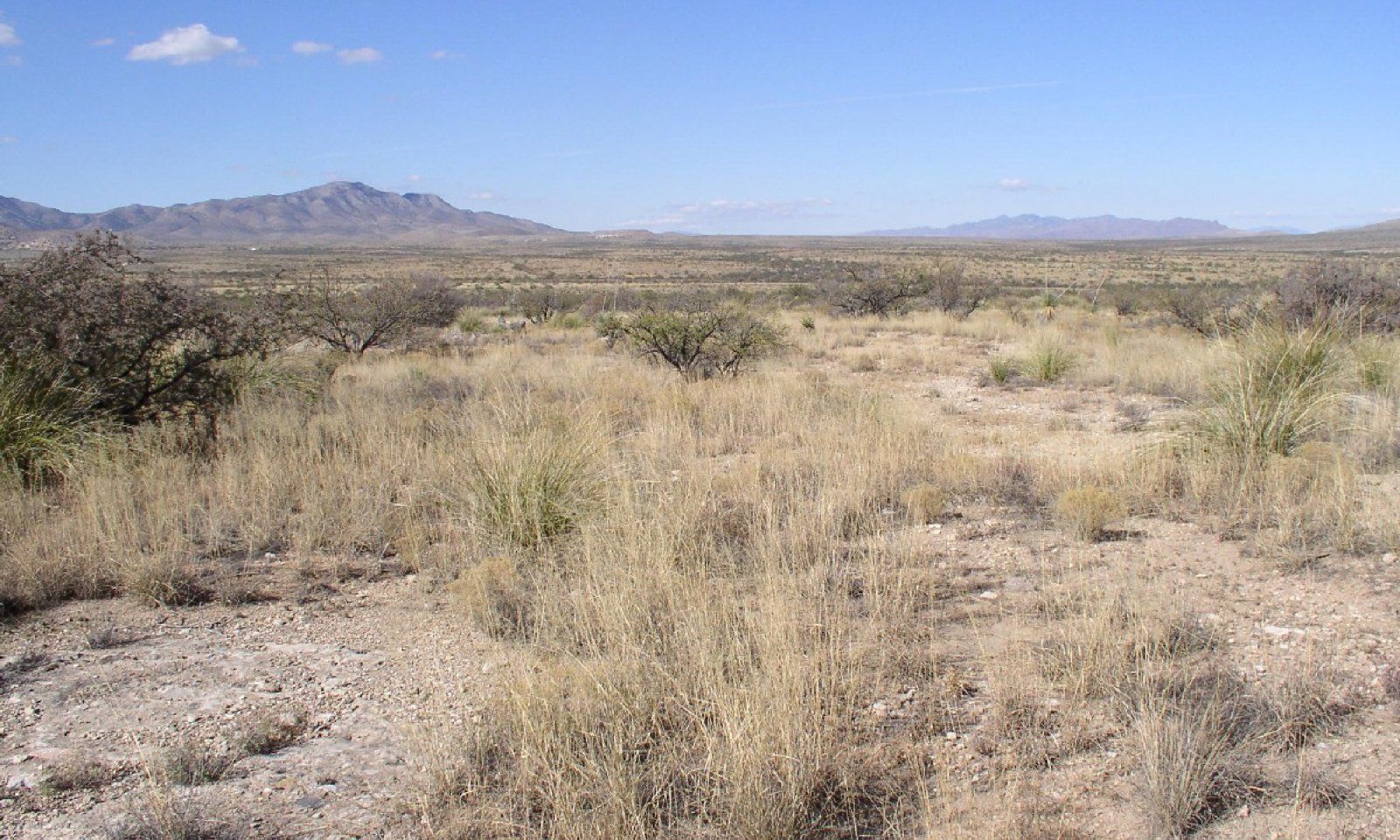
Figure 5. Limy Upland 16-20" pz. HCPC
The historic native state includes the native plant communities that occur on the site, including the historic climax plant community. This state includes other plant communities that naturally occupy the site following fire, drought, flooding, herbivores, and other natural disturbances. The historic climax plant community represents the natural climax community that eventually reoccupies the site with proper management.
The list of plants and their relative proportions are based on near normal years. Fluctuations in species composition and relative production may change from year to year dependant upon abnormal precipitation or other climatic factors.
The potential plant community has been determined by a study of range relict areas, or areas protected from excessive grasses. Trends in plant communities going from heavily grazed to lightly grazed, seasonal-use pasture and historical accounts have also been used.
The potential plant community on this site is dominated by warm season perennial grasses with a fair component of cool season perennial grasses and half shrubs. Cool season grasses tend to be clumped on the site and not evenly dispersed in the community. Several species of shrubs, cacti, other succulents and forbs are represented in the plant community. The aspect is open grassland to savannah.
With continuous heavy grazing, cool season grasses and warm season mid-grasses are removed from the plant community and replaced by unpalatable species like fluffgrass and blue threeawn. With severe deterioration, shrubby species like wait-a-bit mimosa, one-seed juniper and littleleaf sumac can increase to dominate the site. Mesquite, whitethorn acacia and Lehmann lovegrass can invade the community on this site and increase to dominate. Naturally occurring fires in June-August are an important factor in shaping this plant community. Fire-free intervals range from 10-20 years. Without periodic disturbance, like grazing or fire, perennial mid-grasses can become decadent and forbs like croton, bahia and ragweed can increase to dominate the plant community. This site is one of the principle habitats for beargrass in this LRA. Extensive stands are utilized by Mexican industries in making brooms, mats and baskets. To a lesser degree, they are used by native Americans in basket making. Plants should not be harvested more than once every three years to allow adequate recovery and seed production.
Periodic drought can occur in this LRA and cause significant grass mortality. Droughts in the early 30s, mid-50s, 1975-76, 1988-89, 95-96 and 2002 resulted in the loss of much of the grass cover on this site. The site recovers rapidly, however, due to covers of gravel and cobble and the good climate prevailing in this LRA.Figure 6. Annual production by plant type (representative values) or group (midpoint values)
Table 5. Annual production by plant type
Plant type Low
(lb/acre)Representative value
(lb/acre)High
(lb/acre)Grass/Grasslike 260 600 850 Shrub/Vine 40 100 210 Forb 6 15 45 Tree 0 5 20 Total 306 720 1125 Table 6. Soil surface cover
Tree basal cover 0% Shrub/vine/liana basal cover 0-10% Grass/grasslike basal cover 0-10% Forb basal cover 0-0% Non-vascular plants 0% Biological crusts 0-10% Litter 10-40% Surface fragments >0.25" and <=3" 20-60% Surface fragments >3" 0-10% Bedrock 0-10% Water 0% Bare ground 10-20% Table 7. Canopy structure (% cover)
Height Above Ground (ft) Tree Shrub/Vine Grass/
GrasslikeForb <0.5 – 0-5% 1-5% 0-2% >0.5 <= 1 – 1-10% 10-15% 1-5% >1 <= 2 – 1-5% 10-20% 0-1% >2 <= 4.5 – 1-5% 0-5% – >4.5 <= 13 0-1% 0-2% – – >13 <= 40 0-1% – – – >40 <= 80 – – – – >80 <= 120 – – – – >120 – – – – Figure 7. Plant community growth curve (percent production by month). AZ4111 , 41.1 16-30. Growth begins in the spring, semi-dormancy occurs during the June drought, most growth occurs during the summer rainy season..
Jan Feb Mar Apr May Jun Jul Aug Sep Oct Nov Dec J F M A M J J A S O N D 0 0 0 5 10 0 15 45 20 5 0 0 Community 1.2
Sub-shrubs, Succulents & GrassesHalf-shrubs dominate the plant community with lesser amounts of perennial grasses. Yucca-like shrubs increase. Minor amounts of potentially invasive shrubs such as sumac and mimosa.
Pathway 1.1a
Community 1.1 to 1.2Drought, no grazing, no burning.
Conservation practices
Prescribed Burning Upland Wildlife Habitat Management Prescribed Grazing Pathway 1.2a
Community 1.2 to 1.1Natural fire, prescribed grazing, prescribed burning.
Conservation practices
Prescribed Burning Upland Wildlife Habitat Management Prescribed Grazing State 2
Exotic grassCommunity 2.1
Exotic grass
Figure 8. Limy Upland 16-20" pz. Lehmann lovegrass
This state occurs where Lehmann lovegrass has either been seeded or has invaded the plant community from a nearby seed source. Lehmann can increase to dominate the plant community. Native perennial grasses and forbs are reduced to minor amounts. Repeated fires will usually result in increased dominance of Lehmann lovegrass.
State 3
Shrub invadedCommunity 3.1
Shrub invaded
Figure 9. Limy Upland 16-20" pz. Shrub invasion
This state occurs where shrubs like catclaw mimosa, littleleaf sumac, whitethorn acacia and mesquite increase in the absence of fire for long periods of time. Yucca like shrubs including sotol, beargrass, soapweed and banana yucca can also increase. Sufficient fine fuels may still exist to carry fire but fuel continuity is poor and large areas will not burn. The major shrubs are well established and will re-sprout after fire and quickly assume dominance.
State 4
ErodedCommunity 4.1
ErodedThis state exists where accelerated sheet and rill erosion has occurred due severe trailing and soil compaction. In some areas road construction has resulted in this condition. The dark colored soil surface horizon is lost and eroded to expose cemented lime pans at the surface. Site productivity declines as soil depth decreases.
Transition T1A
State 1 to 2Non-native bunchgrass seed source (wind-blown or mechanical transport) paired with native perennial grass community disturbance such as fire or unmanaged grazing.
Transition T1B
State 1 to 3Long-term unmanaged grazing with or without drought/fire interaction opens perennial grass canopy allowing shrubs to outcompete resources. Juniper, mimosa and other shrubs are likely to increase as well as yucca-like succulents. Remnant native perennial grasses cannot re-colonize areas with shrub competition.
Restoration pathway R2A
State 2 to 1No restoration pathway known at this time. Perhaps future development of herbicide or biological treatment to remove perennial exotics will occur.
Conservation practices
Upland Wildlife Habitat Management Prescribed Grazing Transition T2A
State 2 to 3Long-term unmanaged grazing with or without drought/fire interaction opens perennial grass canopy allowing shrubs to outcompete resources. Juniper, mimosa and other shrubs are likely to increase as well as yucca-like succulents. Remnant native perennial grasses cannot re-colonize areas with shrub competition.
Restoration pathway R3A
State 3 to 1Woody species management, native species planting (as needed), supported by prescribed grazing. Shrub control maintained with herbicide and/or prescribed burning.
Conservation practices
Brush Management Prescribed Burning Upland Wildlife Habitat Management Prescribed Grazing Restoration pathway R3B
State 3 to 2Restoration practices conducted when a non-native seed bank is present on site (Lehmann lovegrass or other non-natives present along trails, roads or in disturbed areas) can result in an exotic grassland community. Native species seeding may enhance the native grass and forb components. Practices are woody species control, native species seeding(as needed) both supported by managed grazing. Shrub control maintained with herbicide will favor the native grasses while prescribed burning favors non-natives. Burning the mixed shrub community with a non-native grass seed source present can result in an exotic grassland co-dominant with shrubs.
Conservation practices
Brush Management Prescribed Burning Range Planting Upland Wildlife Habitat Management Prescribed Grazing Transition T3A
State 3 to 4Long-term unmanaged grazing affects soil site stability and hydrologic functioning. Animal trailing and soil surface compaction compound the affect of plant community changes (increased shrub/decreased perennial grass community) to increase surface water run-off rather than infiltration. Over time (50-100+ years) the mollic A horizon can be lost leaving the site with a reduction in potential productivity.
Additional community tables
Table 8. Community 1.1 plant community composition
Group Common name Symbol Scientific name Annual production () Foliar cover (%) Grass/Grasslike1 Dominant mid grasses 100–400 sideoats grama BOCU Bouteloua curtipendula 100–300 – woolyspike balsamscale ELBA Elionurus barbiculmis 0–100 – spiked crinkleawn TRSP12 Trachypogon spicatus 0–100 – 2 Dominant cool season grasses 10–100 southwestern needlegrass ACEM4 Achnatherum eminens 5–100 – New Mexico feathergrass HENE5 Hesperostipa neomexicana 5–100 – prairie Junegrass KOMA Koeleria macrantha 0–10 – pinyon ricegrass PIFI Piptochaetium fimbriatum 0–10 – squirreltail ELELE Elymus elymoides ssp. elymoides 0–5 – 3 Dominant short grasses 150–300 black grama BOER4 Bouteloua eriopoda 100–200 – blue threeawn ARPUN Aristida purpurea var. nealleyi 20–100 – low woollygrass DAPU7 Dasyochloa pulchella 5–50 – Hall's panicgrass PAHA Panicum hallii 5–50 – slim tridens TRMU Tridens muticus 5–50 – hairy grama BOHI2 Bouteloua hirsuta 0–25 – shortleaf woollygrass ERAV Erioneuron avenaceum 0–20 – 4 Miscellaneous perennial grasses 0–30 spidergrass ARTE3 Aristida ternipes 0–10 – spidergrass ARTEG Aristida ternipes var. gentilis 0–5 – poverty threeawn ARDI5 Aristida divaricata 0–5 – Fendler threeawn ARPUL Aristida purpurea var. longiseta 0–5 – Wright's threeawn ARPUW Aristida purpurea var. wrightii 0–5 – Orcutt's threeawn ARSCO Aristida schiedeana var. orcuttiana 0–5 – plains lovegrass ERIN Eragrostis intermedia 0–5 – tanglehead HECO10 Heteropogon contortus 0–5 – sand dropseed SPCR Sporobolus cryptandrus 0–5 – slim tridens TRMUE Tridens muticus var. elongatus 0–2 – common wolfstail LYPH Lycurus phleoides 0–2 – bullgrass MUEM Muhlenbergia emersleyi 0–2 – desert muhly MUGL2 Muhlenbergia glauca 0–2 – bush muhly MUPO2 Muhlenbergia porteri 0–2 – fall witchgrass DICO6 Digitaria cognata 0–2 – slender muhly MUTE4 Muhlenbergia tenuifolia 0–2 – plains bristlegrass SEVU2 Setaria vulpiseta 0–2 – cane bluestem BOBA3 Bothriochloa barbinodis 0–2 – blue grama BOGR2 Bouteloua gracilis 0–2 – purple grama BORA Bouteloua radicosa 0–1 – slender grama BORE2 Bouteloua repens 0–1 – Rothrock's grama BORO2 Bouteloua rothrockii 0–1 – silver bluestem BOSA Bothriochloa saccharoides 0–1 – sedge CAREX Carex 0–1 – flatsedge CYPER Cyperus 0–1 – Arizona cottontop DICA8 Digitaria californica 0–1 – vine mesquite PAOB Panicum obtusum 0–1 – Texas bluestem SCCI2 Schizachyrium cirratum 0–1 – nineawn pappusgrass ENDE Enneapogon desvauxii 0–1 – purple muhly MURI3 Muhlenbergia rigida 0–1 – curly-mesquite HIBE Hilaria belangeri 0–1 – green sprangletop LEDU Leptochloa dubia 0–1 – 5 Annual grasses 0–20 sixweeks threeawn ARAD Aristida adscensionis 0–5 – prairie threeawn AROL Aristida oligantha 0–5 – Mexican sprangletop LEFUU Leptochloa fusca ssp. uninervia 0–5 – mucronate sprangeltop LEPAB Leptochloa panicea ssp. brachiata 0–5 – witchgrass PACA6 Panicum capillare 0–5 – Mexican panicgrass PAHI5 Panicum hirticaule 0–5 – Arizona signalgrass URAR Urochloa arizonica 0–2 – delicate muhly MUFR Muhlenbergia fragilis 0–2 – littleseed muhly MUMI Muhlenbergia microsperma 0–2 – sixweeks fescue VUOC Vulpia octoflora 0–2 – Eastwood fescue VUMIC Vulpia microstachys var. ciliata 0–1 – desert fescue VUMIM Vulpia microstachys var. microstachys 0–1 – poverty dropseed SPVA Sporobolus vaginiflorus 0–1 – prairie false oat TRIN5 Trisetum interruptum 0–1 – needle grama BOAR Bouteloua aristidoides 0–1 – sixweeks grama BOBA2 Bouteloua barbata 0–1 – matted grama BOSI2 Bouteloua simplex 0–1 – Arizona brome BRAR4 Bromus arizonicus 0–1 – feather fingergrass CHVI4 Chloris virgata 0–1 – tapertip cupgrass ERACA Eriochloa acuminata var. acuminata 0–1 – Mexican lovegrass ERME Eragrostis mexicana 0–1 – tufted lovegrass ERPEP2 Eragrostis pectinacea var. pectinacea 0–1 – pitscale grass HAGR3 Hackelochloa granularis 0–1 – Forb6 Perennial forbs 5–25 trailing windmills ALIN Allionia incarnata 1–5 – leatherweed CRPO5 Croton pottsii 1–5 – bluedicks DICA14 Dichelostemma capitatum 1–5 – spreading snakeherb DYSCD Dyschoriste schiedeana var. decumbens 0–2 – shrubby purslane POSU3 Portulaca suffrutescens 0–2 – slimflower scurfpea PSTE5 Psoralidium tenuiflorum 0–2 – Rocky Mountain zinnia ZIGR Zinnia grandiflora 0–2 – Texas snoutbean RHSET Rhynchosia senna var. texana 0–2 – brownplume wirelettuce STPA4 Stephanomeria pauciflora 0–2 – shrubby copperleaf ACPH3 Acalypha phleoides 0–2 – bastard toadflax COUM Comandra umbellata 0–2 – pitseed goosefoot CHBE4 Chenopodium berlandieri 0–2 – rose heath CHER2 Chaetopappa ericoides 0–2 – tuber anemone ANTU Anemone tuberosa 0–2 – weakleaf bur ragweed AMCO3 Ambrosia confertiflora 1–2 – white sagebrush ARLU Artemisia ludoviciana 0–2 – spreading fleabane ERDI4 Erigeron divergens 0–2 – trailing fleabane ERFL Erigeron flagellaris 0–2 – fineleaf hymenopappus HYFI Hymenopappus filifolius 0–2 – purplenerve springparsley CYMU2 Cymopterus multinervatus 0–2 – Wright's deervetch LOWR Lotus wrightii 0–2 – tufted evening primrose OECA10 Oenothera caespitosa 0–2 – Cooley's bundleflower DECO2 Desmanthus cooleyi 0–2 – locoweed OXYTR Oxytropis 0–1 – beardlip penstemon PEBA2 Penstemon barbatus 0–1 – Cochise beardtongue PEDA Penstemon dasyphyllus 0–1 – longstalk chinchweed PELO Pectis longipes 0–1 – Parry's beardtongue PEPA24 Penstemon parryi 0–1 – slimleaf bean PHAN3 Phaseolus angustissimus 0–1 – orange fameflower PHAU13 Phemeranthus aurantiacus 0–1 – ivyleaf groundcherry PHHE4 Physalis hederifolia 0–1 – white milkwort POAL4 Polygala alba 0–1 – velvetseed milkwort POOB Polygala obscura 0–1 – variableleaf bushbean MAGI2 Macroptilium gibbosifolium 0–1 – lacy tansyaster MAPI Machaeranthera pinnatifida 0–1 – Mexican star MIBI2 Milla biflora 0–1 – lemon beebalm MOCIA Monarda citriodora ssp. austromontana 0–1 – whiteflower prairie clover DAAL Dalea albiflora 0–1 – James' prairie clover DAJA Dalea jamesii 0–1 – dwarf prairie clover DANA Dalea nana 0–1 – downy prairie clover DANE Dalea neomexicana 0–1 – babyslippers HYVE Hybanthus verticillatus 0–1 – ragged nettlespurge JAMA Jatropha macrorhiza 0–1 – San Pedro daisy LAPO4 Lasianthaea podocephala 0–1 – Fendler's bladderpod LEFE Lesquerella fendleri 0–1 – narrowleaf stoneseed LIIN2 Lithospermum incisum 0–1 – Lewis flax LILE3 Linum lewisii 0–1 – Greene's bird's-foot trefoil LOGR4 Lotus greenei 0–1 – Mexican fireplant EUHE4 Euphorbia heterophylla 0–1 – sun spurge EURA2 Euphorbia radians 0–1 – wild dwarf morning-glory EVAR Evolvulus arizonicus 0–1 – shaggy dwarf morning-glory EVNU Evolvulus nuttallianus 0–1 – silver dwarf morning-glory EVSE Evolvulus sericeus 0–1 – Arizona snakecotton FRAR2 Froelichia arizonica 0–1 – scarlet beeblossom GACO5 Gaura coccinea 0–1 – pearly globe amaranth GONI Gomphrena nitida 0–1 – small matweed GUDE Guilleminea densa 0–1 – red bluet HORU Houstonia rubra 0–1 – perennial rockcress ARPE2 Arabis perennans 0–1 – southwestern pricklypoppy ARPL3 Argemone pleiacantha 0–1 – Watson's dutchman's pipe ARWA Aristolochia watsonii 0–1 – Arizona milkvetch ASAR6 Astragalus arizonicus 0–1 – spider milkweed ASAS Asclepias asperula 0–1 – chaparral asphead ASHI3 Aspicarpa hirtella 0–1 – broadleaf milkweed ASLA4 Asclepias latifolia 0–1 – woolly locoweed ASMOB Astragalus mollissimus var. bigelovii 0–1 – sheep milkvetch ASNO3 Astragalus nothoxys 0–1 – horsetail milkweed ASSU2 Asclepias subverticillata 0–1 – dense ayenia AYMI Ayenia microphylla 0–1 – hairyseed bahia BAAB Bahia absinthifolia 0–1 – lyreleaf greeneyes BELY Berlandiera lyrata 0–1 – scarlet spiderling BOCO Boerhavia coccinea 0–1 – dwarf stickpea CAHUR Calliandra humilis var. reticulata 0–1 – wholeleaf Indian paintbrush CAIN14 Castilleja integra 0–1 – desert mariposa lily CAKE Calochortus kennedyi 0–1 – sego lily CANU3 Calochortus nuttallii 0–1 – Indian paintbrush CASTI2 Castilleja 0–1 – whitemargin sandmat CHAL11 Chamaesyce albomarginata 0–1 – Mexican yellowshow AMPA3 Amoreuxia palmatifida 0–1 – Cuman ragweed AMPS Ambrosia psilostachya 0–1 – crested anoda ANCR2 Anoda cristata 0–1 – melon loco APUN Apodanthera undulata 0–1 – largeflower onion ALMA4 Allium macropetalum 0–1 – birdbill dayflower CODI4 Commelina dianthifolia 0–1 – Texas bindweed COEQ Convolvulus equitans 0–1 – whitemouth dayflower COER Commelina erecta 0–1 – fingerleaf gourd CUDI Cucurbita digitata 0–1 – coyote gourd CUPA Cucurbita palmata 0–1 – jewels of Opar TAPA2 Talinum paniculatum 0–1 – Coulter's wrinklefruit TECO Tetraclea coulteri 0–1 – hairy fournwort TENE Tetramerium nervosum 0–1 – longstalk greenthread THLO Thelesperma longipes 0–1 – Hopi tea greenthread THME Thelesperma megapotamicum 0–1 – pinewoods spiderwort TRPI Tradescantia pinetorum 0–1 – branched noseburn TRRA5 Tragia ramosa 0–1 – Fort Huachuca vervain VEGR2 Verbena gracilis 0–1 – American vetch VIAM Vicia americana 0–1 – Louisiana vetch VILUL2 Vicia ludoviciana ssp. ludoviciana 0–1 – copper zephyrlily ZELO Zephyranthes longifolia 0–1 – slimleaf plainsmustard SCLI12 Schoenocrambe linearifolia 0–1 – twinleaf senna SEBA3 Senna bauhinioides 0–1 – Lemmon's ragwort SELE8 Senecio lemmonii 0–1 – salt spring checkerbloom SINE3 Sidalcea neomexicana 0–1 – silverleaf nightshade SOEL Solanum elaeagnifolium 0–1 – copper globemallow SPAN3 Sphaeralcea angustifolia 0–1 – gooseberryleaf globemallow SPGR2 Sphaeralcea grossulariifolia 0–1 – buffpetal RHPH2 Rhynchosida physocalyx 0–1 – Torrey's craglily ECFL Echeandia flavescens 0–1 – 7 Annual Forbs 1–20 longleaf false goldeneye HELOA2 Heliomeris longifolia var. annua 0–5 – woolly plantain PLPA2 Plantago patagonica 0–5 – New Mexico goosefoot CHNE3 Chenopodium neomexicanum 0–3 – sensitive partridge pea CHNI2 Chamaecrista nictitans 0–3 – pitseed goosefoot CHBE4 Chenopodium berlandieri 0–2 – scrambled eggs COAU2 Corydalis aurea 0–2 – Wright's bird's beak COWR2 Cordylanthus wrightii 0–2 – New Mexico thistle CINE Cirsium neomexicanum 0–2 – redstar IPCO3 Ipomoea coccinea 0–2 – Thurber's morning-glory IPTH Ipomoea thurberi 0–2 – wedgeleaf draba DRCU Draba cuneifolia 0–2 – New Mexico copperleaf ACNE Acalypha neomexicana 0–2 – smallflowered milkvetch ASNU4 Astragalus nuttallianus 0–2 – Thurber's milkvetch ASTH Astragalus thurberi 0–2 – Arizona poppy KAGR Kallstroemia grandiflora 0–2 – slender goldenweed MAGR10 Machaeranthera gracilis 0–2 – tanseyleaf tansyaster MATA2 Machaeranthera tanacetifolia 0–2 – spreading fanpetals SIAB Sida abutifolia 0–2 – sleepy silene SIAN2 Silene antirrhina 0–1 – whitestem blazingstar MEAL6 Mentzelia albicaulis 0–1 – sweet four o'clock MILO2 Mirabilis longiflora 0–1 – desert evening primrose OEPR Oenothera primiveris 0–1 – Arizona phacelia PHAR13 Phacelia arizonica 0–1 – Mangas Spring phacelia PHBO4 Phacelia bombycina 0–1 – Arizona popcornflower PLAR Plagiobothrys arizonicus 0–1 – warty caltrop KAPA Kallstroemia parviflora 0–1 – Gordon's bladderpod LEGO Lesquerella gordonii 0–1 – broadleaved pepperweed LELA2 Lepidium latifolium 0–1 – intermediate pepperweed LEVIM Lepidium virginicum var. medium 0–1 – dotted blazing star LIPU Liatris punctata 0–1 – plains flax LIPU4 Linum puberulum 0–1 – foothill deervetch LOHU2 Lotus humistratus 0–1 – coastal bird's-foot trefoil LOSAB Lotus salsuginosus var. brevivexillus 0–1 – shortstem lupine LUBR2 Lupinus brevicaulis 0–1 – bajada lupine LUCOC Lupinus concinnus ssp. concinnus 0–1 – Fendler's desertdandelion MAFE Malacothrix fendleri 0–1 – purslane PORTU Portulaca 0–1 – yerba porosa PORU6 Porophyllum ruderale 0–1 – desert unicorn-plant PRAL4 Proboscidea althaeifolia 0–1 – doubleclaw PRPA2 Proboscidea parviflora 0–1 – Wright's cudweed PSCAC2 Pseudognaphalium canescens ssp. canescens 0–1 – Abert's creeping zinnia SAAB Sanvitalia abertii 0–1 – sawtooth sage SASU7 Salvia subincisa 0–1 – wheelscale saltbush ATEL Atriplex elegans 0–1 – fewflower beggarticks BILE Bidens leptocephala 0–1 – Coulter's spiderling BOCO2 Boerhavia coulteri 0–1 – erect spiderling BOER Boerhavia erecta 0–1 – hoary bowlesia BOIN3 Bowlesia incana 0–1 – purple spiderling BOPU Boerhavia purpurascens 0–1 – fringed redmaids CACI2 Calandrinia ciliata 0–1 – carelessweed AMPA Amaranthus palmeri 0–1 – crested anoda ANCR2 Anoda cristata 0–1 – southwestern pricklypoppy ARPL3 Argemone pleiacantha 0–1 – halfmoon milkvetch ASAL6 Astragalus allochrous 0–1 – Abert's buckwheat ERAB2 Eriogonum abertianum 0–1 – sanddune wallflower ERCA14 Erysimum capitatum 0–1 – miniature woollystar ERDI2 Eriastrum diffusum 0–1 – spreading fleabane ERDI4 Erigeron divergens 0–1 – sorrel buckwheat ERPO4 Eriogonum polycladon 0–1 – California poppy ESCAM Eschscholzia californica ssp. mexicana 0–1 – Arizona blanketflower GAAR2 Gaillardia arizonica 0–1 – red dome blanketflower GAPI Gaillardia pinnatifida 0–1 – lesser yellowthroat gilia GIFL Gilia flavocincta 0–1 – El Paso gilia GIME Gilia mexicana 0–1 – Dakota mock vervain GLBIB Glandularia bipinnatifida var. bipinnatifida 0–1 – curlytop gumweed GRNUA Grindelia nuda var. aphanactis 0–1 – El Paso skyrocket IPTH2 Ipomopsis thurberi 0–1 – flaxflowered ipomopsis IPLOL Ipomopsis longiflora ssp. longiflora 0–1 – miner's lettuce CLPEP Claytonia perfoliata ssp. perfoliata 0–1 – camphorweed HESU3 Heterotheca subaxillaris 0–1 – crestrib morning-glory IPCO2 Ipomoea costellata 0–1 – cryptantha CRYPT Cryptantha 0–1 – Chihuahuan prairie clover DAEX2 Dalea exigua 0–1 – American wild carrot DAPU3 Daucus pusillus 0–1 – sacred thorn-apple DAWR2 Datura wrightii 0–1 – New Mexico ticktrefoil DENE Desmodium neomexicanum 0–1 – western tansymustard DEPI Descurainia pinnata 0–1 – western trailing ticktrefoil DEPR2 Desmodium procumbens 0–1 – poorjoe DITE2 Diodia teres 0–1 – royal sandmat CHDI5 Chamaesyce dioica 0–1 – pillpod sandmat CHHI3 Chamaesyce hirta 0–1 – hyssopleaf sandmat CHHY3 Chamaesyce hyssopifolia 0–1 – threadstem sandmat CHRE4 Chamaesyce revoluta 0–1 – thymeleaf sandmat CHSE6 Chamaesyce serpyllifolia 0–1 – slimseed sandmat CHST8 Chamaesyce stictospora 0–1 – Shrub/Vine8 Yucca like plants 20–100 sacahuista NOMI Nolina microcarpa 10–100 – soaptree yucca YUEL Yucca elata 5–25 – banana yucca YUBA Yucca baccata 1–20 – common sotol DAWH2 Dasylirion wheeleri 0–20 – Schott's yucca YUSC Yucca ×schottii 0–5 – 9 Dominant half shrubs 20–50 Utah fendlerbush FEUTC Fendlerella utahensis var. cymosa 0–20 – winterfat KRLA2 Krascheninnikovia lanata 0–20 – rough menodora MESC Menodora scabra 0–15 – littleleaf ratany KRER Krameria erecta 1–15 – trailing krameria KRLA Krameria lanceolata 0–15 – fairyduster CAER Calliandra eriophylla 0–15 – featherplume DAFO Dalea formosa 1–15 – goldenhead ACAMP Acamptopappus 1–14 – trailing windmills ALIN Allionia incarnata 1–14 – chaparral asphead ASHI3 Aspicarpa hirtella 1–14 – dense ayenia AYMI Ayenia microphylla 1–14 – hairyseed bahia BAAB Bahia absinthifolia 1–14 – field bindweed COAR4 Convolvulus arvensis 1–14 – whitemouth dayflower COER Commelina erecta 1–14 – leatherweed CRPO5 Croton pottsii 1–14 – spreading fleabane ERDI4 Erigeron divergens 1–14 – trailing fleabane ERFL Erigeron flagellaris 1–14 – New Mexico fleabane ERNE3 Erigeron neomexicanus 1–14 – wild dwarf morning-glory EVAR Evolvulus arizonicus 1–14 – Arizona snakecotton FRAR2 Froelichia arizonica 1–14 – small matweed GUDED Guilleminea densa var. densa 1–14 – Wright's deervetch LOWR Lotus wrightii 1–14 – variableleaf bushbean MAGI2 Macroptilium gibbosifolium 1–14 – rough menodora MESC Menodora scabra 1–14 – Cochise beardtongue PEDA Penstemon dasyphyllus 1–14 – Parry's beardtongue PEPA24 Penstemon parryi 1–14 – Palmer's penstemon PEPA8 Penstemon palmeri 1–14 – thinleaf goldenhead PYLI2 Pyrrocoma linearis 1–14 – Texas snoutbean RHSET Rhynchosia senna var. texana 1–14 – spreading fanpetals SIAB Sida abutifolia 1–14 – scarlet globemallow SPCO Sphaeralcea coccinea 1–14 – brownplume wirelettuce STPA4 Stephanomeria pauciflora 1–14 – Eureka dunegrass SWAL Swallenia alexandrae 1–14 – Hopi tea greenthread THME Thelesperma megapotamicum 1–14 – Palmer's crinklemat TIPA Tiquilia palmeri 1–14 – desert zinnia ZIAC Zinnia acerosa 0–10 – bastardsage ERWR Eriogonum wrightii 0–5 – prairie acacia ACAN Acacia angustissima 0–5 – yerba de pasmo BAPT Baccharis pteronioides 0–5 – false boneset BREU Brickellia eupatorioides 0–2 – 10 Miscellaneous shrubs 0–50 Mexican cliffrose PUME Purshia mexicana 0–25 – New Mexico copperleaf ACNE Acalypha neomexicana 7–21 – onion ALLIU Allium 7–21 – pigweed AMARA Amaranthus 7–21 – ragweed AMBRO Ambrosia 7–21 – tuber anemone ANTU Anemone tuberosa 7–21 – rockcress ARABI2 Arabis 7–21 – Watson's dutchman's pipe ARWA Aristolochia watsonii 7–21 – phacelia PHACE Phacelia 7–21 – ivyleaf groundcherry PHHE4 Physalis hederifolia 7–21 – phlox PHLOX Phlox 7–21 – Arizona popcornflower PLAR Plagiobothrys arizonicus 7–21 – desert Indianwheat PLOV Plantago ovata 7–21 – white milkwort POAL4 Polygala alba 7–21 – little hogweed POOL Portulaca oleracea 7–21 – slimflower scurfpea PSTE5 Psoralidium tenuiflorum 7–21 – chia SACO6 Salvia columbariae 7–21 – twinleaf senna SEBA3 Senna bauhinioides 7–21 – sleepy silene SIAN2 Silene antirrhina 7–21 – silverleaf nightshade SOEL Solanum elaeagnifolium 7–21 – pinewoods spiderwort TRPI Tradescantia pinetorum 7–21 – branched noseburn TRRA5 Tragia ramosa 7–21 – Fort Huachuca vervain VEGR2 Verbena gracilis 7–21 – American vetch VIAM Vicia americana 7–21 – Rocky Mountain zinnia ZIGR Zinnia grandiflora 7–21 – littleleaf sumac RHMI3 Rhus microphylla 0–15 – desert ceanothus CEGR Ceanothus greggii 0–15 – hairy mountain mahogany CEMOP Cercocarpus montanus var. paucidentatus 0–5 – Warnock's snakewood COWA Condalia warnockii 0–5 – Kearney's snakewood COWAK Condalia warnockii var. kearneyana 0–5 – longleaf jointfir EPTR Ephedra trifurca 0–5 – ocotillo FOSP2 Fouquieria splendens 0–5 – catclaw mimosa MIACB Mimosa aculeaticarpa var. biuncifera 0–5 – mariola PAIN2 Parthenium incanum 0–5 – evergreen sumac RHVIC Rhus virens var. choriophylla 0–5 – Wright's beebrush ALWR Aloysia wrightii 0–2 – broom snakeweed GUSA2 Gutierrezia sarothrae 0–2 – milkvetch ASTRA Astragalus 1–2 – lyreleaf greeneyes BELY Berlandiera lyrata 1–2 – fringed redmaids CACI2 Calandrinia ciliata 1–2 – exserted Indian paintbrush CAEXE Castilleja exserta ssp. exserta 1–2 – mariposa lily CALOC Calochortus 1–2 – Indian paintbrush CASTI2 Castilleja 1–2 – lambsquarters CHAL7 Chenopodium album 1–2 – hyssopleaf sandmat CHHY3 Chamaesyce hyssopifolia 1–2 – New Mexico thistle CINE Cirsium neomexicanum 1–2 – mala mujer CNAN Cnidoscolus angustidens 1–2 – nodding bird's-beak COLA4 Cordylanthus laxiflorus 1–2 – James' prairie clover DAJA Dalea jamesii 1–2 – American wild carrot DAPU3 Daucus pusillus 1–2 – New Mexico ticktrefoil DENE Desmodium neomexicanum 1–2 – western tansymustard DEPI Descurainia pinnata 1–2 – miniature woollystar ERDI2 Eriastrum diffusum 1–2 – buckwheat ERIOG Eriogonum 1–2 – shaggy dwarf morning-glory EVNU Evolvulus nuttallianus 1–2 – longleaf false goldeneye HELOA2 Heliomeris longifolia var. annua 1–2 – Parry's dwarf-sunflower HEPA Helianthella parryi 1–2 – red bluet HORU Houstonia rubra 1–2 – ragged nettlespurge JAMA Jatropha macrorhiza 1–2 – Arizona poppy KAGR Kallstroemia grandiflora 1–2 – Coulter's horseweed LACO13 Laennecia coulteri 1–2 – Fendler's bladderpod LEFE Lesquerella fendleri 1–2 – Goodding's bladderpod LEGO2 Lesquerella gooddingii 1–2 – intermediate pepperweed LEVIM Lepidium virginicum var. medium 1–2 – Lewis flax LILE3 Linum lewisii 1–2 – plains flax LIPU4 Linum puberulum 1–2 – woodland-star LITHO2 Lithophragma 1–2 – Greene's bird's-foot trefoil LOGR4 Lotus greenei 1–2 – foothill deervetch LOHU2 Lotus humistratus 1–2 – coastal bird's-foot trefoil LOSAB Lotus salsuginosus var. brevivexillus 1–2 – lupine LUPIN Lupinus 1–2 – hoary tansyaster MACA2 Machaeranthera canescens 1–2 – whitestem blazingstar MEAL6 Mentzelia albicaulis 1–2 – green carpetweed MOVE Mollugo verticillata 1–2 – Drummond's woodsorrel OXDR Oxalis drummondii 1–2 – locoweed OXYTR Oxytropis 1–2 – wild parsnip PASA2 Pastinaca sativa 1–2 – longstalk chinchweed PELO Pectis longipes 1–2 – skunkbush sumac RHTR Rhus trilobata 0–1 – whitethorn acacia ACCO2 Acacia constricta 0–1 – catclaw acacia ACGR Acacia greggii 0–1 – 11 Succulents 0–10 Parry's agave AGPAP5 Agave parryi ssp. parryi 0–10 – Palmer's century plant AGPA3 Agave palmeri 0–2 – Parry's agave AGPA4 Agave parryi 0–2 – Schott's century plant AGSC3 Agave schottii 0–1 – Scheer's beehive cactus COROS Coryphantha robustispina ssp. scheeri 0–1 – walkingstick cactus CYSP8 Cylindropuntia spinosior 0–1 – pinkflower hedgehog cactus ECFEF3 Echinocereus fendleri ssp. fendleri 0–1 – white fishhook cactus ECIN2 Echinomastus intertextus 0–1 – rainbow hedgehog cactus ECRI3 Echinocereus rigidissimus 0–1 – spinystar ESVI2 Escobaria vivipara 0–1 – Graham's nipple cactus MAGR9 Mammillaria grahamii 0–1 – Macdougal's nipple cactus MAHEM Mammillaria heyderi var. macdougalii 0–1 – Wright's nipple cactus MAWR2 Mammillaria wrightii 0–1 – cactus apple OPEN3 Opuntia engelmannii 0–1 – twistspine pricklypear OPMA2 Opuntia macrorhiza 0–1 – purple pricklypear OPMA8 Opuntia macrocentra 0–1 – tulip pricklypear OPPH Opuntia phaeacantha 0–1 – Tree12 Trees 0–20 oneseed juniper JUMO Juniperus monosperma 0–20 – Arizona white oak QUAR Quercus arizonica 0–5 – Emory oak QUEM Quercus emoryi 0–5 – Mexican blue oak QUOB Quercus oblongifolia 0–5 – alligator juniper JUDE2 Juniperus deppeana 0–1 – Table 9. Community 1.2 plant community composition
Group Common name Symbol Scientific name Annual production () Foliar cover (%) Table 10. Community 2.1 plant community composition
Group Common name Symbol Scientific name Annual production () Foliar cover (%) Table 11. Community 3.1 plant community composition
Group Common name Symbol Scientific name Annual production () Foliar cover (%) Table 12. Community 4.1 plant community composition
Group Common name Symbol Scientific name Annual production () Foliar cover (%) Interpretations
Animal community
This plant community is suitable for grazing by all classes of livestock at any season. High soil pH can limit the availability of some essential plant nutrients and soil water, reducing the forage quality, quantity and length of green season compared to adjacent non-limy sites. Moderate slopes, very gravelly/cobbly surfaces and the differences in forage palatability limit grazing distribution on this site. Large areas should be fenced separately from non-limy hills and uplands to effectively manage the forage resources.
This site has enough topography and/or tree cover to be home to both mule deer and Coues whitetail. It is also habitat for pronghorn antelope. The potential plant community is rich in both grass and forb species, making the site home to a variety of insect, bird, small mammal and reptile species. Natural water is lacking in areas of the site and water developments are very important to large mammals and many species of birds and small mammals using this habitat.Hydrological functions
These soils are very coarse textured; but are shallow to lime cemented layers and are fair to good producers of runoff.
Recreational uses
Hunting, hiking, horseback riding, photography, camping and picnicking
Wood products
None, unless one-seed juniper has increased on the site.
Other products
Beargrass is harvested for fibers by Mexican companies operating out of Agua Prieta, Sonora. Beargrass and soapweed yucca fibers are also harvested by Native Americans like the Tohono O'odham for use in making baskets and other arts and crafts. Medicinal plants like yerba de pasmo, Hopi tea and mormon tea are harvested locally.
Supporting information
Inventory data references
Range 417s include 1 in excellent condition and 1 in good condition.
Type locality
Location 1: Cochise County, AZ Township/Range/Section T21S R19E S20 General legal description Fort Huachuca, west range Location 2: Cochise County, AZ Latitude 32° 26′ 78″ Longitude 110° 1′ 70″ General legal description Un-grazed (sub-divided) area just south of Dragoon, Az. Location 3: Santa Cruz County, AZ Township/Range/Section T21S R17E S11 General legal description Babocomari Ranch, West pasture in SW corner. Contributors
Dan Robinett
Larry D. EllicottApproval
Curtis Talbot, 4/09/2021
Rangeland health reference sheet
Interpreting Indicators of Rangeland Health is a qualitative assessment protocol used to determine ecosystem condition based on benchmark characteristics described in the Reference Sheet. A suite of 17 (or more) indicators are typically considered in an assessment. The ecological site(s) representative of an assessment location must be known prior to applying the protocol and must be verified based on soils and climate. Current plant community cannot be used to identify the ecological site.
Author(s)/participant(s) Wilma Renken, Dan Robinett, Larry Humphrey, Linda Kennedy, Scott Stratton Contact for lead author USDA-NRCS Tucson MLRA Soil Survey Office Date 05/01/2014 Approved by Approval date Composition (Indicators 10 and 12) based on Annual Production Indicators
-
Number and extent of rills:
None -
Presence of water flow patterns:
Common, short (3-5 ft.), and discontinuous. Surface water flow between perennial plant basses is interrupted by rocks and gravel. -
Number and height of erosional pedestals or terracettes:
Pedestals, 1/2" height, are common on perennial grasses; terracettes are common, 3-5 ft apart, 1" elevation difference. -
Bare ground from Ecological Site Description or other studies (rock, litter, lichen, moss, plant canopy are not bare ground):
17% bare ground, non-vegetated areas are <2 ft diameter and soil is well-armored with gravel and rocks. -
Number of gullies and erosion associated with gullies:
None -
Extent of wind scoured, blowouts and/or depositional areas:
None -
Amount of litter movement (describe size and distance expected to travel):
Fine litter moving short distance (1-2ft) to lower edge of terracettes -
Soil surface (top few mm) resistance to erosion (stability values are averages - most sites will show a range of values):
Slake test values of 5 and 6 were uniform across site. 85% of samples were scored at 6. -
Soil surface structure and SOM content (include type of structure and A-horizon color and thickness):
Soil surface horizon texture gravelly loam, 5" depth with granular structure. Color 10YR 3/3 dry, 2/2 moist -
Effect of community phase composition (relative proportion of different functional groups) and spatial distribution on infiltration and runoff:
10% perennial basal cover. Perennial grasses are evenly distributed across site with low shrubs and perennial forbs interspersed. 32% rock and gravel cover. -
Presence and thickness of compaction layer (usually none; describe soil profile features which may be mistaken for compaction on this site):
No compaction. No soil features that could be mistaken for compaction. Soil penetrometer test average was 5.9 cm with range in values from 5 cm to 8 cm. -
Functional/Structural Groups (list in order of descending dominance by above-ground annual-production or live foliar cover using symbols: >>, >, = to indicate much greater than, greater than, and equal to):
Dominant:
Perennial mid-grasses > suffrutescent grassesSub-dominant:
low shrubs > perennial forbsOther:
succulentsAdditional:
annual grasses and forbs -
Amount of plant mortality and decadence (include which functional groups are expected to show mortality or decadence):
Decadence common on perennial grasses, 11 years since last fire. Build-up of annual biomass and plant decadence is expected as fire-free period lengthens. -
Average percent litter cover (%) and depth ( in):
Litter is confined to vegetated areas. -
Expected annual annual-production (this is TOTAL above-ground annual-production, not just forage annual-production):
306 lbs/ac. in a below average year; 720 lbs/ac. in an average year; 1125 lbs/ac. in an above average year. -
Potential invasive (including noxious) species (native and non-native). List species which BOTH characterize degraded states and have the potential to become a dominant or co-dominant species on the ecological site if their future establishment and growth is not actively controlled by management interventions. Species that become dominant for only one to several years (e.g., short-term response to drought or wildfire) are not invasive plants. Note that unlike other indicators, we are describing what is NOT expected in the reference state for the ecological site:
Lehmann lovegrass, Boers lovegrass, mesquite, white-thorn acacia, wait-a-bit -
Perennial plant reproductive capability:
Not impaired.
Print Options
Sections
Font
AAAAOther
PrintThe Ecosystem Dynamics Interpretive Tool is an information system framework developed by the USDA-ARS Jornada Experimental Range, USDA Natural Resources Conservation Service, and New Mexico State University.
Accessibility statement


