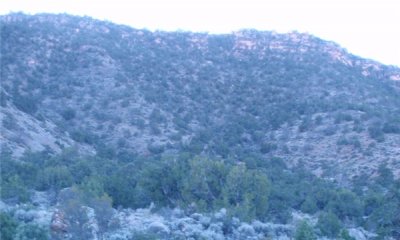
This state is characterized by an overstory dominance of trees with an understory of shrubs and herbaceous species. Tree canopy is typically 25-40% with a range of 15 to 55% depending on aspect, elevation, slopes, rock cover and soil depth. Major overstory species are pinyon and juniper with scattered large shrubs including Freemont barberry, Stansbury cliffrose, turbinella oak and Utah serviceberry. Major understory species include muttongrass, blue grama, squirreltail, galleta, Wyoming big sagebrush, broom snakeweed, Mormon tea and yucca. Amounts and composition of understory species will vary depending on tree canopy, elevation, aspect, rock cover and drought.
Submodel
1.1. Pinyon - Juniper Woodland with Shrubs/ Grasses (HCPC)
1.2. Pinyon - Juniper Woodland with Light Understory
Model keys
Briefcase
Add { ecological sites } and { Major Land Resource Areas } to your briefcase by clicking on the briefcase
() icon wherever it occurs. Drag and drop items to reorder. Cookies are used to store briefcase items between browsing sessions. Because of this, the number of items that can be added to your briefcase is limited, and briefcase items added on one device and browser cannot be accessed from another device or browser. Users who do not wish to place cookies on their devices should not use the briefcase tool. Briefcase cookies serve no other purpose than described here and are deleted whenever browsing history is cleared.
The Ecosystem Dynamics Interpretive Tool is an information system framework developed by the USDA-ARS Jornada Experimental Range, USDA Natural Resources Conservation Service, and New Mexico State University.




 ) icon wherever it occurs. Drag and drop items to reorder. Cookies are used to store briefcase items between browsing sessions. Because of this, the number of items that can be added to your briefcase is limited, and briefcase items added on one device and browser cannot be accessed from another device or browser. Users who do not wish to place cookies on their devices should not use the briefcase tool. Briefcase cookies serve no other purpose than described here and are deleted whenever browsing history is cleared.

