
Natural Resources
Conservation Service
Ecological site DX035X03G618
Sandy Upland
13-17" p.z.
Moderately Deep
Accessed: 10/16/2026
-
Search


Major Land Resource Area or ecological site by name and/or ID.
PreviousSectionsNextGeneral information
Provisional. A provisional ecological site description has undergone quality control and quality assurance review. It contains a working state and transition model and enough information to identify the ecological site.
Click to explore map
Figure 1. Mapped extent
Areas shown in blue indicate the maximum mapped extent of this ecological site. Other ecological sites likely occur within the highlighted areas. It is also possible for this ecological site to occur outside of highlighted areas if detailed soil survey has not been completed or recently updated.
MLRA notes
Major Land Resource Area (MLRA): 035X–Colorado Plateau
AZ CRA 35.6 - Colorado Plateau Pinyon-Juniper-Sagebrush
Elevations range from 5500 to 7000 feet and precipitation averages 13 to 17 inches per year. Vegetation includes pinyon, juniper, big sagebrush, cliffrose, Mormon tea, muttongrass, prairie junegrass, squirreltail, western wheatgrass, and blue grama. The soil temperature regime is mesic and the soil moisture regime is aridic ustic. This unit occurs within the Colorado Plateau Physiographic Province and is characterized by a sequence of flat to gently dipping sedimentary rocks eroded into plateaus, valleys and deep canyons. Sedimentary rock classes dominate the plateau with volcanic fields occurring for the most part near its margin.Associated sites
R035XF607AZ Sandy Upland 13-17" p.z.
Sandy Upland, 13-17" p.z.
Similar sites
F035XC323AZ Sandy Upland 10-14" p.z. (JUOS)
Sandy Upland (JUOS) 10-14" p.z.
Table 1. Dominant plant species
Tree (1) Pinus edulis
(2) Juniperus osteospermaShrub (1) Purshia tridentata
(2) Artemisia tridentata ssp. vaseyanaHerbaceous (1) Muhlenbergia pungens
(2) Achnatherum hymenoidesLegacy ID
R035XF618AZ
Physiographic features
This site is found on plateaus and mesas of Navajo sandstone formation. The topography is generally undulating. The site may occur on either shoulders or summits. Outcrops of sandstone are normally found in association with this site.
Table 2. Representative physiographic features
Landforms (1) Plateau
(2) Mesa
Flooding frequency None Ponding frequency None Elevation 5600 – 6400 ft Slope 1 – 10 % Aspect Aspect is not a significant factor Climatic features
The climate of this land resource unit is semiarid with warm summers and cool winters. The mean annual precipitation ranges from 13 – 17 inches, but it is very erratic, often varying substantially from year to year. The majority of the precipitation comes from October through April. This precipitation comes as gentle rain or snow from frontal storms coming out of the Pacific Ocean. Snow is common from November through February. Generally no more than a few inches of snow accumulates, melting within a few days, but may last a week or more. The remaining precipitation comes from July through September as spotty, unreliable and sometimes violent thunderstorms. The moisture for this precipitation originates in the Gulf of Mexico (and the Pacific Ocean in the fall) and flows into the area on the north end of the Mexican monsoon. Late May through late June is generally a dry period. The mean annual air temperature ranges from 47 to 49 degrees Fahrenheit (F). The frost-free period (air temperature > 32 degrees F) ranges from 113 to 144 days (@ 50 percent probability). Strong winds are common, especially in the spring.
Table 3 Representative climatic features
Frost-free period (average) 140 days Freeze-free period (average) 160 days Precipitation total (average) 20 in BarLineFigure 2. Monthly precipitation range
BarLineFigure 3. Monthly average minimum and maximum temperature
">Influencing water features
Soil features
The soils characterizing this site are moderately deep over sandstone bedrock. They are well drained. The surface layer is about 8 inches thick with a texture of fine sand. The subsurface texture is also fine sand. The available water capacity is very low to low.
Typical taxonomic units include:
SSA-625 Mohave County NE part MU 53 Royosa & Tonalea;
SSA-711 Navajo Mountain Area MU 4 Aridic Ustorthents and Royosa.Table 4. Representative soil features
Parent material (1) Eolian deposits – sandstone
Surface texture (1) Fine sand
Family particle size (1) Sandy
Drainage class Somewhat excessively drained to excessively drained Permeability class Very rapid Soil depth 40 in Surface fragment cover <=3" Not specified Surface fragment cover >3" Not specified Available water capacity
(0-40in)2.5 – 5 in Calcium carbonate equivalent
(0-40in)Not specified Electrical conductivity
(0-40in)0 – 2 mmhos/cm Sodium adsorption ratio
(0-40in)Not specified Soil reaction (1:1 water)
(0-40in)7.4 – 7.8 Subsurface fragment volume <=3"
(Depth not specified)Not specified Subsurface fragment volume >3"
(Depth not specified)Not specified Ecological dynamics
This site is interspersed with the shallower Sandstone Upland, 13-17" p.z. ecological site and rock outcrop. In areas where this site is in small patches the canopy cover trees will increase. In those areas where it is comprised of larger blocks of moderately deep soil it may be more savanah-like.
State and transition model
Custom diagramStandard diagram
More interactive model formats are also available. View Interactive Models
More interactive model formats are also available. View Interactive Models
Click on state and transition labels to scroll to the respective textEcosystem states
State 1 submodel, plant communities
State 1
Historic Climax Plant CommunityCommunity 1.1
Historic Climax Plant Community
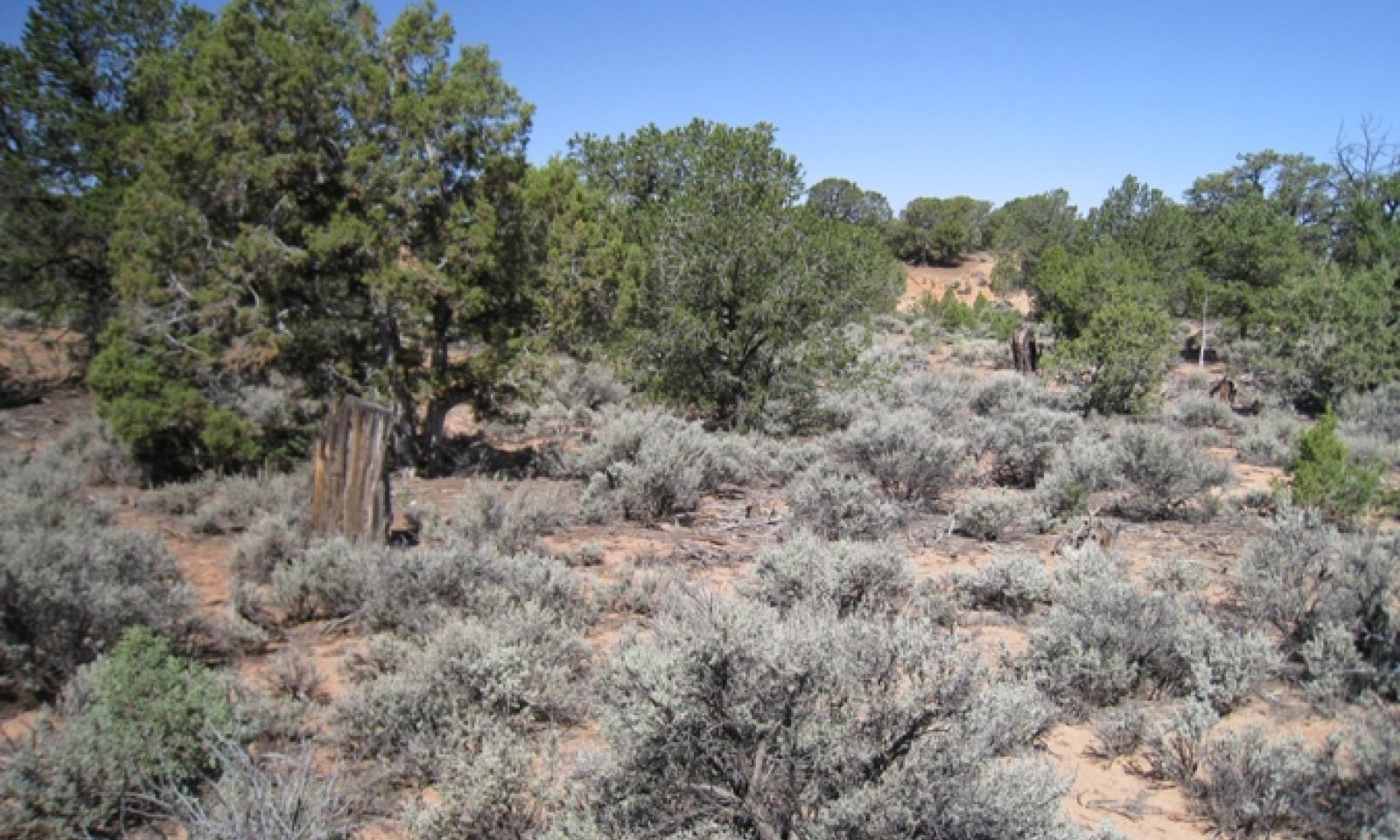
Figure 4. Sandy Upland 13-17" p.z. Moderately Deep
The aspect of this site is a mix of Colorado pinyon and Utah juniper with scattered Gambel oak and an occasional ponderosa pine. Common understory plants include greenleaf manzanita, Utah serviceberry sandhill muhly, blue grama and Indian ricegrass.
Figure 5. Annual production by plant type (representative values) or group (midpoint values)
Table 5. Annual production by plant type
Plant type Low
(lb/acre)Representative value
(lb/acre)High
(lb/acre)Tree 636 – 768 Shrub/Vine 144 – 300 Grass/Grasslike 60 – 156 Forb 36 – 96 Total 876 – 1320 Figure 6. Plant community growth curve (percent production by month). AZ3561 , 35.6 13-17" p.z. all sites. Growth begins in the spring and continues into the fall..
Jan Feb Mar Apr May Jun Jul Aug Sep Oct Nov Dec J F M A M J J A S O N D 0 1 5 16 17 15 15 15 11 5 0 0 Additional community tables
Table 6. Community 1.1 plant community composition
Group Common name Symbol Scientific name Annual production () Foliar cover (%) Grass/Grasslike1 Perennial Cool Season Grasses 12–60 Indian ricegrass ACHY Achnatherum hymenoides 12–24 – threeawn ARIST Aristida 0–12 – squirreltail ELELE Elymus elymoides ssp. elymoides 0–12 – needle and thread HECOC8 Hesperostipa comata ssp. comata 0–12 – western wheatgrass PASM Pascopyrum smithii 0–12 – muttongrass POFE Poa fendleriana 0–12 – 2 Perennial Warm Season Grasses 48–96 sandhill muhly MUPU2 Muhlenbergia pungens 36–60 – blue grama BOGR2 Bouteloua gracilis 12–24 – spike muhly MUWR Muhlenbergia wrightii 0–12 – James' galleta PLJA Pleuraphis jamesii 0–12 – sand dropseed SPCR Sporobolus cryptandrus 0–12 – Forb3 Perennial Forbs 36–96 buckwheat ERIOG Eriogonum 12–24 – beardtongue PENST Penstemon 12–24 – spiny phlox PHHO Phlox hoodii 0–12 – ragwort SENEC Senecio 0–12 – fiddleneck AMSIN Amsinckia 0–12 – white sagebrush ARLU Artemisia ludoviciana 0–12 – pale bastard toadflax COUMP Comandra umbellata ssp. pallida 0–12 – largeleaf springparsley CYME Cymopterus megacephalus 0–12 – Shrub/Vine4 Shrubs 140–290 Gambel oak QUGA Quercus gambelii 36–72 – Utah serviceberry AMUT Amelanchier utahensis 36–60 – Wyoming big sagebrush ARTRW8 Artemisia tridentata ssp. wyomingensis 24–48 – antelope bitterbrush PUTR2 Purshia tridentata 24–48 – mormon tea EPVI Ephedra viridis 12–36 – greenleaf manzanita ARPA6 Arctostaphylos patula 12–24 – rubber rabbitbrush ERNA10 Ericameria nauseosa 0–12 – snakeweed GUTIE Gutierrezia 0–12 – Sonoran scrub oak QUTU2 Quercus turbinella 0–12 – spineless horsebrush TECA2 Tetradymia canescens 0–12 – 5 Yucca and Yucca Like 24–36 narrowleaf yucca YUAN2 Yucca angustissima 24–36 – banana yucca YUBA Yucca baccata 0–12 – 6 Cacti 12–24 beavertail pricklypear OPBA2 Opuntia basilaris 12–24 – hedgehog cactus ECHIN3 Echinocereus 0–12 – Tree7 Trees 600–760 Utah juniper JUOS Juniperus osteosperma 300–360 – twoneedle pinyon PIED Pinus edulis 300–360 – ponderosa pine PIPO Pinus ponderosa 0–60 – Interpretations
Animal community
The suitability for livestock grazing is fair. Loose sand makes travel difficult.
Supporting information
Type locality
Location 1: Mohave County, AZ Township/Range/Section T41 N. R5 W. S34 General legal description Arizona, Mohave County, Moccasin 7 1/2 min. quad., Sec. 34, T. 41 N., R. 5 W., about 4 miles northwest of Moccasin, Arizona. Other references
Information and updates collected during 2009-2010 for this ESD was conducted as part of an Interagency Technical Assistance Agreement between the Bureau of Indian Affairs–Navajo Region and the NRCS-Arizona.
Contributors
Larry D. Ellicott
Stephen Cassady
Steve CassadyRangeland health reference sheet
Interpreting Indicators of Rangeland Health is a qualitative assessment protocol used to determine ecosystem condition based on benchmark characteristics described in the Reference Sheet. A suite of 17 (or more) indicators are typically considered in an assessment. The ecological site(s) representative of an assessment location must be known prior to applying the protocol and must be verified based on soils and climate. Current plant community cannot be used to identify the ecological site.
Author(s)/participant(s) Contact for lead author Date Approved by Approval date Composition (Indicators 10 and 12) based on Annual Production Indicators
-
Number and extent of rills:
-
Presence of water flow patterns:
-
Number and height of erosional pedestals or terracettes:
-
Bare ground from Ecological Site Description or other studies (rock, litter, lichen, moss, plant canopy are not bare ground):
-
Number of gullies and erosion associated with gullies:
-
Extent of wind scoured, blowouts and/or depositional areas:
-
Amount of litter movement (describe size and distance expected to travel):
-
Soil surface (top few mm) resistance to erosion (stability values are averages - most sites will show a range of values):
-
Soil surface structure and SOM content (include type of structure and A-horizon color and thickness):
-
Effect of community phase composition (relative proportion of different functional groups) and spatial distribution on infiltration and runoff:
-
Presence and thickness of compaction layer (usually none; describe soil profile features which may be mistaken for compaction on this site):
-
Functional/Structural Groups (list in order of descending dominance by above-ground annual-production or live foliar cover using symbols: >>, >, = to indicate much greater than, greater than, and equal to):
Dominant:
Sub-dominant:
Other:
Additional:
-
Amount of plant mortality and decadence (include which functional groups are expected to show mortality or decadence):
-
Average percent litter cover (%) and depth ( in):
-
Expected annual annual-production (this is TOTAL above-ground annual-production, not just forage annual-production):
-
Potential invasive (including noxious) species (native and non-native). List species which BOTH characterize degraded states and have the potential to become a dominant or co-dominant species on the ecological site if their future establishment and growth is not actively controlled by management interventions. Species that become dominant for only one to several years (e.g., short-term response to drought or wildfire) are not invasive plants. Note that unlike other indicators, we are describing what is NOT expected in the reference state for the ecological site:
-
Perennial plant reproductive capability:
Print Options
Sections
Font
AAAAOther
PrintThe Ecosystem Dynamics Interpretive Tool is an information system framework developed by the USDA-ARS Jornada Experimental Range, USDA Natural Resources Conservation Service, and New Mexico State University.
Accessibility statement


