
Natural Resources
Conservation Service
Ecological site R034AA012UT
Riparian Complex Perennial II/E4 (Nebraska Sedge/Baltic Rush)
Last updated: 2/19/2025
Accessed: 10/15/2026
-
Search


Major Land Resource Area or ecological site by name and/or ID.
PreviousSectionsNextGeneral information
Provisional. A provisional ecological site description has undergone quality control and quality assurance review. It contains a working state and transition model and enough information to identify the ecological site.
MLRA notes
Major Land Resource Area (MLRA): 034A–Cool Central Desertic Basins and Plateaus
Major Land Resource Area (MLRA) 34A, Cool Central Desertic Basins and Plateaus, consists of approximately 21 million acres in Wyoming, Colorado and Utah. It consists of eleven Land Resource Units (LRU). These units are divisions of the MLRA based on geology, landscape, common soils, water resources and plant community potentials. The elevation spans from approximately 5600 feet (1700 m) along the Green River in UT and CO to approximately 9500 feet (2900 m) near Jeffrey City, WY. Annual precipitation ranges from 7 to 16 inches (177 to 406 mm), with the driest areas in the Green River and Great Divide Basins and the wettest areas in northern Carbon County, southeast Fremont County and Albany County. There is a seasonal weather pattern that trends west to east, with more winter precipitation in the west and more spring and summer in the east, illustrated by diminishing amounts of big sagebrush in the eastern part of the MLRA.
LRU notes
The Bear River Valley LRU is located on the far western side of MLRA 34A between the Bear River Divide and the Monte Cristo Range, from Woodruff, Utah at the southern end to Cokeville, Wyoming at the northern end. The total area of the LRU is approximately 340,000 acres. It shares a boundary with MLRA 47, 43B and 46 (proposed).
This LRU differs from the others in its geology, which is comprised mostly of alluvium and colluvium from the Stump Formation. Its weather patterns are such that the soil moisture is xeric, there is a slight peak in winter precipitation in this LRU, with typical yearly precipitation between 9 to 15 inches (230 to 380 mm). The soil temperature regime of this LRU is frigid with mean annual soil temperatures ranging from 44 to 48 degrees Fahrenheit (6.7 to 8.8 C). The elevation range is from 5700 to 7000 feet (1730 to 2130 m). The soils in the Bear River Valley are dominated by young aged very deep soils developed from sandstone and shale parent material re-worked with recent alluvium. Soils are dominated by Alfisols with young argillic horizons and by Fluvents in more recent alluvium.
The Bear River runs through this LRU, allowing for ample amounts of irrigation water used in the lowland areas to produce hay. Smaller tributaries originating from the neighboring mountains.Ecological site concept
This site occurs in a constricted valley that may be influenced by alluvial fans (Rosgen valley type 2 or 3). Streams within this site have a slope at about two percent or greater and streams have low sinuosity. Streams are perennial and typically gravel dominated streambeds. The riparian complex has developed within a constrained narrow valley. There are two plant community components that can occur within the site, a graminoid community occurring on streambanks and flood plains and the second is dry graminoid community that occurs on the flood plain.
Associated sites
R034AA011UT Riparian Complex Perennial Gravelly VIII/E4 (Northwest Territory Sedge)
This site is typically found downstream.
Similar sites
R034AA011UT Riparian Complex Perennial Gravelly VIII/E4 (Northwest Territory Sedge)
Riparian complex site found downstream with a shift in plant species.
Table 1. Dominant plant species
Tree Not specified
Shrub Not specified
Herbaceous (1) Carex nebrascensis
(2) Juncus arcticus var. littoralisPhysiographic features
This ecological site occurs in MRLA 34A. This site is in the Bear River Basin in the Middle Rocky Mountain Province of the Rocky Mountain System. It typically occurs between 6500 and 6700 feet with valley slopes less than 5 percent. The water table can be found at the surface to over 60 inches below the surface depending on the distance from the stream channel and fluvial surface. The tables below represent the range in values between the different fluvial landforms.
Table 2. Representative physiographic features
Landforms (1) Flood plain
(2) Flood-plain step
Flooding duration Brief (2 to 7 days) to long (7 to 30 days) Flooding frequency Frequent to occasional Ponding frequency None Elevation 6500 – 6800 ft Slope 2 – 5 % Water table depth 0 – 40 in Aspect Aspect is not a significant factor Climatic features
The average annual precipitation is 10 to 15 inches. Peak precipitation occurs as snow from October through April. This site has cold winters and short summers. Occasional convective thunderstorms produce small amounts of rain from June through September. The average annual temperature is 25 to 55 degrees Fahrenheit. The freeze-free period ranges from 95 to 115 days.
Table 3 Representative climatic features
Frost-free period (average) 80 days Freeze-free period (average) 120 days Precipitation total (average) 10 in BarLineFigure 1. Monthly precipitation range
BarLineFigure 2. Monthly average minimum and maximum temperature
">Influencing water features
The stream channel in reference condition is an E4 Rosgen stream type. The stream is typically narrow and deep with undercut banks and overhanging vegetation. This channel has a very low width/depth ratio and high sinuosity. The water surface slope is less than two percent. The water velocity in this channel is in balance with the sediment transport capability. <br />
<br />
Valley Type(s): II or III- Moderate relief gentle sloping side slopes or alluvial fan influence, slightly steeper than 2 percent valley slopes.<br />
Reference Stream Type: E4- This channel has high sinuosity, low channel slope and low channel width/depth ratios. Under influence from beaver, the channel could shift to a ponded site directly above the beaver dam. <br />
Channel Material(s): Gravel dominated bed with some cobble in riffles and sand in pools and on stream banks<br />
Delineative Criteria: Low, High<br />
Entrenchment Ratio (floodprone width / bankfull width): 2.2, 100<br />
Width/Depth Ratio (bankfull width / bankfull depth at riffle): 2.0, 10<br />
Sinuosity (stream length / valley length): 1.3, 2.6<br />
Slope Range: 0.004, 0.02<br />
Channel Materials D50 (particle size index, mm): 8, 12<br />
Channel Materials D84 (particle size index, mm): 32, 48Soil features
Soils are typically variable in stream valley bottoms because of the stream sediment deposition on flood plains and throughout the valley bottom as the channel naturally migrates. Soils on this site range from sandy to loamy on the surface. Streambanks are typically sandy loam to very gravelly sandy loam lower in the soil profile. Sand and gravel lenses throughout the profile are common on all fluvial surfaces. The typical fluvial surfaces found on this site are streambanks and flood plains.
The streambank fluvial surface occurs closest to the active channel and receives annual influence from flowing water.
The flood plain fluvial surface occurs just upslope from the streambank and receives less frequent influence from the stream channel.
The below tables represent the range in variability between the two fluvial surfaces.Table 4. Representative soil features
Parent material (1) Alluvium
Surface texture (1) Sandy loam
Drainage class Very poorly drained to poorly drained Surface fragment cover <=3" Not specified Surface fragment cover >3" Not specified Subsurface fragment volume <=3"
(Depth not specified)Not specified Subsurface fragment volume >3"
(Depth not specified)0 – 50 % Ecological dynamics
This site is characterized by a narrow valley with a stream channel that has low sinuosity (about 1-1.5). The riparian area is narrow with only two fluvial surfaces developed, streambanks and flood plains. The channel has a low width to depth ration, is slightly entrenched and the dominant substrate is gravel (Rosgen E4). The water surface slope at base flow is about 2 percent. The channel within this site responds to disturbance (extended season long grazing, shallow rooted species dominance on streambanks and flood plains) by lateral and vertical erosion, through bank sloughing and bed erosion. Grazing impacts vegetation throughout the riparian area, although some vegetation is more sensitive to grazing impacts, such as Northwest Territory sedge. This sedge is not found in areas that have been grazed, while it is found in sections of the stream that have not been grazed for a number of years. Grazing can also shift the vegetation composition or create open space for different plants to establish, such as Kentucky bluegrass or reed canary grass. Kentucky blue grass does not have the same root characteristics as Nebraska sedge or Northwest Territory sedge. Riparian meadow communities dominated by sedges and rushes have a much greater root densities than grasses (Manning et al. 1989). So when these communities are degraded and loses the sedges and Kentucky bluegrass moves in, it decreases the stream bank stability. As stream bank stability decreases, fine sediment on the stream bank is eroded, thus creating different channel morphology.
This ecological site has been found in narrow valley bottoms with perennial stream channels with slopes typically between 2 and 3 percent. The channel in the valley bottom is fairly straight as there is not much width in the valley bottom for the stream to utilize. High water typically occurs in May. The channel has a low to very low width to depth ratio and low to moderate sinuosity (typically channel measured fits most aspects of a Rosgen “E” channel). Vegetation in a low width to depth ratio channel is essential in holding the stream banks together. Typical stream bank vegetation on this site is Nebraska sedge (Carex nebrascensis) and Northwest Territory sedge (Carex utriculata). These herbaceous roots growing on the stream banks in this site have an important effect in reducing erosion rates of channel banks (Smith 1976), developing new stream banks, and in providing stability to mature stream banks (Kleinfelder et al. 1992). The root structure of these rhizomatous sedges makes them particularly effective at bank stabilization in fine sediment soils (Steed & DeWald 2003) by binding the soil and adding extra cohesion to the stream bank (Thorne 1990).
Plant communities on this site are arranged according to proximity to channel and depth to water. Sedges and rushes are typically found adjacent to the channel (plant community component 1). They have characteristics that allow them to tolerate long periods of inundation and flooding. Graminoids, including grasses, sedges and rushes, can be found growing on the flood plain (plant community component 2).
Observed grazing influence on this site has been attributed to bank sloughing (WICHE 75). Northwest Territory sedge is typically not found in areas with heavy grazing while Nebraska sedge appears to be more tolerant of grazing. These sedges have similar root structures and both provide bank stability. Surveys performed on this site in the 1970s indicate that shrubs were present, but provided low cover and were decadent. Lack of shrubs presently indicates that conditions for willow regeneration have not been present. Grazing impacts may also lead to a change in plant community composition. Kentucky bluegrass is a non-native grass often found within this site. This grass is shallow rooted and does not have the bank stability capacity of rhizomatous sedges. This shift in plant communities has an effect on stream bank stability. Riparian meadow communities dominated by sedges and rushes have a much greater root densities than grasses (Manning et al. 1989). So when these communities are degraded and lose the sedges and Kentucky bluegrass established, it decreases the stream bank stability (Manning et al. 1989).
Plant community components are related to proximity to the stream channel and depth to water table. The plant communities will shift spatially depending on channel position.
Northwest Territory sedge is found closest to the stream channel or in low swales in the floodplain where the water table is high. Northwest Territory sedge and Nebraska sedge are able to tolerate inundation for extended periods of time, which is why they are found in areas with high water table. Their root structure also allows them to withstand flood events. The rhizomatous nature of these sedges allow them to dominate areas where they are found, leading to low diversity (Hoag & Zierke 1998). Willows can come into this community under the correct conditions. Willows require fresh wet sediment for germination and this occurs at the site after high flow deposits sediment on the floodplain. Willow typically occurs on this site further away from the channel, but still within the streambank/floodplain community.
Plant community component 2 is drier than plant community component 1 and is further from the stream and has a deeper water table. The community is composed of various graminoids and forbs, particularly Baltic rush.
Plant communities can be colonized by Kentucky bluegrass and thistles.State and transition model
Custom diagramStandard diagram
Figure 3. R034AA012UT State and Transition Model
More interactive model formats are also available. View Interactive Models
More interactive model formats are also available. View Interactive Models
Click on state and transition labels to scroll to the respective textEcosystem states
T1A - Change in vegetation on the banks to shallow rooted species, decrease in bank stability and bank sloughing causing a change in channel geometry to a wider shallower channel T2A - Vegetation re-establishment on streambanks and floodplain, rest from grazing pressure State 1 submodel, plant communities
State 2 submodel, plant communities
2.1A - Lateral erosion from bank sloughing 2.2A - Vertical erosion from bed instability State 3 submodel, plant communities
3.1A - Sediment deposition on point bars and stream banks colonized by obligate wetland species 3.2A - Early seral obligate wetland species replaced by deeper rooted sedges and rushes State 1
ReferenceThe Reference State for this site is a riparian area with two plant community components and a stream with a gradient between 1.5 to 3 percent, low sinuosity, and very low width to depth ratio. The valley is typically narrow with a small area for the stream channel to meander. All plant communities can be present in this state.
Community 1.1
E4
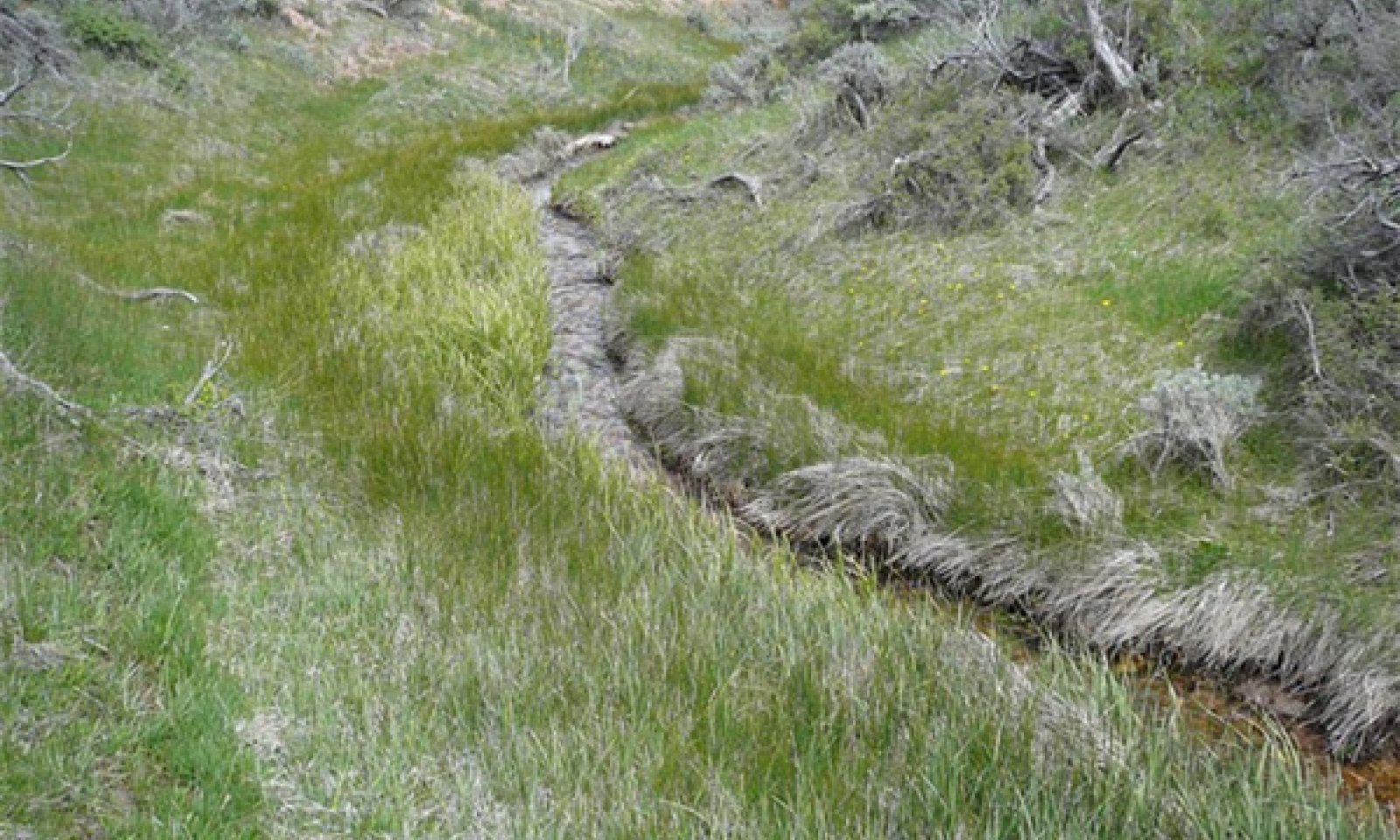
Figure 4. Narrow flood plain with streambank (PCC1)

Figure 5. Flood plain plant community (PCC2)
Community Phase 1.1 has a narrow and deep channel with well-developed vegetation on the streambanks, predominantly composed of sedges and rushes. The flood plain receives regular flooding from snowmelt in the spring. All plant community components may be present in this phase.
Figure 6. Annual production by plant type (representative values) or group (midpoint values)
Table 5. Annual production by plant type
Plant type Low
(lb/acre)Representative value
(lb/acre)High
(lb/acre)Grass/Grasslike 500 1700 3200 Forb 20 140 250 Shrub/Vine 0 20 50 Total 520 1860 3500 Table 6. Canopy structure (% cover)
Height Above Ground (ft) Tree Shrub/Vine Grass/
GrasslikeForb <0.5 – – 0-5% 0-2% >0.5 <= 1 – – 0-10% 0-2% >1 <= 2 – – 15-65% 0-5% >2 <= 4.5 – – – – >4.5 <= 13 – 0-5% – – >13 <= 40 – – – – >40 <= 80 – – – – >80 <= 120 – – – – >120 – – – – State 2
DegradedThe Degraded State is characterized by a shift in the composition of plant community components due to season-long grazing pressure. The sedges and willow typically found on the streambanks are particularly palatable to livestock and can be grazed at a level that weakens the plant eventually leading to loss from the site (i.e. Northwest Territory sedge). Kentucky bluegrass often replaces these sedges along the streambank (see Ecological Dynamics section). Bank sloughing is prevalent.
Community 2.1
G4c Channel
Figure 7. Eroded banks, channel downcut

Figure 8. Bank sloughing, loss of streambank (PCC1) plant component lost

Figure 9. Bank erosion, stream disconnected from previous flood plain
The stream channel within the G4c Channel Community Phase is vertically unstable. Once the channel down-cuts, the water table within the flood plain typically deepens and the plant community shifts to drier plant species. Plant Community Component 1 is typically lost from this phase.
Community 2.2
F4 Channel
Figure 10. Downcut, wider channel
The channel within the F4 Channel Community Phase is lateral unstable. Bank sloughing is common as the channel begins to widen. Plant Community Component 1 is often absent in this phase.
Pathway 2.1A
Community 2.1 to 2.2
G4c Channel
F4 ChannelLateral erosion from bank sloughing
Pathway 2.2A
Community 2.2 to 2.1
F4 Channel
G4c ChannelVertical erosion from bed instability
State 3
Re-established Flood PlainState 3 is characterized by riparian areas that have down cut and reestablished floodplains at a lower elevation. The riparian area is narrower than reference condition, and includes phases that are not found in the reference state. The B4 channel occurs because downcutting has occurred and the channel is steeper and less sinuous. The C4 phase occurs as sediment is deposited and plants establish on the floodplain. The E4 phase represents the riparian area that functions similarly to the Reference State and Community Phase.
Community 3.1
B4cThe B4c Community Phase occurs as the channel begins to deposit sediment and develop a new flood plain at a lower elevation. Plant Community Component 1 can begin to reestablish on the fresh sediment.
Community 3.2
C4 ChannelThe C4 Channel Community Phase occurs as the channel continues to develop flood plains and streambanks. Deeper rooted vegetation, such as sedges and rushes, establish and provide greater bank stability.
Community 3.3
E4 Channel
Figure 11. Channel recovery at lower elevation
The E4 Channel Community Phase functions similarly to 1.1 at a lower elevation with a narrower floodplain and plant community components.
Pathway 3.1A
Community 3.1 to 3.2Sediment deposition on point bars and stream banks colonized by obligate wetland species
Pathway 3.2A
Community 3.1 to 3.3Early seral obligate wetland species replaced by deeper rooted sedges and rushes
Transition T1A
State 1 to 2Change in vegetation on the banks to shallow rooted species, decrease in bank stability and bank sloughing causing a change in channel geometry to a wider shallower channel
Transition T2A
State 2 to 3Vegetation re-establishment on streambanks and floodplain, rest from grazing pressure
Additional community tables
Table 7. Community 1.1 plant community composition
Group Common name Symbol Scientific name Annual production () Foliar cover (%) Grass/Grasslike1 PCC1 Graminoids 800–2000 Northwest Territory sedge CAUT Carex utriculata 400–1700 10–70 Nebraska sedge CANE2 Carex nebrascensis 200–500 15–70 swordleaf rush JUEN Juncus ensifolius 0–125 0–10 willowherb EPILO Epilobium 0–100 0–10 mountain rush JUARL Juncus arcticus ssp. littoralis 0–75 0–15 American mannagrass GLGR Glyceria grandis 0–60 0–15 Grass-like (not a true grass) 2GL Grass-like (not a true grass) 0–50 0–5 Grass, perennial 2GP Grass, perennial 0–50 0–5 Forb, perennial 2FP Forb, perennial 0–20 0–5 Grass, annual 2GA Grass, annual 0–20 0–2 Forb, annual 2FA Forb, annual 0–10 0–5 meadow thistle CISC2 Cirsium scariosum 0–10 0–2 woolly sedge CAPE42 Carex pellita 0–10 0–2 water whorlgrass CAAQ3 Catabrosa aquatica 0–5 0–2 field horsetail EQAR Equisetum arvense 0–5 0–2 buttercup RANUN Ranunculus 0–5 0–1 2 PCC2 Graminoids 300–3300 Forb1 PCC1 Forbs 0–150 Nebraska sedge CANE2 Carex nebrascensis 50–1800 2–80 mountain rush JUARL Juncus arcticus ssp. littoralis 250–1400 10–60 Grass, annual 2GA Grass, annual 0–50 0–5 Grass, perennial 2GP Grass, perennial 0–50 0–5 mountain goldenbanner THMO6 Thermopsis montana 0–20 0–10 cinquefoil POTEN Potentilla 0–20 0–5 Forb, annual 2FA Forb, annual 0–20 0–5 Forb, perennial 2FP Forb, perennial 0–20 0–5 Shrub, deciduous 2SD Shrub, deciduous 0–20 0–5 Missouri goldenrod SOMI2 Solidago missouriensis 0–20 0–2 willow SALIX Salix 0–15 0–5 Woods' rose ROWO Rosa woodsii 0–15 0–2 wild mint MEAR4 Mentha arvensis 0–15 0–2 aster SYMPH4 Symphyotrichum 0–10 0–5 scratchgrass MUAS Muhlenbergia asperifolia 0–10 0–2 common yarrow ACMI2 Achillea millefolium 0–5 0–4 2 PCC2 Forbs 0–200 Shrub/Vine2 PCC2 Shrubs 0–25 Table 8. Community 2.1 plant community composition
Group Common name Symbol Scientific name Annual production () Foliar cover (%) Table 9. Community 2.2 plant community composition
Group Common name Symbol Scientific name Annual production () Foliar cover (%) Table 10. Community 3.1 plant community composition
Group Common name Symbol Scientific name Annual production () Foliar cover (%) Table 11. Community 3.2 plant community composition
Group Common name Symbol Scientific name Annual production () Foliar cover (%) Table 12. Community 3.3 plant community composition
Group Common name Symbol Scientific name Annual production () Foliar cover (%) Interpretations
Supporting information
Inventory data references
Data gathered by qualified range professionals within NRCS and cooperating partners.
Other references
Kleinfelder, D., S. Swanson, G. Norris, and W. Clary. 1992. Unconfined compressive strength of some streambank soils with herbaceous roots. Soil Sci. Am. J. 56: 1920-1925.
Manning, M.E., S.R. Swanson, T, Svejcar, and J. Trent. 1989. Rooting characteristics of four intermountain meadow community types. Journal of Range Management 42(4): 309-312.
Rosgen, D.L., 1996. Applied River Morphology. Wildland Hydrology Books, Pagosa Springs, Colorado, and Ft. Collins, CO.
Ryan, G. 1975. Aquatic habitat inventory of streams on National Resource Land. Western Interstate Commission for Higher Education, Boulder, Co. 65p.
Smith, D.G. 1976. Effect of vegetation on lateral migration of anastomosed channels of a glacier meltwater river. Geological Society of American Bulletin 87: 857-860.
Steed, J.E. and L.E. DeWald. 2003. Transplanting sedges (Carex spp.) in southwestern riparian meadows. Restoration Ecology 11(2): 247-256.
Thorne, C.R. 1990. Effects of vegetation on riverbank erosion and stability. In: Thornes, J.B. (ed.). Vegetation and Erosion. John Wiley and Sons Ltd. pp 125-144.
USDA, NRCS. 2008. (Electronic) Field Office Technical Guide. Available online at: http://efotg.nrcs.usda.gov/efotg_locator.aspx.
USDA, Natural Resource Conservation Service. 2004. National Forestry Handbook. Available online at: http://soils.usda.gov/technical/nfhandbook/.
USDA, NRCS. 2007. The PLANTS Database. National Plant Data Center, Baton Rouge, LA 70874-4490 USA. Available online at: http://plants.usda.gov.
USDA, NRCS. 2003. National Range and Pasture Handbook. Available online at: http://www.glti.nrcs.usda.gov/technical/publications/nrph.html.
USDA, NRCS Soil Survey Manuals for appropriate counties within MLRA 34A.
USDA, NRCS, 2007. Southerland, W. B., Technical Supplement 3E, National Engineering Handbook 654, Rosgen Stream Classification Technique – Supplemental Materials.
USDA, USFS, 2010. Fire Effects Information System Database. Available online at: http://www.fs.fed.us/database/feis/.
USDI, USGS, 2010. National Water Information System. Available online at: http://waterdata.usgs.gov/nwis/.Contributors
Sarah Quistberg
Approval
Kirt Walstad, 2/19/2025
Rangeland health reference sheet
Interpreting Indicators of Rangeland Health is a qualitative assessment protocol used to determine ecosystem condition based on benchmark characteristics described in the Reference Sheet. A suite of 17 (or more) indicators are typically considered in an assessment. The ecological site(s) representative of an assessment location must be known prior to applying the protocol and must be verified based on soils and climate. Current plant community cannot be used to identify the ecological site.
Author(s)/participant(s) Contact for lead author Date 02/18/2025 Approved by Approval date Composition (Indicators 10 and 12) based on Annual Production Indicators
-
Number and extent of rills:
-
Presence of water flow patterns:
-
Number and height of erosional pedestals or terracettes:
-
Bare ground from Ecological Site Description or other studies (rock, litter, lichen, moss, plant canopy are not bare ground):
-
Number of gullies and erosion associated with gullies:
-
Extent of wind scoured, blowouts and/or depositional areas:
-
Amount of litter movement (describe size and distance expected to travel):
-
Soil surface (top few mm) resistance to erosion (stability values are averages - most sites will show a range of values):
-
Soil surface structure and SOM content (include type of structure and A-horizon color and thickness):
-
Effect of community phase composition (relative proportion of different functional groups) and spatial distribution on infiltration and runoff:
-
Presence and thickness of compaction layer (usually none; describe soil profile features which may be mistaken for compaction on this site):
-
Functional/Structural Groups (list in order of descending dominance by above-ground annual-production or live foliar cover using symbols: >>, >, = to indicate much greater than, greater than, and equal to):
Dominant:
Sub-dominant:
Other:
Additional:
-
Amount of plant mortality and decadence (include which functional groups are expected to show mortality or decadence):
-
Average percent litter cover (%) and depth ( in):
-
Expected annual annual-production (this is TOTAL above-ground annual-production, not just forage annual-production):
-
Potential invasive (including noxious) species (native and non-native). List species which BOTH characterize degraded states and have the potential to become a dominant or co-dominant species on the ecological site if their future establishment and growth is not actively controlled by management interventions. Species that become dominant for only one to several years (e.g., short-term response to drought or wildfire) are not invasive plants. Note that unlike other indicators, we are describing what is NOT expected in the reference state for the ecological site:
-
Perennial plant reproductive capability:
Print Options
Sections
Font
AAAAOther
PrintThe Ecosystem Dynamics Interpretive Tool is an information system framework developed by the USDA-ARS Jornada Experimental Range, USDA Natural Resources Conservation Service, and New Mexico State University.
Accessibility statement


