
Natural Resources
Conservation Service
-
Search


Major Land Resource Area or ecological site by name and/or ID.
PreviousSectionsNextGeneral information
Draft. A draft ecological site description is either incomplete or has not undergone quality control and quality assurance review.
MLRA notes
Major Land Resource Area (MLRA): 028B–Central Nevada Basin and Range
MLRA 28B occurs entirely in Nevada and comprises about 23,555 square miles (61,035 square kilometers). More than nine-tenths of this MLRA is federally owned. This area is in the Great Basin Section of the Basin and Range Province of the Intermontane Plateaus. It is an area of nearly level, aggraded desert basins and valleys between a series of mountain ranges trending north to south. The basins are bordered by long, gently sloping to strongly sloping alluvial fans. The mountains are uplifted fault blocks with steep sideslopes. Many of the valleys are closed basins containing sinks or playas. Elevation ranges from 4,900 to 6,550 feet (1,495 to 1,995 meters) in the valleys and basins and from 6,550 to 11,900 feet (1,995 to 3,630 meters) in the mountains.
The mountains in the southern half are dominated by andesite and basalt rocks that were formed in the Miocene and Oligocene. Paleozoic and older carbonate rocks are prominent in the mountains to the north. Scattered outcrops of older Tertiary intrusives and very young tuffaceous sediments are throughout this area. The valleys consist mostly of alluvial fill, but lake deposits are at the lowest elevations in the closed basins. The alluvial valley fill consists of cobbles, gravel, and coarse sand near the mountains in the apex of the alluvial fans. Sands, silts, and clays are on the distal ends of the fans.
The average annual precipitation ranges from 4 to 12 inches (100 to 305 millimeters) in most areas on the valley floors. Average annual precipitation in the mountains ranges from 8 to 36 inches (205 to 915 millimeters) depending on elevation. The driest period is from midsummer to midautumn. The average annual temperature is 34 to 52 degrees F (1 to 11 degrees C). The freeze-free period averages 125 days and ranges from 80 to 170 days, decreasing in length with elevation.
The dominant soil orders in this MLRA are Aridisols, Entisols, and Mollisols. The soils in the area dominantly have a mesic soil temperature regime, an aridic or xeric soil moisture regime, and mixed or carbonatic mineralogy. They generally are well drained, loamy or loamyskeletal, and shallow to very deep.
Nevada’s climate is predominantly arid, with large daily ranges of temperature, infrequent severe storms and heavy snowfall in the higher mountains. Three basic geographical factors largely influence Nevada’s climate: continentality, latitude, and elevation. The strong continental effect is expressed in the form of both dryness and large temperature variations. Nevada lies on the eastern, lee side of the Sierra Nevada Range, a massive mountain barrier that markedly influences the climate of the State. The prevailing winds are from the west, and as the warm moist air from the Pacific Ocean ascend the western slopes of the Sierra Range, the air cools, condensation occurs and most of the moisture falls as precipitation. As the air descends the eastern slope, it is warmed by compression, and very little precipitation occurs. The effects of this mountain barrier are felt not only in the West but throughout the state, as a result the lowlands of Nevada are largely desert or steppes.
The temperature regime is also affected by the blocking of the inland-moving maritime air. Nevada sheltered from maritime winds, has a continental climate with well-developed seasons and the terrain responds quickly to changes in solar heating. Nevada lies within the midlatitude belt of prevailing westerly winds which occur most of the year. These winds bring frequent changes in weather during the late fall, winter and spring months, when most of the precipitation occurs.
To the south of the mid-latitude westerlies, lies a zone of high pressure in subtropical latitudes, with a center over the Pacific Ocean. In the summer, this high-pressure belt shifts northward over the latitudes of Nevada, blocking storms from the ocean. The resulting weather is mostly clear and dry during the summer and early fall, with occasional thundershowers. The eastern portion of the state receives noteworthy summer thunderstorms generated from monsoonal moisture pushed up from the Gulf of California, known as the North American monsoon. The monsoon system peaks in August and by October the monsoon high over the Western U.S. begins to weaken and the precipitation retreats southward towards the tropics (NOAA 2004).
Ecological site concept
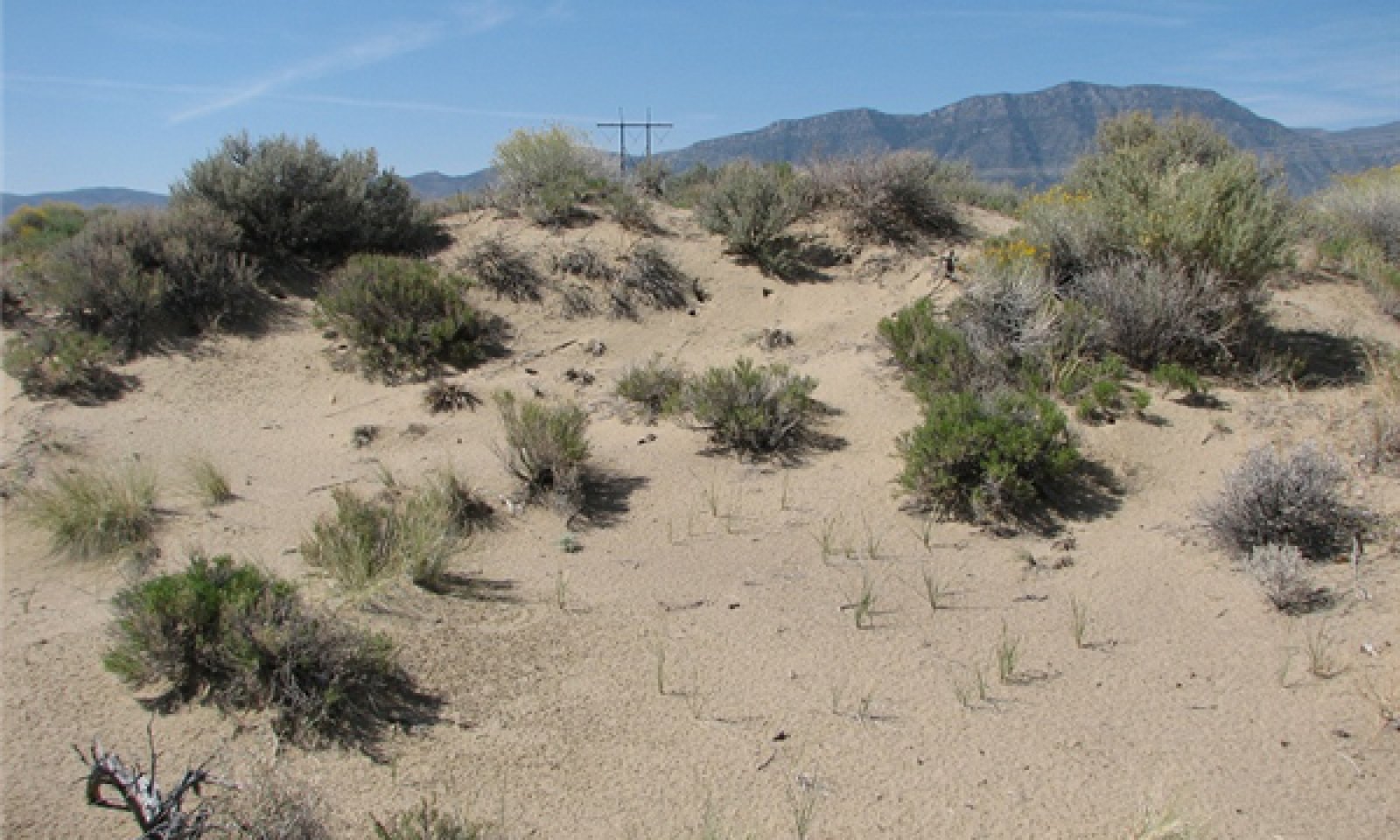
This site occurs on partially stabilized dunes and sand sheets. Slope gradients of 2 to 15% percent are typical. Elevations are 5700 to 6200 feet.
Soils associated with this site are deep, excessively drained and formed in eolian sands from mixed parent material. Soils are sandy throughout and characterized by an ochric epipedon. Runoff is low, permeability is moderately rapid and available water holding capacity is very low.
The reference state is dominated by Indian ricegrass, thickspike wheatgrass and big sagebrush. Production ranges from 300 to 800 pounds per acre.
Based on a review of ecological site concepts and soil map unit components in 2016, it was determined that there is currently no way to separate or compete the site characteristics of this ecological site with those of Sandy 8-10" PZ, 028BY005NV. It is possible these sites are one site expressing different community phases, however field work will be needed to confirm this. Any user of this ecological site should understand this possibility when making land management decisions.
Associated sites
R028BY005NV SANDY 8-10 P.Z.
R028BY078NV DROUGHTY LOAM 5-8 P.Z.
R028BY084NV COARSE SILTY 6-8 P.Z.
Similar sites
R028BY005NV SANDY 8-10 P.Z.
SAVE4 dominant shrub; ACHY dominant grass; less productive site
R028BY021NV SODIC DUNE
HECO26-ACHY codominant grasses; SAVE4 rare to absent
Table 1. Dominant plant species
Tree Not specified
Shrub (1) Artemisia tridentata
Herbaceous (1) Achnatherum hymenoides
(2) Elymus lanceolatus subsp. lanceolatusPhysiographic features
This site occurs on semi-stabilized dunes and parna dunes. Slope gradients of 2 to 30 percent are most typical. Elevations are 5700 to 6200 feet.
Table 2. Representative physiographic features
Landforms (1) Parna dune
(2) Dune
Elevation 5700 – 6200 ft Slope 2 – 30 % Aspect Aspect is not a significant factor Climatic features
The climate associated with this site is semiarid, characterized by cool, moist winters and warm, dry summers.
Average annual precipitation ranges from 8 to 10 inches. Mean annual air temperature is about 45 to 50 degrees F. The average growing season is about 100 to 120 days.
Mean annual precipitation at the DIAMOND VALLEY USDA,NEVADA climate station (262296) is 9.16 inches. Monthly mean precipitation is:
January 0.75; February 0.64; March 0.98; April 0.80;
May 1.24; June 0.69; July 0.60; August 0.77;
September 0.64; October 0.77;
November 0.68; December 0.60.Table 3 Representative climatic features
Frost-free period (average) 50 days Freeze-free period (average) 90 days Precipitation total (average) 10 in BarLineFigure 1. Monthly precipitation range
BarLineFigure 2. Monthly average minimum and maximum temperature
Figure 3. Annual precipitation pattern
Figure 4 Annual average temperature pattern
Climate stations used
-
(1) DIAMOND VALLEY - EUREKA 14NNW [USC00262296], Eureka, NV
">Influencing water features
There are no influencing water features associated with this site.
Soil features
Soils associated with this site are very deep, excessively to somewhat excessively drained and formed in eolian sands of semi-stabilized dunes superimposed on lacustrine terraces. Textures are fine sands or silt loams. Depth to unconformable lacustrine sediments is over 40 inches. Salt crystals can occur in the strata above the unconformable materials. Runoff is very low to low, permeability is very slow to rapid and available water holding capacity is very low to high. They have a typic-aridic soil moisture regime and a mesic temperature regime. The soil series associated with this site include: Pengpong and Zorravista.
The representative soil series is Zorravista, a mixed, mesic Xeric Torripsamments. Diagnostic horizons include an ochric epipedon from the surface to 18 cm. Clay content in the particle control section averages less than 5 percent. Reaction is slightly alkaline through strongly alkaline. Effervescence is noneffervescent to strongly effervescent.Table 4. Representative soil features
Surface texture (1) Fine sand
(2) Silt loam
Family particle size (1) Sandy
Drainage class Excessively drained to somewhat excessively drained Permeability class Very slow to moderate Soil depth 60 – 84 in Surface fragment cover <=3" Not specified Surface fragment cover >3" Not specified Available water capacity
(0-40in)2.4 – 7.9 in Calcium carbonate equivalent
(0-40in)Not specified Electrical conductivity
(0-40in)Not specified Sodium adsorption ratio
(0-40in)Not specified Soil reaction (1:1 water)
(0-40in)7.8 – 8.2 Subsurface fragment volume <=3"
(Depth not specified)Not specified Subsurface fragment volume >3"
(Depth not specified)Not specified Ecological dynamics
An ecological site is the product of all the environmental factors responsible for its development and it has a set of key characteristics that influence a site’s resilience to disturbance and resistance to invasives. Key characteristics include 1) climate (precipitation, temperature), 2) topography (aspect, slope, elevation, and landform), 3) hydrology (infiltration, runoff), 4) soils (depth, texture, structure, organic matter), 5) plant communities (functional groups, productivity), and 6) natural disturbance regime (fire, herbivory, etc.) (Caudle et al. 2013). Biotic factors that influence resilience include site productivity, species composition and structure, and population regulation and regeneration (Chambers et al. 2013).
The ecological sites in this DRG are dominated by deep-rooted cool season, perennial bunchgrasses and long-lived shrubs (50+ years) with high root to shoot ratios. The dominant shrubs usually root to the full depth of the winter-spring soil moisture recharge, which ranges from 1.0 to over 3.0 m. (Comstock and Ehleringer 1992). Root length of mature sagebrush plants was measured to a depth of 2 meters in alluvial soils in Utah (Richards and Caldwell 1987). These shrubs have a flexible generalized root system with development of both deep taproots and laterals near the surface (Dobrowolski et al. 1990)
In the Great Basin, the majority of annual precipitation is received during the winter and early spring. This continental semiarid climate regime favors growth and development of deep-rooted shrubs and herbaceous cool season plants using the C3 photosynthetic pathway (Comstock and Ehleringer 1992).
Periodic drought regularly influences sagebrush ecosystems and drought duration and severity has increased throughout the 20th century in much of the Intermountain West. Major shifts away from historical precipitation patterns have the greatest potential to alter ecosystem function and productivity. Species composition and productivity can be altered by the timing of precipitation and water availability within the soil profile (Bates et al 2006).
Wyoming big sagebrush, the most drought tolerant of the big sagebrushes, is generally long-lived; therefore it is not necessary for new individuals to recruit every year for perpetuation of the stand. Infrequent large recruitment events and simultaneous low, continuous recruitment is the foundation of population maintenance (Noy-Meir 1973). Survival of the seedlings is dependent on adequate moisture conditions.
Native insect outbreaks are also important drivers of ecosystem dynamics in sagebrush communities. Climate is generally believed to influence the timing of insect outbreaks especially a sagebrush defoliator, Aroga moth (Aroga websteri). Aroga moth infestations have occurred in the Great Basin in the 1960s, early 1970s, and is ongoing in Nevada since 2004 (Bentz, et al 2008). Thousands of acres of big sagebrush have been impacted, with partial to complete die-off observed. Aroga moth can partially or entirely kill individual plants or entire stands of big sagebrush (Furniss and Barr 1975).
Perennial bunchgrasses generally have somewhat shallower root systems than shrubs in these systems, but root densities are often as high as or higher than those of shrubs in the upper 0.5 m but taper off more rapidly than shrubs. General differences in root depth distributions between grasses and shrubs result in resource partitioning in these shrub/grass systems. The perennial bunchgrasses that are sub-dominant with the shrubs include Indian ricegrass and needle and thread. The dominant grass within this site, is Indian ricegrass a hardy, cool-season, densely tufted, native perennial bunchgrass that grows from 4 to 24 inches in height (Blaisdell and Holmgren 1984). These species generally have somewhat shallower root systems than the shrubs, but root densities are often as high as or higher than those of the shrubs in the upper 0.5m of the soil profile. General differences in root depth distributions between grasses and shrubs results in resource partitioning in these shrub/grass systems.
The Great Basin sagebrush communities have high spatial and temporal variability in precipitation, both among years and within growing seasons. Nutrient availability is typically low but increases with elevation and closely follows moisture availability. The moisture resource supporting the greatest amount of plant growth is usually the water stored in the soil profile during the winter. The invasibility of plant communities is often linked to resource availability. Disturbance can decrease resource uptake due to damage or mortality of the native species and depressed competition or can increase resource pools by the decomposition of dead plant material following disturbance. The invasion of sagebrush communities by cheatgrass (Bromus tectorum) has been linked to disturbances (fire, abusive grazing) that have resulted in fluctuations in resources (Chambers et al. 2007). The introduction of annual weedy species, like cheatgrass, may cause an increase in fire frequency. Conversely, as fire frequency decreases, sagebrush will increase and with inappropriate grazing management the perennial bunchgrasses and forbs may be reduced.
The ecological sites within this DRG may experience high wind erosion, especially with a decrease in vegetative cover. This can be caused by inappropriate grazing practices, drought, Aroga moth infestation, off-road vehicle use and/or fire. As ecological condition declines the dunes become mobile, and recruitment and establishment of sagebrush and perennial grasses is reduced. This can cause an increase in sprouting shrubs such as rabbitbrush and horsebrush which are more adapted to disturbed sites. Annual non-native species invade these sites where competition from perennial species is decreased.
The ecological sites in this DRG have low resilience to disturbance and resistance to invasion. Increased resilience increases with elevation, aspect, increased precipitation and increased nutrient availability. Three alternative states have been identified for this ecological site but an annual state has been noted in other MLRA's.
Fire Ecology:
In many basin big sagebrush communities, changes in fire frequency occurred along with fire suppression, livestock grazing and OHV use. Few if any fire history studies have been conducted on basin big sagebrush; however, Sapsis and Kauffman (1991) suggest that fire return intervals in basin big sagebrush are intermediate between mountain big sagebrush (15 to 25 years) and Wyoming big sagebrush (50 to 100 years). Fire severity in big sagebrush communities is described as "variable" depending on weather, fuels, and topography. However, fire in basin big sagebrush communities are typically stand replacing (Sapsis and Kauffman 1991). Basin big sagebrush and Wyoming big sagebrush are killed by fire. Because of the time needed to produce seed, they are eliminated by frequent fires (Bunting et al. 1987). Basin big sagebrush and Wyoming big sagebrush reinvade a site primarily by off-site seed or seed from plants that survive in unburned patches. Approximately 90% of big sagebrush seed is dispersed within 30 feet (9 m) of the parent shrub (Goodrich et al. 1985) with maximum seed dispersal at approximately 108 feet (33 m) from the parent shrub (Shumar and Anderson 1986). Therefore regeneration of big sagebrush after stand replacing fires is difficult and dependent upon proximity of residual mature plants and favorable moisture conditions (Johnson and Payne 1968, Humphrey 1984). Reestablishment after fire may require 50-120 or more years (Baker 2006). However, the introduction and expansion of cheatgrass has dramatically altered the fire regime (Balch et al. 2013), therefore altering restoration potential of big sagebrush communities (Evans and Young 1978). Sites with low abundances of native perennial grasses and forbs typically have reduced resiliency following disturbance and are less resistant to invasion or increases in cheatgrass (Miller et al 2013).
The effect of fire on bunchgrasses relates to culm density, culm-leaf morphology, and the size of the plant. The initial condition of bunchgrasses within the site along with seasonality and intensity of the fire all factor into the individual species response. For most forbs and grasses the growing points are located at or below the soil surface providing relative protection from disturbances which decrease above ground biomass, such as grazing or fire. Thus, fire mortality is more correlated to duration and intensity of heat which is related to culm density, culm-leaf morphology, size of plant and abundance of old growth (Wright 1971, Young 1983).
Indian ricegrass is fairly fire tolerant (Wright 1985), which is likely due to its low culm density and below ground plant crowns. Vallentine (1989) cites several studies in the sagebrush zone that classified Indian ricegrass as being slightly damaged from late summer burning. Indian ricegrass has also been found to reestablish on burned sites through seed dispersed from adjacent unburned areas (Young 1983, West 1994). Thus the presence of surviving, seed producing plants facilitates the reestablishment of Indian ricegrass. Grazing management following fire to promote seed production and establishment of seedlings is important.
Needleandthread is a fine leaf grass and is considered sensitive to fire (Akinsoji 1988, Bradley et al. 1992, Miller et al. 2013). In a study by Wright and Klemmedson (1965), season of burn rather than fire intensity seemed to be the crucial factor in mortality for needleandthread grass. Early spring burning was found to kill the plants while August burning had no effect. Thus, under wildfire scenarios needleandthread is often present in the post-burn community.
Spiny hopsage is generally top-killed by fire (Daubenmire 1970), but often sprouts after plants are damaged by fire or mechanical injury (Shaw 1992). Spiny hopsage is reported to be least susceptible to fire during summer dormancy (Rickard and McShane 1984). Plants often survive fires that kill adjacent sagebrush (Blauer et al. 1976).
Depending on fire severity, rabbitbrush may increase after fire. Rubber rabbitbrush is top-killed by fire, but can sprout after fire and can also establish from seed (Young 1983).
Invasion of cheatgrass, mustards and other annual weeds decreases site resilience, increases the risk of stand replacing fire and decreases the potential for sagebrush and Indian ricegrass reestablishment. Soil movement associated with fire and other activities such as OHV use or brush treatment has been observed. Twelve years after stand replacing fires near Winnemucca, NV reestablishment of sagebrush stands has not occurred. Spiny hopsage, a minor component in the reference community, has increased on burned areas due to the ability to resprout. Repeated fire within a 10 to 20 year timeframe has the potential to convert this site to an annual weed dominated system which was observed in MLRA 24 but not in MLRA 28A or 28B. See (024XY001NV).State and transition model
Custom diagramStandard diagram
Figure 5. State and Transition Model

Figure 6. Legend
More interactive model formats are also available. View Interactive Models
More interactive model formats are also available. View Interactive Models
Click on state and transition labels to scroll to the respective textEcosystem states
State 1 submodel, plant communities
State 2 submodel, plant communities
State 3 submodel, plant communities
State 1
Reference StateThe Reference State 1.0 is a representative of the natural range of variability under pristine conditions. The reference state has three general community phases; a shrub-grass dominant phase, a perennial grass dominant phase and a shrub dominant phase. State dynamics are maintained by interactions between climatic patterns and disturbance regimes. Negative feedbacks enhance ecosystem resilience and contribute to the stability of the state. These include the presence of all structural and functional groups, low fine fuel loads, and retention of organic matter and nutrients. Plant community phase changes are primarily driven by fire, periodic drought and/or insect or disease attack.
Community 1.1
Community PhaseBig sagebrush and Indian ricegrass dominate the site. Fourwing saltbush, spiny hopsage and other shrubs are also common. Thickspike wheatgrass, needle and thread grass and other perennial grasses are also present in the understory. Forbs are present but not abundant. Forbs are present but not abundant. Potential vegetative composition is about 35% grasses, 5% forbs and 60% shrubs. Approximate ground cover (basal and crown) is 10 to 20 percent.
Figure 7. Annual production by plant type (representative values) or group (midpoint values)
Table 5. Annual production by plant type
Plant type Low
(lb/acre)Representative value
(lb/acre)High
(lb/acre)Shrub/Vine 180 300 480 Grass/Grasslike 105 175 280 Forb 15 25 40 Total 300 500 800 Community 1.2
Community PhaseThis community phase is characteristic of a post-disturbance, early seral community phase. Indian ricegrass, thickspike wheatgrass, needleandthread grass, and other perennial grasses dominate. Wyoming and basin big sagebrush are killed by fire, therefore decreasing within the burned community. Sagebrush could still be present in unburned patches. Forbs may increase post-fire but will likely return to pre-burn levels within a few years.
Community 1.3
Community PhaseWyoming and basin big sagebrush increase in the absence of disturbance or with herbivory that favors shrubs. Decadent sagebrush dominates the overstory and the deep-rooted perennial bunchgrasses in the understory are reduced either from competition with shrubs or from herbivory.
Pathway a
Community 1.1 to 1.2Fire would decrease or eliminate the overstory of sagebrush and allow for the perennial bunchgrasses to dominate the site. Fires would typically be small and patchy due to dispersed fuel loads. A fire following an unusually wet spring or a change in management may be more severe and reduce sagebrush cover to trace amounts. A severe infestation of Aroga moth could also cause a large decrease in sagebrush within the community, giving a competitive advantage to the perennial grasses and forbs.
Pathway b
Community 1.1 to 1.3Chronic drought, time and/or herbivory favor an increase in Wyoming and basin big sagebrush over deep-rooted perennial bunchgrasses. Combinations of these would allow the sagebrush overstory to increase and dominate the site, causing a reduction in the perennial bunchgrasses. Bottlebrush squirreltail and thickspike wheatgrass may increase in density depending on herbivory impacts.
Pathway a
Community 1.2 to 1.1Absence of disturbance over time allows for the sagebrush to recover.
Pathway a
Community 1.3 to 1.1A low severity fire and/or a moderate Aroga moth infestation may reduce sagebrush overstory and allow perennial bunchgrasses to increase.
Pathway b
Community 1.3 to 1.2Severe fire would decrease or eliminate the overstory of sagebrush and allow for the perennial bunchgrasses to dominate the site. A severe infestation of Aroga moth could also cause a large decrease in sagebrush within the community, giving a competitive advantage to the perennial grasses and forbs.
State 2
Current Potential StateThis state is similar to the Reference State 1.0. This state has the same three general community phases. Ecological function has not changed, however the resiliency of the state has been reduced by the presence of invasive weeds. Non-natives may increase in abundance but will not become dominant within this State. These non-natives can be highly flammable and can promote fire where historically fire had been infrequent. Negative feedbacks enhance ecosystem resilience and contribute to the stability of the state. These feedbacks include the presence of all structural and functional groups, low fine fuel loads and retention of organic matter and nutrients. Positive feedbacks decrease ecosystem resilience and stability of the state. These include the non-natives’ high seed output, persistent seed bank, rapid growth rate, ability to cross pollinate and adaptations for seed dispersal.
Community 2.1
Community PhaseBig sagebrush and Indian ricegrass dominate the site. Thickspike wheatgrass, needleandthread grass and squirreltail may be significant components; other shrubs such as fourwing saltbush and spiny hopsage are also present. Forbs make up smaller percentages by weight of the understory. Non-native annual species are present.
Community 2.2
Community PhaseThis community phase is characteristic of a post-disturbance, early seral community phase. Indian ricegrass and other perennial grasses dominate. Wyoming and basin big sagebrush are killed by fire, therefore decreasing within the burned community. Sagebrush could still be present in unburned patches. Forbs may increase post-fire but will likely return to pre-burn levels within a few years. Annual non-native species generally respond well after fire and may be stable or increasing within the community. Rabbitbrush and other sprouting shrubs may dominate the aspect for a number of years following fire.
Community 2.3
Community Phase
Figure 8. Dune 8-10" (R028BY068NV) P.Novak-Echenique September 2012 Type Location MU253-Zorr
Wyoming and basin big sagebrush increase and the perennial understory are reduced. Decadent sagebrush dominates the overstory and the deep-rooted perennial bunchgrasses in the understory are reduced either from competition with shrubs or from grazing management. Other shrubs such as spiny hopsage and rabbitbrush may also increase in the overstory. Annual non-natives are present.
Pathway a
Community 2.1 to 2.2Fire would decrease or eliminate the overstory of sagebrush and allow for the perennial bunchgrasses to dominate the site. Fires would typically be small and patchy due to low fuel loads. A fire following an unusually wet spring or a change in management may be more severe and reduce sagebrush cover to trace amounts. A severe infestation of Aroga moth could also cause a large decrease in sagebrush within the community, giving a competitive advantage to the perennial grasses and forbs. Annual non-native species generally respond well after fire and may be stable or increasing within the community.
Pathway b
Community 2.1 to 2.3Time, chronic drought, grazing management that favors shrubs or combinations of these would allow the sagebrush overstory to increase and dominate the site, causing a reduction in the perennial bunchgrasses. However bottlebrush squirreltail and thickspike wheatgrass may increase in the understory depending on the grazing management. Heavy spring grazing will favor an increase in sagebrush. Annual non-native species may be stable or increasing within the understory.
Pathway a
Community 2.2 to 2.1Absence of disturbance over time allows for the sagebrush to recover.
Pathway a
Community 2.3 to 2.1Low severity fire or Aroga moth infestation creates sagebrush/grass mosaic. Brush management with minimal soil disturbance; late-fall/winter grazing causing mechanical damage to sagebrush can also reduce sagebrush overstory and allow an increase in perennial bunchgrasses or thickspike wheatgrass.
Pathway b
Community 2.3 to 2.2High severity fire would decrease or eliminate the overstory of sagebrush and allow for the perennial bunchgrasses to dominate the site. A severe infestation of Aroga moth could also cause a large decrease in sagebrush within the community, giving a competitive advantage to the perennial grasses and forbs.
State 3
Shrub StateThis state consists of two community phases one which is dominated by big sagebrush and one that is dominated by sprouting shrubs such as rabbitbrush and horsebrush. This site has crossed a biotic threshold and site processes are being controlled by shrubs. Bare ground has increased and dunes may become active.
Community 3.1
Community Phase
Figure 9. Dune 8-10" (R028BY068NV) Eureka County 2013
Perennial bunchgrasses, like Indian ricegrass and needleandthread are reduced and the site is dominated by big sagebrush and rabbitbrush. Thickspike wheatgrass may be present. Bare ground has increased. Annual non-native species are present.
Community 3.2
Community Phase
Figure 10. Dune 8-10" (R028BY068NV) P.Novak-Echenique September 2012 MU253
Sprouting shrubs such as rabbitbrush, horsebrush or spiny hopsage may dominate aspect following disturbance for a number of years. Wind erosion may be significant and lead to soil redistribution and potential dune flattening, significantly reducing safe sites for sagebrush reestablishment. Trace amounts of sagebrush may be present. Annual non-native species are present.
Pathway a
Community 3.1 to 3.2
Community Phase
Community PhaseFire, Aroga moth infestation, late-fall/winter grazing or brush management would decrease or eliminate the overstory of sagebrush. A severe infestation of Aroga moth could also cause a large decrease in sagebrush within the community, giving a competitive advantage to forbs and sprouting shrubs.
Pathway a
Community 3.2 to 3.1
Community Phase
Community PhaseTime and lack of disturbance allows for regeneration of sagebrush. This may take many years.
Transition A
State 1 to 2Trigger: This transition is caused by the introduction of non-native annual weeds, such as cheatgrass, mustards and Russian thistle. Slow variables: Over time the annual non-native plants will increase within the community. Threshold: Any amount of introduced non-native species causes an immediate decrease in the resilience of the site. Annual non-native species cannot be easily removed from the system and have the potential to significantly alter disturbance regimes from their historic range of variation.
Transition A
State 2 to 3Trigger: Inappropriate, long-term grazing of perennial bunchgrasses during the growing season, and/or long term drought would favor shrubs and initiate transition to Community Phase 3.1. Fire would cause a transition to Community Phase 3.2. Slow variables: Long term decrease in deep-rooted perennial grass density. Threshold: Loss of deep-rooted perennial bunchgrasses changes spatial and temporal nutrient cycling and nutrient redistribution, and reduces soil organic matter.
Additional community tables
Table 6. Community 1.1 plant community composition
Group Common name Symbol Scientific name Annual production () Foliar cover (%) Grass/Grasslike1 Primary Perennial Grasses 85–250 Indian ricegrass ACHY Achnatherum hymenoides 50–125 – thickspike wheatgrass ELLAL Elymus lanceolatus ssp. lanceolatus 25–75 – needle and thread HECO26 Hesperostipa comata 10–50 – 2 Secondary Perennial Grasses 10–40 squirreltail ELEL5 Elymus elymoides 3–15 – basin wildrye LECI4 Leymus cinereus 3–15 – Forb3 Perennial 10–40 globemallow SPHAE Sphaeralcea 3–10 – princesplume STANL Stanleya 3–10 – Shrub/Vine4 Primary Shrubs 210–375 basin big sagebrush ARTRT Artemisia tridentata ssp. tridentata 75–100 – fourwing saltbush ATCA2 Atriplex canescens 25–75 – rubber rabbitbrush ERNA10 Ericameria nauseosa 10–50 – spiny hopsage GRSP Grayia spinosa 25–50 – 5 Secondary Shrubs 25–75 shadscale saltbush ATCO Atriplex confertifolia 5–15 – greasewood SAVE4 Sarcobatus vermiculatus 5–15 – horsebrush TETRA3 Tetradymia 5–15 – Table 7. Community 1.2 plant community composition
Group Common name Symbol Scientific name Annual production () Foliar cover (%) Table 8. Community 1.3 plant community composition
Group Common name Symbol Scientific name Annual production () Foliar cover (%) Table 9. Community 2.1 plant community composition
Group Common name Symbol Scientific name Annual production () Foliar cover (%) Table 10. Community 2.2 plant community composition
Group Common name Symbol Scientific name Annual production () Foliar cover (%) Table 11. Community 2.3 plant community composition
Group Common name Symbol Scientific name Annual production () Foliar cover (%) Table 12. Community 3.1 plant community composition
Group Common name Symbol Scientific name Annual production () Foliar cover (%) Table 13. Community 3.2 plant community composition
Group Common name Symbol Scientific name Annual production () Foliar cover (%) Interpretations
Animal community
Livestock Interpretations:
This site is suited to livestock grazing. Grazing management considerations include timing, duration and intensity of grazing. Grazing management should be keyed to perennial grass production.
Indian ricegrass is highly palatable to all classes of livestock in both green and cured condition. It supplies a source of green feed before most other native grasses have produced much new growth. Indian ricegrass is a preferred forage species for livestock and wildlife (Cook 1962, Booth et al. 2006). This species is often heavily utilized in winter because it cures well (Booth et al. 2006). It is also readily utilized in early spring, being a source of green feed before most other perennial grasses have produced new growth (Quinones 1981). Booth et al. (2006) note that the plant does well when utilized in winter and spring. Cook and Child (1971) however, found that repeated heavy grazing reduced crown cover, which may reduce seed production, density, and basal area of these plants. Additionally, heavy early spring grazing reduces plant vigor and stand density (Stubbendieck 1985). In eastern Idaho, productivity of Indian ricegrass was at least 10 times greater in undisturbed plots than in heavily grazed ones (Pearson 1965). Cook and Child (1971) found significant reduction in plant cover after 7 years of rest from heavy (90%) and moderate (60%) spring use in the desert ranges of Utah. The seed crop may be reduced where grazing is heavy (Bich et al. 1995). Tolerance to grazing increases after May, thus spring deferment may be necessary for stand enhancement (Pearson 1964, Cook and Child 1971); however, utilization of less than 60% is recommended.
Thickspike wheatgrass is palatable to all classes of livestock and wildlife. It is a preferred feed for cattle, sheep, horses, and elk in spring and is considered a desirable feed for deer and antelope in spring. It is considered a desirable feed for cattle, sheep, and horses in summer, fall, and winter. Thickspike wheatgrass's extensive rhizome system allows established stands to withstand heavy grazing and trampling. Thickspike wheatgrass is a rhizomatous perennial grass with extensively creeping underground rootstocks. This characteristic enables the plant to withstand heavy grazing and considerable trampling. It prefers sandy soils where mature plants have been found to have average maximum root depths of about 15 inches. It is considered fair forage for all classes of livestock (USDA 1937).
Needleandthread provides highly palatable forage, especially in the spring before fruits have developed. It is not grazing tolerant and will be one of the first grasses to decrease under heavy grazing pressure (Smoliak et al. 1972, Tueller and Blackburn 1974). Fourwing saltbush is one of the most palatable shrubs in the West. Its protein, fat, and carbohydrate levels are comparable to alfalfa. It provides nutritious forage for all classes of livestock. Palatability is rated as good for domestic sheep and domestic goats; fair for cattle; fair to good for horses in winter, poor for horses in other seasons.
Livestock browse Wyoming big sagebrush, but may use it only lightly when palatable herbaceous species are available. Basin big sagebrush may serve as emergency food during severe winter weather, but it is not usually sought out by livestock. Heavy grazing is likely to reduce basal area of these plants (Smoliak et al. 1972).
Spiny hopsage provides a palatable and nutritious food source for livestock, particularly during late winter through spring. Domestic sheep browse the succulent new growth of spiny hopsage in late winter and early spring. Spiny hopsage is considered one of the most palatable of the salt desert shrubs, particularly during the spring. However, overall value is limited in most areas since leaves and fruits are shed by early summer (Shaw 1992). Spiny hopsage is used as forage to at least some extent by domestic sheep and goats, deer, pronghorn, and rabbits (Wasser and Shoemaker 1982). It is somewhat tolerant of browsing, but heavy use will reduce cover. Webb and Stielstra (1979) reported mean cover of individual spiny hopsage plants decreased 29% in response to heavy domestic sheep grazing in the western Mojave Desert.
In general, livestock forage only lightly on rubber rabbitbrush during the summer, but winter use can be heavy in some locations. Fall use is variable, but flowers are often used by livestock. A few leaves and the more tender stems may also be used.
Inappropriate grazing leads to an increase in sagebrush and a decline in understory plants like Indian ricegrass and needleandthread grass. Invasion of annual weedy forbs and cheatgrass could occur with further grazing degradation, leading to an increase in bare ground. A combination of overgrazing and prolonged drought leads to soil erosion, increased bare ground and a loss in plant production. Without management cheatgrass and annual forbs are likely to invade and dominate the site, especially after fire.
Stocking rates vary over time depending upon season of use, climate variations, site, and previous and current management goals. A safe starting stocking rate is an estimated stocking rate that is fine-tuned by the client by adaptive management through the year and from year to year.
Wildlife Interpretations:
This site provides valuable habitat for several species of wildlife. Wildlife use a variety of associated understory plants that occur in basin big sagebrush habitat. For example: sage grouse, sagebrush vole (Lemmiscus curtatus), Merriam’s shrew (Sorex merriami) and Preble’s shrew (Sorex preblei) use grasses associated with basin big sagebrush for nesting, cover and forage. Basin big sagebrush sandy soil sites provide burrowing opportunities and protection from predators for burrowing owls (Athene cunicularia), dark and pale kangaroo mice (Microdipodops megacephalus and Microdipodops pallidus). Basin big sagebrush that occur on woodland and rock ecotones provide nesting and foraging habitat for the ferruginous hawk (Buteo regalis). Also, animals such as the ferruginous hawk, bald eagle (Haliaeetus leucocephalus), prairie falcon (Falco mexicanus), desert horned lizard greater and pygmy short-horned lizard feed on animals that inhabit basin big sagebrush habit types (Nevada Wildlife Action Plan 2012).
Basin big sagebrush is the least palatable of all the subspecies of big sagebrush. Basin big sagebrush is browsed by mule deer from fall to early spring, but is not preferred. Wyoming big sagebrush is the preferred sub-species of sagebrush among wild ungulates. Pronghorn (Antilocapra americana), elk (Alces alces), mule deer (Odocoileus hemionus) and bighorn sheep (Ovis canadensis nelsoni) will browse Wyoming big sagebrush in winter months. (Bray et al. 1991). Studies have found Wyoming big sagebrush to be an important browse in pronghorn diets, especially in winter. Wyoming big sagebrush, and other big sagebrush varieties comprised approximately 75% to 90% of pronghorn antelope diet in the winter months across western ranges. The shrub is a staple for the pronghorn throughout the year; however, it is not browsed as heavily in the summer months when preferred browse are available (Beale and Smith 1970, Ngugi et al. 1992). Mule deer and elk will also browse sagebrush intensively in winter. In fact, studies have noted dead sagebrush stands associated with elk browsing (Wambolt 1996). Further, mule deer and elk will browse Wyoming big sagebrush over basin big and black sagebrush, according to a ten year study in Montana (Wambolt 1996). Shrubs are important to bighorn sheep diet, as these plants are higher in protein when grasses senesce in the winter months (Wagner and Peek 2006). A study by Brown (1977) determined that big sagebrush was preferred over other shrub types; however, the variety of the big sagebrush was not noted.
Sagebrush communities are important for maintaining lagomorph and rodent populations. Pygmy rabbits (Brachylagus idahoensis), sagebrush obligates, use sites with big sagebrush at a higher intensity than lower sagebrush sites (Heady and Laundre 2005). A study by Larrison and Johnson (1973) captured more deer mice (Perymscus maniculatus) in big sagebrush communities than in any other plant community. Thus, suggesting that deer mice prefer these plant communities for cover over other plant communities.
Native birds also prefer Wyoming sagebrush habitats. A study by Welch (1991) found sage grouse (Centrocercus urophasianus) feed on Wyoming big sagebrush over basin big sagebrush. However, sagebrush habitat should be managed for sage grouse as they prefer to use medium-height sagebrush communities for habitat (Gregg et al. 1994). Birds such as Brewer’s sparrows (Spizella breweri), are considered dependent on sagebrush communities for cover and will nest in Wyoming big sagebrush. Thus when Wyoming big sagebrush communities are converted to agriculture fields, Brewer’s sparrow populations can decline due to loss of habitat (Knick et al. 2003). In fact, mature basin big sagebrush are used as nesting structures, protection from predators and as thermal cover by sage grouse, the loggerhead shrike (Lanius ludovicianus), the sage sparrow (Artemisiospiza nevadensis) and the sage thrasher (Oreoscoptes montanus) (Nevada Wildlife Action Plan 2012).
Several reptiles and amphibians are distributed throughout the sagebrush steppe in the west in Nevada, where Wyoming big sagebrush is known to grow (Bernard and Brown 1977). Reptile species including: eastern racers (Coluber constrictor), ringneck snakes (Diadophis punctatus), night snakes (Hypsiglena torquata), Sonoran mountain kingsnakes (Lampropeltis pyromelana), striped whipsnakes (Masticophis taeniatus), gopher snakes (Pituophis catenifer), long-nosed snakes (Rhinoceheilus lecontei), wandering garter snakes (Thamnophis elegans vagrans), Great Basin rattlesnakes (Crotalus oreganus lutosus), Great Basin collared lizard (Crotaphytus bicinctores), long-nosed leopard lizard (Gambelia wislizenii), short-horned lizard (Phrynosoma douglassi), desert-horned lizard (Phrynosoma platyrhinos), sagebrush lizards (Sceloporus graciosus), western fence lizards (Sceloporus occidentalis), northern side-blotched lizards (Uta uta stansburiana), western skinks (Plestiodon skiltonianus), and Great Basin whiptails (Aspidoscelis tigris) occur in areas where sagebrush is dominant. Similarly, amphibians such as: western toads (Anaxyrus boreas), Woodhouse’s toads (Anaxyrus woodhousii), northern leopard frogs (Lithobates pipiens), Columbia spotted frogs (Rana luteiventris), bullfrogs (Lithobates catesbeianus), and Great Basin spadefoots (Spea intermontana) also occur throughout the Great Basin in areas sagebrush species are dominant (Hamilton 2004). Studies have not determined if reptiles and amphibians prefer certain species of sagebrush; however, researchers agree that maintaining habitat where Wyoming sagebrush and reptiles and amphibians occur is important. In fact, wildlife biologists have noticed declines in reptiles where sagebrush steppe habitat has been seeded with introduced grasses (West 1999 and ref. therein).
Fourwing saltbush provides valuable habitat and year-round browse for wildlife. Fourwing saltbush also provides browse and shelter for small mammals. Additionally, the browse provides a source of water for black-tailed jackrabbits in arid environments. Granivorous birds consume the fruits. Wild ungulates, rodent and lagomorphs readily consume all aboveground portions of the plant. Palatability is rated good for deer, elk, pronghorn and bighorn sheep.
Spiny hopsage provides a palatable and nutritious food source for big game animals. Spiny hopsage is used as forage to at least some extent by domestic goats, deer, pronghorn, and rabbits.
Wildlife forage only lightly on rubber rabbitbrush during the summer, but winter use can be heavy in some locations. Fall use is variable, but flowers are often used by wildlife. A few leaves and the more tender stems may also be used. The forage value of rubber rabbitbrush varies greatly among subspecies and ecotypes. Indian ricegrass is eaten by pronghorn in moderate amounts whenever available. A number of heteromyid rodents inhabiting desert rangelands show preference for seed of Indian ricegrass. Indian ricegrass is an important component of jackrabbit diets in spring and summer. Indian ricegrass seed provides food for many species of birds. Doves, for example, eat large amounts of shattered Indian ricegrass seed lying on the ground. In the spring, it is a preferred feed for elk and is considered desirable feed for deer and antelope. It is desirable feed for elk during summer, fall, and winter.
Thickspike wheatgrass is also a component of black-tailed jackrabbit diets. Thickspike wheatgrass provides some cover for small mammals and birds.
Needleandthread is moderately important spring forage for mule deer, but use declines considerably as more preferred forages become available.
Changes in plant community composition caused by fire frequency associated with this ecological site could affect the distribution and presence of wildlife species. (USDA Ecolo
Hydrological functions
Runoff is low to high. Permeability is very slow to rapid.
Recreational uses
Aesthetic value is derived from the diverse floral and faunal composition and the colorful flowering of wild flowers and shrubs during the spring and early summer. This site offers rewarding opportunities to photographers and for nature study. This site is used for hiking and has potential for upland and big game hunting.
Other products
Native Americans made tea from big sagebrush leaves. They used the tea as a tonic, an antiseptic, for treating colds, diarrhea, and sore eyes and as a rinse to ward off ticks. Big sagebrush seeds were eaten raw or made into meal. Some Native American peoples used the bark of big sagebrush to make rope and baskets. Fourwing saltbush is traditionally important to Native Americans. They ground the seeds for flour. The leaves, placed on coals, impart a salty flavor to corn and other roasted food. Top-growth produces a yellow dye. Young leaves and shoots were used to dye wool and other materials. The roots and flowers were ground to soothe insect bites. Some Native American peoples traditionally ground parched seeds of spiny hopsage to make pinole flour. Indian ricegrass was traditionally eaten by some Native Americans. The Paiutes used the seed as a reserve food source.
Other information
Wyoming big sagebrush is used for stabilizing slopes and gullies and for restoring degraded wildlife habitat, rangelands, mine spoils and other disturbed sites. It is particularly recommended on dry upland sites where other shrubs are difficult to establish. Basin big sagebrush shows high potential for range restoration and soil stabilization. Basin big sagebrush grows rapidly and spreads readily from seed. Fourwing saltbush is widely used in rangeland and riparian improvement and reclamation projects, including burned area recovery. It is probably the most widely used shrub for restoration of winter ranges and mined land reclamation. Spiny hopsage has moderate potential for erosion control and low to high potential for long-term revegetation projects. It can improve forage, control wind erosion, and increase soil stability on gentle to moderate slopes. Spiny hopsage is suitable for highway plantings on dry sites in Nevada. Thickspike is a good revegetation species because it forms tight sod under dry rangeland conditions, has good seedling strength, and performs well in low fertility or eroded sites. It does not compete well with aggressive introduced grasses during the establishment period, but are very compatible with slower developing natives, bluebunch wheatgrass (Pseudoroegneria spicata), western wheatgrass (Pascopyrum smithii), and needlegrass (Achnatherum spp.) species. It’s drought tolerance combined with rhizomes, fibrous root systems, and good seedling vigor make these species ideal for reclamation in areas receiving 8 to 20 inches annual precipitation. Thickspike wheatgrass can be used for hay production and will make nutritious feed, but is more suited to pasture use. Needleandthread is useful for stabilizing eroded or degraded sites.
Supporting information
Type locality
Location 1: White Pine County, NV Township/Range/Section T19N R55E S36 Latitude 39° 28′ 40″ Longitude 115° 43′ 37″ General legal description Newark Valley area, about 5 miles north of Highway 50, White Pine County, Nevada. This site also occurs in Elko and Eureka Counties, Nevada. Other references
Akinsoji, A. 1988. Postfire vegetation dynamics in a sagebrush steppe in southeastern Idaho, USA. Vegetatio 78:151-155.
Baker, W. L. 2006. Fire and restoration of sagebrush ecosystems. Wildlife Society Bulletin 34:177-185.
Baker, W. L. 2011. Pre-euro-american and recent fire in sagebrush ecosystems. Pages 185-201 in S. T. Knick and J. W. Connelly, editors. Greater sage-grouse: ecology and conservation of a landscape species and its habitats. University of California Press, Berkeley, California.
Balch, J. K., B. A. Bradley, C. M. D'Antonio, and J. Gómez-Dans. 2013. Introduced annual grass increases regional fire activity across the arid western USA (1980–2009). Global Change Biology 19:173-183.
Bich, B. S., J. L. Butler, and C. A. Schmidt. 1995. Effects of Differential Livestock Use on Key Plant Species and Rodent Populations within Selected Oryzopsis hymenoides/Hilaria jamesii Communities of Glen Canyon National Recreation Area. The Southwestern Naturalist 40:281-287.
Blaisdell, J. P. 1953. Ecological effects of planned burning of sagebrush-grass range on the upper Snake River Plains. US Dept. of Agriculture.
Blauer, A. C., A. P. Plummer, E. D. McArthur, R. Stevens, and B. C. Giunta. 1976. Characteristics and hybridization of important Intermountain shrubs. II. Chenopod family. USDA For Serv Res Pap INT-177 US Department of Agriculture Intermountain Forest and Range Experiment Station:42.
Booth, D. T., C. G. Howard, and C. E. Mowry. 2006. 'Nezpar' Indian ricegrass: description, justification for release, and recommendations for use. Rangelands Archives 2:53-54.
Bradley, A. F., N. V. Noste, and W. C. Fischer. 1992. Gen. Tech. Rep. INT-287: Fire ecology of forests and woodlands in Utah. . U.S. Department of Agriculture, Forest Service, Intermountain Research Station, Ogden, UT.
Bunting, S. C., B. M. Kilgore, and C. L. Bushey. 1987. Guidelines for prescribed burning sagebrush-grass rangelands in the northern Great Basin. US Department of Agriculture, Forest Service, Intermountain Research Station Ogden, UT, USA.
Chambers, J., B. Bradley, C. Brown, C. D’Antonio, M. Germino, J. Grace, S. Hardegree, R. Miller, and D. Pyke. 2013. Resilience to Stress and Disturbance, and Resistance to Bromus tectorum L. Invasion in Cold Desert Shrublands of Western North America. Ecosystems:1-16.
Chambers, J. C., B. A. Roundy, R. R. Blank, S. E. Meyer, and A. Whittaker. 2007. What makes great basin sagebrush ecosystems invasible by Bromus tectorum? Ecological Monographs 77:117-145.
Cook, C. W. 1962. An Evaluation of Some Common Factors Affecting Utilization of Desert Range Species. Journal of Range Management 15:333-338.
Cook, C. W. and R. D. Child. 1971. Recovery of Desert Plants in Various States of Vigor. Journal of Range Management 24:339-343.
Daubenmire, R. 1970. Steppe vegetation of Washington. Technical Bulletin 62. Washington State University, College of Agriculture, Washington Agriculture Experiment Station, Pullman, WA.
Evans, R. A. and J. A. Young. 1978. Effectiveness of Rehabilitation Practices following Wildfire in a Degraded Big Sagebrush-Downy Brome Community. Journal of Range Management 31:185-188.
Fire Effects Information System (Online; http://www.fs.fed.us/database/feis/plants/).
Furniss, M. M. and W. F. Barr. 1975. Insects affecting important native shrubs of the northwestern United States. US Intermountain Forest And Range Experiment Station. USDA Forest Service General Technical Report INT INT-19.
Goodrich, S., E. D. McArthur, and A. H. Winward. 1985. A new combination and a new variety in Artemisia tridentata. The Great Basin Naturalist 45:99-104.
Houghton, J.G., C.M. Sakamoto, and R.O. Gifford. 1975. Nevada’s Weather and Climate, Special Publication 2. Nevada Bureau of Mines and Geology, Mackay School of Mines, University of Nevada, Reno, NV.
Humphrey, L. D. 1984. Patterns and mechanisms of plant succession after fire on Artemisia-grass sites in southeastern Idaho. Vegetatio 57:91-101.
Johnson, J. R. and G. F. Payne. 1968. Sagebrush reinvasion as affected by some environmental influences. Journal of Range Management 21:209-213.
Miller, R. F., J. C. Chambers, D. A. Pyke, F. B. Pierson, and C. J. Williams. 2013. A review of fire effects on vegetation and soils in the Great Basin Region: response and ecological site characteristics.
National Oceanic and Atmospheric Administration. 2004. The North American Monsoon. Reports to the Nation. National Weather Service, Climate Prediction Center. Available online: http://www.weather.gov/.
Noy-Meir, I. 1973. Desert Ecosystems: Environment and Producers. Annual Review of Ecology and Systematics 4:25-51.
Pearson, L. 1964. Effect of harvest date on recovery of range grasses and shrubs. Agronomy Journal 56:80-82.
Pearson, L. C. 1965. Primary Production in Grazed and Ungrazed Desert Communities of Eastern Idaho. Ecology 46:278-285.
Quinones, F. A. 1981. Indian ricegrass evaluation and breeding. Bulletin 681. Page 19. New Mexico State University, Agricultural Experiment Station, Las Cruces, NM.
Rickard, W. and M. McShane. 1984. Demise of spiny hopsage shrubs following summer wildfire: An authentic record. Northwest Science 58:282-285.
Sapsis, D. B. and J. B. Kauffman. 1991. Fuel consumption and fire behavior associated with prescribed fires in sagebrush ecosystems. Northwest Science 65:173-179.
Shaw, N. L. 1992. Germination and seedling establishment of spiny hopsage (Grayia spinosa [Hook.] Moq.).
Shumar, M. L. and J. E. Anderson. 1986. Water relations of two subspecies of big sagebrush on sand dunes in southeastern Idaho. Northwest Science 60:179-185.
Smoliak, S., J. F. Dormaar, and A. Johnston. 1972. Long-Term Grazing Effects on Stipa-Bouteloua Prairie Soils. Journal of Range Management 25:246-250.
Stringham, T.K., P. Novak-Echenique, P. Blackburn, C. Coombs, D. Snyder and A. Wartgow. 2015. Final Report for USDA Ecological Site Description State-and-Transition Models, Major Land Resource Area 28A and 28B Nevada. University of Nevada Reno, Nevada Agricultural Experiment Station Research Report 2015-01. p. 1524.
Stubbendieck, J. L. 1985. Nebraska Range and Pasture Grasses: (including Grass-like Plants). University of Nebraska, Department of Agriculture, Cooperative Extension Service, Lincoln, NE.
Tueller, P. T. and W. H. Blackburn. 1974. Condition and Trend of the Big Sagebrush/Needleandthread Habitat Type in Nevada. Journal of Range Management 27:36-40.
USDA-NRCS Plants Database (Online; http://www.plants.usda.gov).
Vallentine, J. F. 1989. Range development and improvements. Academic Press, Inc.
Wasser, C. H. and J. W. Shoemaker. 1982. Ecology and culture of selected species useful in revegetating disturbed lands in the West. FWS/OBS-82/56. Fish and Wildlife Service, US Department of the Interior.
Webb, R. and S. Stielstra. 1979. Sheep grazing effects on Mojave Desert vegetation and soils. Environmental Management 3:517-529.
West, N. E. 1994. Effects of fire on salt-desert shrub rangelands.in Proceedings--Ecology and Management of Annual Rangelands, General Technical Report INT-313. USDA Forest Service, Intermountain Research Station, Boise, ID.
Wright, H. A. 1971. Why Squirreltail Is More Tolerant to Burning than Needle-and-Thread. Journal of Range Management 24:277-284.
Wright, H. A. 1985. Effects of fire on grasses and forbs in sagebrush-grass communities. Pages 12-21 in Rangeland Fire Effects; A Symposium: Boise, ID, USDI-BLM.
Wright, H. A. and A. W. Bailey. 1982. Fire ecology: United States and southern Canada. Wiley & Sons.
Wright, H. A. and J. O. Klemmedson. 1965. Effect of Fire on Bunchgrasses of the Sagebrush-Grass Region in Southern Idaho. Ecology 46:680-688.
Young, R. P. 1983. Fire as a vegetation management tool in rangelands of the intermountain region. Pages 18-31 in Managing intermountain rangelands - improvement of range and wildlife habitats. USDA, Forest Service.
Contributors
CP
T. Stringham/P.Novak-EcheniqueRangeland health reference sheet
Interpreting Indicators of Rangeland Health is a qualitative assessment protocol used to determine ecosystem condition based on benchmark characteristics described in the Reference Sheet. A suite of 17 (or more) indicators are typically considered in an assessment. The ecological site(s) representative of an assessment location must be known prior to applying the protocol and must be verified based on soils and climate. Current plant community cannot be used to identify the ecological site.
Author(s)/participant(s) P.NOVAK-ECHENIQUE Contact for lead author STATE RANGELAND MANAGEMENT SPECIALIST Date 03/25/2015 Approved by Approval date Composition (Indicators 10 and 12) based on Annual Production Indicators
-
Number and extent of rills:
None -
Presence of water flow patterns:
None -
Number and height of erosional pedestals or terracettes:
Pedestals are few with occurrence due to wind scouring. After wildfires, the remaining vegetation may become severely pedestalled. -
Bare ground from Ecological Site Description or other studies (rock, litter, lichen, moss, plant canopy are not bare ground):
Bare Ground 50-60%. -
Number of gullies and erosion associated with gullies:
None -
Extent of wind scoured, blowouts and/or depositional areas:
Slight to moderate wind scouring. Severe blowouts and flattening of dunes may occur after severe wildfires and the resulting loss of vegetation. -
Amount of litter movement (describe size and distance expected to travel):
Fine litter (foliage from grasses and annual & perennial forbs) expected to move unsheltered distance during heavy wind. Persistent litter (large woody material) will remain in place except during intense summer convection storms. -
Soil surface (top few mm) resistance to erosion (stability values are averages - most sites will show a range of values):
Soil stability values should be 1 to 3 on the sandy soil textures found on this site. (To be field tested.) -
Soil surface structure and SOM content (include type of structure and A-horizon color and thickness):
Surface structure is single grained or fine granular. Soil surface colors are light brownish grays and soils are typified by an ochric epipedon. Surface textures are fine sands and silt loams. Organic matter of the surface 2 to 3 inches is typically 1 to 1.5 percent dropping off quickly below. Organic matter content can be more or less depending on micro-topography. -
Effect of community phase composition (relative proportion of different functional groups) and spatial distribution on infiltration and runoff:
Perennial herbaceous plants (especially deep-rooted bunchgrasses [i.e., Indian ricegrass]) slow runoff and increase infiltration. Shrub canopy and associated litter break raindrop impact. -
Presence and thickness of compaction layer (usually none; describe soil profile features which may be mistaken for compaction on this site):
None -
Functional/Structural Groups (list in order of descending dominance by above-ground annual-production or live foliar cover using symbols: >>, >, = to indicate much greater than, greater than, and equal to):
Dominant:
Reference State: tall shrubs (basin big sagebrush) >>Sub-dominant:
cool season, deep-rooted perennial bunchgrasses > associated shrubs > cool season, perennial, rhizomatous grass > shallow-rooted, cool season, perennial bunchgrasses > deep-rooted, cool season, perennial forbs = fibrous, shallow-rooted, cool season, annual and perennial forbs;Other:
Additional:
With an extended fire return interval, shrubs become dominant and perennial grasses and forbs decrease. -
Amount of plant mortality and decadence (include which functional groups are expected to show mortality or decadence):
Dead branches within individual shrubs common and standing dead shrub canopy material may be as much as 25% of total woody canopy; some of the mature bunchgrasses (<25%) have dead centers. -
Average percent litter cover (%) and depth ( in):
Between plant interspaces (15-20%) and depth (± ¼in.) -
Expected annual annual-production (this is TOTAL above-ground annual-production, not just forage annual-production):
For normal or average growing season (February thru June) ± 500 lbs/ac; Favorable years ± 800 lbs/ac and unfavorable years ± 300 lbs/ac. -
Potential invasive (including noxious) species (native and non-native). List species which BOTH characterize degraded states and have the potential to become a dominant or co-dominant species on the ecological site if their future establishment and growth is not actively controlled by management interventions. Species that become dominant for only one to several years (e.g., short-term response to drought or wildfire) are not invasive plants. Note that unlike other indicators, we are describing what is NOT expected in the reference state for the ecological site:
Potential invaders include cheatgrass, halogeton, Russian thistle, and annual mustards. -
Perennial plant reproductive capability:
All functional groups should reproduce in average (or normal) and above average growing season years. Little growth or reproduction occurs during extreme or extended drought periods.
Print Options
Sections
Font
AAAAOther
PrintThe Ecosystem Dynamics Interpretive Tool is an information system framework developed by the USDA-ARS Jornada Experimental Range, USDA Natural Resources Conservation Service, and New Mexico State University.
Accessibility statement


