


Natural Resources
Conservation Service
LOAMY BOTTOM 10-14 P.Z.


Scenario model
Current ecosystem state
Select a state
Management practices/drivers
Select a transition or restoration pathway
- Transition A More details
- Transition A More details
- Restoration pathway A More details
- Restoration pathway B More details
- Transition A More details
-
No transition or restoration pathway between the selected states has been described
Target ecosystem state
Select a state
Description
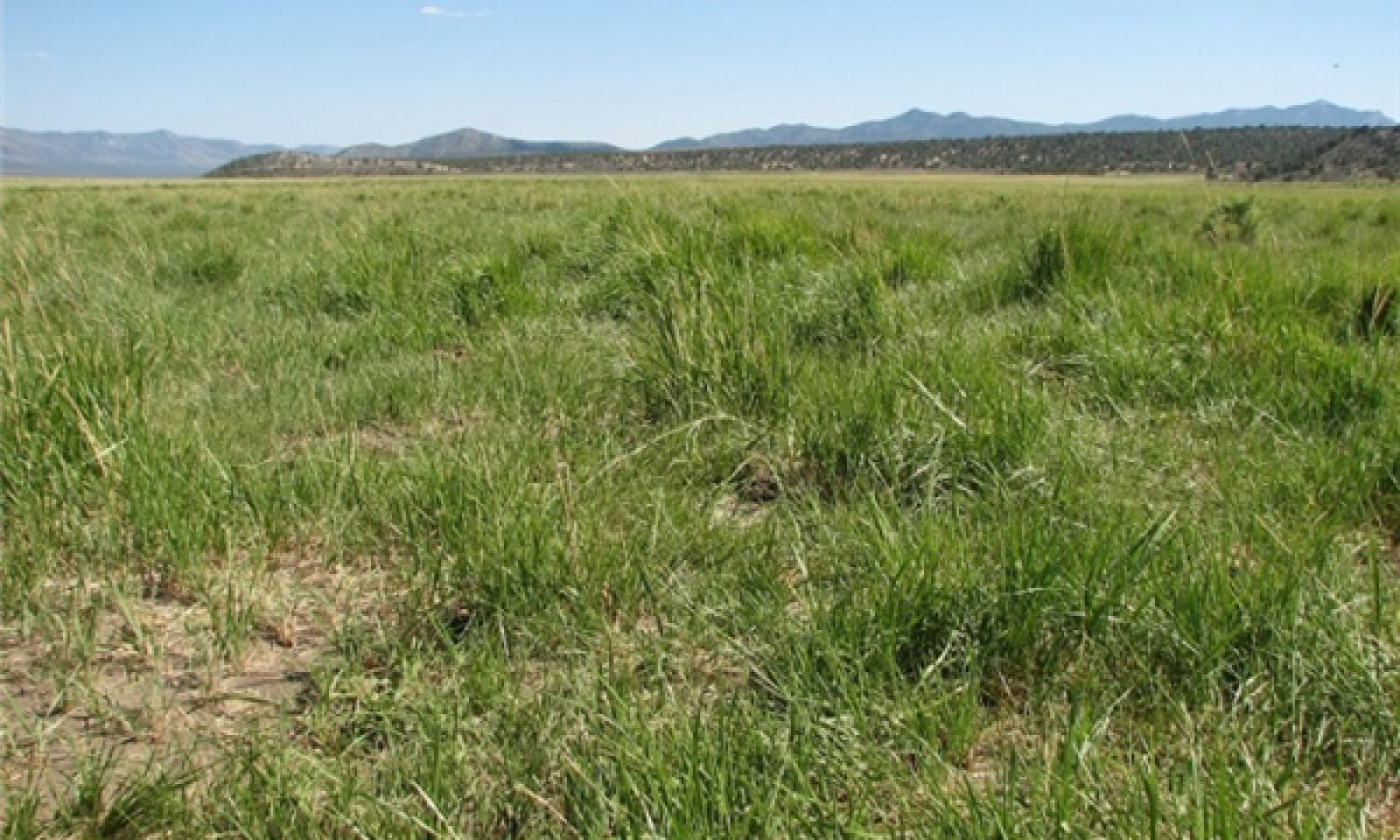
The Reference State 1.0 is a representative of the natural range of variability under pristine conditions. The Reference State has three general community phases; a shrub-grass dominant phase, a perennial grass dominant phase and a shrub dominant phase. State dynamics are maintained by interactions between climatic patterns and disturbance regimes. Negative feedbacks enhance ecosystem resilience and contribute to the stability of the state. These include the presence of all structural and functional groups, low fine fuel loads, and retention of organic matter and nutrients. Plant community phase changes are primarily driven by fire, periodic drought and/or insect or disease attack. Management of this site would be to maintain high plant species diversity and a healty watershed.
Submodel
State 2
Current Potential State

Current Potential State

Description
This state is similar to the Reference State 1.0 with three similar community phases. Ecological function has not changed, however the resiliency of the state has been reduced by the presence of invasive weeds. Non-natives may increase in abundance but will not become dominant within this State. These non-natives can be highly flammable and can promote fire where historically fire had been infrequent. Negative feedbacks enhance ecosystem resilience and contribute to the stability of the state. These feedbacks include the presence of all structural and functional groups, low fine fuel loads, and retention of organic matter and nutrients. Positive feedbacks decrease ecosystem resilience and stability of the state. These include the non-natives’ high seed output, persistent seed bank, rapid growth rate, ability to cross pollinate, and adaptations for seed dispersal. Management would be to maintain high diversity of desired species to promote organic matter inputs and prevent the dispersal and seed production of the non-native invasive species.
Submodel
State 3
Shrub State

Shrub State


Description
This state has two community phases a decadent shrub phase and a sprouting shrub phase. This state is a product of many years of heavy grazing during time periods harmful to perennial bunchgrasses and/or hydrologic modification resulting in a lowered water table. Creeping wildrye, mat muhly and/or Sandberg’s bluegrass may become the dominant grass. Sagebrush dominates the overstory and rabbitbrush may be a significant component. Sagebrush cover exceeds site concept and may be decadent, reflecting stand maturity. The shrub overstory and creeping wildrye or mat muhly understory dominate site resources such that soil water, nutrient capture, nutrient cycling and soil organic matter are temporally and spatially redistributed.
Submodel
Description
This state has two community phases one that is characterized by the dominance of seeded introduced species and the other with shrubs dominating the overstory. Basin big sagebrush and native and non-native forbs may be present.
Submodel
Mechanism
Trigger: This transition is caused by the introduction of non-native annual and perennial plants, such as cheatgrass, mustards, and whitetop (Cardaria draba). Slow variables: Over time the non-native species will increase within the community. Threshold: Any amount of introduced non-native species causes an immediate decrease in the resilience of the site. Non-native species cannot be easily removed from the system and have the potential to significantly alter disturbance regimes from their historic range of variation.
Mechanism
Trigger: To Community Phase 3.1: Repeated, heavy, growing season grazing will decrease or eliminate deep rooted perennial bunchgrasses, increase Sandberg bluegrass and favor shrub growth and establishment. Alteration in the hydrology of the site may also cause an increase in sagebrush; with gullying of associated channel the water table is dropped and may cause a decrease in perennial bunchgrasses. To Community Phase 3.2: Severe fire will remove sagebrush overstory, decrease perennial bunchgrasses and enhance Sandberg bluegrass. Slow variables: Long term decrease in deep-rooted perennial grass density. Threshold: Loss of deep-rooted perennial bunchgrasses changes nutrient cycling, nutrient redistribution, and reduces soil organic matter.
Mechanism
Brush management such as mowing, coupled with seeding of basin wildrye. May be coupled with restoration of the water table where channel incision has occurred. Engineered structures are recommended. See USDA, NRCS National Engineering Handbook (2008).
Relevant conservation practices
| Practice | External resources |
|---|---|
|
Brush Management |
|
|
Range Planting |
Mechanism
Brush management such as mowing, coupled with seeding of deep rooted non-native bunchgrasses.
Mechanism
Trigger: To Community Phase 5.1: Repeated, heavy, growing season grazing will decrease or eliminate deep rooted perennial bunchgrasses, increase cheatgrass and non-native forbs and favor shrub growth and establishment. Alteration in the hydrology of the site may also cause an increase in sagebrush; with gullying of associated channel the water table is dropped and may cause a decrease in perennial bunchgrasses. To Community Phase 5.2: Severe fire will remove sagebrush overstory and cheatgrass will be the dominate plant species. Rabbitbrush may be present. Failed brush management and seeding will also result in Community Phase 5.2. Slow variables: Long term decrease in deep-rooted perennial grass density and increase in shrub overstory. Channel incisement may be occurring. Threshold: Loss of deep-rooted perennial bunchgrasses changes nutrient cycling, nutrient redistribution, and reduces soil organic matter.
Model keys
Briefcase
Add { ecological sites } and { Major Land Resource Areas } to your briefcase by clicking on the briefcase
( ) icon wherever it occurs. Drag and drop items to reorder. Cookies are used to store briefcase items between browsing sessions. Because of this, the number of items that can be added to your briefcase is limited, and briefcase items added on one device and browser cannot be accessed from another device or browser. Users who do not wish to place cookies on their devices should not use the briefcase tool. Briefcase cookies serve no other purpose than described here and are deleted whenever browsing history is cleared.
Ecological sites
Major Land Resource Areas


The Ecosystem Dynamics Interpretive Tool is an information system framework developed by the USDA-ARS Jornada Experimental Range, USDA Natural Resources Conservation Service, and New Mexico State University.
Accessibility statement