
Natural Resources
Conservation Service
-
Search


Major Land Resource Area or ecological site by name and/or ID.
PreviousSectionsNextGeneral information
Draft. A draft ecological site description is either incomplete or has not undergone quality control and quality assurance review.
MLRA notes
Major Land Resource Area (MLRA): 028A–Ancient Lake Bonneville
MLRA 28A occurs in Utah (82%), Nevada (16%), and Idaho (2%). It makes up about 36,775 square miles (95,300 square kilometers). About three-fifths of this area is federally owned land, large tracts of which are used for military training and testing purposes by the. A large area west and southwest of Great Salt Lake is a salty playa. This area is the farthest eastern extent of the Great Basin Section of the Basin and Range Province of the Intermontane Plateaus. It is an area of nearly level basins between widely separated mountain ranges trending north to south. The basins are bordered by long, gently sloping alluvial fans. The mountains are uplifted fault blocks with steep side slopes. They are not well dissected because of low rainfall in the MLRA. Most of the valleys are closed basins containing sinks or playa lakes. Elevation ranges from 3,950 to 6,560 feet (1,205 to 2,000 meters) in the basins and from 6,560 to 11,150 feet (2,000 to 3,400 meters) in the mountains.
Most of this area has alluvial valley fill and playa lakebed deposits at the surface. Great Salt Lake is all that remains of glacial Lake Bonneville, which covered this area during the most recent ice age. A level line on some mountain slopes indicates the former extent of this glacial lake. The uplifted mountains have exposed some Precambrian rocks at their margins. Most of the mountains in the interior of this area consist of tilted blocks of marine sediments from Cambrian to Mississippian age. Scattered outcrops of Tertiary continental sediments and volcanic rocks are throughout the area.
The average annual precipitation is 5 to 12 inches (125 to 305 millimeters) in the valleys and is as much as 49 inches (1,245 millimeters) in the mountains. Most of the rainfall occurs as high-intensity, convective thunderstorms during the growing season. The driest period is from midsummer to early autumn. Precipitation in winter typically occurs as snow. The average annual temperature is 39 to 53 degrees F (4 to 12 degrees C). The freeze-free period averages 165 days and ranges from 110 to 215 days, decreasing in length with elevation.
The dominant soil orders in this MLRA are Aridisols, Entisols, and Mollisols. The soils in the area dominantly have a mesic or frigid soil temperature regime, an aridic or xeric soil moisture regime, and mixed mineralogy. They generally are well drained or somewhat excessively drained, loamy or loamy-skeletal, and very deep.
Ecological site concept
This forestland site occurs on mountains on all aspects. Slope gradients are typically 15 to 75 percent. Elevations are 7500 to about 10,200 feet.
This Forestland site occurs on cool, moist, mountain sideslopes and is associated with rock outcrop and talus or scree. Slope gradients are typically 15 to about 50 percent. Elevations are 8500 to about 10,000 feet. Average annual precipitation is over 20 inches. Mean annual air temperature is 40 to 43 degrees F. The average growing season is 50 to 70 days.
The soils associated with this site are moderately deep and well drained. These soils have formed in residuum from mixed parent material. The surface layer is medium textured and is 5 to 15 inches thick to the subsoil. There is a 1 to 4 inch thick layer of forest litter in various stages of decomposition at the surface. This layer of organic matter reduces moisture loss due to evaporation. The soils are modified by 15 to 50 percent rock fragments through the soil profile.
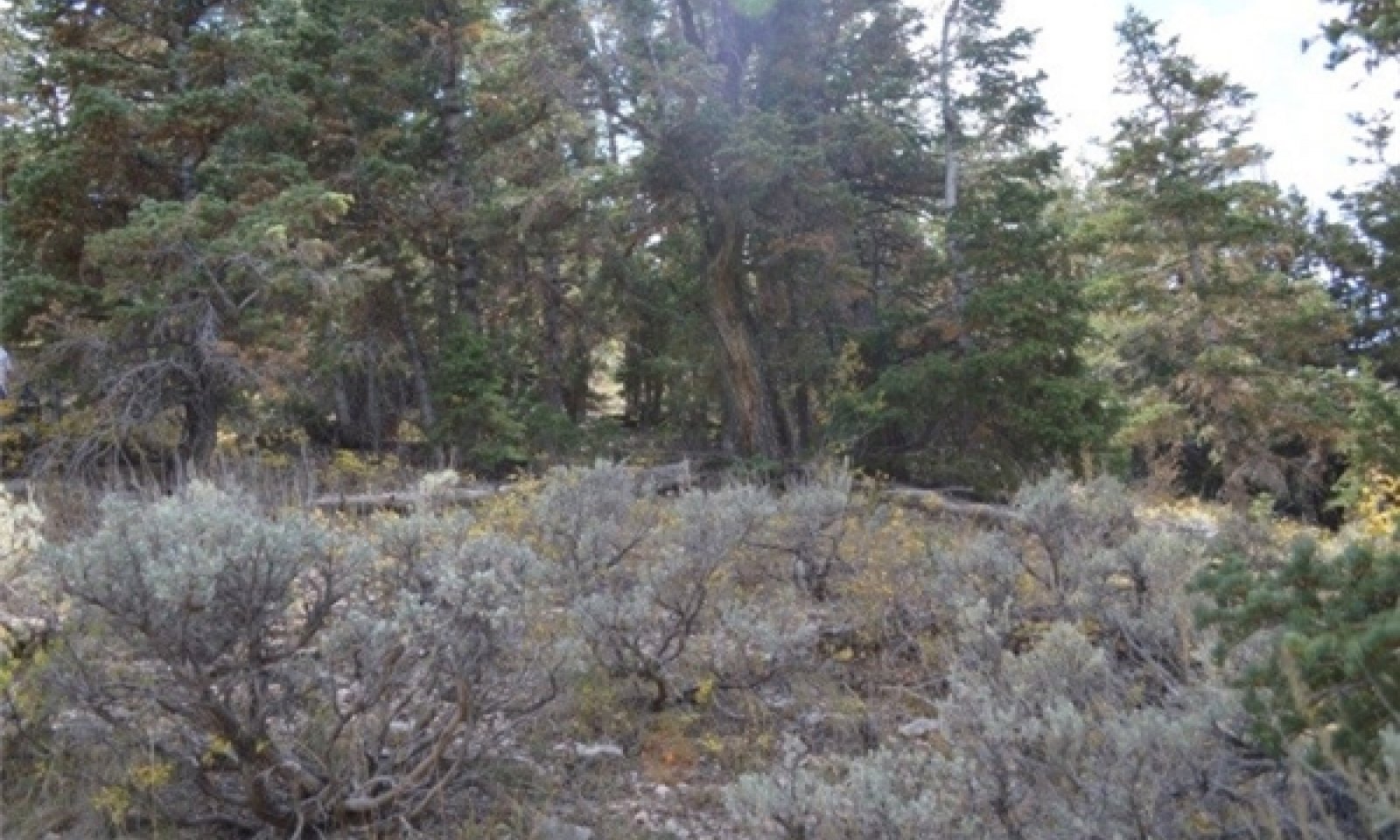
This reference state is dominated by Rocky Mountain white fir (Abies concolor var, concolor). Limber pine (Pinus flexilis) and Great Basin bristlecone pine (Pinus longaeva) occur within the overstory in varying amounts depending on elevation and slope aspect. Mountain big sagebrush is the principal understory shrub. Curlleaf mountain mahogany, snowberry, and greenleaf manzanita are other important shrubs found in the understory community. Bluebunch wheatgrass and muttongrass are the most prevalent understory grasses. Goldenweed species are the most common understory forbs.
An overstory canopy cover of 25 to 35 percent is assumed to be representative of tree dominance on this site in the pristine environment. Overstory tree canopy composition is about 50 to 75 percent white fir, 20 to 40 percent limber pine, and 5 to 20 percent Great Basin bristlecone pine. Production ranges from 200 to 400 pounds per acre.
Table 1. Dominant plant species
Tree (1) Abies concolor
(2) Pinus flexilisShrub (1) Ribes montigenum
Herbaceous (1) Poa
Physiographic features
This forestland site occurs on mountains on all aspects. Slope gradients are typically 15 to 75 percent. Elevations are 7500 to about 10,200 feet.
Table 2. Representative physiographic features
Landforms (1) Mountain
Elevation 7500 – 10200 ft Slope 15 – 75 % Aspect Aspect is not a significant factor Climatic features
Nevada’s climate is predominantly arid, with large daily ranges of temperature, infrequent severe storms, heavy snowfall in the higher mountains, and great location variations with elevation. Three basic geographical factors largely influence Nevada’s climate: continentality, latitude, and elevation. Continentality is the most important factor. The strong continental effect is expressed in the form of both dryness and large temperature variations. Nevada lies on the eastern, lee side of the Sierra Nevada Range, a massive mountain barrier that markedly influences the climate of the State. The prevailing winds are from the west, and as the warm moist air from the Pacific Ocean ascend the western slopes of the Sierra Range, the air cools, condensation occurs and most of the moisture falls as precipitation. As the air descends the eastern slope, it is warmed by compression, and very little precipitation occurs. The effects of this mountain barrier are felt not only in the West but throughout the state, with the result that the lowlands of Nevada are largely desert or steppes. The temperature regime is also affected by the blocking of the inland-moving maritime air. Nevada sheltered from maritime winds, has a continental climate with well-developed seasons and the terrain responds quickly to changes in solar heating.
Nevada lies within the mid-latitude belt of prevailing westerly winds which occur most of the year. These winds bring frequent changes in weather during the late fall, winter and spring months, when most of the precipitation occurs. To the south of the mid-latitude westerlies, lies a zone of high pressure in subtropical latitudes, with a center over the Pacific Ocean. In the summer, this high-pressure belt shifts northward over the latitudes of Nevada, blocking storms from the ocean. The resulting weather is mostly clear and dry during the summer and early fall, with scattered thundershowers. The eastern portion of the state receives significant summer thunderstorms generated from monsoonal moisture pushed up from the Gulf of California, known as the North American monsoon. The monsoon system peaks in August and by October the monsoon high over the Western U.S. begins to weaken and the precipitation retreats southward towards the tropics (NOAA 2004).
This Forestland site occurs on cool, moist, mountain sideslopes and is associated with rock outcrop and talus or scree. Slope gradients are typically 15 to about 50 percent. Elevations are 8500 to about 10,000 feet. Average annual precipitation is over 20 inches. Mean annual air temperature is 40 to 43 degrees F. The average growing season is 50 to 70 days.Table 3 Representative climatic features
Frost-free period (average) 0 days Freeze-free period (average) 60 days Precipitation total (average) 20 in BarLineFigure 1. Monthly precipitation range
BarLineFigure 2. Monthly average minimum and maximum temperature
Figure 3. Annual precipitation pattern
Figure 4 Annual average temperature pattern
">Influencing water features
There are no influencing water features associated with this site.
Soil features
The soils associated with this site are moderately deep and well drained. These soils have formed in residuum from mixed parent material. The surface layer is medium textured and is 5 to 15 inches thick to the subsoil. There is a 1 to 4 inch thick layer of forest litter in various stages of decomposition at the surface. This layer of organic matter reduces moisture loss due to evaporation. The soils are modified by 15 to 50 percent rock fragments through the soil profile. Available water capacity is very low to low and permeability is moderate. Runoff is high to very high and the potential for surface erosion is moderate to high depending on slope. Soil series associated with this site include: Eganroc and Muiral.
The representative soil series is Muiral, a Loamy-skeletal, mixed, superactive Calcic Haplocryepts. Diagnostic horizons include an Organic soil material from the soil surface to 8 cm, Ochric epipedon from the soil surface to 18 cm, Cambic horizon from 30 to 91 cm, Identifiable secondary calcium carbonates from 58 to 91 cm, and a Lithic contact at 91 cm to underlying hard bedrock. Clay content in the particle control sections average 12 to 18 percent. Rock fragments range from 35 to 60 percent, with 25 to 55 percent gravel and 10 to 20 percent cobbles and stones. Reaction is slightly acid through moderately alkaline. Effervescence is Noneffervescenct or slight effervescence. Lithology consists of sedimentary rocks such as limestone, dolomite, and hard siltstone.Table 4. Representative soil features
Parent material (1) Colluvium – limestone
(2) Residuum – dolomite
Surface texture (1) Gravelly loam
(2) Very gravelly loam
(3) Very stony loam
Family particle size (1) Loamy
Drainage class Well drained Permeability class Moderate Soil depth 30 – 35 in Surface fragment cover <=3" 5 – 30 % Surface fragment cover >3" 15 – 30 % Available water capacity
(0-40in)1.9 – 5 in Calcium carbonate equivalent
(0-40in)0 – 5 % Electrical conductivity
(0-40in)Not specified Sodium adsorption ratio
(0-40in)Not specified Soil reaction (1:1 water)
(0-40in)6 – 8 Subsurface fragment volume <=3"
(Depth not specified)35 – 70 % Subsurface fragment volume >3"
(Depth not specified)5 – 20 % Ecological dynamics
An ecological site is the product of all the environmental factors responsible for its development and it has a set of key characteristics that influence a site’s resilience to disturbance and resistance to invasives. Key characteristics include 1) climate (precipitation, temperature), 2) topography (aspect, slope, elevation, and landform), 3) hydrology (infiltration, runoff), 4) soils (depth, texture, structure, organic matter), 5) plant communities (functional groups, productivity), and 6) natural disturbance regime (fire, herbivory, etc.) (Caudle et al. 2013). Biotic factors that influence resilience include site productivity, species composition and structure, and population regulation and regeneration (Chambers et al. 2013).
Rocky Mountain white fir occurs in 31 mountain ranges in Nevada, in ten counties it is relatively uncommon (Charlet 1996). It is considered fairly drought resistant and is a strong competitor with associated species (Maul 1958). It has good seed years at irregular intervals of two to four years. Seed bearing continues for many years but is more abundant during the period of rapid height growth (ages 50 to 100 years). Pole-size trees in dense stands usually bear seeds only when their leaders reach full sunlight (Maul, 1958). Any tree-top damage caused by insects, diseases, and mechanical agents such as ice, snow or wind directly reduces cone production. Crown decadence can be caused by fir mistletoe (Phoradendron pauciflorum), western dwarfmistletoe (Arceuthobium campylopodum), and the fir engraver beetle (Scolytus ventralis). Trees that lose their tops may develop new terminals and resume cone bearing (Maul 1958). Fir-cone moths (Barbara spp.) often seriously injure cones and seed chalcids (Megastigumus spp.) often damage white fir seeds (Maul 1958).
White fir reproduces solely by seed. Seeds are mostly disseminated by wind and to minor extent by rodents. Seed dissemination occurs from September through October later depending on elevation. The greatest number of seeds fall close to the base of the tree with wind dissemination influenced by height of tree, surrounding forest canopy, terrain, updrafts, air turbulence and direction of prevailing winds (Maul 1958). Seed germination requires available surface soil moisture and suitable temperatures. White fir is slow growing until about 30 years of age, then growth rapidly accelerates. Tree heights rarely exceed 100 feet. White fir is subject to windthrow and is often intensified by root rot from Fomes annosus that has becomes established through old fire wounds (Maul 1958).
Great Basin bristlecone pine is highly drought tolerant and can subsist throughout the successional process. While these trees have low requirements for nutrients and moisture they are intolerant of shady conditions and prefer exposed slopes and ridges. High light requirements preclude the establishment of bristlecone pine under dense canopies (Beasley 1972). Great Basin bristlecone pine has a highly branched, shallow root system. Few large branching roots provide structural support and maximize water absorption. Tolerance of dry conditions is increased by waxy needles and thick needle cuticles, which help regulate water loss (Fryer 2004). Bristlecone pine is also able to withstand relatively high internal water stress, plant-water potential values as low as -32 bars have been measured (Beasley 1972).
A common insect pest of the Great Basin bristlecone pine and limber pine is mountain pine beetle (Dendroctonus ponderosae) (Lanner 2007). Heavy infestations are often fatal and affect many trees over large areas. White pine blister rust (WPBR) is of great concern to Great Basin bristlecone pines and also limber pine. It is caused by the fungus Cronartium ribicola and spreads to five-needled white pines from its host plant, Ribes. White pine blister rust has not yet been discovered in Great Basin bristlecone pine (Schoettle and Sniezko 2007). However, WPBR was not discovered in Rocky Mountain bristlecone pine until almost 100 years after its first detection in North America and there is no biological or environmental reason to expect Great Basin bristlecone pine is resistant to infection. Life history traits of Great Basin bristlecone pine promote susceptibility to WPBR. All North American five-needle pines have some resistance to WPBR, although frequency of resistance is low in all species. High elevation white pines have adaptive traits that allow them to persist for hundreds to thousands of years on harsh sites. This longevity is also contributed to a lack of stand-replacing disturbances. As a result, even where trees with rust-resistance are present, without regeneration opportunities the number of individuals with this resistance will not increase (Schottle and Sniezko 2007). Management options to protect uninfected populations or increase resistance may include managing forest composition, increasing host vigor, introduction of resistant container stock and diversifying age class structure.
Mountain big sagebrush and antelope bitterbrush are generally long-lived; therefore it is not necessary for new individuals to recruit every year for perpetuation of the stand. Infrequent large recruitment events and simultaneous low, continuous recruitment is the foundation of population maintenance (Noy-Meir 1973). Survival of the seedlings is dependent on adequate moisture conditions.
This is a very stable site. Fire is the main disturbance but will be rare and low severity due to low fuel loads. Common dandelion is the most common species to invade these sites, non-native species have only been found in trace amounts. This site has two stable states; the Reference State and Current Potential.
Fire Ecology:
At higher elevations and fire safe zones where these sites occur, the understory is scarce and fire is infrequent and of low intensity due to low fuel loads. Fires in these zones are more likely related to El Nino events and higher production years (Sherriff et al. 2001). In the more productive sites, white fir, bristlecone pine and limber pine may be dependent on infrequent stand replacing fires which reduce competition by other tree species and create open areas that promote regeneration (Coop and Schoettle 2009). Fire increases limber pine and bristlecone pine seedling establishment but the regeneration of these species is slow (Coop and Schoettle 2009).
Fire suppression has aided an increase in the population of the white fir. Where fires were more frequent young plants were killed in the understory, with fire suppression these shade tolerant species have been allowed to mature. They act as “fire ladders” which conduct flames into the canopies of other trees, chiefly pines. Pine trees are not tolerant of shade and do not become established under canopies of white fir, thus the transition of pine dominated forests to firs (Lanner 2002).
Limber pine has been noted to be the first to colonize areas after burn. This is in part due to the seed dispersal mechanism; which is mainly by Clark’s nutcracker which prefers to cache in open burn sites (Lanner and Vander Wall 1980, Rebertus et al. 1991). Limber pine decreases in later succession with the increase in other more shade tolerant species (Donnegan and Rebertus 1999).
Mountain big sagebrush is killed by fire (Neuenschwander 1980, Blaisdell et al. 1982), and does not resprout (Blaisdell 1953). Post fire regeneration occurs from seed and will vary depending on site characteristics, seed source, and fire characteristics. Mountain big sagebrush seedlings can grow rapidly and may reach reproductive maturity within 3 to 5 years (Bunting et al. 1987).Mountain big sagebrush may return to pre-burn density and cover within 15-20 years following fire, but establishment after severe fires may proceed more slowly and can take up to 50 years (Bunting et al. 1987, Ziegenhagen 2003, Miller and Heyerdahl 2008, Ziegenhagen and Miller 2009).
Fire will remove aboveground biomass from bluebunch wheatgrass but plant mortality is generally low (Robberecht and Defossé 1995) because the buds are underground (Conrad and Poulton 1966) or protected by foliage. Uresk et al. (1976) reported burning increased vegetative and reproductive vigor of bluebunch wheatgrass. Thus, bluebunch wheatgrass is considered to experience slight damage to fire but is more susceptible in drought years (Young 1983). Plant response will vary depending on season, fire severity, fire intensity and post-fire soil moisture availability.
Muttongrass, a minor component on this site, is top killed by fire but will resprout after low to moderate severity fires. A study by Vose and White (1991) in an open sawtimber site, found minimal difference in overall effect of burning on mutton grass.
Major Successional Stages of Forestland Development:
HERBACEOUS: Vegetation is dominated by grasses and forbs under full sunlight. This stage is experienced after a major disturbance such as crown fire or tree harvest. Skeleton forest (dead trees) remaining after fire or residual trees left following harvest have little affect on the composition and production of the herbaceous vegetation.
SHRUB-HERBACEOUS: Herbaceous vegetation and woody shrubs dominate the site. Various amounts of conifer tree seedlings (less than 20 inches in height) may be present up to the point where they are obviously a major component of the vegetal structure.
SAPLING: In the absence of disturbance, the conifer seedlings develop into saplings (20 inches to 4½ feet in height) with a range in canopy cover of about 5 to 10 percent. Vegetation consists of grasses, forbs and shrubs in association with Douglas-fir and white fir saplings and young aspen trees.
IMMATURE FORESTLAND: The visual aspect and vegetal structure are dominated by limber pine and bristlecone pine greater than 4½ feet in height. Seedlings and saplings of white fir and limber pine are present in the understory. Limber pine are the tallest trees on the site due to the slow growth of bristlecone pine and white fir. Understory vegetation is moderately influenced by a tree overstory canopy of about 10 to 20 percent. As the fir trees continue to develop, they will eventually dominate the site.
MATURE FORESTLAND: The visual aspect and vegetal structure are dominated by white fir, limber pine and bristlecone pine that have reached or are near maximal heights for the site. Dominant trees average ten inches or greater in diameter at breast height. Tree canopy cover ranges from 20 to about 35 percent. Understory vegetation is strongly influenced by tree competition, overstory shading, duff accumulation, etc. Few seedlings and/or saplings of bristlecone pine occur in the understory.
OVER-MATURE FORESTLAND: In the absence of wildfire or other naturally occurring disturbances, the tree canopy on this site can become dense. This stage is dominated by white fir that have reached maximal heights for the site. Dominant and codominant trees average greater than ten inches in diameter at breast height. Understory vegetation is sparse due to tree competition, overstory shading, duff accumulation, etc. Tree canopy cover is commonly greater than 50 percent.
An ecological site is the product of all the environmental factors responsible for its development and it has a set of key characteristics that influence a site’s resilience to disturbance and resistance to invasives. Key characteristics include 1) climate (precipitation, temperature), 2) topography (aspect, slope, elevation, and landform), 3) hydrology (infiltration, runoff), 4) soils (depth, texture, structure, organic matter), 5) plant communities (functional groups, productivity), and 6) natural disturbance regime (fire, herbivory, etc.) (Caudle et al. 2013). Biotic factors that that influence resilience include site productivity, species composition and structure, and population regulation and regeneration (Chambers et al. 2013).
Rocky Mountain white fir occurs in 31 mountain ranges in Nevada, and in ten counties but it is relatively uncommon (Charlet 1996). It is considered fairly drought resistant and is a strong competitor with associated species (Maul 1958). It has good seed years at irregular intervals of two to four years. Seed bearing continues for many years but is more abundant during the period of rapid height growth (ages 50 to 100 years). Pole-size trees in dense stands usually bear seeds only when their leaders reach full sunlight (Maul, 1958). Any tree-top damage caused by insects, diseases, and mechanical agents such as ice, snow or wind directly reduces cone production. Crown decadence can be caused by fir mistletoe (Phoradendron pauciflorum), western dwarf mistletoe (Arceuthobium campylopodum), and the fir engraver beetle (Scolytus ventralis). Trees that lose their tops may develop new terminals and resume cone bearing (Maul 1958). Fir-cone moths (Barbara spp.) often seriously injure cones and seed chalcids (Megastigumus spp.) often damage Rocky Mountain white fir seeds (Maul 1958).
Rocky Mountain white fir reproduces solely by seed. Seeds are mostly disseminated by wind and to minor extent by rodents. Seed dissemination occurs from September through October or later depending on elevation. The greatest number of seeds fall close to the base of the tree with wind dissemination influenced by height of tree, surrounding forest canopy, terrain, updrafts, air turbulence and direction of prevailing winds (Maul 1958). Seed germination requires available surface soil moisture and suitable temperatures. White fir seedlings are shade tolerant but once established grow best in full sun. White fir is slow growing until about 30 years of age and then growth rapidly accelerates (Markstrom and McElderry 1984). This may be due to competition from other species; white fir can survive for long periods of time as a suppressed tree and still be able to respond to release by increasing growth rapidly (Laacke1990). The record white fir is 107 inches diameter and 192 feet tall (Marstrom and McElderry 1984), but tree heights rarely exceed 100 feet. These trees grow on a variety of soils developed from diverse parent materials. White fir may be more dependent on moisture availability and temperature than soil series. Growth and development are best on moderately deep and well-drained sandy-loam to clay-loam soils regardless of parent material. White fir may invade meadows by growing near older lodgepole pines, it can take advantage of the drier soils near the pine roots (Laacke 1990).
A common insect pest of Rocky Mountain white fir is the fir engraver, a beetle that causes considerable damage and mortality (Markstrom and McElderry 1984). Defoliators including Douglas-fir tussock moth and wester spruce budworm, reduce growth and may kill some trees (Markstrom and McElderry 1984). White fir is subject to windthrow and is often intensified by root rot from Fomes annosus that becomes established through old fire wounds (Maul 1958). Windthrow may also be caused by partial cutting; which can leave this shallower rooted species unprotected (Markstrom and McElderry 1984).
Great Basin bristlecone pine is highly drought tolerant and can subsist throughout the successional process. While these trees have low requirements for nutrients and moisture they are intolerant of shady conditions and prefer exposed slopes and ridges. High light requirements preclude the establishment of bristlecone pine under dense canopies (Beasley 1972). Great Basin bristlecone pine has a highly branched, shallow root system. Few large branching roots provide structural support and maximize water absorption. Tolerance of dry conditions is increased by waxy needles and thick needle cuticles, which help regulate water loss (Fryer 2004). Bristlecone pine is also able to withstand relatively high internal water stress, plant-water potential values as low as -32 bars have been measured (Beasley 1972).
A common insect pest of the Great Basin bristlecone pine and limber pine is mountain pine beetle (Dendroctonus ponderosae) (Lanner 2007). Heavy infestations are often fatal and affect many trees over large areas. White pine blister rust (WPBR) is of great concern to Great Basin bristlecone pines and also limber pine. It is caused by the fungus Cronartium ribicola and spreads to five-needled white pines from its host plant, Ribes. White pine blister rust has not yet been discovered in Great Basin bristlecone pine (Schoettle and Sniezko 2007). However, WPBR was not discovered in Rocky Mountain bristlecone pine until almost 100 years after its first detection in North America and there is no biological or environmental reason to expect Great Basin bristlecone pine is resistant to infection. Life history traits of Great Basin bristlecone pine promote susceptibility to WPBR. All North American five-needle pines have some resistance to WPBR, although frequency of resistance is low in all species. High elevation white pines have adaptive traits that allow them to persist for hundreds to thousands of years on harsh sites. This longevity is also contributed to a lack of stand-replacing disturbances. As a result, even where trees with rust-resistance are present, without regeneration opportunities the number of individuals with this resistance will not increase (Schottle and Sniezko 2007). Management options to protect uninfected populations or increase resistance may include managing forest composition, increasing host vigor, introduction of resistant container stock and diversifying age class structure.
Mountain big sagebrush and antelope bitterbrush are generally long-lived; therefore it is not necessary for new individuals to recruit every year for perpetuation of the stand. Infrequent large recruitment events and simultaneous low, continuous recruitment is the foundation of population maintenance (Noy-Meir 1973). Survival of the seedlings is dependent on adequate moisture conditions.
This is a very stable site. Fire is the main disturbance but will be rare and low severity due to low fuel loads. Common dandelion is the most common species to invade these sites, non-native species have only been found in trace amounts. This site has two stable states; the Reference State and Current Potential.
Fire Ecology:
Traits that allow coniferous species to persist in high fire frequency areas are 1) traits that allow species to survive fire such as thick bark, and high crowns, and 2) traits that allow species to repopulate an area rapidly after fire such as serotinous cones, persistent seed banks and increased flowering after fire. (Russell 1994). Prolonged absence of fire in fire-type communities can allow for an increase in fine fuels (Russell 1994). The development of shrubs and young trees in the understory can act as ladder fuels increasing the probability of crown fires. The number of fires was shown to be higher were fire was not suppressed but the average size of fires was significantly higher were fire was suppressed (Russell 1994).
At higher elevations and fire safe zones where these sites occur, the understory is scarce and fire is infrequent and of low intensity due to low fuel loads. Fires in these zones are more likely related to El Nino events and higher production years (Sherriff et al. 2001). In the more productive sites, white fir, bristlecone pine and limber pine may be dependent on infrequent stand replacing fires which reduce competition by other tree species and create open areas that promote regeneration (Coop and Schoettle 2009). Fire increases limber pine and bristlecone pine seedling establishment but the regeneration of these species is slow (Coop and Schoettle 2009).
Fire suppression has aided an increase in the population of the white fir. Where fires were more frequent young plants were killed in the understory, with fire suppression these shade tolerant species have been allowed to mature. They act as “fire ladders” which conduct flames into the canopies of other trees, chiefly pines. Pine trees are not tolerant of shade and do not become established under canopies of white fir, thus the transition of pine dominated forests to firs (Lanner 2002). Burning in areas where white fir is undesired may be the best management practice to control its populations (Laacke 1990).
Limber pine has been noted to be the first to colonize areas after burn. This is in part due to the seed dispersal mechanism; which is mainly by Clark’s nutcracker which prefers to cache in open burn sites (Lanner and Vander Wall 1980, Rebertus et al. 1991). Limber pine decreases in later succession with the increase in other more shade tolerant species (Donnegan and Rebertus 1999).
Mountain big sagebrush is killed by fire (Neuenschwander 1980, Blaisdell et al. 1982), and does not resprout (Blaisdell 1953). Post fire regeneration occurs from seed and will vary depending on site characteristics, seed source, and fire characteristics. Mountain big sagebrush seedlings can grow rapidly and may reach reproductive maturity within 3 to 5 years (Bunting et al. 1987).Mountain big sagebrush may return to pre-burn density and cover within 15-20 years following fire, but establishment after severe fires may proceed more slowly and can take up to 50 years (Bunting et al. 1987, Ziegenhagen 2003, Miller and Heyerdahl 2008, Ziegenhagen and Miller 2009).
Fire will remove aboveground biomass from bluebunch wheatgrass but plant mortality is generally low (Robberecht and Defossé 1995) because the buds are underground (Conrad and Poulton 1966) or protected by foliage. Uresk et al. (1976) reported burning increased vegetative and reproductive vigor of bluebunch wheatgrass. Thus, bluebunch wheatgrass is considered to experience slight damage to fire but is more susceptible in drought years (Young 1983). Plant response will vary depending on season, fire severity, fire intensity and post-fire soil moisture availability.
Muttongrass, a minor component on this site, is top killed by fire but will resprout after low to moderate severity fires. A study by Vose and White (1991) in an open sawtimber site, found minimal difference in overall effect of burning on mutton grass.State and transition model
Custom diagramStandard diagram
Figure 5. State and Transition Model

Figure 6. Legend
More interactive model formats are also available. View Interactive Models
More interactive model formats are also available. View Interactive Models
Click on state and transition labels to scroll to the respective textEcosystem states
State 1 submodel, plant communities
State 2 submodel, plant communities
State 1
Reference StateThe Reference State 1.0 is representative of the natural range of variability under pristine conditions. This reference state has four general community phases. State dynamics are maintained by interactions between climatic patterns and disturbance regimes. Negative feedbacks enhance ecosystem resilience and contribute to the stability of the state. These include the presence of all structural and functional groups, low fine fuel loads, and retention of organic matter and nutrients. Plant community phase changes are primarily driven by fire, periodic drought and/or insect or disease attack.
Community 1.1
Community PhaseThis plant community is dominated by Rocky Mountain white fir (Abies concolor var, concolor). Limber pine (Pinus flexilis) and Great Basin bristlecone pine (Pinus longaeva) occur within the overstory in varying amounts depending on elevation and slope aspect. Mountain big sagebrush is the principal understory shrub. Curlleaf mountain mahogany, snowberry, and greenleaf manzanita are other important shrubs found in the understory community. Bluebunch wheatgrass and muttongrass are the most prevalent understory grasses. Goldenweed species are the most common understory forbs.
An overstory canopy cover of 25 to 35 percent is assumed to be representative of tree dominance on this site in the pristine environment. Overstory tree canopy composition is about 50 to 75 percent white fir, 20 to 40 percent limber pine, and 5 to 20 percent Great Basin bristlecone pine.Forest overstory.MATURE FORESTLAND: The visual aspect and vegetal structure are dominated by white fir, limber pine and bristlecone pine that have reached or are near maximal heights for the site. Dominant trees average ten inches or greater in diameter at breast height. Tree canopy cover ranges from 20 to about 35 percent. Understory vegetation is strongly influenced by tree competition, overstory shading, duff accumulation, etc. Few seedlings and/or saplings of bristlecone pine occur in the understory.
Forest understory. Understory vegetative composition is about 30 percent grasses, 10 percent forbs and 50 percent shrubs and 10 percent young trees when the average overstory canopy is medium (about 30 percent). Average understory production ranges from 200 to 400 pounds per acre with a medium canopy cover. Understory production includes the total annual production of all species within 4½ feet of the ground surface.<br /> <br /> Understory vegetation is strongly influenced by tree competition, overstory shading, duff accumulation, etc. Few seedlings and/or saplings of bristlecone pine occur in the understory.
Figure 7. Annual production by plant type (representative values) or group (midpoint values)
Table 5. Annual production by plant type
Plant type Low
(lb/acre)Representative value
(lb/acre)High
(lb/acre)Shrub/Vine 100 150 200 Grass/Grasslike 60 90 120 Tree 20 30 40 Forb 20 30 40 Total 200 300 400 Community 1.2
Community PhaseThe herbaceous understory increases. Sprouting shrubs such as serviceberry and creeping barberry may increase. Perennial grasses in the understory such as bluebunch wheatgrass, spike fescue, muttongrass, and Letterman’s needlegrass may increase due to reduced competition from the overstory and increased sunlight. Conifers may be present in patches and fire safe zones.
Forest overstory.MATURE FORESTLAND: The visual aspect and vegetal structure are dominated by white fir, limber pine and bristlecone pine that have reached or are near maximal heights for the site. Dominant trees average ten inches or greater in diameter at breast height. Tree canopy cover ranges from 20 to about 35 percent. Understory vegetation is strongly influenced by tree competition, overstory shading, duff accumulation, etc. Few seedlings and/or saplings of bristlecone pine occur in the understory.
Forest understory. Understory vegetative composition is about 30 percent grasses, 10 percent forbs and 50 percent shrubs and 10 percent young trees when the average overstory canopy is medium (about 30 percent). Average understory production ranges from 200 to 400 pounds per acre with a medium canopy cover. Understory production includes the total annual production of all species within 4½ feet of the ground surface.<br /> <br /> Understory vegetation is strongly influenced by tree competition, overstory shading, duff accumulation, etc. Few seedlings and/or saplings of bristlecone pine occur in the understory.
Community 1.3
Community PhaseThe herbaceous understory decreases due to competition from maturing conifer seedlings and saplings. Mountain big sagebrush increases. Limber pine and Rocky Mountain white fir seedlings and saplings increase in size and density.
Forest overstory.MATURE FORESTLAND: The visual aspect and vegetal structure are dominated by white fir, limber pine and bristlecone pine that have reached or are near maximal heights for the site. Dominant trees average ten inches or greater in diameter at breast height. Tree canopy cover ranges from 20 to about 35 percent. Understory vegetation is strongly influenced by tree competition, overstory shading, duff accumulation, etc. Few seedlings and/or saplings of bristlecone pine occur in the understory.
Forest understory. Understory vegetative composition is about 30 percent grasses, 10 percent forbs and 50 percent shrubs and 10 percent young trees when the average overstory canopy is medium (about 30 percent). Average understory production ranges from 200 to 400 pounds per acre with a medium canopy cover. Understory production includes the total annual production of all species within 4½ feet of the ground surface.<br /> <br /> Understory vegetation is strongly influenced by tree competition, overstory shading, duff accumulation, etc. Few seedlings and/or saplings of bristlecone pine occur in the understory.
Community 1.4
Community PhaseLimber pine and Rocky Mountain white fir may be reduced but remain a major component of the overstory. Bristlecone pine trees may show some fire damage but will most likely survive a low intensity fire. Common juniper and mountain big sagebrush are killed by fire and may take many years to reestablish. Sprouting shrubs such as creeping barberry and Utah serviceberry may be sprouting or increasing in the understory. Perennial bunchgrasses such as bluebunch wheatgrass may be reduced the first season after fire but will likely increase in cover and density due to the reduced competition from shrubs and trees.
Forest overstory.MATURE FORESTLAND: The visual aspect and vegetal structure are dominated by white fir, limber pine and bristlecone pine that have reached or are near maximal heights for the site. Dominant trees average ten inches or greater in diameter at breast height. Tree canopy cover ranges from 20 to about 35 percent. Understory vegetation is strongly influenced by tree competition, overstory shading, duff accumulation, etc. Few seedlings and/or saplings of bristlecone pine occur in the understory.
Forest understory. Understory vegetative composition is about 30 percent grasses, 10 percent forbs and 50 percent shrubs and 10 percent young trees when the average overstory canopy is medium (about 30 percent). Average understory production ranges from 200 to 400 pounds per acre with a medium canopy cover. Understory production includes the total annual production of all species within 4½ feet of the ground surface.<br /> <br /> Understory vegetation is strongly influenced by tree competition, overstory shading, duff accumulation, etc. Few seedlings and/or saplings of bristlecone pine occur in the understory.
Pathway a
Community 1.1 to 1.2High severity, stand replacing fire would reduce tree cover and allow for the herbaceous understory to increase.
Pathway b
Community 1.1 to 1.4A lightning strike, low severity fire and/or disease and insects would reduce the tree cover and shrubs in the understory and allow the perennial bunchgrasses to increase.
Pathway a
Community 1.2 to 1.3Time without disturbance such as fire, drought or disease will allow for the trees and shrubs to increase in height and density.
Pathway a
Community 1.3 to 1.1Time without disturbance such as fire, drought or disease will allow for the trees and shrubs to increase in height and density.
Pathway b
Community 1.3 to 1.2Fire would reduce the maturing trees and shrubs and allow for the herbaceous understory to increase.
Pathway a
Community 1.4 to 1.1Time without disturbance would allow for the conifers to increase.
State 2
Current Potential StateThis state is similar to the Reference State 1.0 and has four similar community phases. Ecological function has not changed in this state, but the resiliency of the state has been reduced by the presence of invasive weeds. These non-native species can be highly flammable, and promote fire where historically fire had been infrequent. Negative feedbacks enhance ecosystem resilience and contribute to the stability of the state. These include the presence of all structural and functional groups, low fine fuel loads and retention of organic matter and nutrients. Positive feedbacks decrease ecosystem resilience and stability of the state. These include the non-natives high seed output, persistent seed bank, rapid growth rate, ability to cross pollinate and adaptations for seed dispersal.
Community 2.1
Community PhaseThis community phase is characterized by mature bristlecone pine trees, Rocky Mountain white fir, and limber pine trees. Mountain big sagebrush is the dominant shrub in the understory. Bluebunch wheatgrass is the dominant grass. Spike fescue, muttongrass, Letterman’s needlegrass and sedges are also common. Creeping barberry, common juniper and Utah serviceberry are common understory shrubs. Non-native species such as common dandelion are present.
Forest overstory.MATURE FORESTLAND: The visual aspect and vegetal structure are dominated by white fir, limber pine and bristlecone pine that have reached or are near maximal heights for the site. Dominant trees average ten inches or greater in diameter at breast height. Tree canopy cover ranges from 20 to about 35 percent. Understory vegetation is strongly influenced by tree competition, overstory shading, duff accumulation, etc. Few seedlings and/or saplings of bristlecone pine occur in the understory.
Forest understory. Understory vegetative composition is about 30 percent grasses, 10 percent forbs and 50 percent shrubs and 10 percent young trees when the average overstory canopy is medium (about 30 percent). Average understory production ranges from 200 to 400 pounds per acre with a medium canopy cover. Understory production includes the total annual production of all species within 4½ feet of the ground surface.<br /> <br /> Understory vegetation is strongly influenced by tree competition, overstory shading, duff accumulation, etc. Few seedlings and/or saplings of bristlecone pine occur in the understory.
Community 2.2
Community PhaseThe herbaceous understory increases. Sprouting shrubs such as serviceberry and creeping barberry may increase. Perennial grasses in the understory such as bluebunch wheatgrass, spike fescue, muttongrass, and Letterman’s needlegrass may increase due to reduced competition from the overstory and increased sunlight. Conifers may be present in patches and fire safe zones. Non-native species present.
Forest overstory.MATURE FORESTLAND: The visual aspect and vegetal structure are dominated by white fir, limber pine and bristlecone pine that have reached or are near maximal heights for the site. Dominant trees average ten inches or greater in diameter at breast height. Tree canopy cover ranges from 20 to about 35 percent. Understory vegetation is strongly influenced by tree competition, overstory shading, duff accumulation, etc. Few seedlings and/or saplings of bristlecone pine occur in the understory.
Forest understory. Understory vegetative composition is about 30 percent grasses, 10 percent forbs and 50 percent shrubs and 10 percent young trees when the average overstory canopy is medium (about 30 percent). Average understory production ranges from 200 to 400 pounds per acre with a medium canopy cover. Understory production includes the total annual production of all species within 4½ feet of the ground surface.<br /> <br /> Understory vegetation is strongly influenced by tree competition, overstory shading, duff accumulation, etc. Few seedlings and/or saplings of bristlecone pine occur in the understory.
Community 2.3
Community PhaseThe herbaceous understory decreases due to competition from maturing conifer seedlings and saplings. Mountain big sagebrush increases. Limber pine and Rocky Mountain white fir seedlings and saplings increase in size and density. Non-native species present.
Forest overstory.MATURE FORESTLAND: The visual aspect and vegetal structure are dominated by white fir, limber pine and bristlecone pine that have reached or are near maximal heights for the site. Dominant trees average ten inches or greater in diameter at breast height. Tree canopy cover ranges from 20 to about 35 percent. Understory vegetation is strongly influenced by tree competition, overstory shading, duff accumulation, etc. Few seedlings and/or saplings of bristlecone pine occur in the understory.
Forest understory. Understory vegetative composition is about 30 percent grasses, 10 percent forbs and 50 percent shrubs and 10 percent young trees when the average overstory canopy is medium (about 30 percent). Average understory production ranges from 200 to 400 pounds per acre with a medium canopy cover. Understory production includes the total annual production of all species within 4½ feet of the ground surface.<br /> <br /> Understory vegetation is strongly influenced by tree competition, overstory shading, duff accumulation, etc. Few seedlings and/or saplings of bristlecone pine occur in the understory.
Community 2.4
Community Phase
Figure 8. ABCOC-PIFL2-PILO WSG:4R0101 (F028AY085NV) Phase 2.4 T. Stringham September 2014

Figure 9. ABCOC-PIFL2-PILO WSG:4R0101 (R028AY085NV) Phase 2.4 T. Stringham September 2014
Limber pine and Rocky Mountain white fir may be reduced but remain a major component of the overstory. Bristlecone pine trees may show some fire damage but will most likely survive a low intensity fire. Common juniper and mountain big sagebrush are killed by fire and may take many years to reestablish. Sprouting shrubs such as creeping barberry and serviceberry may be sprouting or increasing in the understory. Perennial bunchgrasses such as bluebunch wheatgrass may be reduced the first season after fire but will likely increase in cover and density due to the reduced competition from shrubs and trees. Non-native species such as common dandelion may be present.
Forest overstory.MATURE FORESTLAND: The visual aspect and vegetal structure are dominated by white fir, limber pine and bristlecone pine that have reached or are near maximal heights for the site. Dominant trees average ten inches or greater in diameter at breast height. Tree canopy cover ranges from 20 to about 35 percent. Understory vegetation is strongly influenced by tree competition, overstory shading, duff accumulation, etc. Few seedlings and/or saplings of bristlecone pine occur in the understory.
Forest understory. Understory vegetative composition is about 30 percent grasses, 10 percent forbs and 50 percent shrubs and 10 percent young trees when the average overstory canopy is medium (about 30 percent). Average understory production ranges from 200 to 400 pounds per acre with a medium canopy cover. Understory production includes the total annual production of all species within 4½ feet of the ground surface.<br /> <br /> Understory vegetation is strongly influenced by tree competition, overstory shading, duff accumulation, etc. Few seedlings and/or saplings of bristlecone pine occur in the understory.
Pathway a
Community 2.1 to 2.2High severity, stand replacing fire would reduce tree cover and allow for the herbaceous understory to increase.
Pathway b
Community 2.1 to 2.4A lightning strike, low severity fire and/or disease and insects would reduce the trees in the overstory and shrubs in the understory allowing the perennial bunchgrasses to increase.
Pathway a
Community 2.2 to 2.3Time without disturbance such as fire, drought or disease will allow for the trees and shrubs to increase in height and density.
Pathway a
Community 2.3 to 2.1Time without disturbance such as fire, drought or disease will allow for the trees and shrubs to increase in height and density.
Pathway b
Community 2.3 to 2.2Fire would reduce the maturing trees and shrubs and allow for the herbaceous understory to increase.
Pathway a
Community 2.4 to 2.1Time without disturbance such as fire, drought or disease will allow for the trees and shrubs to increase in height and density.
Transition A
State 1 to 2Trigger: This transition is caused by the introduction of non-native annual plants, such as cheatgrass and mustards. Slow variables: Over time the annual non-native species will increase within the community. Threshold: Any amount of introduced non-native species causes an immediate decrease in the resilience of the site. Annual non-native species cannot be easily removed from the system and have the potential to significantly alter disturbance regimes from their historic range of variation.
Additional community tables
Table 6. Community 1.1 plant community composition
Group Common name Symbol Scientific name Annual production () Foliar cover (%) Grass/Grasslike1 Primary Perennial Grasses 30–54 muttongrass POFE Poa fendleriana 15–27 – bluebunch wheatgrass PSSPS Pseudoroegneria spicata ssp. spicata 15–27 – 2 Secondary Perennial Grasses 9–45 Letterman's needlegrass ACLE9 Achnatherum lettermanii 3–15 – spike trisetum TRSP2 Trisetum spicatum 3–15 – Forb3 Perennial Forbs 20–40 goldenweed PYRRO Pyrrocoma 15–27 – Shrub/Vine4 Primary Shrubs 60–144 mountain big sagebrush ARTRV Artemisia tridentata ssp. vaseyana 30–72 – 5 Secondary Shrubs 9–45 greenleaf manzanita ARPA6 Arctostaphylos patula 3–15 – curl-leaf mountain mahogany CELE3 Cercocarpus ledifolius 3–15 – snowberry SYMPH Symphoricarpos 3–15 – Tree6 Trees 21–57 limber pine PIFL2 Pinus flexilis 3–15 – Great Basin bristlecone pine PILO Pinus longaeva 3–15 – Table 7. Community 1.2 plant community composition
Group Common name Symbol Scientific name Annual production () Foliar cover (%) Table 8. Community 1.3 plant community composition
Group Common name Symbol Scientific name Annual production () Foliar cover (%) Table 9. Community 1.4 plant community composition
Group Common name Symbol Scientific name Annual production () Foliar cover (%) Table 10. Community 2.1 plant community composition
Group Common name Symbol Scientific name Annual production () Foliar cover (%) Table 11. Community 2.2 plant community composition
Group Common name Symbol Scientific name Annual production () Foliar cover (%) Table 12. Community 2.3 plant community composition
Group Common name Symbol Scientific name Annual production () Foliar cover (%) Table 13. Community 2.4 plant community composition
Group Common name Symbol Scientific name Annual production () Foliar cover (%) Interpretations
Animal community
This ecological site provides shelter and forage for numerous wildlife (Kris 2001). Mammals including, mule deer (Odocoileus hemionus), elk (Cervus elaphus), black bear (Ursus americanus), moose (Alces alces) and mountain goat (Oreamnos americanus) use white fir habitats for cover and forage (Kris 2001 and references therein). Mule deer are especially fond of succulent, new white fir growth in the spring (Lanner 1983, Laacke 1990). Porcupines prefer the bark of white fir, and have been known to forage so enthusiastically that they destroy saplings (Hayward 1945).
White fir seeds are eaten by several species of small mammals Indications of small rodents feeding on the cambial tissue of white fir were noticed in a study by Hayward (1945) Rodents trapped in the study area where white fir trees occur include: deer mouse(Peromvscus maniculatus), Meadow vole (Microtus mordax mordax), Montane vole (Microtus montanus nanus), Hidden forest chipmunk (Tamias umbrinus) yellow-pine chipmunk (Tamias amoenus), jumping mouse (Zapus pinceps) and montane shrew, (Sorex monticolus). Pocket gophers (Thomomys monticola), flying squirrels (Glaucomys sabrinus), and Ground squirrels (Otospermophilus beecheyi) also occur in subalpine habitat and are known to utilize white fir habitat (Lanner 1984, Laacke 1990, Waters and Zabel 1995).
Several other mammals, although do not actively use the trees for food or shelter, inhabit the same ecosystems (subalpine, montane, timberline and limberpine) in which white fir trees occur in Nevada. Yellow bellied marmot (Marmota flaviventris) found in meadows, valleys, and foothills, where forests and meadows form a mosaic will also inhabit subalpine communities above 6500 feet (Great Basin National Park, Listing Sensitive and Extirpated Species 2006, Linzey and Hammerson 2008). The water shrew (Sorex palustris) although restricted to riparian environments occurs in montane communities where white fir trees are known to grow (Great Basin National park, Listing Sensitive and Extirpated Species 2006). Inyo shrew (Sorex tennellus) is confirmed to occur in subalpine communities at 9900 feet. The ringtail (Bassaricus atutus), ermine (Mustela ermine), long-tailed weasel (Mustela frenata), and striped skunk (Mephitis mephitis) all have a wide ranging habitat including high-elevation, forested subalpine uplands and are documented as occurring above 9,000 feet (Goldberg 2003, Great Basin National Park, Listing Sensitive and Extirpated Species 2006, Zevit 2012, Kiiskila 2014).
Several bat species occur within subalpine habitat, adding to the community’s diversity. The fringed myotis (Myotis thysanodes), Long-eared myotis (Myotis evotis), Long-legged myotis (Myotis volans), Silver-haired bat (Lasionycteris noctivagans), townsend’s big-eared bat (Corynorhinus townsendii), all are documented as occurring in coniferous, subalpine forests above 9000 feet (Keinath 2003, Arroyo-Calbrales and Alvares-Castneda 2008, Warner and Czaplewski 1984, Armstrong 2007, Sullivan 2009, Great Basin National Park, Listing Sensitive and Extirpated Species 2006).
Many species of birds also use the subalpine habitat for shelter and food. The bald eagle (Haliaeetus leucocephalus) and western yellow-billed cuckoo (Coccyzus americanus) use mature trees for nesting and foraging (Wildlife Action Plan Team 2012). The burrowing owl will utilize surrounding meadows of subalpine habitat for burrowing (Wildlife Action Plan Team 2012). Censuses determined the broad-tailed hummingbird (Selasphorus platycereus), northern flicker (Colaptes auratus), willow flycatcher (Empidonax oberholseri), mountain chickadee (Parus gambeli), White-breasted nuthatch (Sitta carolinensis), rock wren (Salpinctes obsoletus), American robin (Turdus migratorius), hermit thrush (Catharus guttatus), mountain bluebird (Sialia currucoides), Townsend’s solitaire (Myadestes townsendi), yellow-rumped warbler (Dendroica coronata), Cassin’s finch (Carpodacus cassinii), pine siskin (Carduelis pinus), dark-eyed junco (Junco hyemalis) and Clark’s nutcracker (Nucifraga columbiana) use subalpine habitat for nesting (Wildlife Action Plan Team 2012, Medin 1984, Fryer 2004).
Habitat distribution of reptiles and amphibians is not as widely studied as other animals and few reptiles and amphibians are found at such elevations where white fir trees occur. However; the Sonoran mountain kingsnake (Lampropeltis pyromelana), a highly secretive reptile, which prefers ponderosa pine habitat has been captured at elevations upwards of 9000 feet; suggesting that this snake could occur in habitats shared with Great Basin bristlecone pine (Brennan 2008, Great Basin National Park, Listing Sensitive and Extirpated Species 2006). Also, the western toad (Anaxyrus boreos) has a very wide ranging habitat throughout Nevada, and, if it is near vernal pools the western toad’s habitat could also overlap with Great Basin bristlecone pine habitat. In fact, it has been trapped at elevations of 9000 feet (Lindsdale 1940). The distribution of most of herpetafuana present in these high-elevation woodlands is poorly understood and more research and management are needed.
Bluebunch wheatgrass is moderately grazing tolerant and is very sensitive to defoliation during the active growth period (Blaisdell and Pechanec 1949, Laycock 1967, Anderson and Scherzinger 1975, Britton et al. 1990). Herbage and flower stalk production was reduced with clipping at all times during the growing season; however, clipping was most harmful during the boot stage (Blaisdell and Pechanec 1949). Tiller production and growth of bluebunch was greatly reduced when clipping was coupled with drought (Busso and Richards 1995). Mueggler (1975) estimated that low vigor bluebunch wheatgrass may need up to 8 years rest to recover. Although an important forage species, it is not always the preferred species by livestock and wildlife.
Muttongrass, a minor component on this ecological site, is relatively grazing tolerant. It is palatable and nutritional forage for livestock and wildlife when it is in the early stages of growth. It rates as excellent forage for cattle and horses, and good for sheep, elk and deer (Dayton 1937). Muttongrass persists well in open areas and under canopies of oak and other shrubs (Monsen et al. 2004). Muttongrass may be more shade tolerant than other perennial bunchgrasses and may persist in the understory as the canopy closes (Erdman 1970).
Livestock Interpretations:
Livestock may concentrate on this site in order to take advantage of the shade and shelter offered by the tree overstory. Many areas may not be used because of steep slopes or lack of adequate water. Attentive grazing management is required where this site is used during the earlier stages of forest succession such as the shrub-herbaceous and sapling stages. During these early stages the young trees are most susceptible to damage from livestock and grazing should be monitored closely. Mountain big sagebrush is eaten by domestic livestock but has long been considered to be of low palatability, and a competitor to more desirable species. Bluebunch wheatgrass is considered one of the most important forage grass species on western rangelands for livestock. Although bluebunch wheatgrass can be a crucial source of forage, it is not necessarily the most highly preferred species. Muttongrass is excellent forage for domestic livestock especially in the early spring. Muttongrass begins growth in late winter and early spring, which makes it available before many other forage plants. Stands dominated by white fir seldom produce enough forage for domestic livestock grazing except on harvested or open forest sites, or where grasses and sedges dominate the understory. Because they contain resins, terpenes, and other substances that make the foliage irritating to the digestive tract, most conifers are not particularly palatable to grazing animals. White fir may be slightly palatable to goats. Difficult access and low grass production result in low forage value of limber pine stands for livestock.
Stocking rates vary with such factors as kind and class of grazing animal, season of use and fluctuations in climate. Actual use records for individual sites, and a determination of the degree to which the sites have been grazed offer the most reliable basis for developing initial stocking rates. The forage value rating is not an ecological evaluation of the understory as is the ecological condition rating for rangeland. The forage value rating is a utilitarian rating of the existing understory plants for use by specific kinds of grazing animals.
The amount and nature of the understory vegetation in a forestland is highly responsive to the amount and duration of shade provided by the overstory canopy. Significant changes in kinds and abundance of plants occur as the canopy changes, often regardless of grazing use. Some changes occur slowly and gradually as a result of normal changes in tree size and spacing. Other changes occur dramatically and quickly, following intensive woodland harvest, thinning, or fire.
Wildlife Interpretations:
Open to sparse tree canopies on this site provide forage and browse, and medium to dense tree canopies provide shelter and protection for mule deer and elk. This site may be used by a variety of upland game species including rabbits and blue and ruffed grouse. Various songbirds, rodents, reptiles and associated predators natural to the area also use this woodland. Mountain big sagebrush is highly preferred and nutritious winter forage for mule deer and elk. Bluebunch wheatgrass is considered one of the most important forage grass species on western rangelands for wildlife. Deer and elk make heavy use of muttongrass, especially in early spring when other green forage is scarce. Depending upon availability of other nutritious forage, deer may use muttongrass in all seasons. Muttongrass cures well and is an important fall and winter deer food in some areas. White fir provides abundant browse and cover for large and small wildlife species. Deer, elk, and bear often use white fir habitats as either summer or winter range. Mule deer generally eat small amounts of white fir during the spring, fall, and winter, and sometimes larger amounts during the summer. Mule deer are especially fond of succulent, new white fir growth in the spring. Spring browsing of white fir by deer can be particularly heavy when small white firs are the only green food available; all of the current or previous year's growth may be consumed. White fir needles are an important part of the diet of blue grouse. White fir seeds are eaten by several species of small mammals and birds including grouse, chipmunks, and mice. The large, wingless seeds of limber pine have high energy content. Pine “nuts” provide critical food for rodents and birds, which cache the seeds for later use. Other small mammals and birds benefit from these caches. Bears also feed from caches. Sites with limber pine provide key winter range for deer and elk. Bighorn sheep use open stands on ridges. Great Basin bristlecone pine is listed as unpalatable to mule deer, but provides habitat for small birds and mammals.
Livestock/Wildlife Grazing Interpretations:
This ecological site provides shelter and forage for numerous wildlife (Kris 2001). Mammals including, mule deer (Odocoileus hemionus), elk (Cervus elaphus), black bear (Ursus americanus), moose (Alces alces) and mountain goat (Oreamnos americanus) use Rocky Mountain white fir habitats for cover and forage (Kris 2001 and references therein). Mule deer are especially fond of succulent, new white fir growth in the spring (Lanner 1983, Laacke 1990). Porcupines prefer the bark of white fir, and have been known to forage so enthusiastically that they destroy saplings (Hayward 1945).
Rocky Mountain white fir seeds are eaten by several species of small mammals. Indications of small rodents feeding on the cambial tissue of white fir were noticed in a study by Hayward (1945) Rodents trapped in the study area where white fir trees occur include: deer mouse (Peromvscus maniculatus), Meadow vole (Microtus mordax mordax), Montane vole (Microtus montanus nanus), Hidden forest chipmunk (Tamias umbrinus) yellow-pine chipmunk (Tamias amoenus), jumping mouse (Zapus pinceps) and montane shrew, (Sorex monticolus). Pocket gophers (Thomomys monticola), flying squirrels (Glaucomys sabrinus), and Ground squirrels (Otospermophilus beecheyi) also occur in subalpine habitat and are known to utilize white fir habitat (Lanner 1984, Laacke 1990, Waters and Zabel 1995). Browsing by big game may retard the height of white fir for many years (Markstrom and McElderry 1984).
Several other mammals, although do not actively use the trees for food or shelter, inhabit the same ecosystems (subalpine, montane, timberline and limberpine) in which white fir trees occur in Nevada. Yellow bellied marmot (Marmota flaviventris) found in meadows, valleys, and foothills, where forests and meadows form a mosaic will also inhabit subalpine communities above 6500 feet (Great Basin National Park, Listing Sensitive and Extirpated Species 2006, Linzey and Hammerson 2008). The water shrew (Sorex palustris) although restricted to riparian environments occurs in montane communities where white fir trees are known to grow (Great Basin National park, Listing Sensitive and Extirpated Species 2006). Inyo shrew (Sorex tennellus) is confirmed to occur in subalpine communities at 9900 feet. The ringtail (Bassaricus atutus), ermine (Mustela ermine), long-tailed weasel (Mustela frenata), and striped skunk (Mephitis mephitis) all have a wide ranging habitat including high-elevation, forested subalpine uplands and are documented as occurring above 9,000 feet (Goldberg 2003, Great Basin National Park, Listing Sensitive and Extirpated Species 2006, Zevit 2012, Kiiskila 2014).
Several bat species occur within subalpine habitat, adding to the community’s diversity. The fringed myotis (Myotis thysanodes), Long-eared myotis (Myotis evotis), Long-legged myotis (Myotis volans), Silver-haired bat (Lasionycteris noctivagans), townsend’s big-eared bat (Corynorhinus townsendii), all are documented as occurring in coniferous, subalpine forests above 9000 feet (Keinath 2003, Arroyo-Calbrales and Alvares-Castneda 2008, Warner and Czaplewski 1984, Armstrong 2007, Sullivan 2009, Great Basin National Park, Listing Sensitive and Extirpated Species 2006).
Many species of birds also use the subalpine habitat for shelter and food. The bald eagle (Haliaeetus leucocephalus) and western yellow-billed cuckoo (Coccyzus americanus) use mature trees for nesting and foraging (Wildlife Action Plan Team 2012). The burrowing owl will utilize surrounding meadows of subalpine habitat for burrowing (Wildlife Action Plan Team 2012). Censuses determined the broad-tailed hummingbird (Selasphorus platycereus), northern flicker (Colaptes auratus), willow flycatcher (Empidonax oberholseri), mountain chickadee (Parus gambeli), White-breasted nuthatch (Sitta carolinensis), rock wren (Salpinctes obsoletus), American robin (Turdus migratorius), hermit thrush (Catharus guttatus), mountain bluebird (Sialia currucoides), Townsend’s solitaire (Myadestes townsendi), yellow-rumped warbler (Dendroica coronata), Cassin’s finch (Carpodacus cassinii), pine siskin (Carduelis pinus), dark-eyed junco (Junco hyemalis) and Clark’s nutcracker (Nucifraga columbiana) use subalpine habitat for nesting (Wildlife Action Plan Team 2012, Medin 1984, Fryer 2004).
Habitat distribution of reptiles and amphibians is not as widely studied as other animals and few reptiles and amphibians are found at such elevations where white fir trees occur. However; the Sonoran mountain kingsnake (Lampropeltis pyromelana), a highly secretive reptile, which prefers ponderosa pine habitat has been captured at elevations upwards of 9000 feet; suggesting that this snake could occur in habitats shared with Great Basin bristlecone pine (Brennan 2008, Great Basin National Park, Listing Sensitive and Extirpated Species 2006). Also, the western toad (Anaxyrus boreos) has a very wide ranging habitat throughout Nevada, and, if it is near vernal pools the western toad’s habitat could also overlap with Great Basin bristlecone pine habitat. In fact, it has been trapped at elevations of 9000 feet (Lindsdale 1940). The distribution of most of herpetafuana present in these high-elevation woodlands is poorly understood and more research and management are needed.
Bluebunch wheatgrass is moderately grazing tolerant and is very sensitive to defoliation during the active growth period (Blaisdell and Pechanec 1949, Laycock 1967, Anderson and Scherzinger 1975, Britton et al. 1990). Herbage and flower stalk production was reduced with clipping at all times during the growing season; however, clipping was most harmful during the boot stage (Blaisdell and Pechanec 1949). Tiller production and growth of bluebunch was greatly reduced when clipping was coupled with drought (Busso and Richards 1995). Mueggler (1975) estimated that low vigor bluebunch wheatgrass may need up to 8 years rest to recover. Although an important forage species, it is not always the preferred species by livestock and wildlife.
Muttongrass, a minor component on this ecological site, is relatively grazing tolerant. It is palatable and nutritional forage for livestock and wildlife when it is in the early stages of growth. It rates as excellent forage for cattle and horses, and good for sheep, elk and deer (Dayton 1937). Muttongrass persists well in open areas and under canopies of oak and other shrubs (Monsen et al. 2004). Muttongrass may be more shade tolerant than other perennial bunchgrasses and may persist in the understory as the canopy closes (Erdman 1970).
Hydrological functions
Permeability is moderate. Runoff is high to very high. Hydrologic soil group is C.
Recreational uses
This site has moderate aesthetic value and provides a variety of recreational opportunities such as hiking, camping and deer and upland game bird hunting. Steep slopes and the fragile soil-vegetation complex, however, inhibit many other forms of recreation such as the use of off-road vehicles.
Wood products
This site is of very low quality for tree production. Site index ranges from less than 30 to about 40 for white fir.
Productivity Class: 4
CMAI*: White fir
3.6 to 4.5 m3/ha/yr;
51 to 64 ft3/ac/yr.
Culmination is at 70 years
*CMAI: is the culmination of mean annual increment or highest average growth rate of the stand in the units specified.
Tree Volume: Ranges from less than 2100 to about 2700 cubic feet per acre for stands averaging 30 to 40 feet in height and 70 years of age.
Fuelwood Production: About 20 to 40 cords per acre for stands averaging 30 to 40 feet in height and 70 years of age. There are about 210,000 British Thermal Units (BTUs) of heat energy per cubic foot of mixed white fir, limber pine, and bristlecone pine wood. Firewood is commonly measured in cords, or a stacked unit equivalent to 128 cubic feet. Solid wood volume in a cord varies but straight material of even taper will give a solid volume of 80 to 90 cubic feet. Assuming an average of 85 cubic feet of solid wood per cord, there are about 18 million BTUs of heat value in a cord of mixed white fir, limber pine, and bristlecone pine firewood
B. MANAGEMENT GUIDES
AND INTERPRETATIONS
1. LIMITATIONS AND CONSIDERATIONS
a. Potential for sheet and rill erosion is moderate to severe depending on slope.
b. Severe equipment limitations on steeper slopes.
2. ESSENTIAL REQUIREMENTS
a. Adequately protect from uncontrolled burning to protect woodland resources and reduce potential erosion hazards.
b. Protect soils from accelerated erosion. Use water bars at designed spacing on roads. Follow designed in-sloping, out-sloping or crowning of roads (with necessary ditching and reliable culverts).
3. SILVICULTURAL PRACTICES
Silvicultural treatments are not reasonably applied on this site due to poor site quality and severe limitations for equipment and tree harvest.
Other products
White fir is a valuable ornamental tree. It is often used for ornamental plantings in rural and urban landscapes because it is attractive and frost-hardy. White fir is used extensively in the Christmas tree industry. White fir needles were used to make tea by Native Americans. Native Americans used big sagebrush leaves and branches for medicinal teas, and the leaves as a fumigant. Bark was woven into mats, bags and clothing.
Table 14. Representative site productivity
Common name Symbol Site index low Site index high CMAI low CMAI high Age of CMAI Site index curve code Site index curve basis Citation ABCOC 30 40 51 64 – – – Supporting information
Type locality
Location 1: White Pine County, NV Township/Range/Section T23N R67E S15 Latitude 39° 52′ 12″ Longitude 114° 23′ 16″ General legal description NW¼, Approximately 3 miles west of Tippet, Antelope Range, White Pine County, Nevada. This site is also found in Lincoln County, Nevada. Other references
Anderson, E. W. and R. J. Scherzinger. 1975. Improving quality of winter forage for elk by cattle grazing. Journal of Range Management:120-125.
Arroyo-Cabrales, J. & Álvarez-Castañeda, S.T. 2008. Myotis evotis. The IUCN Red List of Threatened Species. Version 2014.3. Available at: www.iucnredlist.org. Downloaded on 23 January 2015.
Blaisdell, J. P. 1953. Ecological effects of planned burning of sagebrush-grass range on the upper Snake River Plains. US Dept. of Agriculture.
Blaisdell, J. P., R. B. Murray, and E. D. McArthur. 1982. Managing intermountain rangelands-sagebrush-grass ranges. Gen. Tech. Rep. INT-134. U.S. Department of Agriculture, Forest Service, Intermountain Forest and Range Experiment Station, Ogden, UT.
Blaisdell, J. P. and J. F. Pechanec. 1949. Effects of Herbage Removal at Various Dates on Vigor of Bluebunch Wheatgrass and Arrowleaf Balsamroot. Ecology 30:298-305.
Brennan, T. 2008. Online field guide to amphibians and reptiles of Arizona. Available at: http://www.reptilesofaz.org/index.html. Accessed 23 January 2015.
Britton, C. M., G. R. McPherson, and F. A. Sneva. 1990. Effects of burning and clipping on five bunchgrasses in eastern Oregon. Great Basin Naturalist 50:115-120.
Bunting, S. C., B. M. Kilgore, and C. L. Bushey. 1987. Guidelines for prescribed burning sagebrush-grass rangelands in the northern Great Basin. US Department of Agriculture, Forest Service, Intermountain Research Station Ogden, UT, USA.
Busso, C. A. and J. H. Richards. 1995. Drought and clipping effects on tiller demography andgrowth of two tussock grasses in Utah. Journal of Arid Environments 29:239-251.
Caudle, D., J. DiBenedetto, M. Karl, H. Sanchez, and C. Talbot. 2013. Interagency ecological site handbook for rangelands. Available at: http://jornada.nmsu.edu/sites/jornada.nmsu.edu/files/InteragencyEcolSiteHandbook.pdf. Accessed 4 October 2013.
Chambers, J., B. Bradley, C. Brown, C. D’Antonio, M. Germino, J. Grace, S. Hardegree, R. Miller, and D. Pyke. 2013. Resilience to Stress and Disturbance, and Resistance to Bromus tectorum L. Invasion in Cold Desert Shrublands of Western North America. Ecosystems:1-16.
Charlet, D. A. 1996. Atlas of Nevada Conifers. University of Nevada Press, Reno, NV, USA.
Cochran, P.H. 1979. Gross Yields for Even-Aged Stands of Douglas Fir and White Fir East of the Cascades in Oregon and Washington. USDA-Forest Service Research Paper PNW-263, Pacific Northwest Forest and Range Experiment Station, Portland, Oregon.
Conrad, C. E. and C. E. Poulton. 1966. Effect of a wildfire on Idaho fescue and bluebunch wheatgrass. Journal of Range Management:138-141.
Coop, J. D. and A. W. Schoettle. 2009. Regeneration of Rocky Mountain bristlecone pine (Pinus aristata) and limber pine (Pinus flexilis) three decades after stand-replacing fires. Forest Ecology and Management 257:893-903.
Donnegan, J. A. and A. J. Rebertus. 1999. Rates and mechanisms of subalpine forest succession along an environmental gradient. Ecology 80:1370-1384.
Erdman, J. A. 1970. Pinyon-juniper succession after natural fires on residual soils of Mesa Verde, Colorado. Brigham Young University Science Bulletin-Biological Series 11:1-26.
Eyre, F.H., editor. 1980. Forest Cover Types of the United States and Canada. Society of American Foresters, Washington, D.C.
Farjon, A. 2013. Abies concolor. The IUCN Red List of Threatened Species. Version 2014.3. Available at: www.iucnredlist.org Downloaded on 27 January 2015.
Fire Effects Information System (Online; http://www.fs.fed.us/database/feis/plants/).
Fryer, Janet L. 2004. Pinus longaeva. In: Fire Effects Information System, [Online]. U.S. Department of Agriculture, Forest Service, Rocky Mountain Research Station, Fire Sciences Laboratory (Producer). Available at: http://www.fs.fed.us/database/feis/. Accessed: 2015, January 22
Johnson, K. A. 2001. Pinus flexilis. Fire Effects Information System [Online]. U.S. Department of Agriculture, Forest Service, Rocky Mountain Research Station, Fire Science Laboratory (Producer). Available: http://www.fs.fed.us/database/feis/ Accessed: 2015, January 22
Houghton, J.G., C.M. Sakamoto, and R.O. Gifford. 1975. Nevada’s Weather and Climate, Special Publication 2. Nevada Bureau of Mines and Geology, Mackay School of Mines, University of Nevada, Reno, NV.
Hayward, C.L. 1945. Biotic communities of the southern Wasatch and Unita mountains, Utah. Great Basin Naturalist. 6:1-40
Laacke, Robert J. 1990. Abies concolor (Gord. & Glend.) Lindl. ex Hildebr. white fir. In: Burns, Russell M.; Honkala, Barbara H., technical coordinators. Silvics of North America. Volume 1. Conifers. Agric. Handb. 654. Washington, DC: U.S. Department of Agriculture, Forest Service: 36-46. 0 p.
Langor, D. W. 1989. Host effects on the phenology, development, and motality of field populations of the mountain pine beetle, Dendroctonus ponderosae Hopkins (Coleoptera: Scolytidae). The Canadian Entomologist 121:149-157.
Lanner, R. M. 1988. Dependence of Great Basin Bristlecone Pine on Clark's Nutcracker for Regeneration at High Elevations. Arctic and Alpine Research 20:358-362.
Lanner, R. M. 2002. Conifers of California. Cachuma Press, Los Olivos, CA, USA.
Lanner, R.M. 1984. Trees of the Great Basin: A Natural History. Reno: University of Nevada Press.
Lanner, R. M. and S. B. Vander Wall. 1980. Dispersal of Limber Pine Seed by Clark's Nutcracker. Journal of Forestry 78:637-639.
Laycock, W. A. 1967. How heavy grazing and protection affect sagebrush-grass ranges. Journal of Range Management:206-213.
Lindsdale, J.M. 1940. Amphibians and Reptiles in Nevada. Proceedings of the American Academy of Arts and Sciences. 73:197-257
Markstrom, D.C. and S. E. McElderry. 1984. White fir, an American wood. FS-237. U. S. Department of Agriculture, Forest Service, Rocky Mountain Forest and Range Experiment Station, Fort Collins, CO. p. 11.
Maul, D.C. 1958. Silvical Characteristics of White Fir. Technical Paper No. 25. California Forest and Range Experiment Station. U.S. Department of Agriculture, Forest Service, Berkeley, CA. 21pp.
Miller, R. F. and E. K. Heyerdahl. 2008. Fine-scale variation of historical fire regimes in sagebrush-steppe and juniper woodland: an example from California, USA. International Journal of Wildland Fire 17:245-254.
Monsen, S. B., R. Stevens, and N. L. Shaw. 2004. Grasses. Pages 295-424 In: S. B. Monsen, R. Stevens [eds.]. Restoring western ranges and wildlands, vol. 2. Gen. Tech. Rep. RMRS-GTR-136-vol-2. U.S. Department of Agriculture, Forest Service, Rocky Mountain Research Station, Fort Collins, CO.
Mueggler, W. F. 1975. Rate and Pattern of Vigor Recovery in Idaho Fescue and Bluebunch Wheatgrass. Journal of Range Management 28:198-204.
National Oceanic and Atmospheric Administration. 2004. The North American Monsoon. Reports to the Nation. National Weather Service, Climate Prediction Center. Available online: http://www.weather.gov/.
Neuenschwander, L. 1980. Broadcast burning of sagebrush in the winter. Journal of Range Management:233-236.
Nevada Division of Forestry. Fir Engraver Beetle (Scolytus vetralis). Available at: http://forestry.nv.gov /forestry-resources/forest-health/fir-engraver-beetle/. Accessed 27 January 2015.
Noy-Meir, I. 1973. Desert Ecosystems: Environment and Producers. Annual Review of Ecology and Systematics 4:25-51.
Rebertus, A. J., B. R. Burns, and T. T. Veblen. 1991. Stand dynamics of Pinus flexilis-dominated subalpine forests in the Colorado Front Range. Journal of Vegetation Science 2:445-458.
Robberecht, R. and G. Defossé. 1995. The relative sensitivity of two bunchgrass species to fire. International Journal of Wildland Fire 5:127-134.
Schumacher, F.X. 1926. Normal Yield Tables for White Fir. California Ag Ext Sta Bulletin No. 407, Berkeley, CA.
Sherriff, R. L., T. T. Veblen, and J. S. Sibold. 2001. Fire history in high elevation subalpine forests in the Colorado Front Range. Ecoscience 8:369-380.
Stringham, T.K., P. Novak-Echenique, P. Blackburn, C. Coombs, D. Snyder and A. Wartgow. 2015. Final Report for USDA Ecological Site Description State-and-Transition Models, Major Land Resource Area 28A and 28B Nevada. University of Nevada Reno, Nevada Agricultural Experiment Station Research Report 2015-01. p. 1524.
Stuever, Mary C.; Hayden, John S. 1996. Plant associations (habitat types) of the forests and woodlands of Arizona and New Mexico. Final report: Contract R3-95-27. Placitas, NM: Seldom Seen Expeditions, Inc. p. 52
Tappeiner, J. C., II and J. A. Helms. 1971. Natural Regeneration of Douglas Fir and White Fir on Exposed Sites in the Sierra Nevada of California. American Midland Naturalist 86:358-370.
Uresk, D. W., J. F. Cline, and W. H. Rickard. 1976. Impact of wildfire on three perennial grasses in south-central Washington. Journal of Range Management 29:309-310.
USDA-NRCS. National Forestry Manual - Part 537. Washington, D.C.
USDA-NRCS Plants Database (Online; http://www.plants.usda.gov).
Vose, J. M. and A. S. White. 1991. Biomass response mechanisms of understory species the first year after prescribed burning in an Arizona ponderosa-pine community. Forest Ecology and Management 40:175-187.
Waters, J.R. and C.J. Zabel. 1995. Northern flying squirrel densities in fir forests of northeastern California. Journal of Range Management. 59:858-866.
Wildlife Action Plan Team. 2012. Nevada Wildlife Action Plan. Nevada Department of Wildlife, Reno, NV.
Young, R. P. 1983. Fire as a vegetation management tool in rangelands of the intermountain region. Pages 18-31 In: S. B. Monsen, N. Shaw [eds.] Managing intermountain rangelands - improvement of range and wildlife habitats INT-GTR-157. U.S. Department of Agriculture, Forest Service, Intermountain Forest and Range Experiment Station.
Ziegenhagen, L. L. 2003. Shrub reestablishment following fire in the mountain big sagebrush (Artemisia tridentata Nutt. ssp. vaseyana (Rydb.) Beetle) alliance. M.s. Oregon State University.
Ziegenhagen, L. L. and R. F. Miller. 2009. Postfire Recovery of Two Shrubs in the Interiors of Large Burns in the Intermountain West, USA. Western North American Naturalist 69:195-205.
Contributors
DBP/GKB
Rangeland health reference sheet
Interpreting Indicators of Rangeland Health is a qualitative assessment protocol used to determine ecosystem condition based on benchmark characteristics described in the Reference Sheet. A suite of 17 (or more) indicators are typically considered in an assessment. The ecological site(s) representative of an assessment location must be known prior to applying the protocol and must be verified based on soils and climate. Current plant community cannot be used to identify the ecological site.
Author(s)/participant(s) Contact for lead author Date Approved by Approval date Composition (Indicators 10 and 12) based on Annual Production Indicators
-
Number and extent of rills:
-
Presence of water flow patterns:
-
Number and height of erosional pedestals or terracettes:
-
Bare ground from Ecological Site Description or other studies (rock, litter, lichen, moss, plant canopy are not bare ground):
-
Number of gullies and erosion associated with gullies:
-
Extent of wind scoured, blowouts and/or depositional areas:
-
Amount of litter movement (describe size and distance expected to travel):
-
Soil surface (top few mm) resistance to erosion (stability values are averages - most sites will show a range of values):
-
Soil surface structure and SOM content (include type of structure and A-horizon color and thickness):
-
Effect of community phase composition (relative proportion of different functional groups) and spatial distribution on infiltration and runoff:
-
Presence and thickness of compaction layer (usually none; describe soil profile features which may be mistaken for compaction on this site):
-
Functional/Structural Groups (list in order of descending dominance by above-ground annual-production or live foliar cover using symbols: >>, >, = to indicate much greater than, greater than, and equal to):
Dominant:
Sub-dominant:
Other:
Additional:
-
Amount of plant mortality and decadence (include which functional groups are expected to show mortality or decadence):
-
Average percent litter cover (%) and depth ( in):
-
Expected annual annual-production (this is TOTAL above-ground annual-production, not just forage annual-production):
-
Potential invasive (including noxious) species (native and non-native). List species which BOTH characterize degraded states and have the potential to become a dominant or co-dominant species on the ecological site if their future establishment and growth is not actively controlled by management interventions. Species that become dominant for only one to several years (e.g., short-term response to drought or wildfire) are not invasive plants. Note that unlike other indicators, we are describing what is NOT expected in the reference state for the ecological site:
-
Perennial plant reproductive capability:
Print Options
Sections
Font
AAAAOther
PrintThe Ecosystem Dynamics Interpretive Tool is an information system framework developed by the USDA-ARS Jornada Experimental Range, USDA Natural Resources Conservation Service, and New Mexico State University.
Accessibility statement


