


Natural Resources
Conservation Service
Subalpine Moderately Deep Loamy-Skeletal Slopes


Scenario model
Current ecosystem state
Select a state
Management practices/drivers
Select a transition or restoration pathway
- Transition T1 More details
- Transition T2 More details
- Restoration pathway R1 More details
-
No transition or restoration pathway between the selected states has been described
Target ecosystem state
Select a state
Description
The historic state represents unmodified, pre-European conditions. Grazing was by native wildlife only. Temporary use by Native Americans occurred during summer. Data is not available for this state.
Submodel
Description
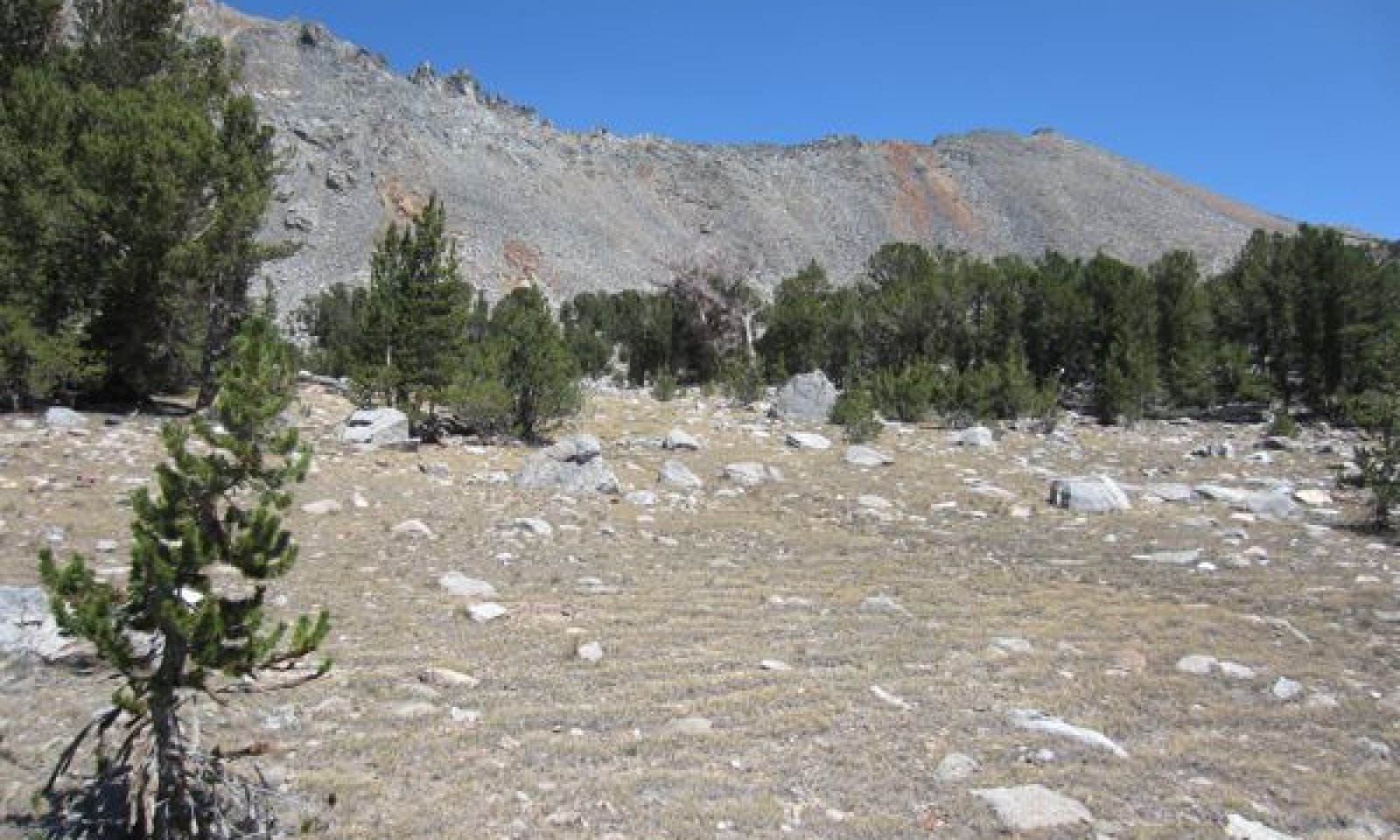
The current reference state represents meadows recovering from widespread heavy sheep grazing at the turn of the 19th century, and may still be used by pack stock and for backcountry camping.
Submodel
Description
This degraded state occurs after grazing impacts are severe enough that active restoration is required for recovery. Bare gravels or soil dominate, with vegetation largely denuded. Livestock trails are prevalent. There is significant soil erosion. Data is not available for this state, but descriptions of these conditions exist in the literature (e.g. Ratliff 1974, 1985a, b).
Submodel
Mechanism
This transition occurred with widespread, intensive sheep grazing throughout the Sierra Nevada at the turn of the 19th century. The majority of Sierran meadows were impacted by this grazing, and are still recovering (e.g. Benedict 1983).
Mechanism
Occurs with severe grazing impacts that denude large areas, compact soils and have significant soil erosion that requires active restoration for recovery.
Mechanism
Active restoration including seeding or outplanting may be used to revegetate barren areas. Threadleaf sedge plugs and fertilizer addition have been used experimentally to restore damaged meadows in the Siberian outpost area of Kings Canyon National Park (Ratliff 1985b). Transplanting large, unfertilized, unspotted plugs of sod was found to be most successful. Fertilization had neutral or negative effects on plug survival, and had negative effects on density of existing vegetation. Plugs of shorthair sedge and Parry’s rush were also to restore trail ruts in Yosemite National Park (Eagan et al. 2000). Five years after restoration, the cover on restored areas had increased from barren to about half the cover of undisturbed meadow plots, indicating restoration was happening, but slowly. Meadows must be kept free of grazing or other disturbance until restoration is complete.
Model keys
Briefcase
Add { ecological sites } and { Major Land Resource Areas } to your briefcase by clicking on the briefcase
( ) icon wherever it occurs. Drag and drop items to reorder. Cookies are used to store briefcase items between browsing sessions. Because of this, the number of items that can be added to your briefcase is limited, and briefcase items added on one device and browser cannot be accessed from another device or browser. Users who do not wish to place cookies on their devices should not use the briefcase tool. Briefcase cookies serve no other purpose than described here and are deleted whenever browsing history is cleared.
Ecological sites
Major Land Resource Areas


The Ecosystem Dynamics Interpretive Tool is an information system framework developed by the USDA-ARS Jornada Experimental Range, USDA Natural Resources Conservation Service, and New Mexico State University.
Accessibility statement