
Natural Resources
Conservation Service
Ecological site R010XC032OR
SR Mountain
12-16 PZ
Last updated: 5/06/2025
Accessed: 10/17/2026
-
Search


Major Land Resource Area or ecological site by name and/or ID.
PreviousSectionsNextGeneral information
Provisional. A provisional ecological site description has undergone quality control and quality assurance review. It contains a working state and transition model and enough information to identify the ecological site.
Click to explore map
Figure 1. Mapped extent
Areas shown in blue indicate the maximum mapped extent of this ecological site. Other ecological sites likely occur within the highlighted areas. It is also possible for this ecological site to occur outside of highlighted areas if detailed soil survey has not been completed or recently updated.
Associated sites
R010XC054OR SR Mountain Shallow South 12-16 PZ
SR Mountain Shallow South 12-16 PZ (south aspect, shallower soil depth, different composition – higher proportion of PSSPS)
R010XC066OR SR Mountain North 12-16 PZ
SR Mountain North 12-16 PZ (north aspect, higher production)
R010XC075OR SR Mountain Shallow North 12-16 PZ
SR Mountain Shallow North 12-16 PZ (north aspect, shallower soil depth, lower production)
R010XC037OR SR Mountain Shallow 12-16 PZ
SR Mountain Shallow 12-16 PZ (stony loam surface texture, shallower soil depth, lower production)
R010XC039OR SR Very Shallow 12-16 PZ
SR Very Shallow 12-16 PZ (very shallow soil depth, lower production, different composition – ARRI2/POSE association)
R010XC047OR SR Mountain South 12-16 PZ
SR Mountain South 12-16 PZ (south aspect, lower production, different composition – higher proportion of PSSPS)
Similar sites
R010XC068OR SR Cool Mountain North 12-16 PZ
SR Cool Mountain North 12-16 PZ (lower elevation, north aspect, higher production, different composition - higher proportion of ARTRT-X)
R010XC037OR SR Mountain Shallow 12-16 PZ
SR Mountain Shallow 12-16 PZ (stony loam surface texture, shallower soil depth, lower production)
R010XC029OR SR Shallow Cool 12-16 PZ
SR Shallow Cool 12-16 PZ (lower elevation, shallower soil depth, lower production, different composition - higher proportion of ARTRT-X)
R010XC066OR SR Mountain North 12-16 PZ
SR Mountain North 12-16 PZ (north aspect, higher production)
R010XC075OR SR Mountain Shallow North 12-16 PZ
SR Mountain Shallow North 12-16 PZ (north aspect, shallower soil depth, lower production)
R010XC033OR SR Cool 12-16 PZ
SR Cool 12-16 PZ (lower elevation, different composition – higher proportion of ARTRT-X)
Table 1. Dominant plant species
Tree Not specified
Shrub (1) Artemisia tridentata ssp. vaseyana
Herbaceous (1) Festuca idahoensis
Physiographic features
This site occurs on rolling uplands, tablelands, and mountain plateaus. Slopes typically range from 2 to 12%. Elevations typically range from 4,200 to 5,700 feet.
Table 2. Representative physiographic features
Landforms (1) Hill
(2) Plateau
(3) Mountain
Elevation 4200 – 5700 ft Slope 2 – 12 % Aspect Aspect is not a significant factor Climatic features
The annual precipitation ranges from 12 to 16 inches, most of which occurs in the form of snow during the months of December through March. Localized, occasionally severe, convection storms occur during the summer. The soil temperature regime is frigid with a mean annual air temperature of 43 degrees F. Temperature extremes range from 90 to -30 degrees F. The frost-free period ranges from less than 30 to 90 days. The optimum period for plant growth is May through June.
Table 3 Representative climatic features
Frost-free period (average) 90 days Freeze-free period (average) 60 days Precipitation total (average) 20 in BarLineFigure 2. Monthly precipitation range
BarLineFigure 3. Monthly average minimum and maximum temperature
">Influencing water features
Soil features
The soils of this site are typically moderately deep and well drained. Typically, the surface layer is a silt loam to silty clay loam about 8 inches thick. The subsoil is a clay loam to clay about 20 inches thick. Depth to bedrock or an indurated pan ranges from 20 to 40 inches. Permeability is moderate. The available water holding capacity (AWC) is about 4 to 8 inches for the profile. The erosion potential is moderate to severe.
Table 4. Representative soil features
Parent material (1) Volcanic ash – rhyolite
(2) Loess – basalt
Surface texture (1) Silt loam
(2) Silty clay loam
Family particle size (1) Clayey
Drainage class Well drained to moderately well drained Permeability class Moderate to moderately slow Soil depth 20 – 40 in Surface fragment cover <=3" 0 – 20 % Surface fragment cover >3" 0 – 10 % Available water capacity
(0-40in)4 – 8 in Calcium carbonate equivalent
(0-40in)Not specified Electrical conductivity
(0-40in)Not specified Sodium adsorption ratio
(0-40in)Not specified Ecological dynamics
The potential native plant community is strongly dominated by Idaho fescue and mountain big sagebrush. Sandberg bluegrass is the dominant shallow rooted perennial grass. Bluebunch wheatgrass, prairie junegrass, parsnip flower buckwheat and a variety of other grasses and forbs are present. Wax currant, mountain snowberry and other deciduous shrubs occur sporadically. Vegetative composition of the community is approximately 75 percent grasses, 10 percent forbs and 15 percent shrubs. Approximate ground cover is 70 to 80 percent (basal and crown).
Range in Characteristics:
Idaho fescue increases on silty clay loam surfaces. Bluebunch wheatgrass increases on slight south and west exposures. Needlegrasses increases on coarser surfaces and over shallower depths. Shrubs increase over gravelly and fractured substratums. Basin big sagebrush increases at lower elevations and as the precipitation zone approaches 12 inches. Production, antelope bitterbrush, serviceberry, snowberry and pine increase at the upper end of the precipitation zone.
Response to Disturbance - States:
If the condition of the site deteriorates as a result of overgrazing, Idaho fescue decreases. Mountain big sagebrush rapidly increases. Sandberg bluegrass increases and juniper invades from isolated rocky areas. With continued overgrazing, mountain big sagebrush and juniper dominate the overstory. Sandberg bluegrass dominates the understory. Annual invasion is limited unless ground disturbance occurs. With further deterioration and lack of fire juniper dominates the site, shrubs decrease and bare ground increases. With fire and heavy use or ground disturbance Sandberg increases. Bulbous bluegrass and to a lesser extent annuals invade. Bare ground increases and excessive erosion reduces the site productivity and contributes to downstream sedimentation.
States: ARTRV-T/POSE-Bare Ground; JUOC/ARTRV-T/POSE-Bare Ground; POSE-POBU -Annuals-Bare Ground (with fire)
Juniper Response:
Fine fuel reduction from improper grazing and fire suppression has led to an increase in the historical fire return interval on many western rangelands. A reduction in fire frequency on these sites leads to an increase in juniper cover, a decrease in sagebrush cover followed by a decrease in herbaceous cover and understory diversity. As juniper encroaches on north facing aspects sagebrush declines with a subsequent decrease in forbs, bluebunch wheatgrass and needlegrass. Idaho fescue becomes the primary herbaceous species occurring under the canopy of the juniper trees. Sandberg’s bluegrass increases in the plant community on lower elevation north slopes and warmer non-aspect sites while bare ground increases in the interspaces between trees. Bitterbrush is more resistant to juniper encroachment than sagebrush and maintains its presence in the community, however vigor and fitness (seed production) may be thwarted. The potential for soil erosion increases as the juniper woodland matures and the understory plant community cover declines. The combined effect of overgrazing and juniper invasion increases the rate of decline in ecological function and the probability of crossing a threshold is high.
Treatment Response:
This site responds positively to juniper removal if soil erosion is not significant.
Seeding may be necessary if there are less than 1-2 bunchgrass plants per meter square in the understory. Forbs may also need to be seeded if adult plants are no longer present in the understory.
State and transition model
Custom diagramStandard diagram
More interactive model formats are also available. View Interactive Models
More interactive model formats are also available. View Interactive Models
Click on state and transition labels to scroll to the respective textEcosystem states
State 1 submodel, plant communities
State 1
ReferenceCommunity 1.1
Reference Plant Community
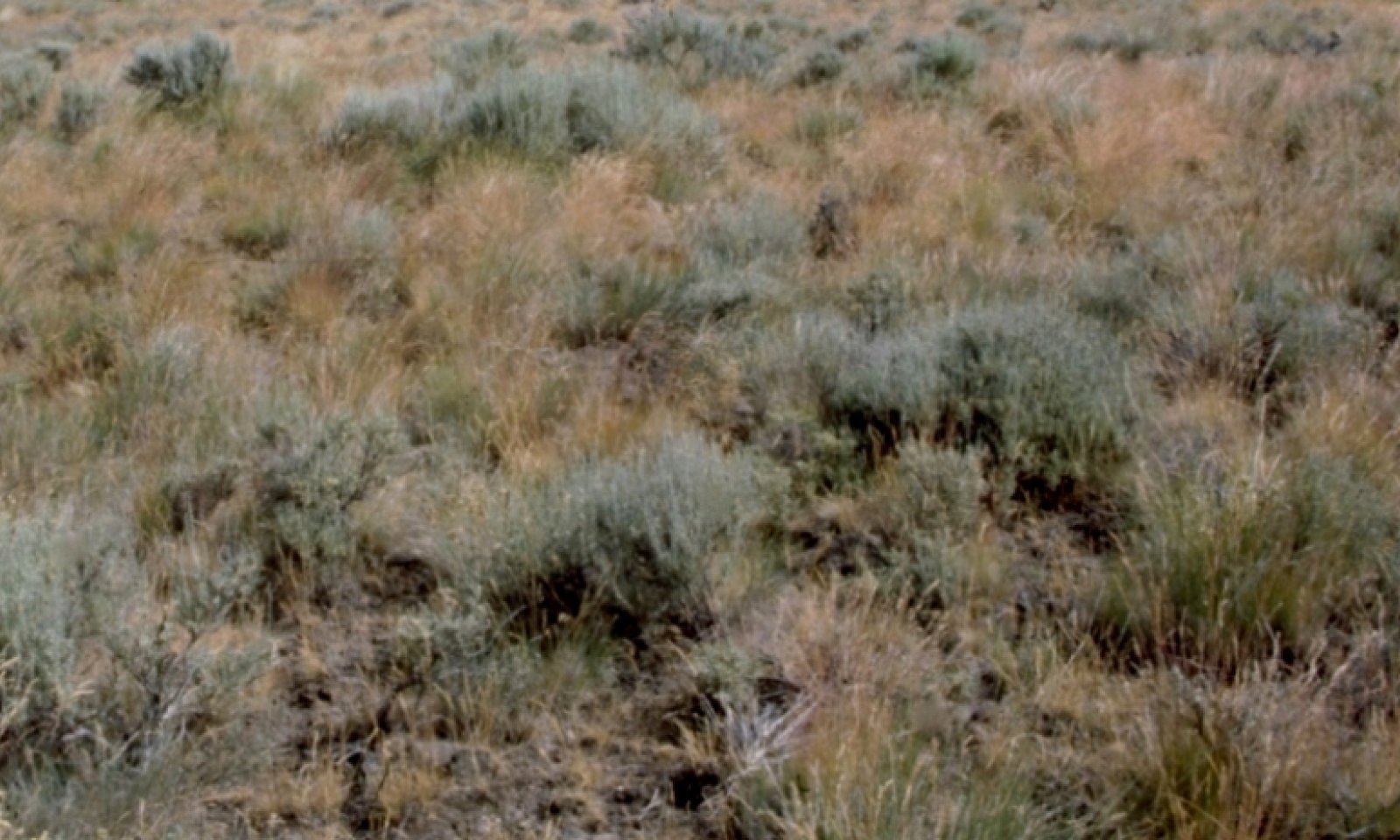
Figure 4. Representative Plant Community
The reference native plant community is strongly dominated by Idaho fescue and mountain big sagebrush. Sandberg bluegrass is the dominant shallow rooted perennial grass. Bluebunch wheatgrass, prairie junegrass, parsnip flower buckwheat and a variety of other grasses and forbs are present. Wax currant, mountain snowberry and other deciduous shrubs occur sporadically. Vegetative composition of the community is approximately 75 percent grasses, 10 percent forbs and 15 percent shrubs. Approximate ground cover is 70 to 80 percent (basal and crown).
Figure 5. Annual production by plant type (representative values) or group (midpoint values)
Table 5. Annual production by plant type
Plant type Low
(lb/acre)Representative value
(lb/acre)High
(lb/acre)Grass/Grasslike 755 1130 1510 Shrub/Vine 130 200 260 Forb 100 150 200 Tree 15 20 30 Total 1000 1500 2000 Figure 6. Plant community growth curve (percent production by month). OR4481 , B10 SR Mtn, Cool & No 12-16pz. SR Mtn, Cool & No 12-16pz RPC Growth Curve.
Jan Feb Mar Apr May Jun Jul Aug Sep Oct Nov Dec J F M A M J J A S O N D 0 0 0 10 30 30 15 5 5 5 0 0 Additional community tables
Table 6. Community 1.1 plant community composition
Group Common name Symbol Scientific name Annual production () Foliar cover (%) Grass/Grasslike1 Deep rooted perennial bunchgrass 990–1425 Idaho fescue FEID Festuca idahoensis 900–1200 – bluebunch wheatgrass PSSPS Pseudoroegneria spicata ssp. spicata 30–75 – Thurber's needlegrass ACTH7 Achnatherum thurberianum 30–75 – basin wildrye LECI4 Leymus cinereus 15–45 – prairie Junegrass KOMA Koeleria macrantha 15–30 – 2 Shallow rooted perennial grass 15–30 Sandberg bluegrass POSE Poa secunda 15–30 – 3 Other perennial grasses/grasslikes 0–45 oniongrass MEBU Melica bulbosa 0–15 – mountain brome BRMA4 Bromus marginatus 0–15 – threadleaf sedge CAFI Carex filifolia 0–15 – squirreltail ELEL5 Elymus elymoides 0–15 – needlegrass ACHNA Achnatherum 0–15 – Forb4 Dominant perennial forbs 90–195 arrowleaf balsamroot BASA3 Balsamorhiza sagittata 30–75 – lupine LUPIN Lupinus 15–30 – desertparsley LOMAT Lomatium 15–30 – milkvetch ASTRA Astragalus 15–30 – buckwheat ERIOG Eriogonum 15–30 – 5 Other forbs 0–45 common yarrow ACMI2 Achillea millefolium 0–15 – agoseris AGOSE Agoseris 0–15 – onion ALLIU Allium 0–15 – pussytoes ANTEN Antennaria 0–15 – brodiaea BRODI Brodiaea 0–15 – mariposa lily CALOC Calochortus 0–15 – Indian paintbrush CASTI2 Castilleja 0–15 – bushy bird's beak CORA5 Cordylanthus ramosus 0–15 – tapertip hawksbeard CRAC2 Crepis acuminata 0–15 – fleabane ERIGE2 Erigeron 0–15 – waterleaf HYDRO4 Hydrophyllum 0–15 – woodland-star LITHO2 Lithophragma 0–15 – stoneseed LITHO3 Lithospermum 0–15 – bluebells MERTE Mertensia 0–15 – owl's-clover ORTHO Orthocarpus 0–15 – phlox PHLOX Phlox 0–15 – sagebrush buttercup RAGL Ranunculus glaberrimus 0–15 – stonecrop SEDUM Sedum 0–15 – ragwort SENEC Senecio 0–15 – deathcamas ZIGAD Zigadenus 0–15 – Shrub/Vine6 Dominant shrubs 75–240 mountain big sagebrush ARTRV Artemisia tridentata ssp. vaseyana 75–150 – wild crab apple PERA4 Peraphyllum ramosissimum 0–45 – antelope bitterbrush PUTR2 Purshia tridentata 0–45 – basin big sagebrush ARTRT Artemisia tridentata ssp. tridentata 0–45 – 7 Other shrubs 0–75 Saskatoon serviceberry AMAL2 Amelanchier alnifolia 0–30 – threetip sagebrush ARTR4 Artemisia tripartita 0–30 – curl-leaf mountain mahogany CELE3 Cercocarpus ledifolius 0–30 – yellow rabbitbrush CHVI8 Chrysothamnus viscidiflorus 0–30 – rubber rabbitbrush ERNA10 Ericameria nauseosa 0–30 – wax currant RICE Ribes cereum 0–30 – common snowberry SYAL Symphoricarpos albus 0–30 – horsebrush TETRA3 Tetradymia 0–30 – Tree8 Trees 0–45 western juniper JUOC Juniperus occidentalis 0–30 – ponderosa pine PIPO Pinus ponderosa 0–15 – Interpretations
Animal community
Livestock grazing:
This site is suitable for livestock grazing use in the late spring, summer, and fall under a planned grazing system. Use should be postponed until the soils are firm enough to prevent trampling damage and soil compaction. Grazing management should be keyed to Idaho fescue. Deferred grazing or rest is recommended at least once every three years.
Native Wildlife Associated with the Potential Climax Community:
This site is commonly used by mule deer, elk, antelope, rabbits, rodents, upland birds and various predators. It is a preferred site for upland bird nesting and rearing areas. Mule deer and elk make excellent use of the site for spring and late fall forage.
Hydrological functions
The soils of this site are in an upland topographic position. They have medium infiltration rates and moderate high runoff potential when the hydrologic cover is good. Under frozen ground conditions runoff potential is significantly increased. This occurs for extended periods when the deep rooted perennial bunchgrass cover is negligible. Hydrologic cover is good when the Idaho fescue deep rooted bunchgrass component is greater than 70 percent of potential. The soils are in hydrologic group C.
Other information
Juniper invasion is a risk on this site. Increases in western juniper and the subsequent competition for moisture will lead to a reduction of available forage. Overgrazing can easily reduce ground cover and accelerate soil loss. Juniper control measures include prescribed burning and/or cutting followed by rest to improve vigor, density and seed production of existing deep rooted perennial bunchgrasses. Consider seeding following control measures if an inadequate stand of bunchgrass is present.
When incised channels are present, rehabilitation will markedly improve production, reduce downstream sedimentation, and restore good hydrologic characteristics. On altered sites, the reintroduction of basin wildrye may be needed to fully restore the site potential.
Supporting information
Contributors
T.Bloomer,B.Gillaspy,E.Petersen,A.Bahn
A. Bahn, G. Kuehl, H. Barrett
Bob Gillaspy
M. Parks
T. Bloomer, E. Petersen, A. BahnApproval
Kirt Walstad, 5/06/2025
Rangeland health reference sheet
Interpreting Indicators of Rangeland Health is a qualitative assessment protocol used to determine ecosystem condition based on benchmark characteristics described in the Reference Sheet. A suite of 17 (or more) indicators are typically considered in an assessment. The ecological site(s) representative of an assessment location must be known prior to applying the protocol and must be verified based on soils and climate. Current plant community cannot be used to identify the ecological site.
Author(s)/participant(s) Jeff Repp, Bruce Frannsen Contact for lead author NRCS Oregon State Rangeland Management Specialist Date 07/11/2007 Approved by Approval date Composition (Indicators 10 and 12) based on Annual Production Indicators
-
Number and extent of rills:
None, Moderate to severe sheet & rill erosion hazard -
Presence of water flow patterns:
None -
Number and height of erosional pedestals or terracettes:
None to very few (some frost heaving) -
Bare ground from Ecological Site Description or other studies (rock, litter, lichen, moss, plant canopy are not bare ground):
5-15% -
Number of gullies and erosion associated with gullies:
None -
Extent of wind scoured, blowouts and/or depositional areas:
None, Moderate wind erosion hazard -
Amount of litter movement (describe size and distance expected to travel):
Fine - limited movement -
Soil surface (top few mm) resistance to erosion (stability values are averages - most sites will show a range of values):
Significantly resistant to erosion: aggregate stability = 4-6 -
Soil surface structure and SOM content (include type of structure and A-horizon color and thickness):
Granular to platy to sub-angular blocky structure; Dry color value 4-5; 3-9" thickness; Low to moderate OM (1-4%) -
Effect of community phase composition (relative proportion of different functional groups) and spatial distribution on infiltration and runoff:
Moderate to significant ground cover (60-70%) and gentle slopes (2-12%) effectively limit rainfall impact and overland flow -
Presence and thickness of compaction layer (usually none; describe soil profile features which may be mistaken for compaction on this site):
None -
Functional/Structural Groups (list in order of descending dominance by above-ground annual-production or live foliar cover using symbols: >>, >, = to indicate much greater than, greater than, and equal to):
Dominant:
Deep rooted, perennial, cool-season bunchgrassesSub-dominant:
shrubsOther:
other grasses > forbsAdditional:
-
Amount of plant mortality and decadence (include which functional groups are expected to show mortality or decadence):
Normal decadence and mortality expected -
Average percent litter cover (%) and depth ( in):
-
Expected annual annual-production (this is TOTAL above-ground annual-production, not just forage annual-production):
Favorable: 2000, Normal: 1500, Unfavorable: 1000 lbs/acre/year at high RSI (HCPC) -
Potential invasive (including noxious) species (native and non-native). List species which BOTH characterize degraded states and have the potential to become a dominant or co-dominant species on the ecological site if their future establishment and growth is not actively controlled by management interventions. Species that become dominant for only one to several years (e.g., short-term response to drought or wildfire) are not invasive plants. Note that unlike other indicators, we are describing what is NOT expected in the reference state for the ecological site:
Western Juniper readily invades the site. Cheatgrass and Medusahead invade sites that have lost deep rooted perennial grass functional groups -
Perennial plant reproductive capability:
All species should be capable of reproducing annually
Print Options
Sections
Font
AAAAOther
PrintThe Ecosystem Dynamics Interpretive Tool is an information system framework developed by the USDA-ARS Jornada Experimental Range, USDA Natural Resources Conservation Service, and New Mexico State University.
Accessibility statement


