


Natural Resources
Conservation Service
Frigid Moist Xeric Ashy Slopes (Grand fir Warm Moist Shrub/Herb)

Scenario model
Current ecosystem state
Select a state
Management practices/drivers
Select a transition or restoration pathway
-
Transition T1A
Severe fires
More details -
Restoration pathway R2A
Control of shrub competition and replanting
More details -
No transition or restoration pathway between the selected states has been described
Target ecosystem state
Select a state
State 1
Reference
Reference


Description
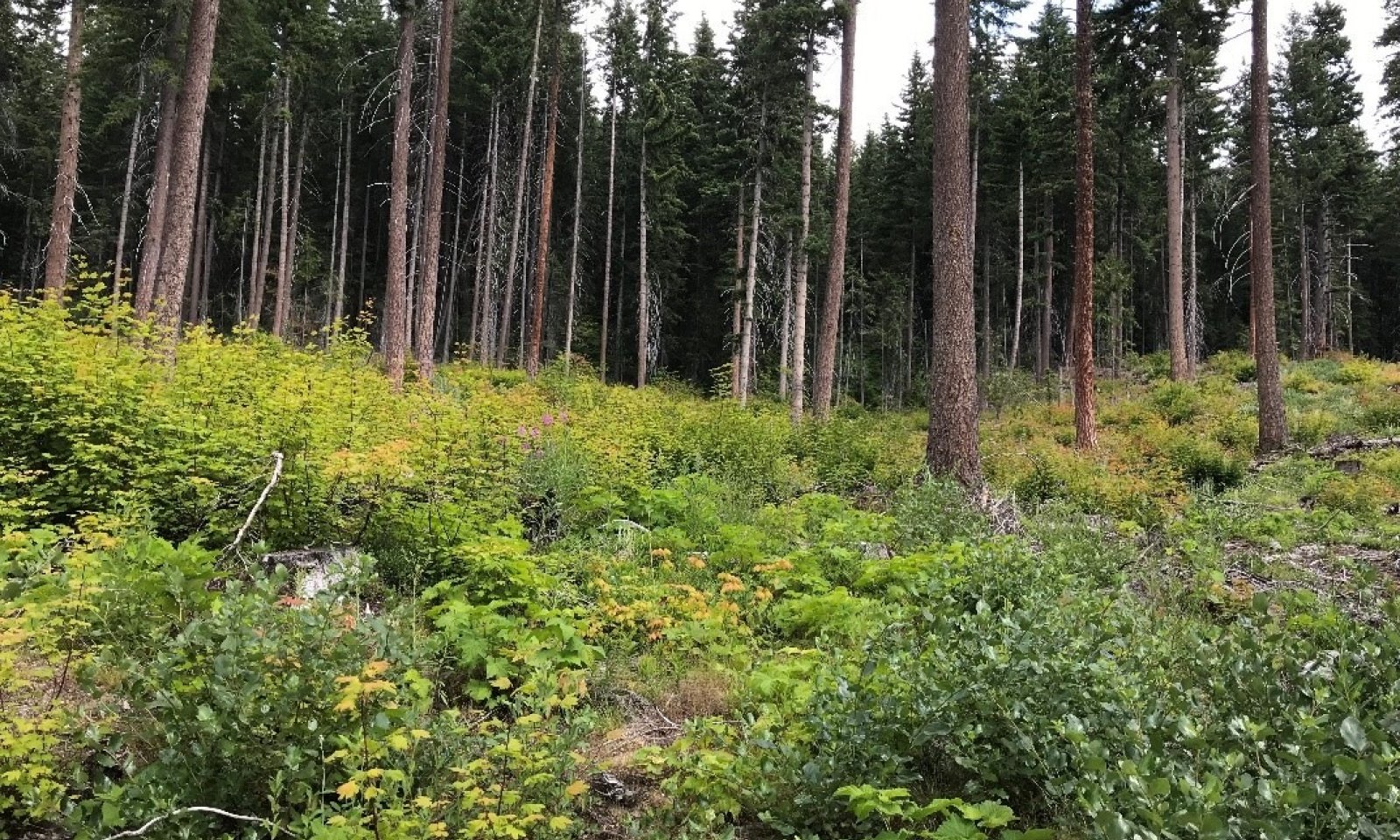
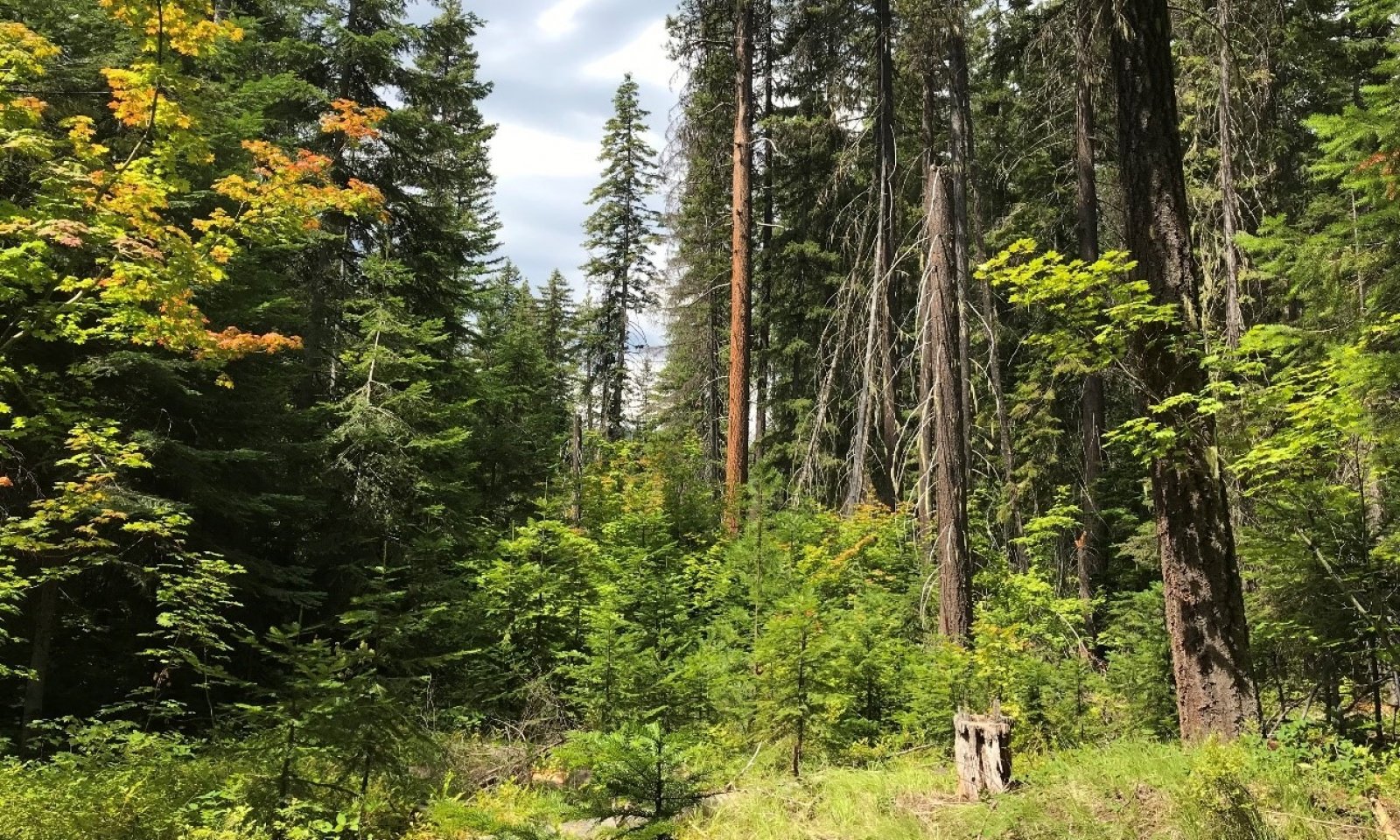
The state is dominated with productive stands of Douglas-fir and grand fir. Ponderosa pine attains its highest productivity on these grand fir/vine maple sites, but cannot dominate the late seral stages and occurs as large scattered individuals. Western larch and western white pine also can occur as scattered individuals. Grand fir is the dominant understory tree in the second level canopy and regeneration. An occasional western redcedar and western hemlock can be found in the regeneration, but grand fir dominates. The moister western prince’s pine and queencup beadlily sites may have a few Engelmann spruce in the stand. Vine maple is the dominant understory shrub in all of the Plant Community Phases 1.1 to 1.4 and can sprout quickly after fire or release strongly after canopy gaps in mature stands. Shelterwood systems work best to keep some shade on ground to reduce vine maple dominance and allow tree regeneration to occur, otherwise vine maple shrub fields can occur impeding natural regeneration. Fire regimes would be in the stand replacing or mix severity realm occurring 50 to 150 year range.
Major insects that can cause mortality are the fir engraver and Douglas-fir beetle. Overstocked late seral stands with increased grand fir developing from prolonged fire intervals enhance beetle attacks. Dwarf mistletoe is a major concern in western larch causing major growth loss and mortality. White blister rust in white pine has reduced its prevalence in mature stands.
Other diseases include Annosum, laminated, and Armillaria root rots. Armillaria can be present in close to 80 percent of the sites with grand fir. Indian paint fungus can be found on sites with increased grand fir stocking. These root rot diseases are enhanced through soil compaction and root damage though selective logging and road building. The root rot diseases are less of a concern in productive grand fir sites and worse in drier sites.
Dominant plant species
Douglas-fir (Pseudotsuga menziesii), tree
grand fir (Abies grandis), tree
ponderosa pine (Pinus ponderosa), tree
western larch (Larix occidentalis), tree
lodgepole pine (Pinus contorta), tree
bigleaf maple (Acer macrophyllum), tree
vine maple (Acer circinatum), shrub
beaked hazelnut (Corylus cornuta), shrub
Douglas maple (Acer glabrum var. douglasii), shrub
Oregon boxleaf (Paxistima myrsinites), shrub
common snowberry (Symphoricarpos albus), shrub
white spirea (Spiraea betulifolia), shrub
rose (Rosa), shrub
Saskatoon serviceberry (Amelanchier alnifolia), shrub
oceanspray (Holodiscus discolor), shrub
Cascade barberry (Mahonia nervosa), shrub
hollyleaved barberry (Mahonia aquifolium), shrub
Sitka mountain ash (Sorbus sitchensis var. sitchensis), shrub
pipsissewa (Chimaphila umbellata), shrub
little prince's pine (Chimaphila menziesii), shrub
bitter cherry (Prunus emarginata), shrub
thinleaf huckleberry (Vaccinium membranaceum), shrub
thimbleberry (Rubus parviflorus), shrub
pinegrass (Calamagrostis rubescens), grass
western rattlesnake plantain (Goodyera oblongifolia), grass
bride's bonnet (Clintonia uniflora), grass
American trailplant (Adenocaulon bicolor), grass
sweetroot (Osmorhiza), grass
western brackenfern (Pteridium aquilinum), grass
British Columbia wildginger (Asarum caudatum), grass
Submodel
Mechanism
Severe fires kill all standing trees and damage site allowing shrubs to sprout and dominate
Restoration pathway R2A
Control of shrub competition and replanting
Mechanism
Control of shrub competition and replanting Douglas-fir, ponderosa pine (drier sites), and western larch. Inspection of site qualities important before replanting e.g. soil organic matter and ash layer.
Model keys
Briefcase
Add { ecological sites } and { Major Land Resource Areas } to your briefcase by clicking on the briefcase
( ) icon wherever it occurs. Drag and drop items to reorder. Cookies are used to store briefcase items between browsing sessions. Because of this, the number of items that can be added to your briefcase is limited, and briefcase items added on one device and browser cannot be accessed from another device or browser. Users who do not wish to place cookies on their devices should not use the briefcase tool. Briefcase cookies serve no other purpose than described here and are deleted whenever browsing history is cleared.
Ecological sites
Major Land Resource Areas


The Ecosystem Dynamics Interpretive Tool is an information system framework developed by the USDA-ARS Jornada Experimental Range, USDA Natural Resources Conservation Service, and New Mexico State University.
Accessibility statement